
AI-powered customer experience marketing (CXM) platform that helps local businesses win.


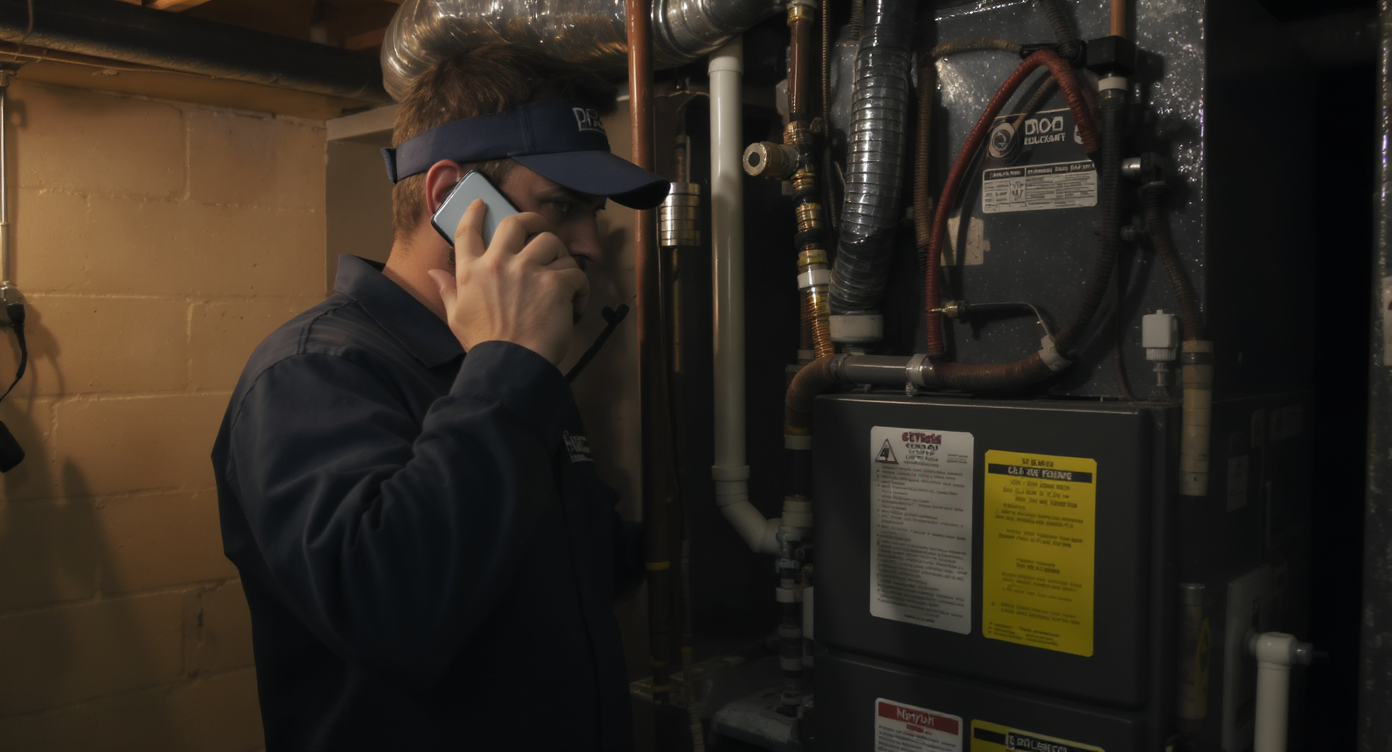
It’s 9:47 PM on a Friday. Your furnace just died. It’s freezing outside. You call the HVAC company. Nobody answers. So you call their competitor, who picks up on the second ring. That job—worth $800 or more—just walked out the door. Learning how to handle after hours calls for HVAC companies isn’t just a nice operational detail. It’s the difference between growing and bleeding money every night.
Handling after hours calls for HVAC companies means capturing emergency requests outside normal business hours through answering services, call forwarding, or automated systems. Since HVAC emergencies happen nights and weekends, responding quickly to these calls prevents losing high-value jobs to competitors and keeps customers satisfied.
Quick Answer
After-hours HVAC calls can be captured through automated answering services, call routing to on-call technicians, voicemail-to-text transcription for quick callbacks, scheduling systems that notify available staff, and hiring part-time dispatchers. The key is responding within minutes—most customers will call a competitor if you don’t answer quickly, costing you emergency service revenue that typically commands premium rates.
What Are After Hours Calls in the HVAC Industry?
After hours calls are any inbound calls outside your normal business hours—evenings, weekends, holidays. For HVAC companies, these aren’t casual inquiries. They’re urgent. A broken AC in August. A furnace malfunction at midnight. A commercial refrigeration system failing on Sunday. The caller is stressed, ready to spend, and looking for whoever answers first.
Related guide: how to handle after hours calls for cleaning companies.
Free weekly newsletter
Growth tips for home service businesses
Every Tuesday — actionable ideas to get more leads, reviews, and repeat customers. No fluff.
HVAC is different. Emergencies don’t wait for Monday. According to research on the cost of missed calls, a single unanswered call can cost a small business hundreds of dollars in lost revenue. Multiply that across a busy season? You’re looking at tens of thousands in jobs that went to competitors. Just because nobody picked up.
Why After Hours Calls Matter More Than You Think
The Revenue You’re Losing Is Invisible
Here’s the frustrating part. Most HVAC owners don’t know how many after hours calls they’re missing. You can’t measure what you don’t see. A caller who hits voicemail? They rarely leave a message. They just move on. According to CallJolt’s analysis of missed call costs, the vast majority of callers who reach voicemail hang up and call someone else instead. That’s not a lead that didn’t work out. That’s a lead you never even knew existed.
But there’s more. A homeowner who finds a responsive HVAC company at 10 PM becomes a loyal customer for years. Maintenance contracts. Referrals. Future emergencies. Lose them once, and you’ve lost decades of lifetime value.
Your Team Can’t Be On Call Forever
Some HVAC owners try rotating phone duty among techs or office staff. It works at first. Then burnout hits hard. Your best dispatcher resents late-night calls. Technicians who answered phones all weekend show up Monday exhausted. Quality drops. Both your customer service and fieldwork suffer. There’s a real human cost to this approach, and it doesn’t scale as you grow.
📺 Watch: After-Hours Call Routing Setup: Never Miss a Lead
Proven Methods for Handling After Hours HVAC Calls
Several approaches exist. Each has different trade-offs in cost, reliability, and customer experience. Let’s break them down honestly.
Traditional Answering Services
This is the old option. Hire a call center with human operators who answer after hours, take messages, and dispatch emergencies. It works. But it’s expensive. Most services charge per call or per minute. During peak season, costs explode. And the operators don’t know your business the way your team does. They’re reading a script. They can’t answer detailed questions about your services, pricing, or availability.
On-Call Rotation
Assign a team member to carry the company phone each night. Keeps things in-house. But—as mentioned above—it leads to burnout and inconsistency. One person handles calls professionally. Another rushes through them. Plus you’re paying overtime or on-call premiums for answering the same five questions repeatedly. According to the SBA’s guidance on small business operations, controlling labor costs while maintaining service quality is one of the top challenges for growing service businesses.
AI-Powered Phone Agents
This is the newest option. And it’s growing fast. An AI phone agent answers every call with a natural-sounding voice. 24/7. It answers FAQs, books appointments, qualifies leads based on your criteria, and routes true emergencies to your on-call tech. The cost is a fraction of human answering services. The AI never gets tired, frustrated, or inconsistent. As Technology.org notes in their review of AI answering services, these tools have become sophisticated enough to handle complex service business conversations without callers realizing they’re speaking with AI.
Missed Call Text-Back
If a call goes unanswered, an automatic text fires back within seconds. Something like: “Hi, thanks for calling [Your HVAC Company]. We missed your call but want to help. Can you describe what’s going on?” This keeps the lead warm. It often captures the job. It’s not a replacement for answering the phone. But it’s a powerful safety net.
Best Practices for Setting Up Your After Hours System
Whatever method you choose, a few principles matter most. They separate companies that capture after hours revenue from those that don’t.
- Define what counts as an emergency. Not every after hours call needs a truck rolled. Set clear criteria: no heat in winter, gas smell, flooding from a unit. Everything else can be booked for the next business day.
- Build a call flow, not just a greeting. A well-designed call flow routes emergency calls to your on-call tech, books non-urgent appointments automatically, and captures caller information so nothing falls through the cracks.
- Automate follow-ups. Every after hours caller should get a confirmation text or email. If they booked an appointment, send a reminder. If they left a message, follow up first thing in the morning. According to data on the revenue conversion gap, slow follow-up is one of the biggest reasons small businesses lose leads they’ve already captured.
- Track everything. You can’t improve what you don’t measure. Record calls, log response times, and review how many after hours leads convert into booked jobs. SCORE’s guide on using data to boost your business emphasizes that even simple tracking gives you a major advantage over competitors flying blind.
- Keep it professional. Whether it’s AI or a human answering, the after hours experience should feel like calling during the day. Sloppy greetings, long hold times, or generic voicemail recordings tell callers you don’t take their emergency seriously.
How SalesCaptain Helps
SalesCaptain was built for exactly this. Its AI Phone Agent answers every call 24/7 with a natural-sounding voice. It greets callers, answers common HVAC questions, qualifies whether it’s an emergency, books appointments, and routes urgent calls to your on-call tech. You set it up with a drag-and-drop call flow builder. No technical expertise required.
What separates it from traditional answering services or basic phone tools? The depth behind the system. Every call gets an AI-generated transcription and summary. Your morning dispatcher can scan what happened overnight in seconds instead of listening to recordings. Missed call text-back fires automatically if a call slips through. And because SalesCaptain combines the AI phone agent with AI chat agents for SMS, webchat, and social media, you’re covering every channel a homeowner might use to reach you. All from one shared inbox your team accesses.
Running multiple locations? The per-location pricing model starting with a free plan makes scaling straightforward. You won’t need to hire additional after hours staff or pay per-call fees that spike during your busiest months. The platform integrates with tools you already use, including HousecallPro, ServiceFusion, and Zapier. Booked jobs flow directly into your existing workflow. According to recent analysis on missed call costs, businesses that respond to every inbound call see dramatically higher conversion rates. That’s exactly what an always-on AI agent delivers.
Key Takeaways
Handling after hours calls for HVAC companies comes down to one question. Are you willing to let revenue walk away every evening, weekend, and holiday? The methods range from traditional answering services to on-call rotations to AI-powered phone agents. The right choice depends on your budget, call volume, and growth plans. What does that look like in practice?
- After hours calls in HVAC are often high-urgency and high-value. Missing them costs real money.
- Human answering services work but are expensive and impersonal. On-call rotations burn out your team.
- AI phone agents offer 24/7 coverage at a fraction of the cost, with consistent quality and automatic follow-up.
- Regardless of your method, build a structured call flow, automate follow-ups, and track your results.
- The HVAC companies capturing the most after hours revenue aren’t working harder. They’ve built systems that work while they sleep.
The best time to fix your after hours call handling was last busy season. The second best time is right now.
Frequently Asked Questions
How many after hours calls does a typical HVAC company miss?
It varies by season and region. But most HVAC companies report that 30% to 50% of their total inbound calls come in outside business hours. During extreme weather events, that number spikes even higher. Without a system in place, the majority of those callers won’t leave a voicemail. They’ll call a competitor instead.
Is an AI phone agent as good as a human receptionist for HVAC calls?
For after hours calls? An AI agent is often better. It answers instantly. Never gets tired. Follows your call flow consistently every time. It handles appointment booking, FAQ answers, and lead qualification. For true emergencies, it routes to your on-call tech. The only scenario where a human has a clear advantage is handling highly unusual or emotionally complex situations. Those are rare for after hours HVAC calls.
What should my after hours call flow include?
At minimum, it should include a professional greeting. A way to identify emergencies versus routine requests. Automatic appointment booking for non-urgent calls. Voicemail capture as a fallback. And an instant text-back if a call goes unanswered. Emergency calls should route directly to your on-call technician with all relevant caller information attached.
How much does it cost to set up after hours call handling?
Traditional answering services typically charge $1 to $2 per minute or $25 to $50 per call. Over a busy season, that adds up to thousands per month. AI phone agents like SalesCaptain’s start with a free plan and charge $0.12 per minute for AI calls. Dramatically less expensive. And way more scalable, especially for multi-location HVAC businesses.
Can I use after hours call handling alongside my existing phone system?
Yes. Most modern solutions, including SalesCaptain, integrate with your current business phone number. You don’t need to change your number or disrupt daytime operations. After hours calls simply get routed to the AI agent or answering system based on rules you define in your call flow.
Ready to see it in action?
See how HVAC companies use SalesCaptain to capture after-hours calls and book emergency appointments.
See How SalesCaptain Can Help
SalesCaptain’s AI Phone Agent answers your HVAC company’s calls 24/7. It books appointments, qualifies leads, and routes emergencies. All without adding staff or paying per-call fees. Set it up in minutes with the drag-and-drop call flow builder.