
AI-powered customer experience marketing (CXM) platform that helps local businesses win.


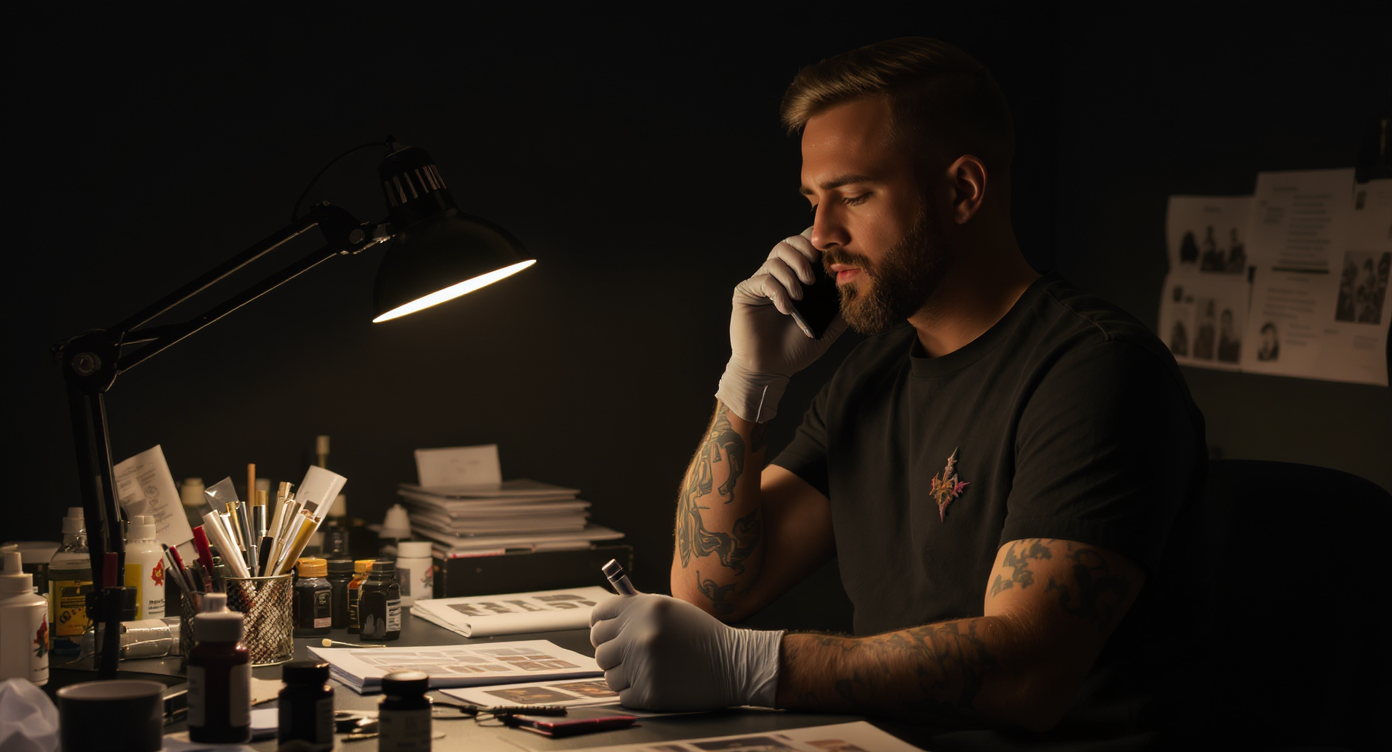
You’re halfway through a sleeve piece, your hands are gloved, the needle’s buzzing, and your studio phone starts ringing. You can’t pick up. By the time you check the voicemail two hours later, the caller has already booked with the shop down the street. Learning how to handle after hours calls for tattoo studios isn’t just a nice operational upgrade. It’s the difference between a full book and empty chairs.Handling after hours calls for tattoo studios means capturing inbound calls when artists are busy or outside business hours. Use voicemail systems, call forwarding, or automated services to acknowledge missed calls and book appointments automatically, preventing potential clients from booking competitors while you’re tattooing.
Quick Answer
Set up an automated voicemail greeting that captures caller details, then use call forwarding to route messages to your phone or a dedicated team member. Implement a callback system to respond within 24 hours, and consider a simple answering service for high-volume studios. This ensures no potential clients slip through while you’re actively tattooing, preserving leads and maintaining professionalism.
Free weekly newsletter
Growth tips for service businesses
Every Tuesday — actionable ideas to get more leads, reviews, and repeat customers. No fluff.
What Are After Hours Calls for Tattoo Studios?
After hours calls are any inbound phone calls that come in when your studio isn’t staffed to answer. For most tattoo shops, that means evenings, weekends, holidays, and any time your artists are actively tattooing. But here’s the thing: your “after hours” problem actually happens during business hours too. When every artist is with a client, nobody’s free to grab the phone.These calls typically fall into a few categories. Some are potential clients asking about pricing, availability, or walk-in slots. Others are existing clients confirming appointments, asking about aftercare, or requesting touch-up sessions. And then there’s the spam, robocalls, and tire-kickers that waste your time. You can’t tell which is which until you answer. That’s the real problem. Research shows that a significant percentage of business calls go unanswered, costing small businesses substantial revenue every year.Why Missed Calls Hit Tattoo Studios Harder Than Most Businesses
Tattoo work is high-value. A single appointment might be worth $200 to $2,000 or more, depending on the piece. So every missed call carries outsized financial risk. The buying psychology is different too. People shopping for a tattoo artist are often making an emotional decision. They’ve been scrolling Instagram, found your portfolio, and picked up the phone while the impulse is fresh. Wait two hours to call them back? That impulse has cooled. They’ve already found someone who answered.The Peak Hours Problem
Most tattoo studios see their highest call volume between 5 PM and 9 PM on weekdays and throughout Saturday afternoons. That’s when potential clients are off work and browsing. But those are also prime tattooing hours. It’s a timing nightmare. According to a missed call revenue study from PCN, small businesses that fail to capture after hours inquiries lose a meaningful share of their annual revenue. For a tattoo studio running on tight margins, that’s not trivial.Walk-In Culture Complicates Things
Many studios balance appointment-based work with walk-in availability. Callers want to know: “Can I walk in today?” or “How long is the wait?” If nobody picks up, they won’t drive over to check. They’ll just call the next shop on their list. Speed matters here. Even a five-minute delay can lose you a customer who’s ready to spend money right now.📺 Watch: After-Hours Call Routing Setup: Never Miss a Lead
A Practical Framework for Handling After Hours Calls
You don’t need to hire a receptionist or chain yourself to the phone. What you need is a system that triages calls intelligently, captures the right information, and responds fast enough that callers don’t bounce. Here’s how to build it.Step 1: Define What’s Urgent vs. What Can Wait
Not every call needs an immediate human response. Start by categorizing your typical inquiries:- Urgent (needs same-day response): Clients confirming or canceling appointments within 24 hours, walk-in availability questions, aftercare concerns about infection or allergic reactions
- Important (respond within a few hours): New client consultations, pricing questions for custom work, deposit payments
- Low priority (next business day is fine): General questions about your portfolio, merch inquiries, collaboration requests from other artists
Step 2: Build a Triage Script
Whether you use a voicemail greeting, an automated system, or an AI agent, your after hours call handler needs to ask the right questions. For tattoo studios, that means:- Are you calling about an existing appointment or a new booking?
- What type of piece are you interested in (size, placement, style)?
- Do you have a preferred artist?
- What’s your availability for a consultation?
- Have you been tattooed at our studio before?
- Is this about aftercare or a concern with a recent tattoo?
Step 3: Set Clear After Hours Pricing and Policies
One thing that drives unnecessary call volume is ambiguity. If your website and social profiles don’t clearly state your deposit policy, minimum pricing, and booking process, people call to ask. Reducing avoidable calls matters as much as handling the ones that come in. Post your policies prominently on your Instagram bio, Google Business Profile, and website. According to SCORE’s small business guidance, using data about your most common inquiries to proactively address them can cut inbound call volume significantly.Step 4: Choose the Right Coverage Model
You’ve several options for handling calls when you can’t pick up. Each has real tradeoffs:- Voicemail only: Cheapest option but lowest callback rate. Most callers won’t leave a message, especially younger demographics.
- Shared front desk staff: Works if you have a multi-artist studio that can justify a dedicated receptionist. Expensive for solo artists or small shops.
- Traditional answering service: Human operators answer on your behalf. Costs add up fast. Operators rarely know enough about tattoo work to answer specific questions.
- AI-powered phone agents: Automated voice agents that can answer common questions, book consultations, and capture lead details 24/7 without human involvement.
Handling Special Situations: Weekends, Events, and Peak Seasons
Friday the 13th flash sales, convention weekends, summer walk-in rushes. These are the times when your call volume spikes but your availability drops to zero. Every artist is booked solid, the lobby is packed, and the phone won’t stop ringing.Planning for these peaks requires a different approach. During high-volume events, your phone system should automatically inform callers about current wait times and direct them to your online booking page. Capture their contact information so you can follow up later. Small business data from NAWBO shows that businesses with systematic lead capture processes grow faster than those relying on ad hoc methods.Also consider that burnout is real. If you’re the owner-artist answering calls at 10 PM because you feel guilty about missing potential clients, you’ll burn out fast. A sustainable system handles those calls for you. You can focus on the craft during working hours and actually rest during off hours.How SalesCaptain Helps
SalesCaptain’s AI Phone Agent was built for exactly this scenario. It answers every call to your studio 24/7 with a natural-sounding voice, asks the triage questions you define, books consultations directly into your calendar, and captures lead information so nothing slips through the cracks. No hold music loop. No “press 1 for this” frustration. Callers have an actual conversation.What makes this particularly useful for tattoo studios is how the features work together:- After hours call capture: Every call gets answered, even at 2 AM on a Saturday, so you never lose a lead to a competitor who picks up faster.
- Spam blocking: The AI filters out robocalls and junk so you only see real inquiries in your inbox.
- Missed call text-back: If someone hangs up or can’t complete the call, they automatically receive a text with your booking link.
- Unified inbox: Calls, texts, Instagram DMs, Facebook messages, and webchat all land in one place, so you can manage every channel between appointments.
- AI summaries and transcriptions: Every call gets transcribed and summarized, so you can quickly scan what the caller needed without listening to full recordings.
Key Takeaways
Handling after hours calls at your tattoo studio comes down to three principles: don’t let any call go unanswered, capture enough information to prioritize follow-ups, and build a system that runs without requiring you to stop tattooing. Whether you’re a solo artist or managing a five-chair shop, the approach scales.Start by categorizing your call types and reducing unnecessary inbound volume through clear online policies. Then pick a coverage model that fits your budget. For studios that can’t justify a receptionist, an AI phone agent handles the job at a fraction of the cost. It actually improves the caller experience too. Your hands should be holding a machine, not a phone.Frequently Asked Questions
What’s the best voicemail greeting for a tattoo studio?
Keep it under 25 seconds. State your studio name, current hours, and direct callers to your booking link or tell them to text for faster response. Avoid generic greetings. Mention something specific like “We’re currently tattooing and can’t pick up” so callers understand why they’re not reaching a person. That said, voicemail alone converts poorly. Most callers simply won’t leave a message.Should I answer calls while I’m tattooing a client?
No. Picking up mid-session is unprofessional and creates a hygiene risk. Your client deserves your full attention. The caller deserves more than a rushed, distracted conversation. A better solution is automated call handling that captures the caller’s information and responds immediately. You can follow up between appointments.How many calls does the average tattoo studio miss per week?
It varies by location and marketing activity. Studios running active social media accounts typically receive 15 to 40 inbound calls per week. According to data on missed call costs from Voksha, businesses without dedicated phone coverage miss a significant percentage of those calls. Even capturing five extra bookings per month can add thousands in revenue.Can an AI phone agent handle tattoo-specific questions like pricing and aftercare?
Yes, as long as you configure it with your studio’s specific information. SalesCaptain’s AI Phone Agent lets you define custom responses for your FAQs, including pricing ranges, deposit requirements, aftercare instructions, and booking policies. The agent won’t improvise or make up answers. It sticks to what you’ve programmed.Is it worth hiring a receptionist for a small tattoo studio?
A dedicated receptionist makes sense if you’ve four or more artists and consistent daily walk-in traffic. For smaller studios, the cost is hard to justify. A part-time receptionist runs $15 to $20 per hour, covering only limited shifts. An AI phone agent covers all hours for a fraction of that cost. It’s a more practical choice for studios with one to three artists. Industry data on missed call costs consistently shows that automated answering pays for itself quickly in recovered revenue.Ready to see it in action?
See how tattoo studios use SalesCaptain to capture after-hours calls and book appointments automatically.
Book a Free Demo →