
AI-powered customer experience marketing (CXM) platform that helps local businesses win.


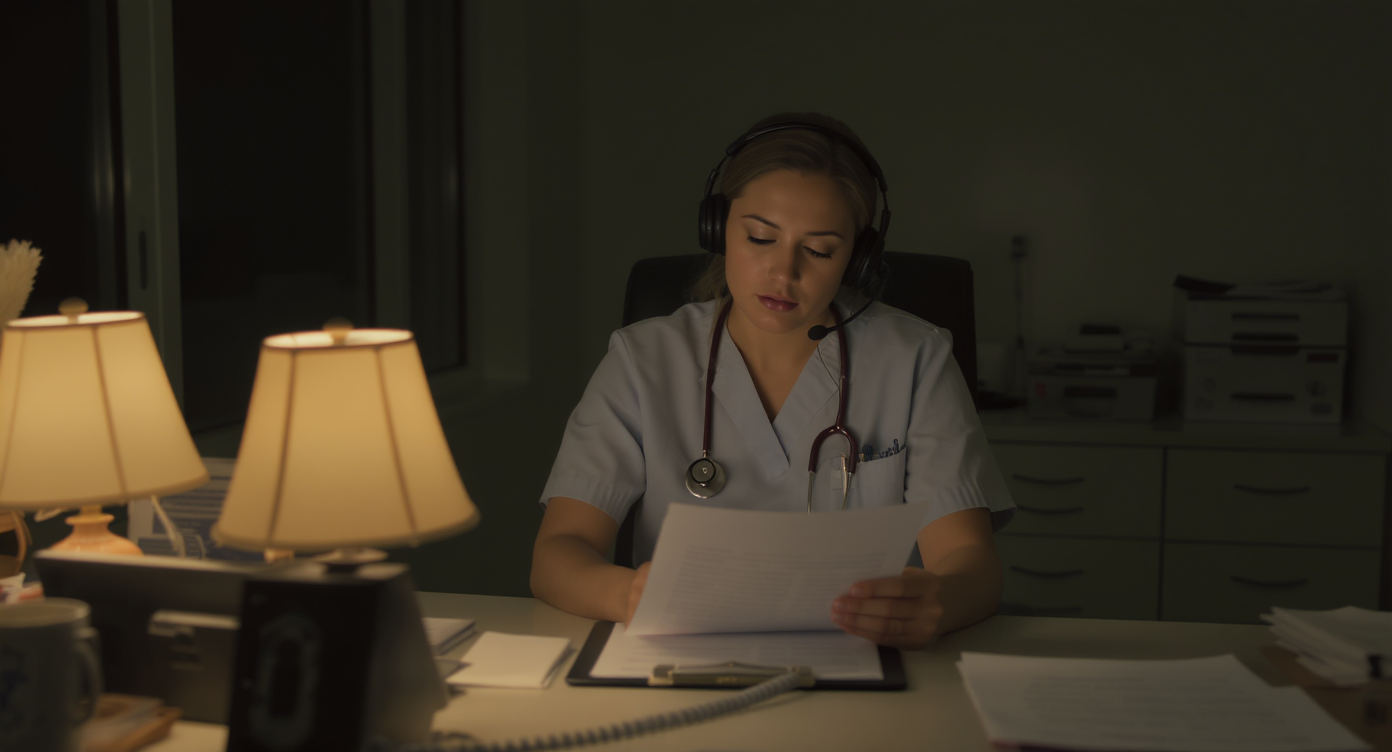
A patient calls your practice at 7:15 PM with a post-procedure question. Nobody picks up. They leave a voicemail, but by morning, they’ve already called a competitor or headed to the ER for something your staff could’ve handled in two minutes. Sound familiar? Knowing how to handle after hours calls for medical practices isn’t just an operational detail. It directly affects patient outcomes, revenue, and reputation.
Handling after hours calls for medical practices means managing patient contact outside regular operating hours through voicemail, answering services, or automated systems. This ensures urgent issues get triaged properly, prevents patients from seeking emergency care unnecessarily, and protects your practice’s reputation and revenue.
Free weekly newsletter
Growth tips for dental & medical practices
Every Tuesday — actionable ideas to get more leads, reviews, and repeat customers. No fluff.
Quick Answer
Medical practices should use automated answering services, voicemail systems, or live answering services to capture after-hours calls. Route urgent messages to on-call physicians, schedule non-emergency callbacks for business hours, and provide patients with clear instructions for emergencies. This approach reduces missed appointments, improves patient satisfaction, and protects your practice from liability while maintaining continuity of care.
What Are After-Hours Calls in Medical Practices?
After-hours calls are any patient calls that come in outside your practice’s regular operating hours. For most medical offices, that means evenings, weekends, holidays, and lunch breaks. These calls range from appointment requests and prescription refills to urgent symptom concerns that need immediate triage.
Related guide: how to handle after hours calls for pest control companies.
Here’s the challenge: patients don’t get sick on a schedule. Yet most practices operate on one. According to recent missed call benchmarks, a significant portion of calls to small businesses go unanswered. Medical practices are no exception. Every unanswered call is a missed opportunity—to provide care, retain a patient, or capture revenue.
Why After-Hours Call Management Matters for Patient Care and Revenue
Patient Safety and Satisfaction
When patients can’t reach your practice, they make decisions without clinical guidance. Some delay necessary care. Others flood emergency departments with non-emergent issues. This drives up healthcare costs for everyone. A study referenced by the CDC’s emergency department data shows that millions of ER visits annually could be handled in primary care or urgent care settings. Better after-hours communication could redirect many of those visits.
Patient satisfaction suffers too. People remember when they couldn’t reach their doctor. That frustration compounds over time. Eventually, they switch providers. In an era where online reviews shape practice growth, one bad experience at 8 PM can cost you dozens of future patients.
Revenue You’re Leaving on the Table
Missed calls aren’t just a service problem. They’re a revenue problem. Research from CallJolt’s analysis of missed call costs shows that each unanswered call can represent hundreds of dollars in lost business. For medical practices, where a single new patient relationship might be worth thousands annually, the math gets painful quickly.
Consider appointment scheduling alone. A patient calling at 6 PM to book a check-up won’t wait until tomorrow. They’ll search for another provider. Multiply that by five or ten calls per week, and you’re looking at significant annual revenue loss without even realizing it.
Staff Burnout and Operational Strain
Here’s what happens in many practices: front desk staff arrive each morning to a pile of voicemails. They spend the first hour returning calls. Many of these go to voicemail themselves, creating an endless phone tag cycle. Meanwhile, patients in the waiting room get less attention. The morning schedule falls behind before it even starts.
On-call physicians face their own version. Without proper call screening and triage, doctors get woken up for non-urgent matters. Over time, that leads to burnout. The American Medical Association has identified this as a critical issue affecting physician retention and care quality.
📺 Watch: After-Hours Call Routing Setup: Never Miss a Lead
Proven Methods to Handle After-Hours Calls Effectively
There’s no single right answer for every practice. The best approach depends on your patient volume, specialty, budget, and compliance requirements. But several proven methods exist. Each has distinct trade-offs.
Traditional Answering Services
Human answering services have been the default for decades. A live operator answers calls using your protocols. They triage based on urgency and page on-call staff when necessary. The upside? Patients talk to a real person. The downside? Cost adds up fast, especially for practices with high after-hours call volume. Quality varies widely between services. And HIPAA compliance isn’t guaranteed with every provider.
On-Call Rotation with Nurse Triage
Larger practices often rotate on-call responsibilities among physicians or employ after-hours nurse triage lines. This model works well for clinical decision-making. But it creates staffing challenges. Finding nurses willing to work overnight shifts is expensive. And physician on-call burnout is a real concern.
AI-Powered Phone Agents
AI voice agents represent the newest category. And they’re changing the economics entirely. Instead of paying per minute for human operators, an AI phone agent answers every call instantly. The conversation sounds natural and flows well. It can:
- Answer common patient questions about office hours, locations, and accepted insurance
- Book, confirm, or reschedule appointments without human involvement
- Triage calls based on urgency keywords and route emergencies to on-call staff
- Capture detailed messages with caller information for morning follow-up
- Block spam and robocalls that waste staff time
- Provide consistent, compliant responses every single time
Unlike traditional answering services, AI agents don’t have shift changes, bad days, or training gaps. They follow your protocols exactly, 24/7. And because AI answering services charge per minute rather than per operator, costs stay predictable as call volume grows.
Missed-Call Text-Back
Even the best system won’t catch every call on the first ring. That’s where missed-call text-back comes in. When a call goes unanswered, the system automatically sends the patient a text acknowledging their call. It offers options like scheduling online, texting their question, or requesting a callback. This simple automation recovers a surprising number of interactions that would otherwise be lost entirely.
Choosing the Right Combination
Most successful practices don’t rely on just one method. They combine several layers. For example, an AI phone agent handles the front line. It answers FAQs and books appointments. Urgent calls get routed to an on-call nurse or physician. And any missed calls trigger an automatic text-back. What does that look like in practice? Benchmarking your current call handling performance against industry standards helps you identify which gaps need filling first.
Best Practices for HIPAA-Compliant After-Hours Communication
Medical practices can’t treat after-hours call handling like a regular business. HIPAA compliance adds a layer of complexity that eliminates some solutions and constrains others. Here’s what to get right.
- Secure message handling: Any system that captures patient information must encrypt data at rest and in transit. Voicemails, transcriptions, and call recordings all contain protected health information (PHI).
- Business Associate Agreements: Every third-party vendor touching patient data needs a signed BAA. This applies to answering services, AI platforms, and even your phone provider.
- Minimum necessary standard: After-hours systems should collect only the information needed to handle the call. An appointment booking doesn’t need a patient’s full medical history.
- Audit trails: Maintain records of who accessed what information and when. Call recordings, transcriptions, and summaries should be stored with clear access logs.
- Staff training: Even with automation handling most calls, on-call staff who receive escalated calls need regular HIPAA refresher training on phone communication protocols.
Practices that skip these steps expose themselves to serious legal liability. HIPAA violations carry fines ranging from $100 to $50,000 per incident. And that’s before you factor in reputational damage. Getting compliance right from the start is far cheaper than fixing a breach later.
How SalesCaptain Helps Medical Practices Handle After-Hours Calls
SalesCaptain’s AI Phone Agent was built for exactly this scenario. When your office closes, the AI agent takes over. It answers every call with natural-sounding conversation tailored to your practice’s specific protocols. It handles appointment booking, answers FAQs about your office, blocks spam calls, and routes genuinely urgent matters to your on-call team through custom call flows.
What makes this different? The depth of automation. SalesCaptain’s call flow builder lets you design exactly how each type of call gets handled. From initial greeting through resolution. After-hours calls that result in booked appointments sync directly with your existing systems through integrations with tools like HubSpot, Salesforce, and Zoho. Plus, every call gets an AI-generated summary and transcription. Your morning staff can review overnight activity in minutes rather than listening to a stack of voicemails.
The unified inbox pulls together calls, texts, webchat messages, and social media DMs into one view. So if a patient calls after hours and then texts a follow-up question, your team sees the complete conversation in one place. Missed-call text-back is built in. It automatically engages patients who don’t connect on the first try. At $0.12 per minute for AI calls, the cost is a fraction of what human answering services charge. And there’s a free plan available for practices that want to test the system with a single location.
Key Takeaways
After-hours call handling isn’t optional for medical practices that want to retain patients, protect revenue, and reduce staff burnout. The stakes are higher than in most industries. Patient safety is directly involved.
- Missed after-hours calls lead to lost patients, unnecessary ER visits, and morning workflow chaos.
- The best strategies layer multiple solutions: AI phone agents for front-line answering, nurse triage for clinical escalation, and missed-call text-back for recovery.
- HIPAA compliance must be baked into every tool and process, not bolted on after the fact.
- AI-powered phone agents offer 24/7 coverage at a fraction of the cost of human answering services, with more consistency and built-in documentation.
- Practices that quantify their missed call costs are far more likely to invest in the right solution before the problem compounds.
The practices that handle after-hours communication well don’t just avoid problems. They build stronger patient relationships. They capture more revenue. They give their staff a better working environment. That’s not a nice-to-have. It’s a competitive requirement.
FAQ
How many after-hours calls does a typical medical practice miss each week?
It varies by specialty and patient volume. Most small to mid-size practices miss between 20 and 40 calls per week outside business hours. Some are appointment requests. Some are clinical questions. A portion are spam. Without a tracking system in place, many practice owners don’t realize the true volume until they measure it.
Are AI phone agents secure for medical practices?
AI phone agents can be secure. But it depends on the vendor. Look for platforms that offer encrypted data handling. Check for secure storage of call recordings and transcriptions. And make sure they’re willing to sign a Business Associate Agreement. Not every AI answering service meets these requirements. So ask directly before committing.
What’s the difference between an AI phone agent and a traditional answering service?
A traditional answering service uses human operators who follow scripts. They take messages and route calls. An AI phone agent uses conversational AI to do the same tasks. But it also books appointments, answers FAQs dynamically, and handles unlimited concurrent calls without wait times. AI agents typically cost less per minute. They deliver more consistent responses. Human services offer a personal touch for complex or emotionally sensitive calls.
Can after-hours call automation really reduce ER visits?
Yes, though the impact depends on your patient population and specialty. When patients can reach a triage system or get their questions answered after hours, many situations that would trigger an ER visit get resolved instead. Patients get guidance, a next-day appointment, or reassurance. Primary care and pediatric practices tend to see the most significant reduction.
How should a medical practice measure whether its after-hours call handling is working?
Track four metrics: call answer rate (percentage of after-hours calls that get a live or AI response), patient callback completion rate, appointment bookings from after-hours calls, and patient satisfaction scores related to accessibility. Benchmarking guides for small businesses can help you set realistic targets based on your practice size and specialty.
Ready to see it in action?
See how medical practices use SalesCaptain to capture every after-hours call automatically.
Book a Free Demo →See How SalesCaptain Can Help Your Practice Handle Every After-Hours Call
SalesCaptain’s AI Phone Agent answers patient calls 24/7, books appointments, triages urgent matters, and gives your morning staff a clear summary of overnight activity. Stop losing patients to voicemail and start capturing every opportunity.