
AI-powered customer experience marketing (CXM) platform that helps local businesses win.


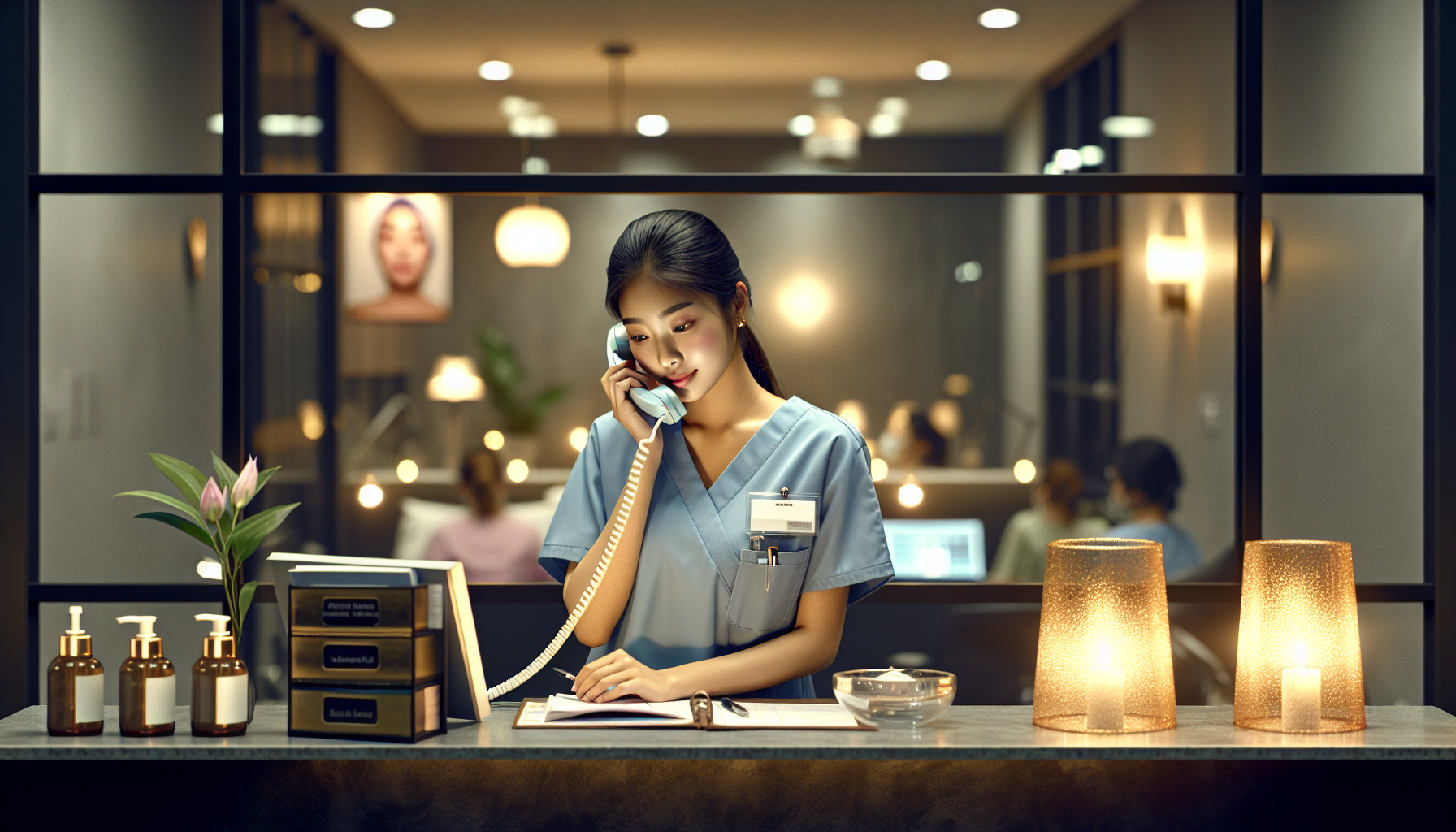
A potential client calls your medspa at 7:45 PM to book a Botox consultation. Nobody answers. By the time your front desk sees the voicemail the next morning, she’s already booked with the clinic down the street. Sound familiar? It’s happening at medspas every single evening, and figuring out how to handle after hours calls for medspa businesses is the difference between steady growth and a slow revenue leak you can’t quite explain.
Handling after hours calls for medspa means capturing inbound leads when your front desk is unavailable. High-intent clients often call evenings and weekends to book treatments. Solutions include voicemail systems, call forwarding, automated responses, or answering services that ensure no qualified prospect is lost to competitors.
Free weekly newsletter
Growth tips for dental & medical practices
Every Tuesday — actionable ideas to get more leads, reviews, and repeat customers. No fluff.
Quick Answer
After-hours calls for medspas should be handled through an automated answering service, voicemail system, or live virtual receptionist that captures caller information and schedules appointments for the next business day. Implementing a callback option, SMS confirmation system, or chatbot on your website ensures no leads slip away after closing time. The key is acknowledging inquiries immediately and following up within 24 hours to convert interested prospects into booked appointments.
What Are After-Hours Calls and Why Do They Matter for Medspas?
After-hours calls are any inbound calls that arrive when your front desk isn’t staffed. For most medspas, that means evenings after 5 or 6 PM, weekends, holidays, and lunch breaks. But here’s the thing: these aren’t just informational inquiries. Many are high-intent prospects ready to book treatments worth hundreds or thousands of dollars.
Medspas operate in a unique space. Your clients are often working professionals who browse treatment options during their own downtime, which rarely aligns with your business hours. According to recent missed call statistics, a significant percentage of business calls go unanswered, and the majority of callers who reach voicemail won’t leave a message. They’ll just call the next provider. So the question isn’t whether you’re losing revenue after hours. What does that look like in practice? It’s how much.
The True Cost of Missed After-Hours Calls
Let’s put some numbers around this. If your average medspa treatment runs $400 to $600, and you miss just three after-hours calls per week from people ready to book, that’s roughly $5,000 to $7,500 in lost monthly revenue. The math gets worse. Over a year, you’re looking at $60,000 to $90,000 walking out the door. And that doesn’t account for the lifetime value of those clients, who might’ve returned for fillers, facials, and laser treatments for years.
The problem compounds because data on revenue conversion gaps shows that small businesses consistently underestimate how many leads they lose between initial contact and booking. For medspas specifically, speed matters. A prospective client researching lip filler at 8 PM on a Tuesday has likely narrowed their options to two or three clinics. Whichever one responds first wins.
Beyond Revenue: Reputation and Retention
Missed calls don’t just cost you new clients. They erode trust with existing ones. When a current client calls after a treatment with a concern and can’t reach anyone, their anxiety spikes. That anxiety turns into negative reviews. According to the U.S. Small Business Administration, understanding your competitive landscape is essential for retention, and responsiveness is one of the easiest competitive advantages to establish.
📺 Watch: After-Hours Call Routing Setup: Never Miss a Lead
Common Approaches to After-Hours Call Handling
Medspas typically try one of four approaches to solve this problem. Each has trade-offs worth understanding before you commit.
Extended Front Desk Hours
Hiring additional staff to cover evenings and weekends is the most straightforward option. However, it’s also the most expensive. You’re paying $15 to $25 per hour for someone to sit at the desk during periods when call volume is unpredictable. Some nights you’ll get ten calls. Others, you’ll get one. Either way, you’re paying the same labor cost. Plus, you still won’t have coverage for holidays or the gap between midnight and morning.
Traditional Answering Services
Third-party answering services use human operators to pick up your calls. They’re better than voicemail. But they come with real limitations:
- Operators don’t know your treatment menu, pricing, or contraindications
- They can’t answer specific questions about procedures like microneedling protocols or downtime for chemical peels
- Per-minute pricing adds up fast, especially if callers have detailed questions
- Callers often sense they’re talking to a generic call center, which feels inconsistent with a premium medspa brand
Services like Smith.ai and Ruby use human receptionists, and while they’re professional, their per-call pricing model doesn’t scale well for medspas handling a high volume of detailed inquiries. You’re essentially paying premium rates for someone reading a script.
Online Booking Only
Some medspas push all after-hours traffic to an online booking widget. That works for clients who already know exactly what they want. But it completely abandons the caller who’s researching, comparing options, or has a question before committing. According to research on missed call costs for small businesses, many callers prefer voice communication because they want reassurance before booking a medical aesthetic procedure. A booking page doesn’t address that need.
AI-Powered Phone and Chat Agents
The newest approach uses AI voice agents that sound natural, understand context, and handle conversations the way a trained receptionist would. Unlike answering services, AI agents can be taught your exact treatment offerings, pricing tiers, pre-treatment instructions, and booking workflows. They don’t charge per minute in the traditional sense. They never call in sick or show up distracted.
Best Practices for After-Hours Medspa Call Handling
Regardless of which approach you choose, certain principles separate effective after-hours systems from ones that just check a box.
Prioritize Appointment Booking Above Everything
Your after-hours system’s primary job is converting callers into booked appointments. Every other function—answering FAQs, providing directions, describing treatment options—should funnel toward that outcome. If a caller asks about pricing for Sculptra, the ideal response isn’t just “$800 per vial.” It’s the price plus an immediate offer to schedule a consultation. Make sure whatever solution you use is built around appointment capture, not just message taking.
Cover All Communication Channels
Phone calls aren’t the only after-hours inquiries you’ll receive. Prospective clients reach out through Instagram DMs, Facebook Messenger, website chat widgets, and SMS. A comprehensive after-hours strategy covers all of these channels, not just voice. Think about it: someone sees your before-and-after photos on Instagram at 9 PM and sends a DM asking about availability. If that DM sits unanswered until the next business day, you’ve likely lost them.
Customize Responses for Medical Aesthetics
Generic scripts won’t cut it. Your after-hours system needs to handle questions specific to your industry:
- Pre-treatment preparation instructions (stop retinol, avoid blood thinners)
- Post-treatment concerns (swelling timelines, when to call back urgently)
- Treatment comparisons (Botox vs. Dysport, laser vs. IPL)
- Pricing transparency for common procedures
- Membership or package details if you offer them
According to a recent analysis of AI answering services, the most effective solutions allow businesses to train the system on their specific knowledge base rather than relying on generic templates.
Build a Follow-Up Workflow
Not every after-hours caller will book on the spot. Some need a follow-up text the next morning. Others want a callback from a specific provider. Your system should automatically trigger the right next step based on the conversation outcome. A missed follow-up is almost as bad as a missed call. What separates growing medspas from stagnant ones is often this exact discipline: consistent, fast follow-through on every inquiry.
Track and Measure Everything
You can’t improve what you don’t measure. Your after-hours solution should give you clear data on call volume by time of day, conversion rates, common questions, and missed opportunities. SCORE’s guidance on using data to improve small businesses reinforces that even basic call analytics can reveal patterns you’d never spot otherwise. Maybe your highest-value calls come in on Sunday afternoons. You won’t know unless you’re tracking.
How SalesCaptain Helps
SalesCaptain was built for exactly this scenario. Its AI Phone Agent answers calls 24/7 with natural-sounding voice conversations. You train it on your medspa’s specific treatments, pricing, and booking rules. When a prospective client calls at 8 PM asking about lip filler, the AI agent explains your options, answers follow-up questions, and books the appointment directly into your calendar. No voicemail. No missed opportunity.
But phone calls are only part of the picture. SalesCaptain’s AI Chat Agents handle SMS, webchat, Instagram DMs, and Facebook Messenger with the same responsiveness. So when someone messages your Instagram at 10 PM, they get an instant, helpful reply instead of radio silence. All of these conversations—voice and text—flow into a single Unified Inbox where your team can see every interaction the next morning with full context, AI-generated summaries, and transcriptions.
The platform also includes a Workflow Automation builder that triggers follow-up texts, appointment reminders, and CRM updates automatically. If someone calls after hours but doesn’t book, SalesCaptain can send a follow-up text the next morning with a direct booking link. It integrates natively with tools like HubSpot, Salesforce, and Mindbody, so your existing systems stay in sync. Pricing starts with a free plan, with paid plans at $159/month per location. That’s a fraction of what you’d spend on extended front desk hours or a human answering service.
Key Takeaways
Learning how to handle after hours calls for medspa businesses isn’t optional anymore. It’s a core operational requirement. Here’s what matters most:
- After-hours calls represent some of your highest-intent leads, and they won’t leave voicemails
- Traditional answering services can’t match the depth of knowledge medspa callers expect
- Effective after-hours handling requires covering voice, text, and social media channels
- AI-powered agents now offer 24/7 coverage with the ability to book appointments, answer detailed questions, and trigger follow-up workflows
- Tracking after-hours call data reveals revenue opportunities most medspas don’t realize they’re missing
Every unanswered evening call is a client your competitor gets instead. The medspas that solve this problem grow. The ones that don’t keep wondering why their marketing isn’t converting.
Frequently Asked Questions
How many after-hours calls does a typical medspa receive?
It varies by location and marketing volume, but most medspas report that 30% to 40% of their inbound calls arrive outside standard business hours. During promotional campaigns or seasonal peaks (spring and fall are heavy for aesthetic treatments), that percentage can climb even higher. Calculating the cost of your specific missed calls can help quantify the impact for your practice.
Can an AI phone agent handle complex medspa questions?
Yes, if the system allows custom training. With SalesCaptain’s AI Phone Agent, you provide your treatment menu, pricing, pre/post-care instructions, and booking rules. The agent uses that knowledge base to have detailed conversations. It won’t replace a provider’s clinical consultation, but it can confidently handle the vast majority of pre-booking questions that your front desk typically fields.
What happens if an after-hours caller has a medical concern?
Any well-configured after-hours system should include escalation rules. With SalesCaptain’s Call Flows, you can set specific triggers. If a caller describes symptoms that require immediate attention, the system can route the call to an on-call provider or provide emergency instructions while logging the interaction for follow-up.
Is an AI agent noticeable to callers compared to a human receptionist?
Modern AI voice agents sound remarkably natural. Most callers won’t notice a difference, especially when the agent is knowledgeable about your specific services. In fact, many callers prefer the instant response over waiting on hold or leaving a voicemail. The key is thorough training of the agent on your medspa’s specific terminology and procedures.
How quickly can I set up an after-hours call solution?
Traditional answering services can take one to two weeks to onboard with scripts and training. SalesCaptain’s AI Phone Agent can be configured and deployed without technical expertise. You’ll typically be up and running quickly or two. You’ll spend most of that time entering your treatment details, business hours, and booking preferences into the drag-and-drop builder.
Ready to see it in action?
See how medspas use SalesCaptain to capture every after-hours call and book appointments automatically.
Book a Free Demo →See How SalesCaptain Can Help
SalesCaptain gives your medspa an AI-powered phone and chat agent that answers every call, books appointments, and captures leads around the clock. Stop losing evening and weekend revenue to voicemail. Visit SalesCaptain.com to explore the platform and start your free plan today.