
AI-powered customer experience marketing (CXM) platform that helps local businesses win.


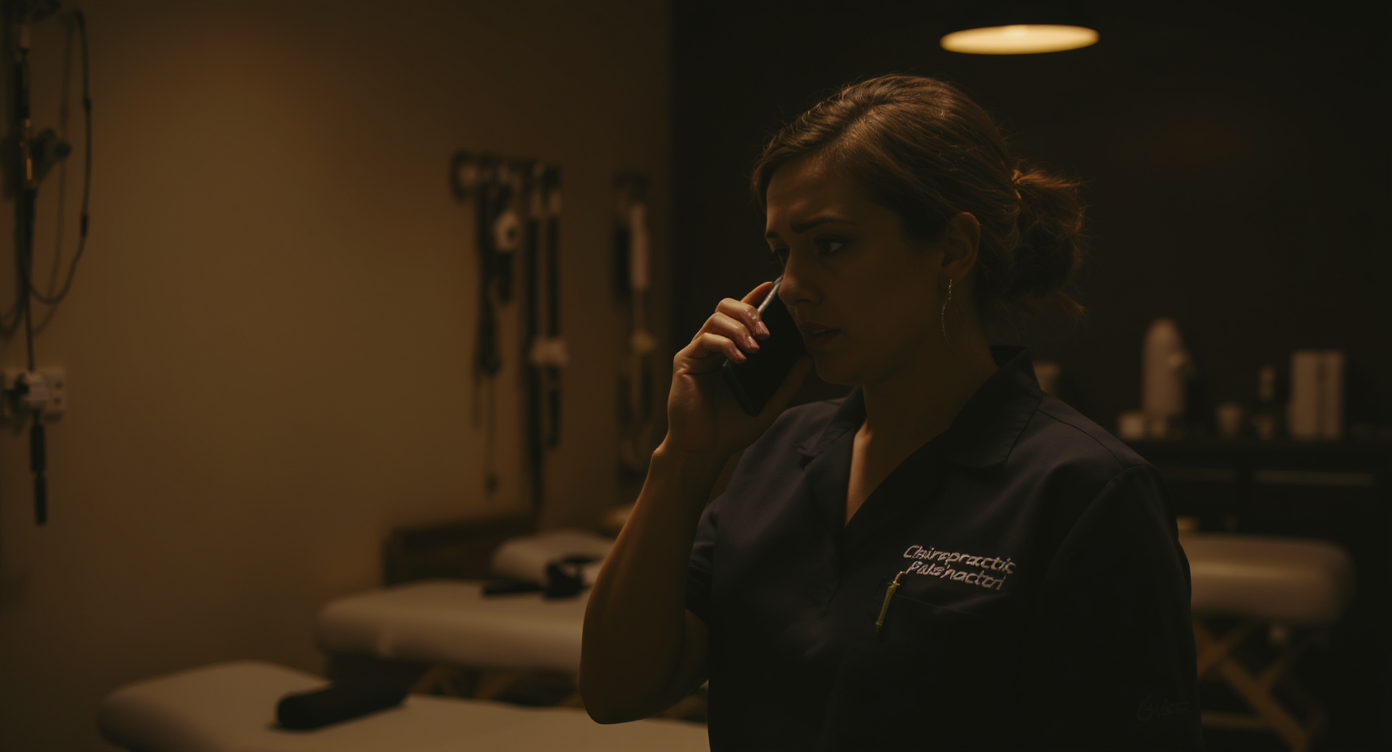
A patient wakes up at 11 PM with sharp lower back pain after a weekend gardening session. They grab their phone and call your chiropractic office. It rings six times, hits voicemail, and they hang up. By morning? They’ve already booked with the chiropractor down the street who texted them back instantly. Learning how to handle after hours calls for chiropractic offices isn’t just about being available. It’s about protecting revenue you’ve already earned through years of building trust in your community.Handling after-hours calls for chiropractic offices means managing inbound patient calls outside business hours through voicemail, answering services, or automated systems. These calls include appointment requests, rescheduling, and urgent pain issues. Responding promptly prevents patients from booking with competitors and protects your practice revenue.
Quick Answer
Chiropractic offices can handle after-hours calls by using automated answering services, voicemail-to-text transcription, call forwarding to on-call staff, or scheduling callback systems. Many practices implement a hybrid approach: an IVR menu directing urgent cases to an answering service while routine inquiries get captured for next-business-day callbacks. This ensures emergency patients receive immediate attention while non-urgent callers still feel heard without overloading staff.
Free weekly newsletter
Growth tips for dental & medical practices
Every Tuesday — actionable ideas to get more leads, reviews, and repeat customers. No fluff.
What Are After-Hours Calls in a Chiropractic Practice?
After-hours calls are any inbound calls that come in when your front desk staff isn’t available. For most chiropractic offices, that means evenings after 5 or 6 PM, weekends, lunch breaks, and holidays. These calls range from patients wanting to schedule or reschedule appointments to people experiencing acute pain episodes. They need guidance on whether they should seek emergency care.What makes chiropractic unique? The mix of urgency levels is unpredictable. Some callers have legitimate musculoskeletal emergencies, like severe sciatica or post-accident neck pain, that need triage. Others simply want to book their next adjustment. Both types of callers matter to your bottom line. According to research on missed call revenue loss, a significant percentage of callers who reach voicemail won’t leave a message. Even fewer will call back. That’s money walking out the door every single evening.The Real Cost of Missing Chiropractic Patient Calls
Think about what a single new patient is worth to your practice. Initial exam, X-rays, a treatment plan. That plan often spans weeks or months of regular visits. A missed call from a prospective patient doesn’t just cost you one appointment. It costs you the entire lifetime value of that patient relationship.Revenue That Disappears Quietly
Most chiropractic offices don’t track missed calls closely enough to see the damage. And that’s the problem. According to missed call statistics for small businesses, the average small business misses a substantial number of inbound calls each week. For a chiropractic office where treatment plans can run $1,000 to $2,000 or more, even a few lost patients per month adds up fast. We’re talking tens of thousands in annual revenue. Yet because you never spoke to those callers, the loss is invisible.Patient Trust and Retention
Existing patients who can’t reach you after hours face a different problem. They’re in pain. They’re anxious. They need reassurance now, not tomorrow. When your phone goes to a generic voicemail, it signals that their concern isn’t a priority. Over time, this erodes trust. Patients start looking for practices that feel more responsive, even if your clinical care is superior. Research from the U.S. Small Business Administration consistently shows that customer experience is a top factor in small business retention. It often outranks price.📺 Watch: After-Hours Call Routing Setup: Never Miss a Lead
How to Set Up an Effective After-Hours Call System
Building a reliable after-hours system for your chiropractic office requires thinking through three areas: triage protocols, patient communication, and technology. Here’s how to approach each one practically.Define Your Emergency Criteria First
Before you choose any tool or service, you need clear guidelines. What counts as a chiropractic emergency versus routine care? Your staff, your answering system, and your patients all need to understand these boundaries. Emergencies that warrant immediate action typically include:- Sudden loss of bladder or bowel control alongside back pain (possible cauda equina syndrome)
- Severe pain following a car accident, fall, or sports injury
- Numbness or weakness spreading rapidly through a limb
- Post-adjustment symptoms that feel abnormal, like sudden severe headache or dizziness
Set After-Hours Pricing and Expectations
If you offer any form of on-call or emergency consultation outside normal business hours, be upfront about fees. Patients appreciate transparency far more than surprises on their bill. Consider publishing your after-hours policy on your website. Have your phone system communicate it clearly. Some practices charge a premium for emergency Saturday appointments. Others simply reserve a few slots each week for urgent cases. Either approach works. Just make sure patients know what to expect before they need it.Choose the Right Technology for Your Practice Size
Your options range from simple to sophisticated. The right choice depends on your call volume and budget. Here’s what’s available:- Basic voicemail with callback: The cheapest option but the lowest conversion rate. Most patients won’t leave a message.
- Call forwarding to a personal cell: Keeps you connected but destroys work-life balance. Burnout follows quickly.
- Traditional answering services: Human operators take messages and follow scripts, but they can’t book appointments or answer clinical questions.
- AI phone agents: Automated voice systems that sound natural, answer common questions, book appointments directly into your calendar, and triage urgent calls, all without waking you up at midnight.
- Missed call text-back: Automatically sends an SMS to any caller you can’t answer, keeping the conversation alive even when the phone goes unanswered.
Preventing Staff Burnout While Staying Available
Here’s a tension every chiropractic practice owner knows: you want to be there for your patients around the clock. But you and your staff are human. Forwarding after-hours calls to your personal phone feels responsible at first. Within months, it becomes a source of constant stress. Every ring triggers a decision. Is this urgent enough to answer, or can it wait until morning?Burnout among chiropractors is a real concern. It’s often the invisible overhead of running a small practice. According to small business statistics compiled by Fit Small Business, business owners commonly cite always-on availability as a primary driver of stress. Automating after-hours communication isn’t about being less available to patients. It’s about being more consistently available without the personal cost.When you automate the routine stuff (scheduling, FAQ answering, basic triage), you free yourself to only handle the calls that genuinely need your clinical judgment. That’s sustainable. The alternative, answering every call personally, isn’t.How SalesCaptain Helps
SalesCaptain’s AI Phone Agent was built for exactly this scenario. It answers every call to your chiropractic office 24/7 with a natural-sounding voice. No robotic menu trees. Patients calling at 9 PM about their sore neck get their questions answered immediately. Those who want to book an appointment get scheduled on the spot. Directly into your calendar. And callers with red-flag symptoms get routed to your emergency on-call number based on the triage criteria you define.Beyond the phone, there’s more. SalesCaptain’s missed call text-back feature automatically sends an SMS to anyone who hangs up before connecting. You don’t lose that patient to a competitor. Every interaction flows into the Unified Inbox. Your front desk team can see the full history the next morning: call transcriptions, AI-generated summaries, and any follow-up tasks flagged during the conversation.What makes this practical for chiropractic offices? The setup is simple. You don’t need technical skills to configure call flows. The drag-and-drop builder lets you create custom paths. Route new patient calls differently from existing patients. Play a specific after-hours greeting before the AI agent takes over. Plus, SalesCaptain integrates with tools like HousecallPro and Zapier. Appointment data syncs without manual entry.Pricing is straightforward too. A free Startup plan covers a single location. The Business plan at $159/month per location gives multi-location practices everything they need. AI call minutes run $0.12 each. That’s dramatically less than what traditional answering services or human receptionists charge per interaction.Key Takeaways
Handling after-hours calls well comes down to preparation and the right technology. Define your emergency triage criteria clearly. Urgent cases get immediate attention. Routine requests get handled automatically. Set transparent pricing and expectations for any after-hours services you offer. And choose a system that doesn’t require you or your staff to be glued to a phone every evening.The chiropractic offices that thrive aren’t necessarily the ones with the best clinical skills alone. They’re the ones that never miss a patient’s call. They don’t lose leads to slow response times. And they never burn out their team in the process. Automation makes that possible without adding headcount. The ROI is measurable within the first month.Frequently Asked Questions
Should a chiropractic office answer calls after hours or use voicemail?
Voicemail alone results in a high percentage of callers hanging up without leaving a message. A better approach is an AI phone agent or missed call text-back system. It engages callers immediately, books appointments, and routes emergencies. This captures far more leads than voicemail. Your staff stays off the clock too.How do I decide what counts as a chiropractic emergency after hours?
Focus on red-flag symptoms. Loss of bowel or bladder control with back pain. Rapidly spreading numbness. Severe post-accident pain. Unusual symptoms following a recent adjustment. Everything else—scheduling, general soreness, insurance questions—can be handled by an automated system. Follow up during business hours.How much does a missed after-hours call cost a chiropractic practice?
A single new patient’s treatment plan often ranges from $1,000 to $2,000 or more over several months. According to research on the hidden cost of missed calls, most callers who reach voicemail won’t try again. Even two or three lost new patients per month can mean $30,000 to $70,000 in lost annual revenue.Can an AI phone agent handle appointment booking for chiropractic patients?
Yes. Modern AI phone agents connect directly to your scheduling software. They can book, reschedule, or cancel appointments during the call. Patients get instant confirmation. Your front desk sees the updated calendar the next morning. No manual data entry needed.Will patients feel comfortable talking to an AI agent instead of a real person?
Today’s AI voice agents sound natural and conversational. Not like the clunky phone menus of the past. Most patients care more about getting a fast, helpful response. They don’t care whether a human delivered it. In fact, many prefer the convenience of handling scheduling through an AI. Waiting on hold or leaving voicemails isn’t fun.Ready to see it in action?
See how chiropractic offices use SalesCaptain to capture after-hours calls and book appointments automatically.
Book a Free Demo →