
AI-powered customer experience marketing (CXM) platform that helps local businesses win.


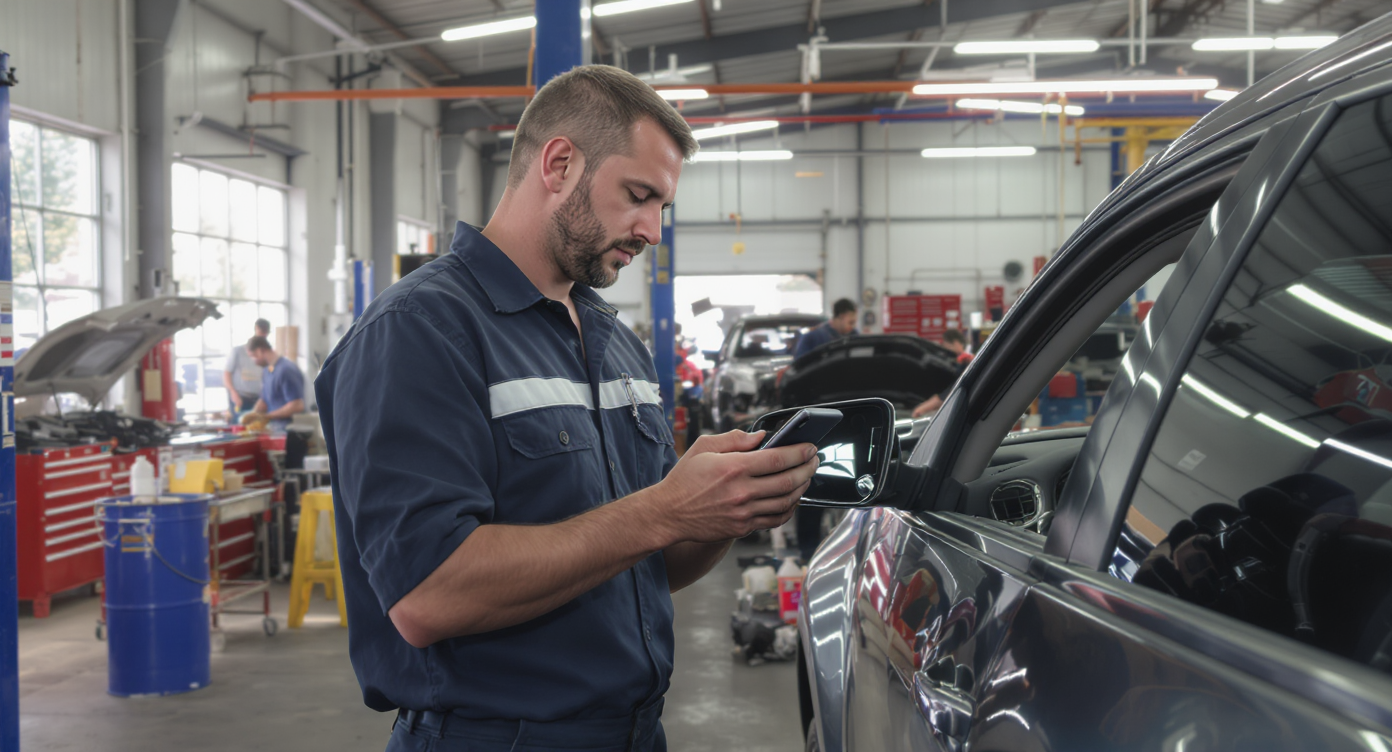
Every missed call at your auto body shop is a lost estimate, a lost repair job, and a lost customer who’ll call the next shop on Google. Sound familiar? Between insurance adjusters, walk-in customers, and parts suppliers all calling at once, your front desk can only handle so much. Finding the best phone system for auto body shops isn’t about getting a fancier handset. It’s about making sure every call gets answered, every lead gets captured, and your team stops drowning in phone tag.
The best phone system for auto body shops is a modern VoIP solution that routes calls efficiently, captures every lead, and handles simultaneous calls from insurance adjusters, customers, and suppliers. It replaces traditional landlines with internet-based calling, text messaging, call recording, and automated features that reduce missed opportunities and keep your front desk from getting overwhelmed.
Free weekly newsletter
Growth tips for auto dealerships & repair shops
Every Tuesday — actionable ideas to get more leads, reviews, and repeat customers. No fluff.
Quick Answer
Auto body shops need phone systems with call routing, voicemail-to-text, and integration with scheduling software to capture every job inquiry. Cloud-based systems offer flexibility and lower upfront costs, while features like call recording and customer history tracking help technicians provide better service and reduce repeat calls, ultimately improving customer satisfaction and revenue.
What Makes a Phone System Right for Auto Body Shops
A business phone system replaces your traditional landline with a modern solution that routes calls, sends texts, records conversations, and often runs through the internet (VoIP) instead of copper wiring. For auto body shops specifically, the right system needs to handle a unique mix of communication: insurance company calls, customer status updates, parts vendor coordination, and new estimate requests. Often all at once.
What separates a generic phone system from one that actually works in a collision repair environment? According to Voksha’s guide to small business phone systems, the core requirements include call routing, voicemail management, multi-line handling, and mobile access. But auto body shops have additional needs that most guides overlook: the ability to text photos of damage to customers, route insurance adjuster calls differently from new leads, and keep communication flowing even when technicians are in the shop bay and can’t pick up a desk phone.
Why Auto Body Shops Lose Revenue from Poor Phone Systems
The Real Cost of Missed Calls
Here’s a number that should make any shop owner uncomfortable: research from CallSetter shows that missed calls can cost businesses over $100,000 per year in lost revenue. For auto body shops, where the average repair ticket runs $3,000 to $5,000, just a few missed estimate calls per week add up fast. And most shop owners don’t even realize how many calls they’re losing.
Your front desk person is simultaneously checking in a vehicle, explaining a repair timeline to someone in the lobby, and fielding a call from an adjuster. The phone rings again. It goes to voicemail. That caller—a potential $4,000 repair—calls the shop down the street. According to Zadarma’s research on missed call costs, 85% of people whose calls go unanswered won’t call back. They simply move on.
Communication Chaos Across Channels
Modern auto body shop communication isn’t just phone calls anymore. Customers text photos of their damage. Insurance companies send emails. Your DRP partners might reach out via specific portals. Parts suppliers call about backorders. When all of this lives in separate places, details slip through the cracks. And that’s when you get the angry customer who was told their car would be ready Tuesday but nobody communicated the delay.
The IDC’s 2024 SMB Communications Services Survey confirms what most shop owners already feel: businesses that unify their communication channels see measurable improvements in customer satisfaction and operational efficiency. Yet most collision repair shops still juggle a desk phone, personal cell phones, a shared email inbox, and maybe a Facebook page that nobody monitors consistently.
Features to Prioritize When Choosing a Phone System
Not every feature matters equally for a collision repair business. Here’s what actually moves the needle for auto body shops, ranked by impact on your daily operations.
Must-Have Features
- Call routing and IVR: Route insurance adjusters to your estimator, new customers to your front desk, and parts calls to your production manager. A simple phone tree (“Press 1 for estimates, press 2 for repair status”) saves your staff from playing receptionist all day.
- After-hours call handling: Accidents don’t happen on a 9-to-5 schedule. Your phone system needs to capture after-hours callers, whether through voicemail, automated text responses, or an AI agent that can actually book an estimate appointment at 9 PM on a Saturday.
- SMS and text messaging: Texting repair photos, status updates, and payment links is faster and more convenient than phone calls for both you and your customers. According to FinancesOnline’s business phone statistics, businesses that incorporate text messaging into their communication see significantly higher customer response rates.
- Call recording and transcription: When an insurance adjuster gives you verbal authorization or a customer approves additional work over the phone, having a recording protects your shop. Transcriptions make it easy to search for specific conversations later.
- Mobile access: Your estimators are in the parking lot, your techs are in the bay, and your manager is at the paint booth. Everyone needs to make and receive calls from the business number on their mobile device without giving out personal cell numbers.
High-Impact Features Worth Paying For
- Missed-call text-back: When a call goes unanswered, an automatic text fires immediately: “Thanks for calling [Shop Name]. We’re with a customer right now. How can we help?” This single feature can recover leads that would otherwise disappear.
- Unified inbox: One place to see every call, text, email, and social media message. No more checking four different apps to find that one conversation with the customer about their bumper repair.
- AI-powered call answering: A natural-sounding AI agent that can answer common questions (“Do you work with State Farm?”, “What are your hours?”, “Can I get an estimate?”) and book appointments without any human involvement. As TRTC’s buyer’s guide to AI receptionists notes, these systems have matured rapidly and now handle routine calls convincingly.
- Workflow automation: Automatically send a follow-up text two hours after an estimate call if no appointment was booked. Send a review request when a repair is completed. These automations run in the background and keep leads from going cold.
How Popular Phone Systems Compare for Auto Body Shops
Most phone system comparisons focus on general businesses. But auto body shops have specific needs: high call volume during certain hours, insurance-related call routing, text-heavy customer communication, and limited front desk staff. Here’s how some well-known options stack up against those requirements.
| Feature | SalesCaptain | OpenPhone | Nextiva | Dialpad | RingCentral |
|---|---|---|---|---|---|
| AI Voice Agent (24/7 answering) | Yes | No | No | No | No |
| Missed-Call Text-Back | Yes | No | No | No | No |
| Unified Inbox (calls, texts, social) | Yes | Limited | Limited | Limited | Limited |
| Call Coaching and Whispering | Yes | No | No | No | No |
| High Volume SMS | Yes | No | Capped (250/user/mo) | No | No |
| Payments via Text | Yes | No | No | No | No |
| Workflow Automation Builder | Yes | No | Basic | Basic | Basic |
| Per-Location Pricing | From Free | $15/user | $20/user | $15/user | $20/user |
Per-user pricing models can get expensive quickly for auto body shops. Think about it: if you’ve got three estimators, two front desk staff, and a shop manager all needing phone access, per-user costs at $15-$30 each add up to $90-$180 per month before you’ve even made a call. Per-location pricing works differently. It covers your entire team under one predictable cost. Also worth noting: OpenPhone lacks call coaching and whispering features, Nextiva caps SMS at 250 messages per user per month (which most busy shops will blow through in a week), and none of these traditional VoIP providers offer a true AI voice agent that can answer calls and book estimates on its own.
How SalesCaptain Helps Auto Body Shops
SalesCaptain was built for exactly the kind of communication challenges auto body shops face. Rather than bolting AI onto a traditional phone system, it’s a unified communication platform. AI agents, phone service, texting, and workflow automation all work together from day one.
For collision repair shops, the most impactful feature is the AI Phone Agent. It answers every call with a natural-sounding voice, 24 hours a day. When a potential customer calls at 7 PM after discovering fresh damage on their car, the AI agent can answer their questions, confirm you work with their insurance carrier, and book an estimate appointment. All without a human touching the phone. It also blocks spam calls, which any shop owner knows are a constant annoyance.
Beyond voice, SalesCaptain’s unified inbox pulls every communication channel into one screen. Calls, texts, webchat conversations, Facebook messages, and Instagram DMs all appear in a single team-friendly interface. Your estimator can see the text thread where a customer sent damage photos, read the AI-generated call summary from their initial inquiry, and pick up exactly where the conversation left off. No context lost. No repeated questions.
The workflow automation builder handles the follow-up that busy shops always intend to do but rarely execute consistently. You can set up automated sequences like: send a text two hours after a missed estimate call, trigger a review request when a repair is marked complete in your management system, or automatically notify your parts department when a new job is scheduled. With integrations into tools like 50+ business platforms including HubSpot, Salesforce, Zapier, and QuickBooks, these automations can connect directly to the software your shop already uses.
Pricing starts with a free plan for a single location, with paid plans at $159 per month per location. That covers your whole team, not per user. For a busy collision center, that’s typically less than what you’d pay for three users on competing platforms.
Key Takeaways
The best phone system for auto body shops isn’t the one with the most features on a spec sheet. It’s the one that captures every call, keeps your team organized across channels, and handles communication automatically when your staff is busy with repairs. Here’s what matters most:
- After-hours call handling and missed-call text-back prevent the revenue loss that most shops don’t even measure.
- SMS capability is essential, not optional, for modern customer communication in collision repair.
- Per-location pricing is almost always cheaper than per-user pricing for shops with multiple staff members.
- AI voice agents can handle routine calls (hours, insurance questions, estimate scheduling) without adding headcount.
- A unified inbox eliminates the chaos of managing calls, texts, and messages across separate apps.
Your phone system should work as hard as your technicians do. If yours isn’t capturing leads after hours, texting customers automatically, and keeping every conversation in one place, it’s costing you money every single day.
Frequently Asked Questions
How much does a business phone system cost for an auto body shop?
Costs vary widely depending on the pricing model. Per-user systems like OpenPhone ($15/user) or RingCentral ($20/user) can run $75-$180 per month for a typical shop with 3-6 staff. Per-location platforms like SalesCaptain start with a free plan and go up to $159-$300 per month covering your entire team. Usually that’s more cost-effective for shops with multiple employees.
Can an AI phone agent really handle calls for a collision repair shop?
Yes, for the most common call types. AI voice agents handle questions about hours, location, insurance acceptance, and estimate scheduling with natural-sounding conversation. They won’t replace your estimator for detailed supplement discussions with an adjuster. But they’ll capture the 60-70% of calls that are routine inquiries or appointment requests, especially after hours when nobody’s at the desk.
Do I need a separate texting service, or should my phone system include it?
Your phone system should absolutely include texting. Running a separate service means another login, another monthly bill, and another place where customer conversations get lost. Look for a system that lets you text from the same business number you take calls on. And make sure there aren’t restrictive caps on monthly message volume. Busy shops can easily send hundreds of texts per month with status updates, photo requests, and payment links.
What happens to my existing business phone number if I switch systems?
Nearly all modern phone systems support number porting, which means you keep your existing number. The process typically takes 1-3 weeks depending on your current provider. During the transition, calls are forwarded so you don’t miss anything. Always confirm porting is supported and free before signing up with any provider.
Is a VoIP phone system reliable enough for a busy auto body shop?
With a decent internet connection, absolutely. According to Calilio’s business phone statistics, VoIP adoption among small businesses has grown steadily because reliability has improved dramatically. SalesCaptain, for example, offers 99.99% uptime. The key is having a stable internet connection, ideally with a backup. If your shop already uses cloud-based management software, your internet is likely sufficient for VoIP.
Ready to see it in action?
See how auto body shops use SalesCaptain to capture every customer call and booking.
See How SalesCaptain Can Help Your Auto Body Shop
SalesCaptain gives your collision repair shop an AI phone agent that answers every call, a unified inbox for all your communication channels, and workflow automation that keeps leads from slipping away. Per-location pricing means your whole team is covered without per-user costs adding up.
Visit SalesCaptain.com to start your free plan and stop losing repair jobs to missed calls.