
AI-powered customer experience marketing (CXM) platform that helps local businesses win.



SalesCaptain vs CallRail: Which Platform Is Right for Your Service Business?
If you’re comparing SalesCaptain vs CallRail, you’re probably running a service business. You’re drowning in missed calls. You need a better way to handle customer communication, track leads, and stop leaving money on the table. Both platforms deal with phone communication, but they’re solving completely different problems. CallRail is a call tracking and analytics tool built for marketers who want to know which campaigns drive phone calls. SalesCaptain is different. It’s a unified communication platform with AI agents that actually answer those calls, respond to texts, and book appointments around the clock without any human involvement. This comparison will break down features, pricing, use cases, and limitations so you can make the right decision for your business.
Quick Answer
CallRail specializes in call tracking and lead management for service businesses, capturing phone calls and attributing them to marketing campaigns. The other platform focuses on broader lead capture across multiple channels including calls, forms, and chats. CallRail excels at call analytics and attribution, while alternatives may offer more integrated CRM functionality. Your choice depends on whether you prioritize deep call insights or a unified lead management system.
What Is CallRail?
CallRail is a call tracking and marketing analytics platform. It helps businesses understand which marketing efforts generate phone calls. The way it works is simple: it assigns unique tracking numbers to different campaigns, Google Ads, Facebook, direct mail, billboards, so you can see exactly where your leads come from. According to industry reviews of CallRail alternatives, it’s widely considered the market leader in call tracking for small and mid-sized businesses. The platform also offers call recording, keyword-level attribution, and basic conversation intelligence that transcribes calls and flags keywords.
CallRail’s real strength? Marketing attribution. You’re spending thousands on ads. Which ones are actually ringing your phone? CallRail gives you that visibility. It integrates with Google Ads, Google Analytics, HubSpot, and other marketing tools to close the loop between ad spend and phone leads. But here’s where it stops. CallRail doesn’t answer calls for you. It doesn’t automate responses. It can’t manage communication across SMS, webchat, or social media. It tells you what happened. It just can’t fix it.
Free weekly newsletter
Growth tips for service businesses
Every Tuesday — actionable ideas to get more leads, reviews, and repeat customers. No fluff.
What Is SalesCaptain?
SalesCaptain is an AI-powered unified communication platform. It’s built specifically for service businesses, not marketers. Rather than just tracking where calls come from, SalesCaptain deploys AI Phone Agents and AI chat agents that handle the actual customer interactions. They answer calls, respond to texts, book appointments, qualify leads, and follow up automatically. Everything flows into a single collaborative inbox where your team can see calls, SMS, webchat, Instagram DMs, Facebook Messenger conversations, and email in one place.
This platform is built for roofing companies, dental practices, law firms, salons, HVAC contractors, and real estate agencies. Any business where a missed call means a lost customer. SalesCaptain’s AI Phone Agent picks up every call with a natural-sounding voice. It handles FAQs, blocks spam, and routes callers based on custom logic you define. No coding required. You also get a full business phone system with 99.99% uptime, IVR, call routing, and voicemail. One platform replaces multiple tools at once.
Sound familiar? Here’s the difference. CallRail answers the question “which ad drove this call?” SalesCaptain answers a different question entirely: “how do I handle every customer interaction without hiring more staff?” These are fundamentally different problems. The right choice depends on which one your business needs to solve most urgently.
SalesCaptain vs CallRail: Feature Comparison
The table below provides a side-by-side look at the core capabilities of each platform. Focus on the features that matter most to service business owners, not just marketers. When evaluating SalesCaptain vs CallRail, pay close attention to where each tool starts and stops in your customer communication workflow. What does that actually look like? CallRail excels at the analytics layer. SalesCaptain covers the entire communication and automation layer from first contact to booked appointment.
| Feature | SalesCaptain | CallRail |
|---|---|---|
| AI Voice Agent | Yes, answers calls 24/7, books appointments, qualifies leads, blocks spam | No, tracks and records calls but does not answer them |
| AI Chat Agents | Yes, SMS, webchat, Instagram DMs, Facebook Messenger | No, form tracking only, no automated chat responses |
| Unified Inbox | Yes, all channels (calls, texts, webchat, social, email) in one inbox | No, call log and conversation intelligence dashboard only |
| Call Tracking & Attribution | Basic call tracking through phone system | Advanced, keyword-level, multi-touch, campaign attribution |
| Business Phone System | Yes, IVR, call routing, voicemail, 99.99% uptime | No, provides tracking numbers, not a primary phone system |
| Workflow Automation | Yes, drag-and-drop builder with triggers, follow-ups, CRM sync | Limited, automation rules for call routing and notifications |
| Pricing | Free plan available; $159/month (Business); AI calls at $0.12/min | Starts at $50/month; scales with usage and add-ons |
| Ease of Setup | No-code AI agent builder; designed for non-technical users | Straightforward setup for tracking numbers and integrations |
| Integrations | 50+ including HubSpot, Salesforce, Zoho, HousecallPro, Shopify, Zapier | Strong marketing stack, Google Ads, GA4, HubSpot, Salesforce, Slack |
| Best For | Service businesses that need to automate communication and stop missing leads | Marketing teams that need to attribute phone calls to ad campaigns |
Where CallRail Falls Short for Service Businesses
CallRail is a strong product at what it does. Marketing attribution. But when you’re a service business owner trying to actually capture and convert more leads, tracking alone doesn’t solve the problem. Here are the specific areas where CallRail’s capabilities hit a wall.
No AI Agent to Answer Calls
CallRail tracks which marketing source generated a phone call. It records it. It transcribes it. But it doesn’t pick up the phone. A potential customer calls your roofing company at 7 PM on a Saturday. CallRail logs that missed call so you can see it on Monday morning. By then? That homeowner already called your competitor. According to research on the cost of missed business calls, small businesses lose significant revenue annually from unanswered calls. CallRail can show you the problem. It just can’t fix it.
No Multichannel Communication
Modern customers don’t just call anymore. They text. They send Instagram DMs. They use webchat. They message through Facebook. CallRail is focused almost entirely on phone calls and form submissions. It has no unified inbox. No AI chat agents for SMS or social media. No way to manage multichannel conversations in one place. Your dental practice gets a text from a patient. A DM on Instagram from a new lead. A phone call from a referral. That’s three separate tools to manage. According to comparisons of CallRail and its alternatives, businesses increasingly need tools that go beyond phone call analytics. Full customer communication workflows are essential now.
Limited Automation Beyond Call Routing
CallRail offers some automation rules. You can route calls based on source. Send notifications. Trigger basic actions. But that’s where it ends. It doesn’t provide a full workflow automation engine. You can’t build automated follow-up sequences. You can’t trigger appointment reminders. You can’t update your CRM based on call outcomes. You can’t create multi-step workflows without connecting several external tools. For service businesses that live and die by their follow-up speed, this is a significant gap. A lead that gets a callback in five minutes? Far more likely to convert than one that waits an hour. CallRail doesn’t help you close that gap automatically.
Why SalesCaptain Is the Better Choice for Service Businesses
When evaluating SalesCaptain vs CallRail from the perspective of a service business owner, one question matters most: do you need to understand your calls or handle them? SalesCaptain is built to do the latter. It does it across every communication channel, not just phone. Here’s what sets it apart.
24/7 AI Phone Agent That Actually Picks Up
SalesCaptain’s AI Phone Agent answers every call with a natural-sounding voice. Regardless of time of day. It doesn’t just greet callers and take a message. It books appointments. It qualifies leads by asking the right questions. It answers frequently asked questions about your services. It routes callers to the right team member when needed. For after-hours calls, it captures the lead’s information and can immediately trigger a follow-up text or workflow. Research from Aira’s analysis of missed business call statistics shows that missed calls represent a massive revenue leak across service industries. SalesCaptain plugs that leak. No call goes unanswered.
True Unified Inbox Across Every Channel
SalesCaptain brings calls, SMS, webchat, Instagram DMs, Facebook Messenger, email, and internal notes into a single collaborative inbox. Your entire team sees every customer interaction in context. They can pick up where someone left off. They can respond without switching between apps. This is particularly valuable for multi-location businesses where staff at different locations need visibility into customer conversations. CallRail can’t do this. It’s a call-centric analytics dashboard, not a communication hub.
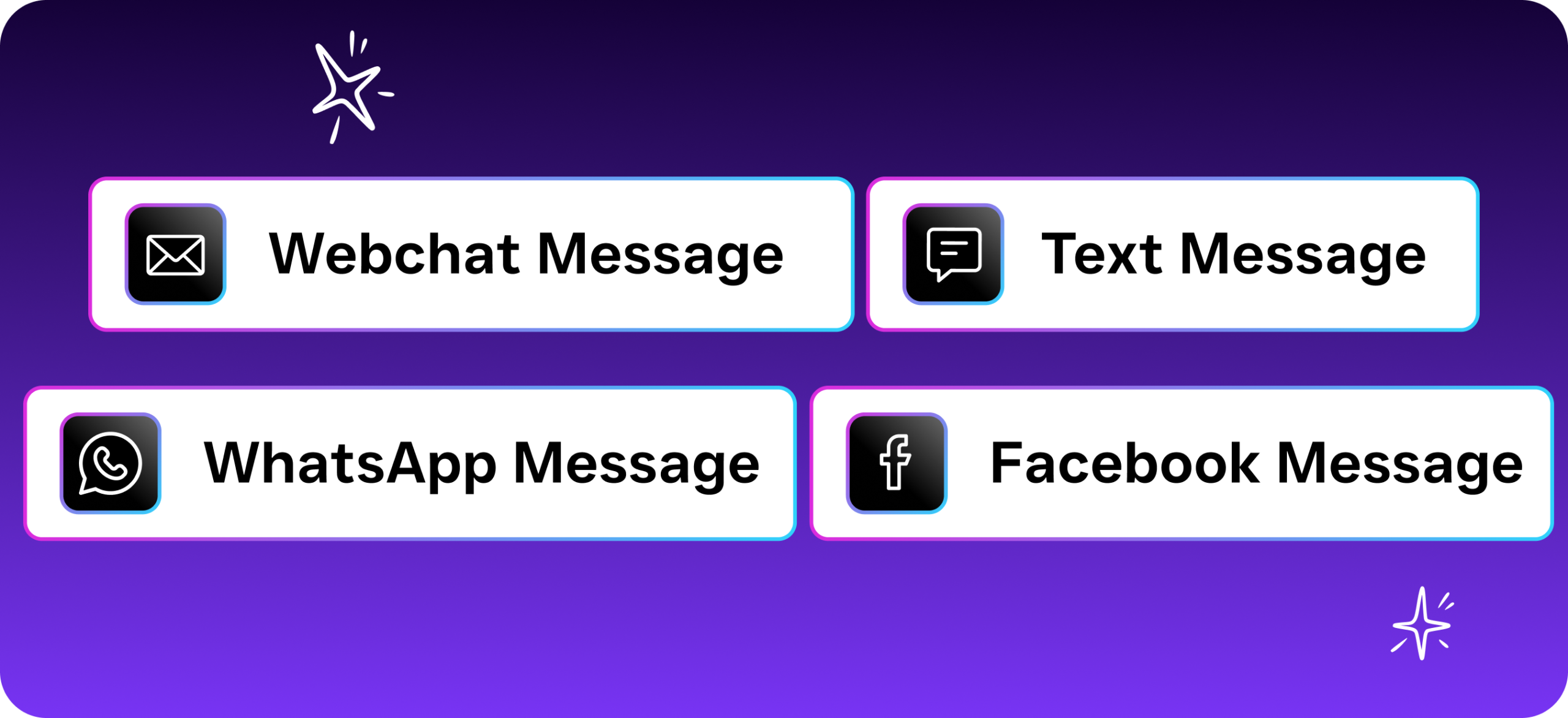
AI Chat Agents for Text, Web, and Social
Beyond phone calls, SalesCaptain deploys AI chat agents that respond instantly to SMS messages, webchat inquiries, and social media DMs. These agents capture lead information. They answer common questions. They book appointments. All without a human touching a keyboard. They also handle missed call text-back, automatically sending a text to anyone whose call wasn’t answered. For businesses like MedSpas, fitness studios, and law firms where speed of response directly impacts conversion rates, this automation is the difference between winning and losing a lead.
Built-In Phone System Replaces Extra Tools
SalesCaptain includes a full business phone system with IVR, call routing, voicemail, call recording, and 99.99% uptime. You don’t need to pay for a separate phone provider on top of your communication platform. CallRail provides tracking numbers that sit on top of your existing phone system. You’re still paying for and managing that underlying phone service. With SalesCaptain? The phone system, the AI agents, the inbox, and the automation are all one platform. Less cost. Less complexity. Fewer vendors to manage.
Affordable Per-Location Pricing with a Free Plan
SalesCaptain offers a free Startup plan for single-location businesses. You can test the platform without any financial commitment. The Business plan is $159 per month per location. Enterprise is $300 per month per location. AI phone calls are billed at $0.12 per minute. This per-location model works especially well for multi-location service businesses. You only pay for what you use. Why does this matter? As noted in third-party platform comparisons, SalesCaptain’s pricing structure is designed to scale affordably for growing SMBs. CallRail’s pricing starts lower at $50 per month, but that’s call tracking only. You’ll still need to budget for a phone system, a chat tool, an inbox manager, and automation software separately.
Which Should You Choose?
The right platform depends entirely on the problem you’re solving. Your primary need is marketing attribution? Knowing which Google Ads keywords, which landing pages, which campaigns are generating phone calls? CallRail is purpose-built for that job. It’s a focused tool that does call tracking extremely well. Marketing agencies and in-house marketing teams who manage significant ad spend will get clear value from CallRail’s attribution capabilities. According to CallRail’s own benchmark reporting, businesses that track call sources can make more informed decisions about their marketing budgets.
But if your core problem is operational, that’s different. You’re missing calls after hours. Your staff is overwhelmed with repetitive inquiries. Leads are slipping through the cracks because nobody followed up fast enough. You’re juggling multiple communication tools. SalesCaptain addresses all of those issues in one platform. It’s built for the service business owner who needs to grow revenue without hiring more staff. The AI agents handle the volume. The unified inbox keeps everything organized. The workflow automation ensures no lead is forgotten.
And here’s the thing: for many service businesses, the answer might even be both. CallRail for marketing attribution and SalesCaptain for everything that happens after the phone rings. But if you can only choose one, ask yourself this: is knowing which ad generated the call more valuable than actually answering the call and booking the appointment? For most service businesses with limited staff and high call volume, the answer points clearly toward SalesCaptain. According to research on the true cost of missed calls, the revenue impact of unanswered calls far exceeds what most business owners estimate. Every unanswered call is a customer who will call someone else.
Consider your current tech stack as well. You already have a phone system, a chat tool, a scheduling tool, and an inbox, but no way to track marketing? CallRail fills a specific gap. You’re stitching together multiple tools and still dropping leads? SalesCaptain consolidates your entire communication workflow. It integrates with HubSpot, Salesforce, Zoho, HousecallPro, ServiceFusion, Shopify,
Ready to see it in action?
See why agencies are switching from CallRail to SalesCaptain for smarter lead management.
Book a Free Demo →Frequently Asked Questions
What is the main difference between SalesCaptain and CallRail?
CallRail is a call tracking and marketing analytics tool that shows you which campaigns generate phone calls, while SalesCaptain is an AI-powered unified communication platform that actually answers those calls, responds to texts, and books appointments automatically. CallRail tells you what happened with your leads, but SalesCaptain takes action on them without human involvement.
Does CallRail answer and manage customer calls?
CallRail does not answer calls or automate responses—it only tracks and records them to show which marketing campaigns drive phone leads. If you need a platform that actively handles customer interactions, you would need a different solution like SalesCaptain.
What can SalesCaptain’s AI agents do?
SalesCaptain’s AI agents can answer phone calls, respond to text messages, book appointments, qualify leads, and follow up with customers automatically around the clock. All customer interactions are collected in a single collaborative inbox for your team to review and manage.
Is CallRail good for marketing attribution?
CallRail is considered the market leader in call tracking and marketing attribution for small and mid-sized businesses, allowing you to assign unique tracking numbers to different campaigns to see exactly which marketing efforts generate phone calls. It integrates with Google Ads, Google Analytics, and HubSpot to show you the connection between ad spend and phone leads.
Which platform is better for a service business?
SalesCaptain is specifically built for service businesses that need to handle high call volumes and automate customer communication across phone, text, and chat. CallRail is better suited for businesses whose main goal is understanding marketing performance rather than automating customer interactions.