
AI-powered customer experience marketing (CXM) platform that helps local businesses win.



AI Receptionist for Therapy Practices: Never Miss a Client Call Again
An AI receptionist for therapy practices is software that answers incoming calls 24/7, books appointments, and responds to common questions—ensuring no potential client reaches voicemail. It captures leads during sessions, after hours, and weekends, reducing missed opportunities while freeing your staff to focus on clinical care.
Running a therapy practice is a balancing act. You’re managing clinical care, handling business demands, and the phone never stops ringing. Potential clients call during sessions, after hours, weekends, often when no one’s available to pick up. An AI receptionist for therapy practices changes that by handling every incoming call, booking appointments, answering common questions, and making sure no prospective client gets lost. And if you’re stretched thin without a full-time front desk staff? This is the practical way to grow without burning out or sacrificing the care you provide.
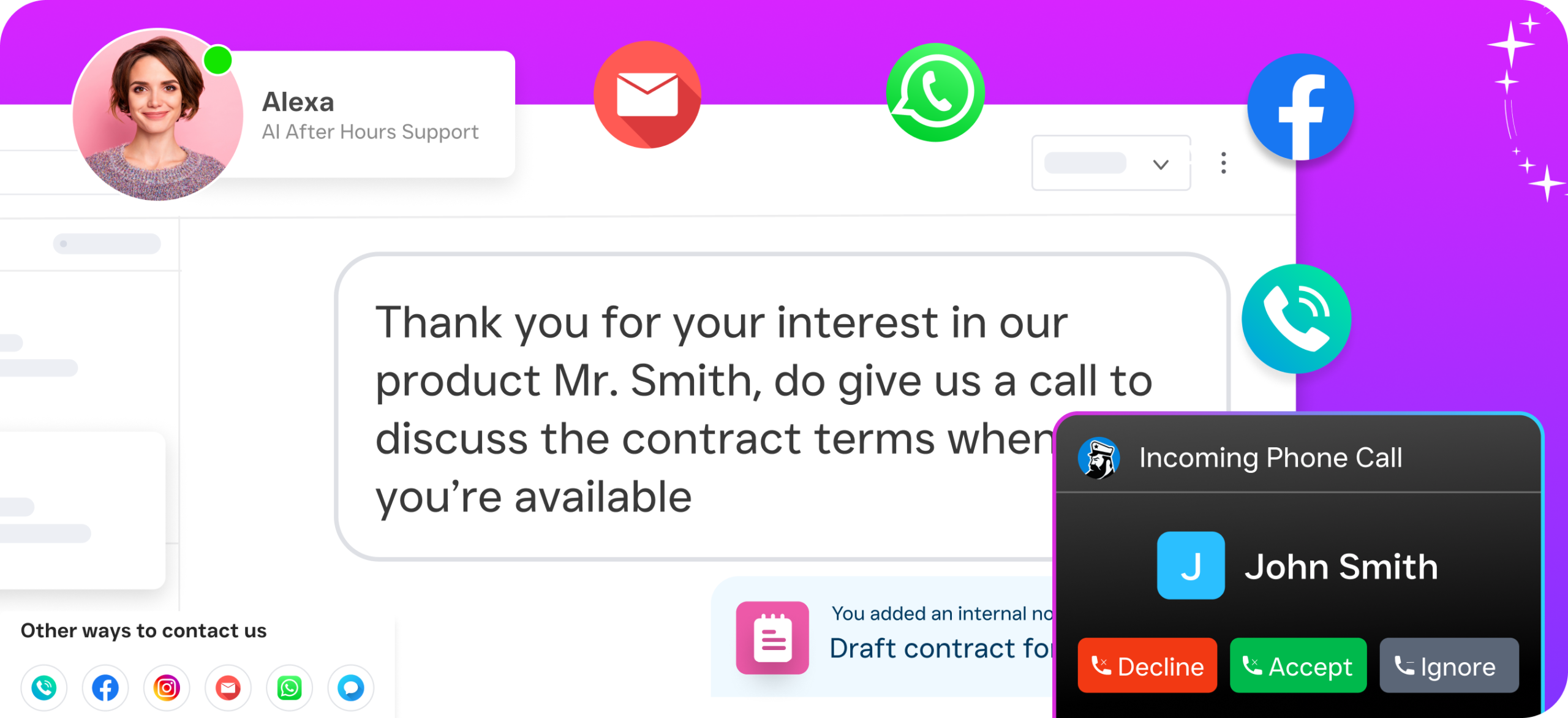
Therapy is deeply personal. So when someone finally musters the courage to call a therapist’s office, hitting voicemail feels like a door closing in their face. That moment of hesitation? It’s real, and it costs your practice clients every single day. Sound familiar? The gap between when a client reaches out and when you respond is where most lost revenue hides. This page explains exactly why that gap exists and how to close it permanently.
Free weekly newsletter
Growth tips for dental & medical practices
Every Tuesday — actionable ideas to get more leads, reviews, and repeat customers. No fluff.
Why Therapy Practices Struggle With Client Communication
Therapists face a problem that most other businesses don’t: you literally can’t answer the phone while doing your job. A 50-minute session means 50 minutes of unavailability, repeated six to eight times daily. Multiply that across a multi-therapist practice, and you’ve got an office where the phone rings constantly but no one’s free to pick it up. According to the Bureau of Labor Statistics, receptionist roles remain in steady demand because businesses across healthcare rely heavily on front desk staff. But for small therapy practices? Affording a dedicated receptionist is a different story entirely.
The Cost of Missed Calls Is Higher Than You Think
When a prospective therapy client calls and no one answers, most won’t leave a voicemail. They’ll call the next practice on their list. This isn’t speculation, it’s how consumers actually behave in 2025. People expect immediate responses, especially when dealing with something as sensitive as finding a therapist. Every missed call represents not just one session fee but potentially months or years of recurring appointments lost to a competitor who simply picked up the phone faster.
The financial math is straightforward. A therapy session averages $150, and clients attend weekly. One lost client? That’s roughly $7,800 in annual revenue gone. Miss just two or three calls a week, and the revenue leak becomes significant enough to fund an entire hire or an AI solution costing a fraction of that. Here’s the problem: most practices don’t even realize how many calls they’re missing. There’s no one tracking what happens when the phone rings during a session.
Hiring and Retaining Front Desk Staff Is Getting Harder
Small therapy practices compete with hospitals, large medical groups, and corporate offices for the same administrative talent pool. The American Physical Therapy Association’s 2024 hiring report documents the severe staffing challenges facing outpatient practices. Therapy offices feel the same squeeze. When you do find someone, training takes weeks. Then they get sick, take vacation, or quit. You’re back to square one.
Receptionist burnout rarely gets discussed openly. But it’s real. Front desk staff in therapy offices handle emotionally charged calls, insurance frustrations, scheduling conflicts, and constant multitasking. As research on receptionist stress has shown, the cumulative toll of these demands leads to high turnover. For solo practitioners and small groups, this creates a revolving door that disrupts operations and damages the client experience.
Managing Multiple Communication Channels Creates Chaos
Today’s therapy clients don’t just call. They text. They fill out your website contact form. They message you on Instagram or Facebook. Each channel creates a separate thread that someone has to monitor, respond to, and track. Without a centralized system, messages get lost. Responses are delayed. The same client might reach out on three channels before anyone notices. This fragmentation is one of the most common front desk communication problems affecting healthcare practices today. And it gets worse as you grow.
How SalesCaptain’s AI Receptionist for Therapy Practices Solves This
SalesCaptain was built specifically for service businesses like yours. It handles reliable, always-on communication without the complexity of enterprise software. Instead of juggling separate tools for phone answering, text messaging, appointment booking, and follow-ups, everything lives in one platform with AI agents working around the clock. Here’s how each piece works for a therapy practice.
AI Phone Agent: Your 24/7 Virtual Receptionist
SalesCaptain’s AI Phone Agent answers every call with a natural-sounding voice. No robotic menus. No generic answering service. You configure it to match your practice’s tone, whether that’s warm and conversational or professional and clinical. When a prospective client calls at 9 PM on a Tuesday, the AI picks up. It greets them. Answers their questions about services and availability. And books an appointment directly into your calendar. No hold music. No voicemail. No “we’ll call you back.” The caller gets what they need immediately. You get a new client on your schedule.
The system also qualifies leads by asking the right intake questions. What type of therapy are they seeking? Do they have insurance? What’s their preferred schedule? Spam calls and irrelevant inquiries get filtered out automatically, so your time goes only to real clients. For calls that genuinely need human attention, a crisis situation or a complex insurance question, the AI agent routes them to the right person or flags them for priority follow-up. Nothing falls through the cracks. Your phone doesn’t ring off the hook either.
AI Chat Agents: Instant Responses on Every Channel
Beyond phone calls, SalesCaptain deploys AI Chat Agents across SMS, your website’s live chat widget, Instagram DMs, and Facebook Messenger. Someone fills out your website contact form at midnight? The AI agent responds instantly. They text asking about your sliding scale fees? Instant response with accurate, helpful information. It can share your availability, describe your specialties, explain your cancellation policy, and book an initial consultation. All without you doing anything.
For therapy practices, the missed call text-back feature is particularly valuable. If a call somehow isn’t answered, maybe the AI agent is already handling another call on a busy Monday, the system automatically sends a text within seconds. They know you received their call. They know you can help via text right now. This simple touchpoint dramatically reduces the chance that a potential client gives up and calls someone else. The AI chat agent then continues the conversation by text, collecting what you need and scheduling the appointment.
Unified Inbox: One Place for All Client Communication
Every call transcript, text thread, webchat conversation, and social media message lives in one place: SalesCaptain’s Unified Inbox. If you’ve got a practice manager, intake coordinator, and three therapists, everyone sees the same real-time view. Notes can be added to any contact. So when a client texts about rescheduling and later calls about insurance, whoever picks up the thread has the full context. This solves the “I didn’t see that message” problem that plagues multi-channel practices. Every client gets a smooth, professional experience.
Workflow Automation: Set It and Forget It
The drag-and-drop Workflow Automation builder handles the repetitive tasks eating up administrative hours. Appointment reminders go out automatically via text 24 hours before a session. New client intake forms are sent immediately after booking. Follow-up messages trigger if a prospective client no-shows. CRM records update themselves. You build these workflows once, and they run forever in the background. With over 50 integrations including HubSpot, Zoho, and Zapier, SalesCaptain connects to the tools you’re already using.
Key Features for Therapy Practices
24/7 Call Answering: AI Phone Agent picks up every call, during sessions, after hours, weekends, and holidays, so no prospective client ever hits voicemail. Appointment Booking: The AI agent checks your real-time availability and schedules initial consultations or follow-up sessions directly into your calendar system. Lead Qualification: Customizable intake questions let the AI gather information about therapy type, insurance, and scheduling preferences before you ever speak with the client. Missed Call Text-Back: If a call can’t be answered, an automatic text goes out within seconds, keeping the conversation alive and the client engaged. Automated Appointment Reminders: Reduce no-shows by sending text reminders at intervals you choose, 48 hours, 24 hours, or 1 hour before the session. Spam Blocking: Telemarketer and spam calls are identified and blocked automatically, so your AI agent’s time (and your attention) isn’t wasted. Multichannel Messaging: Respond to SMS, webchat, Instagram, and Facebook messages from one dashboard, no more switching between apps. Custom Call Flows: Design exactly how calls should be handled for different scenarios, new clients, existing clients, crisis situations, billing questions. Team Collaboration: The unified inbox lets multiple staff members see, respond to, and hand off conversations without losing context. and HIPAA-Conscious Communication: While therapists should always verify compliance with their specific regulatory requirements, SalesCaptain’s platform is designed for professional service businesses that handle sensitive client information..
How an AI Receptionist Differs From a Human Receptionist
This isn’t about replacing people. It’s about filling the gaps that human staffing can’t cover. A human receptionist works 8 hours a day, 5 days a week. They take lunch breaks. They call in sick. They can only handle one call at a time. An AI receptionist? It works 24 hours a day, 7 days a week, never takes a break, and handles multiple simultaneous interactions across phone, text, and chat. For a therapy practice where most calls come in during the exact hours when therapists are in session, this distinction matters enormously.
The cost difference is significant. According to Federal Reserve small business survey data, labor costs remain the top expense concern for small businesses. A full-time receptionist costs $30,000 to $45,000 annually in salary alone. That’s before benefits, payroll taxes, and training expenses. SalesCaptain’s Business plan costs $159 per month per location, under $2,000 a year, with AI call minutes at $0.12 each. Even a busy practice handling hundreds of calls monthly spends a fraction of what a human hire costs.
But here’s what works best: a hybrid model. Use the AI receptionist to handle routine calls, after-hours inquiries, appointment scheduling, and FAQ answering. Keep a part-time human staff member for complex insurance coordination, in-person client check-ins, and tasks requiring a personal touch. This approach covers all the bases without overstaffing or overspending. As industry analysis on receptionist services for therapists has noted, offloading routine communication frees clinical staff to focus on what they trained for, providing therapy.
| Capability | Human Receptionist | SalesCaptain AI Receptionist |
|---|---|---|
| Availability | 8 hours/day, weekdays | 24/7/365 |
| Simultaneous calls | 1 at a time | Multiple at once |
| Missed call text-back | Manual, if remembered | Automatic, within seconds |
| Appointment booking | During work hours only | Anytime, any channel |
| Multichannel response | Phone + maybe email | Phone, SMS, webchat, social DMs |
| Annual cost | $30,000 to $45,000+ | Under $2,000 + per-minute usage |
| Training time | Weeks | Minutes |
| Consistency | Varies by day/mood | Identical quality every interaction |
Real Results You Can Expect
Implementing an AI receptionist for therapy practices through SalesCaptain changes how your practice operates daily. These outcomes aren’t theoretical, they’re the natural result of answering every call, responding instantly to every message, and following up automatically with every lead. Here’s what therapy practice owners consistently experience after going live.
More Appointments Booked Without More Effort
When every call gets answered and every inquiry gets an instant response, your booking rate goes up. Simple math: if you were previously missing even 20% of incoming calls during session hours, capturing those calls means more initial consultations on your calendar. The AI agent doesn’t just answer, it actively guides callers through scheduling, removing the friction that causes people to say “I’ll call back later” and then never do. For practices receiving inquiries via website or social media, the AI chat agents create additional booking pathways that didn’t exist before.
Dramatically Reduced No-Shows
Automated appointment reminders sent at intervals you choose, 48 hours, 24 hours, 1 hour before a session, keep clients accountable and reduce forgotten appointments. When a client needs to reschedule, they reply directly to the reminder text. The AI agent handles the rebooking. This two-way communication turns a static reminder into an active scheduling tool. For therapy practices where a single no-show means $150+ in lost revenue, cutting no-show rates even slightly has meaningful financial impact over a year.
Hours of Administrative Time Reclaimed Every Week
Think about how much time your practice spends on phone calls that an AI could handle. Confirming appointments. Answering questions about office hours and location. Explaining cancellation policy. Collecting basic intake information. Each task takes only a few minutes individually, but they add up to hours every week. Workflow automation handles reminder sequences, intake form delivery, and follow-up messages without any human involvement. That time goes back to your clinical staff, or to you, if you’re a solo pract
Ready to see it in action?
See how therapy practices use SalesCaptain to answer every call and book more clients.
Book a Free Demo →Frequently Asked Questions
What is an AI receptionist for therapy practices?
An AI receptionist is an automated system that answers incoming calls to your therapy practice, books appointments, answers common questions, and ensures no prospective client calls go unanswered. It handles the front desk responsibilities 24/7, even during sessions, after hours, and on weekends when your staff isn’t available.
How does an AI receptionist help therapy practices not miss client calls?
The AI receptionist answers every incoming call immediately instead of letting calls go to voicemail, which is critical because most prospective therapy clients won’t leave a message and will simply call a competitor instead. By providing immediate response and appointment booking, it closes the gap between when clients reach out and when they get help.
Why can’t therapy practices just hire a human receptionist instead?
While human receptionists are in steady demand across healthcare, many small therapy practices can’t afford a dedicated full-time front desk staff member. An AI receptionist offers a practical way to grow without the expense of hiring additional employees or burning out existing staff.
How much revenue can a therapy practice lose from missed calls?
According to the article, one lost client can cost a practice approximately $7,800 in annual revenue, since the average therapy session is $150 and clients typically attend weekly. When prospective clients reach voicemail, most won’t leave a message and will call the next practice on their list instead.
Can an AI receptionist handle appointment scheduling and answering patient questions?
Yes, an AI receptionist can book appointments directly and answer common questions that prospective clients have when they call. This automation allows your practice to handle client intake and basic inquiries without requiring your therapists or staff to step away from clinical care.