
AI-powered customer experience marketing (CXM) platform that helps local businesses win.



Best Virtual Receptionist Software for Law Firms: A Practical Guide for 2025
A potential client calls your law firm at 6:15 PM on a Tuesday. They just got served with papers and need help fast. Your office closed at 5:00, the call goes to voicemail, and by 8:00 AM the next morning, that person has already hired the attorney who answered their phone at 7:00 PM. Sound familiar? This scenario plays out every single day at law firms across the country, and it’s one of the most expensive problems a legal practice can have. Finding the best virtual receptionist software for law firms isn’t a nice-to-have anymore. It’s a fundamental business decision that directly impacts your revenue and client experience.
Quick Answer
Virtual receptionist software for law firms automates call answering, appointment scheduling, and message management 24/7. These systems capture client information, route calls to the right attorney, and integrate with practice management tools to ensure no inquiry goes unanswered. Look for features like customizable greetings, multilingual support, and detailed call logs to maintain professional client relationships.
What Is Virtual Receptionist Software for Law Firms?
Virtual receptionist software replaces or supplements a traditional front-desk receptionist with technology that answers calls, greets clients, captures information, and routes inquiries without requiring a human to be physically present. For law firms, this means every phone call, text message, and website inquiry gets a professional, immediate response regardless of the time of day or how busy your staff is. Unlike a basic voicemail system or a generic answering service, modern virtual receptionist software is designed specifically for legal workflows: intake screening, appointment scheduling, conflict checking prompts, and confidential message handling.
Related guide: virtual receptionist vonage.
The term “virtual receptionist” has evolved dramatically. It used to mean a live person working remotely from a call center, reading scripts and taking messages. But that’s changed. AI-powered virtual receptionists can now hold natural-sounding conversations, answer questions about your practice areas, qualify potential clients based on your criteria, and book consultations directly into your calendar, all without any human involvement. This shift from human call centers to AI has made virtual receptionist technology far more affordable and accessible for solo practitioners and small firms that could never justify the cost of a full-time receptionist or premium answering service.
Free weekly newsletter
Growth tips for law firms & legal practices
Every Tuesday — actionable ideas to get more leads, reviews, and repeat customers. No fluff.
For law firms, the stakes are genuinely higher than in most industries. Research on the cost of missed business calls shows that small businesses lose tens of thousands of dollars per year from unanswered calls alone. In legal services? The math is brutal. One missed personal injury case could cost your firm more than an entire year of virtual receptionist software. Because a single new client might represent thousands or even tens of thousands in fees, the stakes couldn’t be higher. The American Bar Association has repeatedly noted that client responsiveness is one of the top factors in both client satisfaction and malpractice prevention, making this a risk management issue as much as a revenue one.
Why Law Firms Need a Different Kind of Virtual Receptionist
Not all virtual receptionist solutions are built the same. What works for a plumbing company or dental office won’t work for a law practice. Legal practices have unique requirements around confidentiality, intake complexity, and the emotional state of callers. These differences demand a more thoughtful approach. Understanding them is essential before you start comparing options.
Confidentiality and Client Privilege Concerns
Law firms operate under strict ethical obligations regarding client confidentiality. Even the initial phone call from a prospective client can create confidentiality duties under most state bar rules. That’s why your virtual receptionist system needs secure data handling, encrypted message storage, and compliant visitor or caller logs. A generic small business answering service that stores call transcripts on unsecured servers? That’s a liability waiting to happen. The best virtual receptionist software for law firms addresses these concerns with secure audit trails, controlled access to caller information, and data practices that align with legal ethics requirements.
Complex Intake and Qualification Needs
When someone calls a roofing company, intake is simple. When someone calls a law firm, it’s fundamentally different. You need to identify the practice area, screen for conflicts of interest, assess urgency and case viability, and often collect sensitive personal information during that first interaction. A virtual receptionist that can only take a name and number forces your attorneys to make callbacks for basic screening, which defeats the purpose of automation entirely. The ideal system asks intelligent follow-up questions based on the caller’s situation and captures structured data your team can act on immediately.
The Emotional Stakes of Legal Callers
People calling a law firm aren’t calling about routine services. They’re frequently stressed, scared, angry, or confused. They may be facing a divorce, a criminal charge, an injury, or a business dispute. The tone and professionalism of that first interaction sets the foundation for the entire attorney-client relationship. Virtual receptionist technology has advanced significantly in handling these sensitive conversations, with AI agents now capable of recognizing urgency cues and adjusting their tone accordingly. But that’s precisely why you need to evaluate how a virtual receptionist handles emotionally charged calls rather than just looking at basic feature lists.
📺 Watch: AI Voice Agent in Your Call Flow: Automate Calls
The Features That Matter Most When Choosing Virtual Receptionist Software for Law Firms
With dozens of options on the market, narrowing down your choice requires knowing which features actually move the needle. Some features that get heavy marketing attention are irrelevant for most law firms. Other quieter capabilities can transform your client experience overnight. Below are the features that practicing attorneys and firm administrators consistently identify as most impactful.
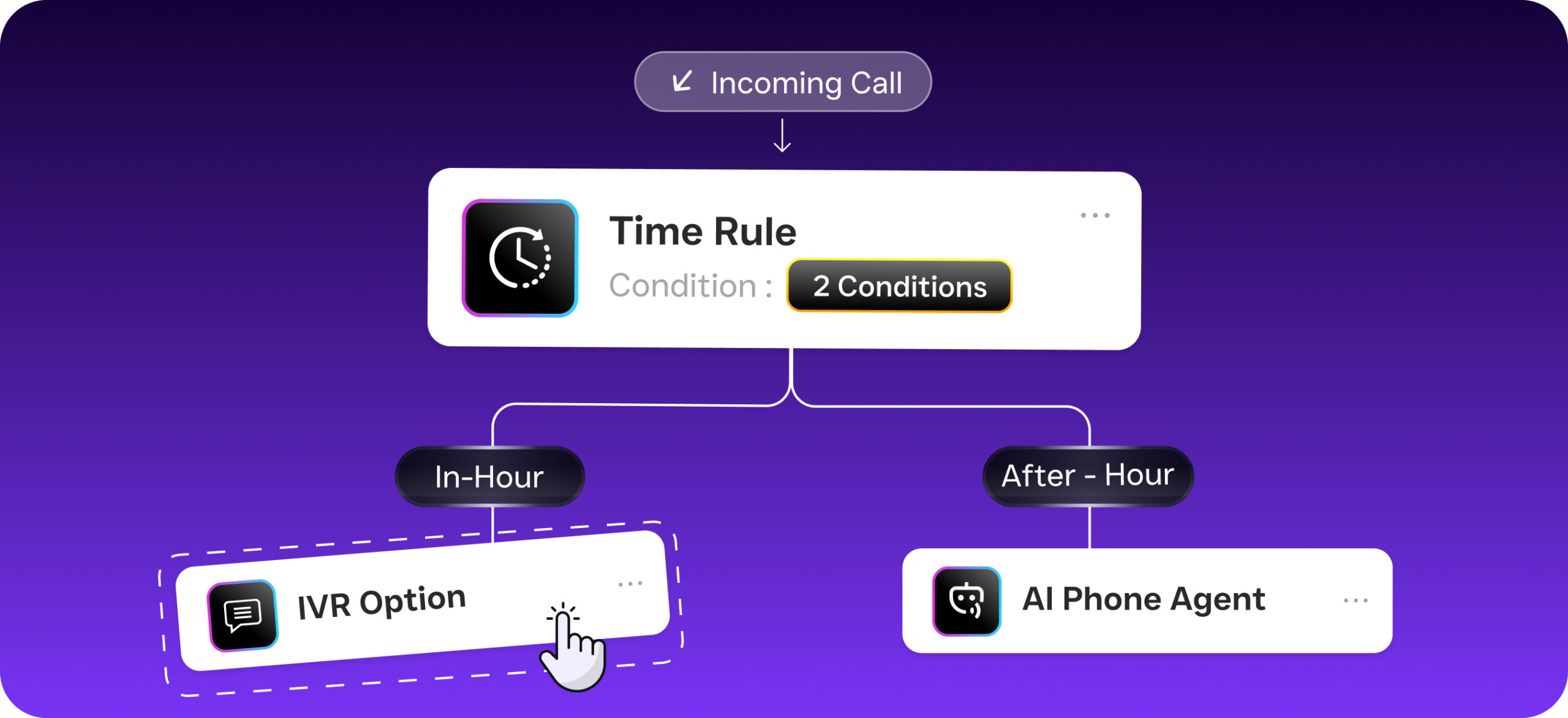
24/7 Call Answering with Intelligent Routing
Legal emergencies don’t respect business hours. Criminal defense clients get arrested at 2 AM. Family law clients discover hidden assets on weekends. Personal injury victims get in accidents during holidays. Your virtual receptionist must answer every call, every time. Period. Beyond simply answering, the system should route calls intelligently, urgent matters to an on-call attorney’s cell phone, existing client calls to their assigned attorney’s line, and new prospects through your intake workflow. Industry data on missed call costs by sector consistently shows legal services among the hardest hit, precisely because the revenue per client is so high.
Automated Appointment Booking and Calendar Sync
Here’s the single most valuable thing a virtual receptionist can do: book a consultation while the prospect is still on the phone. Every hour of delay between initial contact and a scheduled appointment gives that prospect time to call your competitor. Your virtual receptionist software should connect directly to your attorneys’ calendars, Google Calendar, Outlook, or practice management tools like Clio, and offer available time slots in real time. It should also send automated confirmation texts and email reminders to reduce no-shows, which plague legal consultations.
Lead Qualification and Intake Screening
Not every call is a case worth pursuing. A strong virtual receptionist for law firms should ask qualifying questions based on your practice areas and criteria, then tag and prioritize leads accordingly. What does that actually look like? A personal injury firm might want the system to ask about the date of injury, type of incident, whether the caller has spoken with another attorney, and whether there are documented medical treatments. This structured intake data flows directly into your CRM or case management system, saving your staff from re-asking the same questions and allowing attorneys to quickly assess whether a case is worth pursuing.
Multichannel Communication Beyond Phone Calls
Modern legal consumers don’t just call. They text. They fill out website forms. They send messages through Facebook and Google Business Profile. According to reviews of the top virtual receptionist services, the platforms delivering the best results handle multiple communication channels from a single interface. Your virtual receptionist should respond to a website chat visitor at the same time it answers a phone call and sends a follow-up text, all while keeping the conversation history in one place so nothing falls through the cracks.
Secure Visitor and Caller Logs
Compliance and risk management require a complete, tamper-proof record of every client interaction. This includes call recordings (where legally permitted), transcripts, chat logs, and timestamps showing when a lead came in and how quickly your firm responded. These logs do triple duty: they help you track marketing ROI by connecting new clients to their source, they protect you if a prospect later claims they weren’t contacted, and they provide documentation for any bar complaints related to responsiveness.
Integration with Legal Practice Management Software
Virtual receptionist software that exists in a silo creates more work, not less. The best solutions integrate directly with the tools law firms already use. That includes practice management platforms like Clio, CRM systems like Salesforce or HubSpot, and billing software like QuickBooks. When a new lead calls and books a consultation, the ideal workflow creates a new contact record, logs the call details, adds the appointment, and triggers a follow-up sequence, all automatically. If your virtual receptionist can’t connect to your existing stack, your staff will spend their time copying and pasting data between systems.
Comparing Virtual Receptionist Options for Law Firms
The market breaks down into three broad categories. Each has distinct advantages and limitations. Understanding where each type excels helps you match the right solution to your firm’s size, budget, and workflow complexity.
Live Answering Services
Traditional live answering services employ real people who answer your phone line using scripts you provide. Companies like Ruby, Smith.ai, and LEX Reception have built strong reputations in the legal market. The advantage? A human touch, callers speak with a real person, which some attorneys prefer for their brand image. The disadvantage is cost. Live answering services typically charge per minute or per call, and a busy firm can easily spend $800 to $2,000 per month. Ranked reviews of the best virtual receptionist services in 2025 show these human-powered services consistently scoring well on caller satisfaction but poorly on scalability and cost efficiency.
AI-Powered Virtual Receptionists
AI virtual receptionists use natural language processing to hold conversations that sound remarkably human. They qualify leads, book appointments, answer questions, and route calls, all without per-minute staffing costs. The technology has improved dramatically since 2023. Modern AI agents can handle multi-turn conversations, understand context, and adapt to unexpected questions. For law firms handling high call volumes or operating in competitive practice areas where speed-to-lead matters, AI offers the best combination of responsiveness and cost control. Why does this matter? The main concern is call quality, which varies significantly between providers. Some sound robotic and frustrate callers. The best are nearly indistinguishable from a well-trained human receptionist.
Hybrid Solutions
Some firms opt for a hybrid approach. AI handles after-hours calls, initial screening, and routine inquiries. A human receptionist (in-house or remote) manages complex calls during business hours. This model captures the cost savings of AI for the 60-70% of calls that are straightforward while preserving human judgment for sensitive situations. Guides on virtual receptionists for small businesses increasingly recommend this hybrid approach as the most practical path for firms transitioning from fully manual call handling.
| Feature | Live Answering Service | AI Virtual Receptionist | Hybrid Solution |
|---|---|---|---|
| 24/7 Availability | Usually (with higher cost) | Always | Always |
| Cost per Month (typical) | $800 to $2,000+ | $100 to $400 | $300 to $800 |
| Call Quality / Empathy | High | Moderate to High | High |
| Scalability | Limited by staffing | Unlimited | Moderate |
| Legal Intake Depth | Script-dependent | Configurable | Configurable + human judgment |
| Integration Capability | Varies | Strong (API-driven) | Strong |
| Multichannel (calls + text + chat) | Rarely | Often included | Often included |
How to Choose the Best Virtual Receptionist Software for Your Law Firm
Selecting the right platform requires more than scanning a feature list. The decision depends on your firm’s size, practice area, call volume, and growth plans. Here’s a practical framework for evaluating your options without getting lost in marketing hype.
Start with Your Call Data
Before evaluating any software, spend two weeks tracking your firm’s call patterns. How many calls do you receive daily? How many go to voicemail? What percentage are after hours? What are the most common reasons people call? This data tells you exactly what you need. A solo family law attorney getting 15 calls a day has completely different needs than a 10-attorney personal injury firm getting 100+. Many firms are shocked to discover that 30-40% of their calls come outside business hours. That single data point often justifies the entire investment.
Test with Real Scenarios
Any vendor worth considering will let you test their system before committing. Don’t just run a basic demo. Call in with realistic scenarios. Pretend to be a panicked spouse calling about a custody emergency at 10 PM. Call as opposing counsel requesting a specific attorney. Call as a confused elderly person who isn’t sure they need a lawyer. How the system handles these real-world situations tells you far more than any feature checklist. Pay attention to response latency, conversation naturalness, and whether the system gracefully handles unexpected questions or requests.
Calculate Total Cost of Ownership
Per-minute pricing sounds cheap until you do the math. A firm receiving 50 calls per day averaging 3 minutes each at $1.50 per minute spends $6,750 per month on a live answering service. That’s significant. AI-powered solutions with flat-rate or per-minute models often cost a fraction of that. But also factor in setup time, integration costs, and the ongoing management required to keep scripts and workflows current. Analysis of the true cost of missed calls suggests that the real calculation isn’t what you spend on software but what you lose without it. For law firms,
Ready to see it in action?
See how law firms use SalesCaptain to capture every client inquiry without missing leads.
Book a Free Demo →Frequently Asked Questions
What is virtual receptionist software for law firms?
Virtual receptionist software uses technology to answer calls, greet clients, capture information, and route inquiries without requiring a human receptionist to be physically present. Unlike basic voicemail systems, it’s designed specifically for legal workflows including intake screening, appointment scheduling, conflict checking, and confidential message handling.
How does AI-powered virtual receptionist software work?
Modern AI-powered virtual receptionists can hold natural-sounding conversations, answer questions about your practice areas, qualify potential clients based on your criteria, and book consultations directly into your calendar without human involvement. This technology ensures every phone call, text message, and website inquiry receives a professional, immediate response regardless of the time of day or staff availability.
Is virtual receptionist software affordable for solo and small law practices?
Yes, the shift from human call centers to AI has made virtual receptionist technology far more affordable and accessible for solo practitioners and small firms that could never justify the cost of a full-time receptionist or premium answering service. This makes it a practical investment even for practices with limited budgets.
Why do law firms need virtual receptionist software more than other businesses?
Law firms face higher stakes than most industries because missing a single client call can result in lost cases worth more than an entire year of virtual receptionist costs. Potential clients who can’t reach you may hire a competitor who answers their call, making the cost of missed business calls brutal for legal practices.
What happens when a potential client calls a law firm after hours without virtual receptionist software?
Without virtual receptionist software, after-hours calls go to voicemail and clients may hire a competitor who answers immediately, as illustrated in the scenario where a potential client calling at 6:15 PM hired another attorney by 7:00 PM instead of waiting until morning. Virtual receptionist software ensures calls are answered professionally 24/7, preventing this loss of business.