
AI-powered customer experience marketing (CXM) platform that helps local businesses win.



SalesCaptain vs HubSpot: Which Platform Is Right for Your Service Business?
If you’re a service business owner comparing SalesCaptain vs HubSpot, you’re probably wrestling with a real problem: how do you handle more customer communication without hiring more staff or getting buried in complexity? Both platforms promise to help you manage leads and grow revenue, but they take very different approaches. HubSpot is a massive CRM and marketing suite designed to serve businesses of all sizes. SalesCaptain is a focused AI communication platform built specifically for service-based SMBs. This comparison breaks down the features, pricing, ease of use, and ideal use cases so you can make a confident decision without wasting time on the wrong tool.
Quick Answer
HubSpot is a comprehensive all-in-one CRM with extensive marketing automation and reporting tools, ideal for larger teams with complex needs. The alternative platform offers streamlined sales-focused features at lower pricing, better suited for small to mid-sized service businesses prioritizing simplicity and quick implementation. Your choice depends on budget, team size, and whether you need advanced marketing capabilities or straightforward sales management.
What Is HubSpot?
HubSpot is a well-known CRM and inbound marketing platform. It offers sales pipelines, email marketing, content management, customer service ticketing, and reporting dashboards. Founded in 2006, it’s grown into an enterprise-grade platform serving startups to large corporations. Here’s what makes it stand out: HubSpot can handle nearly every aspect of marketing, sales, and service operations under one roof, which is why many small businesses initially adopt it for CRM and growth.
But depth comes with trade-offs. HubSpot’s full feature set is spread across multiple “Hubs” (Marketing Hub, Sales Hub, Service Hub, etc.), and each has its own pricing tier. Sound familiar? You’re probably asking yourself: do I really need all of this? For a small plumbing company or dental practice that just needs to stop missing calls and respond to leads faster, the platform can feel like buying a commercial kitchen when all you need is a reliable stove. The learning curve is steep, and costs escalate quickly once you move beyond the limited free tier.
Free weekly newsletter
Growth tips for service businesses
Every Tuesday — actionable ideas to get more leads, reviews, and repeat customers. No fluff.
What Is SalesCaptain?
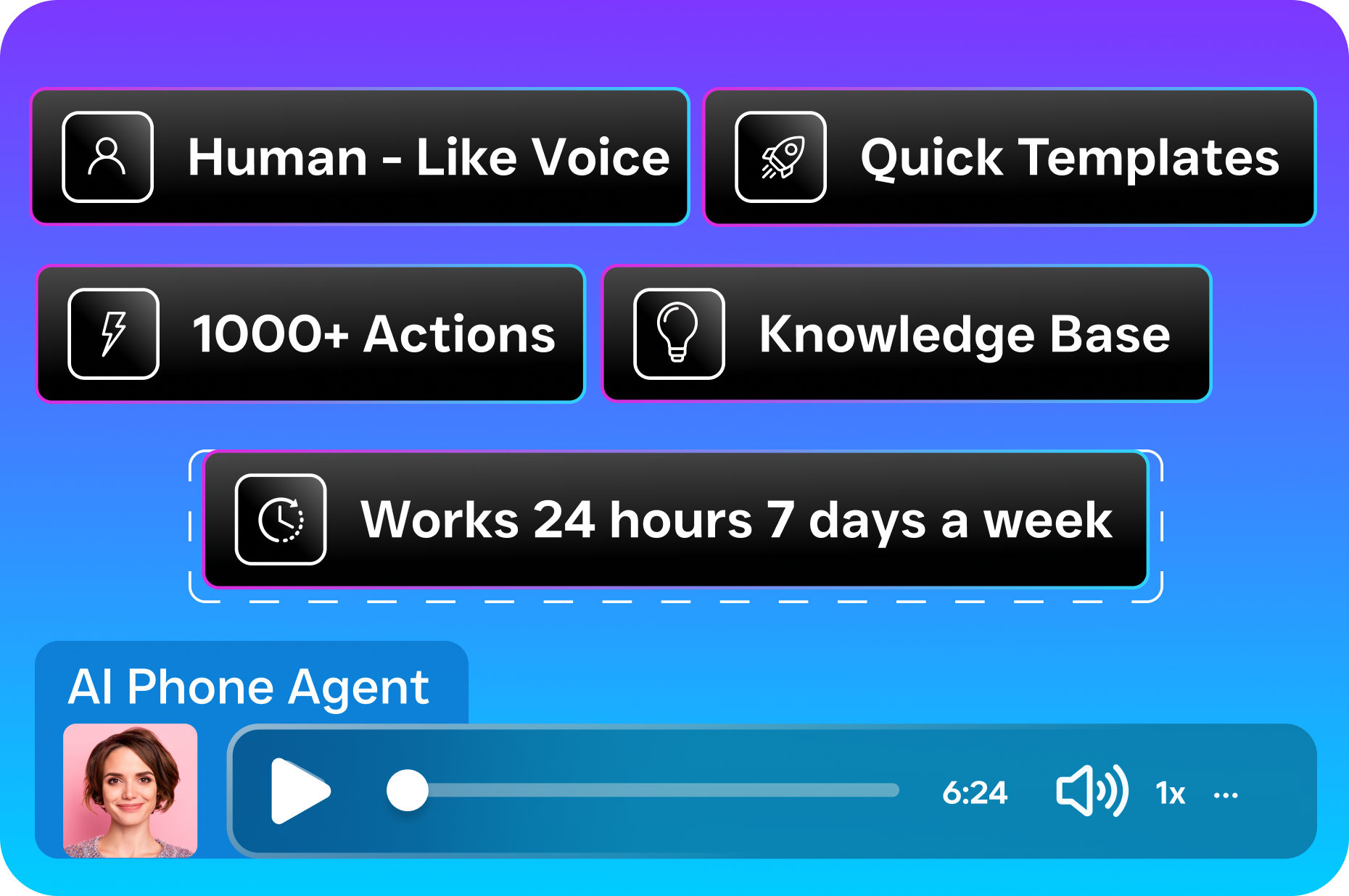
SalesCaptain is an AI-powered unified communication platform designed from the ground up for service businesses. Think home services, legal practices, healthcare providers, salons, and real estate agencies. Instead of trying to be an all-in-one marketing suite, SalesCaptain focuses on the communication layer that actually drives revenue: answering calls, responding to texts and social media messages, booking appointments, and following up with leads automatically. It combines an AI Phone Agent, AI Chat Agents, a unified inbox, a full business phone system, and workflow automation into a single platform that requires no technical expertise to set up.
The core idea is simple: service businesses lose customers not because of bad marketing, but because of missed calls, slow responses, and inconsistent follow-up. According to industry research from SkipCalls, small businesses can lose significant revenue annually from missed calls alone. SalesCaptain solves this with AI agents that handle inbound and outbound communication 24/7. Every channel. Phone, SMS, webchat, Instagram DMs, Facebook Messenger, without requiring a human to be available. The platform launched in 2023 and offers a free plan for single-location businesses, with paid plans starting at $159 per month per location.
SalesCaptain vs HubSpot: Feature Comparison
The fastest way to understand the difference is to look at the features side by side. The table below compares what matters most to service business owners who need to capture more leads, respond faster, and automate repetitive communication tasks. Keep in mind that HubSpot’s features vary widely depending on which Hubs you subscribe to and at which tier, while SalesCaptain bundles its core features into straightforward per-location pricing.
| Feature | SalesCaptain | HubSpot |
|---|---|---|
| AI Phone Agent | Built-in AI voice agent answers calls 24/7, books appointments, qualifies leads, answers FAQs, blocks spam, routes callers | No native AI voice agent; requires third-party integrations for call handling |
| AI Chat Agents | AI-powered chat agents across SMS, webchat, Instagram DMs, Facebook Messenger with instant responses and lead capture | Chatbot builder available (Service Hub / Marketing Hub), but limited AI autonomy; primarily rule-based flows |
| Unified Inbox | All channels (calls, texts, webchat, social DMs, email, notes) in one collaborative inbox with real-time tracking | Conversations inbox available, but call integration is limited and requires paid tiers for full functionality |
| Business Phone System | Full phone system with 99.99% uptime, IVR builder, call routing, voicemail, call recording | HubSpot calling available on Sales Hub paid plans with limited minutes; not a full phone system replacement |
| Workflow Automation | Visual drag-and-drop builder for follow-ups, reminders, CRM updates, notifications; 50+ integrations | Powerful workflow automation, but advanced features locked behind Professional and Enterprise tiers ($800+/month) |
| Pricing | Free plan available; $159/month (Business); $300/month (Enterprise); AI calls at $0.12/minute | Free CRM available; paid plans range from $20/month (Starter) to $800 to $3,600+/month for full-featured tiers |
| Ease of Setup | No technical expertise needed; designed for non-technical business owners | Significant setup time; most SMBs need a consultant or agency for full implementation |
| Integrations | HubSpot, Salesforce, Zoho, ServiceFusion, HousecallPro, Mindbody, Shopify, QuickBooks, Clio, Zapier, and more | 1,500+ integrations through its marketplace |
| Best For | Service businesses (1 to 200 employees) that need AI-powered communication automation without complexity | Mid-market to enterprise companies that need a comprehensive CRM, marketing, and sales platform |
One detail worth noting: SalesCaptain actually integrates with HubSpot. You don’t have to choose one at the complete exclusion of the other. If you already use HubSpot for CRM or marketing, you can layer SalesCaptain on top to handle the communication and AI agent layer that HubSpot lacks. The integration supports triggers like contact creation and updates, company creation and updates, and automated workflow actions between both platforms. So you get HubSpot’s CRM data plus the dedicated communication automation tool on the front lines.
Where HubSpot Falls Short for Service Businesses
HubSpot is a genuinely impressive platform. And this comparison wouldn’t be fair if we pretended otherwise. But “impressive” and “right for your business” are two different things. For the service businesses SalesCaptain serves, roofers, plumbers, dental practices, law firms, salons, HVAC companies, HubSpot has three consistent shortcomings that show up over and over again.
It’s Overkill for Most SMBs
HubSpot was designed to be a comprehensive business operating system. Content management. SEO tools. Social media scheduling. Deal pipelines. Customer service ticketing. Knowledge bases. Dozens of other modules. For a landscaping company with 10 employees that primarily needs to answer the phone, respond to texts, and book jobs, the vast majority of HubSpot’s feature set goes unused. As one analysis of HubSpot alternatives notes, small businesses often find themselves paying for features they’ll never touch while still lacking the specific capabilities they actually need, like an AI agent that answers calls at 9 PM on a Saturday when a homeowner’s pipe bursts.
Costs Escalate Quickly
HubSpot’s free CRM is genuinely useful as a starting point. But the jump to paid tiers is dramatic. You need workflow automation, custom reporting, advanced integrations? Most growing businesses need those features within months. That’s when you’re looking at Professional-tier pricing that can run $800 or more per month. Add multiple Hubs together (Marketing + Sales + Service), and annual costs can easily exceed $20,000 to $40,000 for a small business. By contrast, a five-location service business on SalesCaptain’s Business plan would pay $795 per month total. And that includes AI phone agents, AI chat agents, a unified inbox, a full phone system, and workflow automation for every location.
The CRM Setup Is Complex
Getting HubSpot fully configured takes time. Often lots of it. You need to set up custom properties, build deal pipelines that match your sales process, configure automation workflows, connect your phone system, integrate your booking tool, and train your team on the interface. Many SMBs end up hiring a HubSpot consultant or agency partner for implementation, adding thousands of dollars in setup costs. Comparative analyses of HubSpot consistently highlight this complexity as a barrier for smaller teams. SalesCaptain, by design, requires no technical expertise. You can build and deploy an AI phone agent or chat agent without writing code or hiring a consultant.
Why SalesCaptain Is the Better Choice for Service Businesses
When you look at the SalesCaptain vs HubSpot comparison through the lens of what service businesses actually need day to day, SalesCaptain’s advantages become clear. It was purpose-built to solve the specific revenue leaks that plague appointment-heavy, phone-dependent businesses, and it does so without the overhead that comes with enterprise CRM platforms.
AI Voice Agents That Actually Answer the Phone
This is the single biggest differentiator. It’s the one that matters most for businesses where phone calls drive revenue. SalesCaptain’s AI Phone Agent picks up every call. During business hours, after hours, on weekends, on holidays. It sounds natural. Books appointments directly into your calendar. Qualifies leads by asking the right questions. Answers common FAQs about your services and pricing. Blocks spam calls. Routes urgent callers to the right person. Research from DaVinci Virtual underscores the revenue impact of missed calls on small businesses, every unanswered ring is a potential customer calling your competitor instead. HubSpot has no equivalent feature. You’d need to stitch together a third-party call answering service, a VoIP provider, and custom integrations to approximate what SalesCaptain provides natively.
Multichannel AI Chat Without the Patchwork
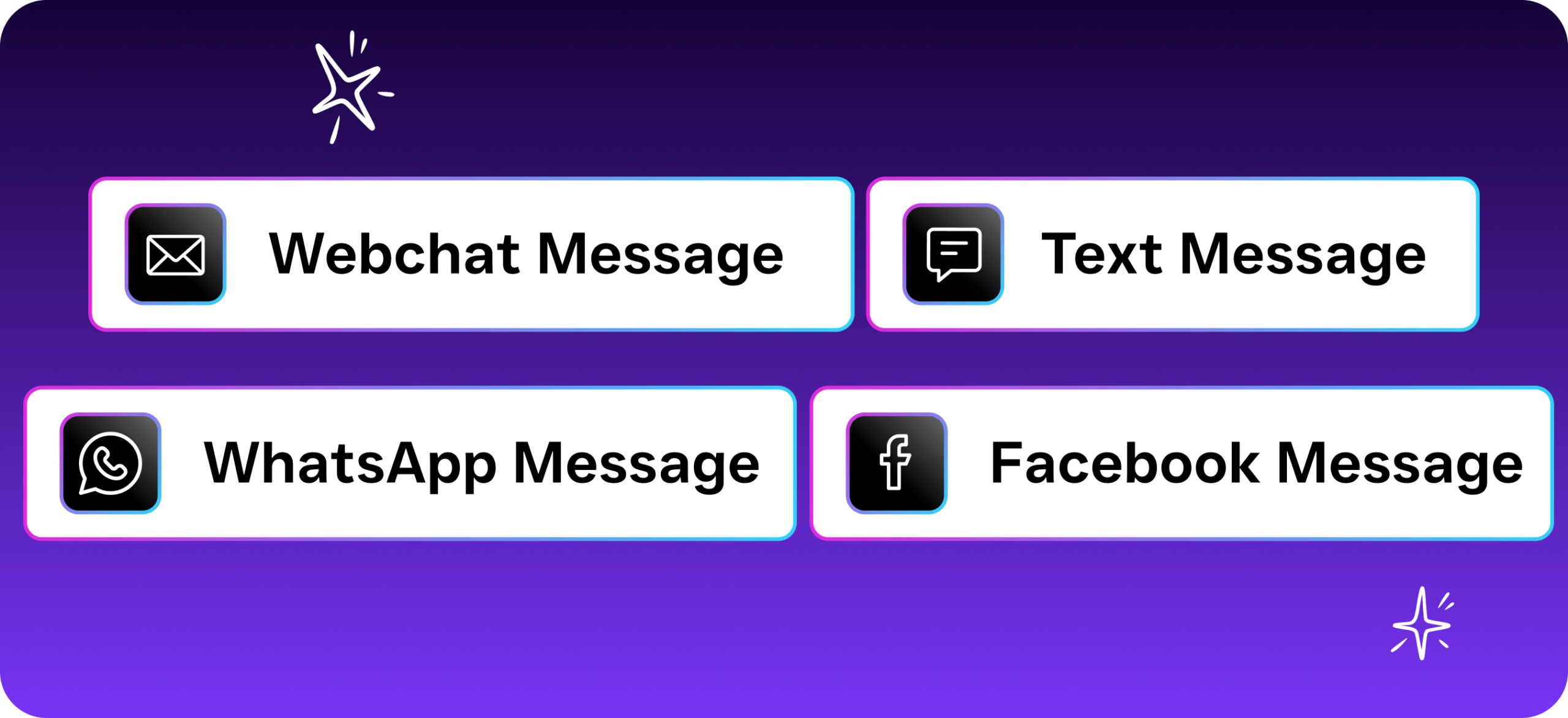
Today’s customers don’t just call anymore. They text. They send Instagram DMs. They use Facebook Messenger. They fill out webchat forms. What does that actually look like? SalesCaptain’s AI Chat Agents handle all of these channels with instant, intelligent responses that capture lead information, answer questions, and book appointments. The missed call text-back feature is particularly valuable: when a call goes unanswered for any reason, the system automatically sends a text to that caller within seconds, keeping the conversation alive. According to small business sales research compiled by Fit Small Business, speed of response is one of the strongest predictors of whether a lead converts. SalesCaptain’s AI agents respond in seconds across every channel, not hours or days.
Per-Location Pricing That Makes Sense
SalesCaptain’s pricing model is designed for the way service businesses actually operate. Free for one location. $159/month per location for Business. $300/month per location for Enterprise. A dental group with three offices pays for three locations. An HVAC franchise with 10 territories pays for 10 locations. There are no surprise costs for adding users, no feature gates that force you into a higher tier to unlock basic automation, and no annual contracts required to get reasonable pricing. AI call minutes are billed at $0.12 per minute, giving you transparent, predictable costs. HubSpot’s per-seat pricing model and tiered Hub structure create a very different cost curve, one that tends to spike as your team grows and your needs evolve.
Industry-Specific Integrations
SalesCaptain integrates with the tools service businesses already use. HousecallPro and ServiceFusion for home services. Clio for legal practices. Mindbody for wellness and fitness. Shopify for e-commerce. QuickBooks for accounting. Rezdy for booking-based businesses. It also connects to HubSpot, Salesforce, and Zoho for teams that want CRM functionality, plus Zapier for custom workflows with hundreds of other apps. While HubSpot’s marketplace has more total integrations, SalesCaptain’s list is curated for the industries it serves. Less time searching for the right connector. More time running your business.
Which Should You Choose: SalesCaptain or HubSpot?
The answer depends on what problem you’re solving and what kind of business you run. These two platforms aren’t direct substitutes. They overlap in some areas but serve fundamentally different purposes. Here’s a practical framework for deciding.
Choose HubSpot If…
Your business needs a full-scale CRM with deep marketing automation, content management,
Ready to see it in action?
See why agencies are switching from HubSpot to SalesCaptain for instant lead capture.
Book a Free Demo →Frequently Asked Questions
What is the main difference between SalesCaptain and HubSpot?
HubSpot is a comprehensive CRM and marketing suite designed for businesses of all sizes with multiple separate hubs for different functions, while SalesCaptain is a focused AI communication platform built specifically for service-based SMBs that handles calls, texts, social media, and appointment booking in one unified system.
Is HubSpot good for small service businesses?
HubSpot can work for small service businesses but may feel overwhelming, as its full feature set is spread across multiple pricing tiers and requires significant learning investment when simpler solutions might be needed. For businesses that just need to handle customer communication and booking more efficiently, the platform can feel like overkill.
What specific features does SalesCaptain offer for service businesses?
SalesCaptain combines an AI Phone Agent, AI Chat Agents, a unified inbox, a full business phone system, and workflow automation—all focused on answering calls, responding to texts and social media messages, booking appointments, and automating lead follow-ups.
Who is SalesCaptain designed for?
SalesCaptain is purpose-built for service-based SMBs including home services companies, legal practices, healthcare providers, salons, and real estate agencies that need to manage customer communication without complexity or excess features.
Why might a service business choose SalesCaptain over HubSpot?
A service business would choose SalesCaptain if they need a streamlined communication platform focused on answering calls, managing leads, and booking appointments without the steep learning curve and escalating costs of HubSpot’s multi-hub enterprise platform.