
AI-powered customer experience marketing (CXM) platform that helps local businesses win.


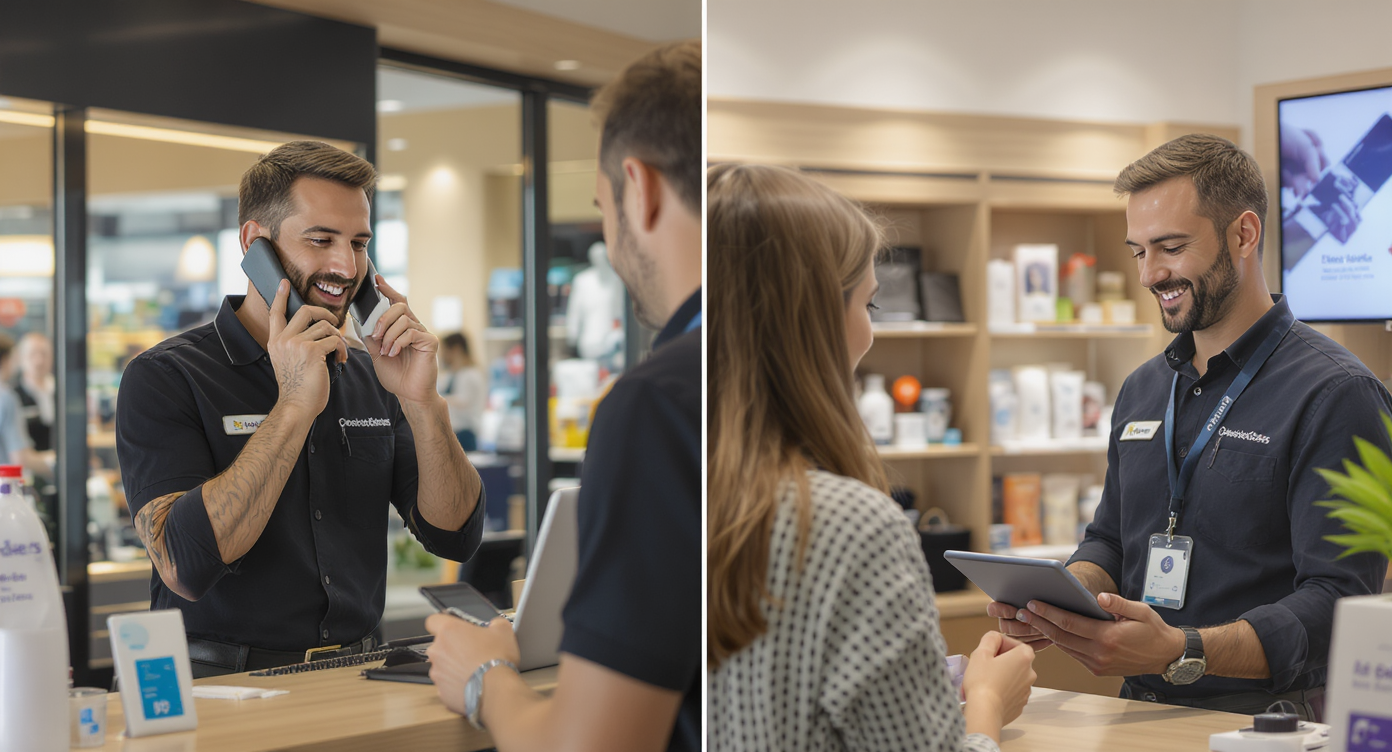
If you’re running a service business, you’ve probably hit the multichannel vs omnichannel question. Both approaches reach customers on multiple platforms. But here’s the thing: they work in fundamentally different ways. This guide breaks down the real differences, shows you where each strategy fits, and explains how to build a true omnichannel approach without overwhelming your team.
Multichannel vs omnichannel describes two different customer service approaches. Multichannel means operating on separate platforms where each channel works independently. Omnichannel integrates all platforms so customer data and conversations flow seamlessly across phone, email, text, and social media, creating a unified experience.
Free weekly newsletter
Growth tips for service businesses
Every Tuesday — actionable ideas to get more leads, reviews, and repeat customers. No fluff.
Quick Answer
Multichannel uses separate, independent sales channels where customers interact with each one distinctly. Omnichannel integrates all channels seamlessly, allowing customers to start on one platform and continue on another without friction. Omnichannel typically delivers better customer experience and loyalty, though multichannel requires less infrastructure investment. The best choice depends on your business complexity, budget, and customer expectations.
What Multichannel Communication Actually Means
Multichannel communication means your business is present on multiple platforms. You answer phone calls. You respond to Facebook messages. You send text reminders. You reply to emails. Sounds comprehensive, right? Here’s the catch: each channel operates independently. Your phone system doesn’t know what happened in a text conversation. Your social media inbox has zero connection to your call history.
Picture this scenario. A homeowner calls to ask about a quote, then texts the next day. If your team can’t see the call notes when they open that text thread, the customer repeats everything. According to Shopify’s breakdown of multichannel vs omnichannel, this fragmented experience is the single biggest limitation of multichannel strategies. You’re present on multiple channels, but you aren’t connected across them.
Common Multichannel Pitfalls for Service Businesses
For appointment-heavy businesses like dental offices, HVAC companies, or law firms, multichannel creates specific problems that go beyond customer frustration:
- Duplicate conversations: Two staff members respond to the same customer on different channels without realizing it.
- Lost context: A lead who filled out a web form calls in, and the person answering the phone has no idea they already submitted information.
- Inconsistent follow-up: Some channels get checked hourly, others get checked once a day. Leads slip through the gaps.
- No single source of truth: There’s no unified record of what was said, when, and on which platform.
These aren’t theoretical problems. A significant percentage of business calls go unanswered. And fragmented communication systems make it worse. According to research compiled by Aira, there’s no automated fallback when a call is missed, so opportunities disappear.
What omnichannel communication Actually Means
Omnichannel connects every channel your business uses into one continuous experience. The customer doesn’t explain their situation twice. Your team doesn’t toggle between five apps. Every interaction—phone call, text, Instagram DM, webchat—flows into one place with full context attached.
The difference is more than operational. It’s strategic. PayPal’s guide to omnichannel marketing highlights that businesses using connected communication see higher customer retention. The experience feels personal and consistent, regardless of channel.
Why Omnichannel Matters More for Service Businesses Than Retail
Most omnichannel content online focuses on retail and e-commerce. But the impact is actually greater for service businesses. When someone needs a plumber at 9 PM or a dental office on a Saturday morning, that first interaction determines everything. Do they book or call the next company on Google? Retail customers can browse and come back. Service customers need answers now.
An omnichannel approach ensures consistency. Whether a potential customer calls, texts, or messages on Facebook, they get the same fast, informed response. And your team sees the full picture without hunting through separate inboxes. According to FitSmallBusiness’s omnichannel statistics, businesses with strong omnichannel customer engagement retain significantly more customers year over year.
Multichannel vs Omnichannel: A Side-by-Side Comparison
Before diving into specific tools, it helps to see the core differences in one place. This table compares the two approaches on the dimensions that matter most for service businesses.
| Dimension | Multichannel | Omnichannel |
|---|---|---|
| Channel availability | Multiple channels available | Multiple channels available |
| Channel integration | Channels operate independently | All channels connected in one system |
| Customer experience | Varies by channel | Consistent across every channel |
| Conversation history | Siloed per platform | Unified contact record |
| Team collaboration | Staff check multiple apps | One shared inbox for all messages |
| Follow-up consistency | Manual, prone to gaps | Automated workflows across channels |
| After-hours coverage | Typically none or voicemail only | AI agents handle calls, texts, and chats 24/7 |
| Scalability | Add more staff per channel | Add more automation, not more staff |
The pattern is clear. Multichannel gives you presence. Omnichannel gives you connection. For service businesses handling dozens of customer interactions daily, that connection turns leads into booked appointments.
How to Choose Between Multichannel and Omnichannel
Not every business needs full omnichannel on day one. If you’re a solo operator handling five calls a day and the occasional text, basic multichannel might work for now. But add a second team member, a second location, or a second channel? The cracks show fast.
Signs You’ve Outgrown Multichannel
- Your team regularly asks, “Did someone already respond to this customer?”
- Leads mention that they called but never heard back, even though you’re sure someone answered.
- You’re spending more than 30 minutes a day switching between phone, text, email, and social apps.
- After-hours inquiries sit unread until the next business day, and by then the customer has booked elsewhere.
- You can’t easily pull up a customer’s full communication history across channels.
Sound familiar? You’re already losing revenue. Bynder’s research on omnichannel strategy reinforces that customers now expect brands to know their history. Falling short doesn’t just frustrate people. It sends them to competitors.
What It Takes to Go Omnichannel Without the Complexity
The biggest objection service business owners raise is complexity. And honestly, that concern is valid. When you look at enterprise platforms designed for Fortune 500 companies, they require months of setup, dedicated IT teams, and six-figure budgets. But that’s not the only path.
SalesCaptain was built specifically for service businesses that want omnichannel communication without enterprise overhead. It brings calls, SMS, webchat, Instagram DMs, Facebook Messenger, WhatsApp, and email into a single Unified Inbox where your entire team can collaborate. Every conversation, regardless of channel, is attached to one contact record with full history.
The AI Layer That Makes Omnichannel Practical
Having one inbox is only half the equation. The other half is ensuring messages get handled, especially outside business hours. SalesCaptain’s AI Phone Agent answers calls 24/7 with natural-sounding voice AI. It can book appointments, qualify leads, answer FAQs, and block spam calls. No voicemail purgatory. No missed opportunities at 8 PM on a Tuesday.
On the messaging side, AI Chat Agents handle incoming texts, webchat conversations, and social DMs instantly. What does that look like in practice? A potential customer messages your Facebook page at midnight. They don’t wait until morning for a response. The AI responds, captures their information, and can even schedule an appointment—all without waking anyone up. According to Greet’s analysis of missed call costs, the financial impact of slow or missed responses adds up quickly for small businesses.
Automation That Connects the Dots
SalesCaptain’s Workflow Automation builder lets you create trigger-based sequences across channels. A missed call can automatically fire a text-back message. A new lead from a web form can trigger an appointment reminder sequence via SMS. Post-call summaries generated by AI Transcription and Summaries ensure nothing discussed on a call gets lost. Follow-up tasks become clear for your team.
Because SalesCaptain integrates with over 50 tools including HubSpot, Salesforce, Zoho, HousecallPro, ServiceFusion, and QuickBooks, your communication data flows into whatever systems you already use. That’s the real promise of omnichannel: not just talking to customers on multiple platforms. It’s making every interaction inform the next one.
Why Most “Omnichannel” Tools Aren’t Actually Omnichannel
Here’s something the competitor landscape won’t tell you directly: many platforms that market themselves as omnichannel are really just multichannel tools with a shared dashboard. They’ll show you texts and calls in one view. But they won’t offer AI agents that respond across channels. They won’t provide real-time call analytics with sentiment analysis. And they won’t automate cross-channel workflows.
SalesCaptain combines AI voice agents, AI chat agents, a unified inbox, call flow builder, and workflow automation in one platform. Most competitors offer pieces of this stack. Some have strong messaging but weak phone systems. Others have decent calling but no AI, no WhatsApp, and no social media integration. For a deeper look at how omnichannel differs from multichannel in practice, Coveo’s analysis is worth reading.
SalesCaptain’s per-location pricing also makes it accessible. Free for one location, $159/month per location for the Business plan. You don’t need a $500/month seat license or a 12-month contract to start connecting your channels.
Frequently Asked Questions
What’s the simplest way to explain multichannel vs omnichannel?
Multichannel means your business is reachable on multiple platforms. But each one works independently. Omnichannel means all those platforms are connected. Every team member sees the full conversation history regardless of which channel the customer used. The customer experience is consistent rather than fragmented.
Can a small business actually implement omnichannel communication?
Yes. Platforms like SalesCaptain are specifically designed for SMBs with 1 to 200 employees. You don’t need an IT department or months of setup. The drag-and-drop builders for call flows and workflow automation mean you can connect your channels in hours, not weeks.
Does omnichannel communication require AI?
It doesn’t strictly require AI. But AI makes omnichannel dramatically more effective. Without AI, someone on your team still has to monitor and respond on every channel. With AI phone and chat agents, your business can respond 24/7 across calls, texts, and social messages without adding headcount.
How does omnichannel help with missed calls?
In an omnichannel setup, a missed call doesn’t end the conversation. SalesCaptain’s AI Phone Agent can answer the call automatically. Or if the call does go unanswered, a missed-call text-back triggers immediately. The customer stays engaged instead of moving on to a competitor.
Is omnichannel more expensive than multichannel?
It depends on what you’re comparing. Cobbling together separate apps for phone, text, social, and email often costs more than a single omnichannel platform. SalesCaptain offers a free plan for one location. You can test a fully connected approach before committing to a paid tier.
Ready to see it in action?
See how service businesses use SalesCaptain to handle calls, texts, and emails seamlessly.
Ready to Move from Multichannel to True Omnichannel?
SalesCaptain gives service businesses everything they need to connect calls, texts, webchat, social messages, and email in one AI-powered platform. No technical expertise required. No enterprise pricing. Start with the free plan and see what connected communication looks like for your business.