
AI-powered customer experience marketing (CXM) platform that helps local businesses win.


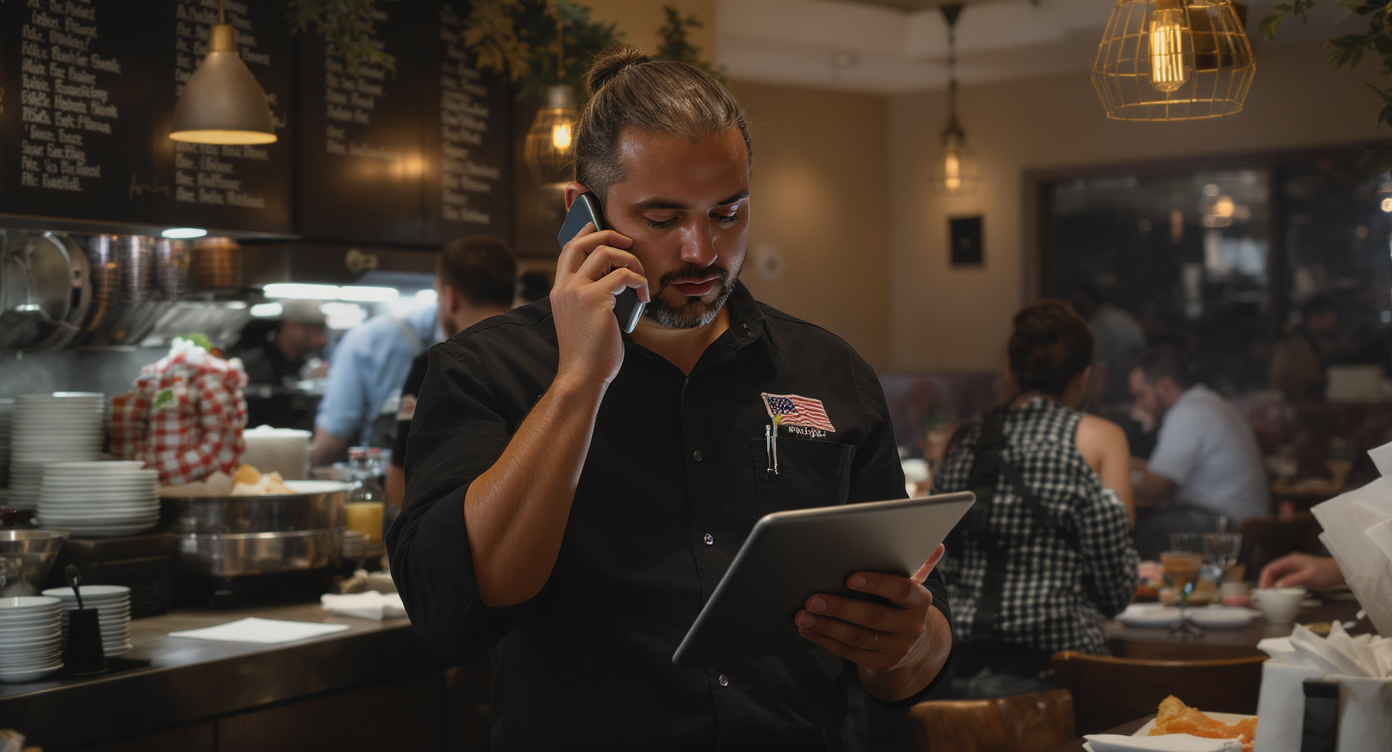
A guest calls your restaurant during the Friday dinner rush to book a party of 12 for next weekend. Nobody picks up. Everyone’s slammed. That reservation goes to the place down the street, and you never even know it happened. Sound familiar? If you’re using OpenPhone and running into limits like minimal AI, no real-time call coaching, and no way to automatically text back missed calls, it’s time to look at an OpenPhone alternative for restaurants that’s actually built for the pace and pressure of food service.
An OpenPhone alternative for restaurants is a business phone system built specifically for food service operations. It handles high call volumes during peak hours, manages reservations automatically, coaches staff on calls in real-time, and texts customers back when calls are missed—solving problems OpenPhone wasn’t designed to address.
What Is an OpenPhone Alternative for Restaurants
An OpenPhone alternative for restaurants is a business phone and communication platform that replaces or upgrades what OpenPhone offers. It specifically tackles restaurant challenges. OpenPhone works fine as a lightweight virtual phone system for startups, but restaurants face problems it wasn’t designed to solve: high call volumes during peak hours, reservation management, after-hours inquiries, and coordinating across front-of-house, back-of-house, and off-site catering teams.
The right alternative does much more. It handles missed-call text-back automatically. Routes calls based on time of day or department. And ideally uses AI to answer common questions like hours, menu options, and reservation availability without tying up your staff. According to the National Restaurant Association’s Technology Landscape Report, the majority of restaurant operators now view technology as a competitive advantage rather than a cost center. Your phone system should reflect that shift.
Why Restaurants Outgrow OpenPhone
OpenPhone costs $15 per user and handles the basics well. You get a business number, shared inboxes, and some automation snippets. But restaurants aren’t typical small businesses. Here’s where OpenPhone falls short.
No AI Voice Agent
OpenPhone doesn’t offer an AI-powered phone agent that can pick up calls. It can’t answer questions about your menu or hours. It won’t book reservations on its own. Every unanswered call during a rush is a potential lost customer. Research from Zadarma’s missed call cost study found that businesses lose significant revenue from calls that go to voicemail. Most callers simply won’t leave one.
No Call Coaching or Whispering
Training new hosts takes time. They need to handle phone orders, catering inquiries, and complaint calls. OpenPhone doesn’t offer real-time call coaching or whispering, so managers can’t guide a new employee through a tricky call without the caller hearing it. For restaurants with seasonal staff turnover, that’s a real problem.
No Call Queueing or Sentiment Analysis
Peak periods mean multiple calls hit at once. Without call queueing, those callers hear a busy signal or get dumped to voicemail. And without sentiment analysis, you’ve got no way to flag calls where a customer was upset. Your manager can’t follow up on those conversations. OpenPhone lacks both features entirely.
Limited Integrations for Restaurant Workflows
OpenPhone offers just 7 integrations. Compare that to platforms with 50+ native integrations. Those connect to POS systems, CRMs, and scheduling tools. Restaurants running HousecallPro for catering logistics, QuickBooks for accounting, or Zapier-driven automations need a system that fits into their tech stack. Not something sitting beside it.
What to Look for in a Restaurant Phone Platform
Not every OpenPhone alternative suits restaurant operations. Before evaluating options, know exactly which features matter in food service. According to SpotOn’s restaurant industry statistics, phone orders and reservations remain a primary revenue channel even as online ordering grows. Your phone system needs to protect that channel.
- 24/7 call answering with AI: Guests call outside business hours for next-day reservations, event inquiries, and catering quotes. An AI agent that handles these calls without human involvement captures revenue you’d otherwise miss entirely.
- Missed-call text-back: When a call goes unanswered, the system should automatically send an SMS so the guest can text their request. Most callers won’t leave voicemail, but they will respond to a text.
- Call flows with IVR: A drag-and-drop call flow builder lets you route calls by department (reservations, catering, management) or time of day (lunch rush vs. off-peak) so the right person handles each call.
- Unified inbox across channels: Guests reach out via phone, text, Instagram DMs, Facebook Messenger, and webchat. Managing five separate apps creates chaos during service. One inbox keeps everything visible.
- Call queueing and routing: During peak hours, callers should hear hold music and a position update rather than a busy tone. Proper queueing reduces hangups dramatically.
- Voicemail drop and transcription: Pre-recorded voicemail drops save time on outbound confirmation calls. AI transcription turns every voicemail into searchable text so nothing slips through the cracks.
- Payments via text: For catering deposits, large party prepayments, or gift card orders, the ability to send a payment link over SMS closes the transaction instantly without requiring the guest to call back.
Research from CallJolt’s missed call research shows that small businesses miss a substantial percentage of inbound calls. Restaurant environments with their inherent noise and multitasking are particularly vulnerable. These features aren’t luxury additions. They’re essential for restaurants taking phone revenue seriously.
How Top Alternatives Compare for Restaurant Use
Let’s put the most commonly mentioned OpenPhone alternatives side by side. We’re focusing on what actually matters for restaurants. Each of these platforms gets recommended in various roundups of OpenPhone alternatives, but their fit for food service varies widely.
| Feature | OpenPhone | Aircall | Nextiva | Dialpad | SalesCaptain |
|---|---|---|---|---|---|
| Starting Price | $15/user | $30/license | $20/user | $15/user | Free (1 location) |
| AI Voice Agent | No | No | No | No | Yes |
| Missed-Call Text-Back | No | No | No | No | Yes |
| Call Coaching / Whispering | No | No | No | No | Yes |
| Call Queueing | No | Yes | Yes | Yes | Yes |
| Unified Inbox (SMS, Social, Web) | Limited | No | Limited | Limited | Yes |
| Payments via Text | No | No | No | No | Yes |
| IVR / Call Flow Builder | Basic | Yes | Yes | Yes | Yes (drag-and-drop) |
| Integrations | 7 | 100+ | Limited | 70+ | 50+ |
| Voicemail Drop | No | No | No | No | Yes |
A few things stand out immediately. Aircall has deep integrations, but at $30 per license it’s the most expensive option here. It lacks an AI voice agent, missed-call text-back, and real-time AI for calls. That’s a significant gap. Nextiva caps SMS at 250 messages per user per month, which is problematic for a restaurant sending reservation confirmations and promotional texts. Dialpad is solid for sales teams but doesn’t offer toll-free minutes, social chat, or WhatsApp natively. And honestly? None of these were designed with service businesses in mind.
For a deeper look at how restaurant-specific phone systems stack up, DialerHQ’s comparison covers additional options worth reviewing. However, most of those roundups focus on traditional VoIP features. They miss AI-powered communication, which is where the market is heading fast.
How SalesCaptain Helps
SalesCaptain was built for service businesses. Restaurants fit that mold perfectly. It combines an AI Phone Agent, AI Chat Agents, a Unified Inbox, and workflow automation in a single platform. None of the alternatives above offer all of that together.
What does that look like in practice? During your Friday dinner rush, SalesCaptain’s AI Phone Agent picks up every call. It answers questions about tonight’s specials and confirms your hours. It books a reservation for that party of 12 without pulling a single staff member off the floor. If someone calls after close asking about catering for a corporate event, the AI captures their details, books a callback, and sends an instant text confirmation.
Meanwhile, your Unified Inbox is working. It pulls in Instagram DMs from guests asking about gluten-free options. Texts from a vendor confirming tomorrow’s delivery. A webchat message from someone looking at your private dining page. Your manager sees all of it in one place instead of juggling five apps. Call coaching lets you whisper guidance to a new host handling a complaint call. Sentiment analysis flags conversations that need manager follow-up. It’s that simple.
- Payments via text let you collect catering deposits without phone tag
- Workflow automation sends reservation reminders and post-visit review requests automatically
- AI summaries and transcriptions create a searchable record of every catering inquiry and large-party request
- High-volume SMS handles promotional campaigns for slow nights without hitting message caps
The free Startup plan covers one location. The Business plan runs $159/month per location. That’s less than a single part-time host. And it works 24/7 without calling in sick. For multi-location restaurant groups, per-location pricing keeps costs predictable as you scale.
Key Takeaways
OpenPhone serves as a functional virtual phone system. But restaurants need more. High call volumes during peak hours, after-hours reservation requests, multi-channel guest communication, and seasonal staff turnover create demands that OpenPhone simply wasn’t designed to meet.
The right OpenPhone alternative for restaurants should include AI-powered call answering. Missed-call text-back. Call queueing. A unified inbox. And payment collection via SMS. Most popular alternatives like Aircall, Nextiva, and Dialpad each cover some of these needs. But they miss critical pieces—especially AI voice agents and service-business-specific features. SalesCaptain is the only platform that bundles all of these capabilities into one tool. It starts with a free plan. For any restaurant serious about capturing every reservation and guest inquiry, it’s the strongest choice on the market today.
Frequently Asked Questions
Can an AI phone agent really handle restaurant reservation calls?
Absolutely. Modern AI voice agents sound natural. They ask about party size, preferred date and time, dietary restrictions, and contact information. They book the reservation, send an SMS confirmation, and log everything in your system. SalesCaptain’s AI Phone Agent handles these conversations 24/7. That includes after-hours calls that would otherwise go unanswered.
How does missed-call text-back work for restaurants?
When a call goes unanswered, the system automatically sends the caller a text within seconds. For a restaurant, this might say something like “Sorry we missed your call! Text us your reservation details and we’ll confirm shortly.” Most people respond to texts faster than they leave voicemails. You recover calls that would’ve been lost entirely.
Is SalesCaptain affordable for a single-location restaurant?
SalesCaptain offers a free Startup plan for one location. The Business plan is $159/month per location. It covers AI phone and chat agents, unified inbox, workflow automation, and 50+ integrations. AI call minutes are billed at $0.12/minute. That’s significantly less than hiring additional staff to cover phones.
What happens during peak hours when multiple guests call at once?
SalesCaptain includes call queueing. Callers hear hold music and wait in line instead of getting a busy signal. Calls can also route to the AI Phone Agent so it handles common questions. Your staff focuses on in-house guests. Combined with call routing rules based on time of day, you won’t lose callers during the rush.
Can SalesCaptain handle catering and large-party inquiries automatically?
Absolutely. The AI Phone Agent can qualify catering leads by asking about event date, guest count, budget range, and menu preferences. It logs everything in the system and sends the caller a text summary. A workflow notifies your catering manager automatically. AI transcriptions and summaries ensure nothing gets missed in the handoff.
See How SalesCaptain Can Help Your Restaurant
Stop losing reservations and catering leads to missed calls. SalesCaptain’s AI Phone Agent, Unified Inbox, and workflow automation give your restaurant 24/7 coverage without adding staff. Start with the free plan and see the difference in your first week.