
AI-powered customer experience marketing (CXM) platform that helps local businesses win.


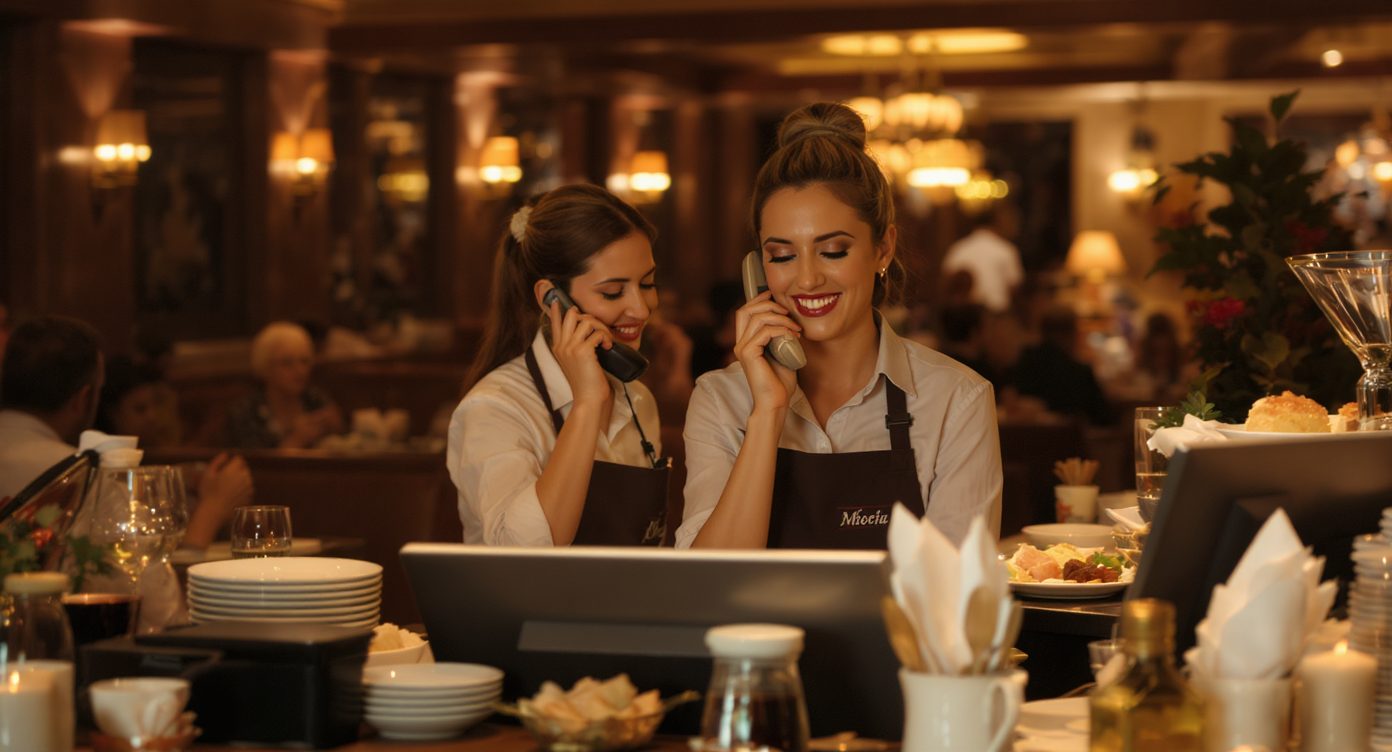
Your restaurant’s phone rings at 6:45 PM on a Friday night. The host is seating a party of eight, two servers just called out sick, and the kitchen is backed up. Nobody picks up. That caller wanted to book a reservation for twelve people next weekend, and now they’re dialing your competitor down the street. An AI receptionist for restaurants in Phoenix prevents exactly this scenario, turning every missed call into a captured opportunity without adding a single person to your payroll.
An AI receptionist for restaurants in Phoenix is voice-powered software that answers calls 24/7, books reservations, answers questions about hours and menu, and routes urgent issues to managers. It eliminates missed calls and captures reservation opportunities without hiring additional staff.
What Is an AI Receptionist for Restaurants?
An AI receptionist is a voice-powered software agent that answers your restaurant’s phone line, speaks naturally with callers, and handles routine tasks like booking reservations, answering menu questions, confirming hours, and routing urgent calls to a manager. Unlike a traditional answering service staffed by humans, an AI receptionist works around the clock. Zero hold times. Consistent accuracy every single time.
Think of it as an always-on host stand for your phone line. The technology uses natural language processing to understand what callers need, then responds conversationally. It can confirm party sizes, explain dietary accommodations, take down special event details, and send follow-up texts with confirmation info. Because it handles calls simultaneously, your guests never hear a busy signal, even during your Friday and Saturday dinner rush.
Why Phoenix Restaurants Can’t Afford to Miss Calls
Phoenix’s restaurant scene is fiercely competitive. The city’s population growth has fueled a boom in new openings, from fast-casual concepts in Scottsdale to fine dining in the Arcadia corridor. According to the National Restaurant Association’s industry statistics, the restaurant industry continues to be one of the largest private-sector employers in the country, and Arizona is no exception. More restaurants mean more choices for diners. That means a single missed call sends a customer elsewhere permanently.
The Real Cost of a Missed Call
Most restaurant owners underestimate how much revenue slips away when calls go unanswered. Research from CallJolt’s analysis of missed call data shows that small businesses lose significant revenue each year from calls they don’t pick up. For a restaurant, each missed reservation could represent a table of four spending $50 per person. Multiply that across a busy week, and you’re looking at serious losses.
It’s not just about the immediate sale, either. A caller who can’t reach you once might never try again. And during peak hours, when your staff is juggling in-person guests, phone calls naturally become the lowest priority. That’s precisely when call volume tends to spike, creating a frustrating paradox.
Staffing Challenges Make It Worse
Finding and keeping front-of-house staff remains one of the biggest headaches in Phoenix’s restaurant industry. Data from the Bureau of Labor Statistics shows that hosts and hostesses earn relatively modest wages, yet turnover in these roles stays persistently high. Every time a host quits, your phone coverage suffers during the gap. An AI receptionist eliminates that vulnerability entirely. It doesn’t call in sick, doesn’t quit without notice, and doesn’t get overwhelmed during a Saturday night rush.
How an AI Receptionist Works in a Restaurant Setting
Setting up an AI phone agent for your restaurant isn’t the complex IT project you might imagine. Modern platforms let you configure the agent’s knowledge base, voice personality, and call handling rules without writing a single line of code. Here’s what the day-to-day operation actually looks like.
Answering Common Questions Instantly
Roughly 60-70% of calls to a restaurant fall into predictable categories: hours of operation, menu inquiries, reservation availability, parking information, and private event requests. An AI receptionist handles all of these instantly. You load your menu, hours, and policies into the system once, and the agent draws from that knowledge base for every call.
- Hours and location: Callers hear accurate, up-to-date information without your staff pausing service to answer the phone.
- Menu questions: The agent can describe dishes, list allergen information, and explain daily specials you’ve programmed in.
- Reservation booking: Callers provide their party size, preferred date, and time. The agent confirms availability and sends a text confirmation.
- Private events and catering: For complex inquiries, the agent captures details and routes the lead to your events manager via text or email.
Handling After-Hours and Overflow Calls
Many reservation calls come in between 2 PM and 5 PM, exactly when most restaurants run a skeleton crew during the gap between lunch and dinner service. After-hours calls are another huge blind spot. Someone planning a birthday dinner at 10 PM on a Tuesday won’t wait until you open tomorrow. An AI receptionist captures that booking immediately and sends a confirmation, so the caller commits before shopping around.
During peak hours, the agent handles overflow. Your host is on the phone with one caller and two more ring in? The AI picks up those simultaneous calls. No hold music, no voicemail, no lost customers.
Blocking Spam and Routing Urgent Calls
Restaurant phone lines attract a surprising amount of spam, from supply company sales pitches to robocalls. An AI agent identifies and blocks these, saving your team’s time. Meanwhile, truly urgent calls get routed directly to the right person. A supplier reporting a delivery issue. A guest with a medical concern. You set the rules, and the system follows them.
What to Look for in an AI Receptionist Platform
Not every AI phone solution fits a restaurant’s needs. Some tools are built for sales teams or healthcare practices and don’t adapt well to the hospitality workflow. According to Tested Media’s AI Receptionist Buyer’s Guide, the most important factors for buyers are natural-sounding voice quality, integration depth, and transparent per-minute pricing. Here’s what matters specifically for Phoenix restaurants.
- Natural voice quality: Callers should feel like they’re speaking with a person, not a robot. Stilted or overly mechanical voices create a negative first impression for your brand.
- Multichannel follow-up: The best platforms don’t just answer calls. They send text confirmations, follow up on missed calls via SMS, and connect to your existing reservation or POS system.
- Easy setup without IT staff: Restaurant owners aren’t developers. You need a drag-and-drop interface for building call flows and updating your agent’s knowledge base.
- Transparent pricing: Some platforms hide costs behind per-user or per-feature tiers. Look for clear per-minute pricing so you can predict your monthly spend accurately.
- Spam blocking: A platform that filters junk calls before they reach your staff saves hours of interruption every week.
Tools like Podium and Birdeye focus heavily on reputation management and reviews, but they lack features like call routing, IVR builders, and AI-powered voice agents. Aircall is designed for call center teams and charges $30 per license without offering real-time AI for calls or missed-call text-back. For a restaurant that needs inbound call handling plus automated text follow-ups, these gaps matter.
Why Phoenix Restaurants Choose SalesCaptain
Phoenix small businesses face a unique combination of high call volume, seasonal tourist surges, and tight labor markets. SalesCaptain’s AI Phone Agent was built for exactly this environment. It answers calls 24/7 with a natural-sounding voice, books appointments and reservations, qualifies leads for private events or catering, and blocks spam. No technical expertise needed to set up.
What makes it particularly useful for restaurants is the combination of voice and text in one platform. After the AI agent confirms a reservation by phone, SalesCaptain’s AI Chat Agents can send an automated text confirmation and a reminder the day before. Everything flows into a single Unified Inbox where your manager can see every customer interaction in one place. Calls, texts, webchat messages, social media DMs—all together.
- After-hours capture: Your AI agent takes reservation requests at midnight and sends confirmations instantly.
- Missed call text-back: If a caller hangs up before the agent answers, an automated text goes out within seconds.
- Call flow builder: Drag-and-drop interface lets you create custom call paths, routing event inquiries to your catering manager and reservation calls to the AI agent.
- AI summaries and transcriptions: Every call is transcribed and summarized so your team can review guest requests, special dietary needs, or complaints without re-listening to recordings.
- 50+ integrations: Connect to tools like HubSpot, Zapier, or QuickBooks to keep your CRM and accounting in sync.
Pricing starts with a free plan for a single location. For multi-location restaurant groups across the Phoenix metro, the per-location pricing at $159/month for the Business plan scales affordably. AI call minutes run $0.12 per minute, which is a fraction of what you’d pay a human answering service like Smith.ai or Ruby per call.
Key Takeaways
An AI receptionist for restaurants in Phoenix solves one of the most persistent problems in hospitality: missed calls during the moments when your team is busiest serving guests in person. The technology has matured now. Callers genuinely can’t tell they’re speaking with an AI agent, and setup takes hours, not weeks.
Phoenix restaurants that adopt this technology gain a measurable edge. They capture reservations around the clock, eliminate the staffing gap at the host stand, and follow up with every caller via text automatically. The restaurants that don’t adopt it will keep losing those Friday night twelve-tops to the place down the street that picks up on the first ring. Your phone line is either working for you or against you. There’s no middle ground.
Frequently Asked Questions
Can an AI receptionist handle complex reservation requests like large parties or special accommodations?
Yes. Modern AI phone agents can ask follow-up questions about party size, preferred seating, dietary restrictions, and special occasions. For requests that need human judgment, like negotiating a buyout fee for a private event, the agent captures all the details and routes the lead to your events manager via text or email. Nothing falls through the cracks.
Will callers know they’re talking to an AI and not a real person?
Today’s AI voice agents sound remarkably natural, with conversational pacing, pauses, and tone variation. Most callers won’t realize they’re speaking with software. However, you can choose to disclose it upfront if transparency is important to your brand. Either approach works smoothly.
How long does it take to set up an AI receptionist for my restaurant?
With a platform like SalesCaptain, most restaurant owners can configure their AI agent in a few hours. You’ll load your menu, hours, reservation policies, and any FAQs into the knowledge base, build your call flow with the drag-and-drop builder, and forward your business line. No developer or IT staff needed.
What happens if the AI agent can’t answer a caller’s question?
Well-designed AI agents have fallback rules built into their call flows. If the agent encounters a question outside its knowledge base, it can transfer the caller to a live staff member, take a message, or send the caller a text with instructions to reach the right person. You control exactly how these situations are handled.
Is an AI receptionist cost-effective compared to hiring another host or using an answering service?
Significantly. According to BLS wage data for hosts and hostesses, the average annual salary for a restaurant host represents a substantial ongoing labor cost. And that’s before benefits, turnover, and training expenses. Human answering services charge per call or per minute at rates that climb quickly during high-volume periods. An AI receptionist at $0.12/minute with no per-user fees offers predictable, lower costs. Your actual call volume determines your spend.
Does SalesCaptain integrate with restaurant reservation systems?
SalesCaptain offers 50+ native integrations including Zapier, which connects to most major reservation and POS platforms. Through SpotOn and similar tools, you can sync reservation data, customer records, and follow-up workflows so your AI receptionist feeds directly into your existing operations.
See How SalesCaptain Can Help Your Phoenix Restaurant
Join Phoenix businesses already using SalesCaptain to answer every call, book more reservations, and follow up automatically. Set up your AI Phone Agent in hours, not weeks, and stop losing revenue to missed calls tonight.