
AI-powered customer experience marketing (CXM) platform that helps local businesses win.


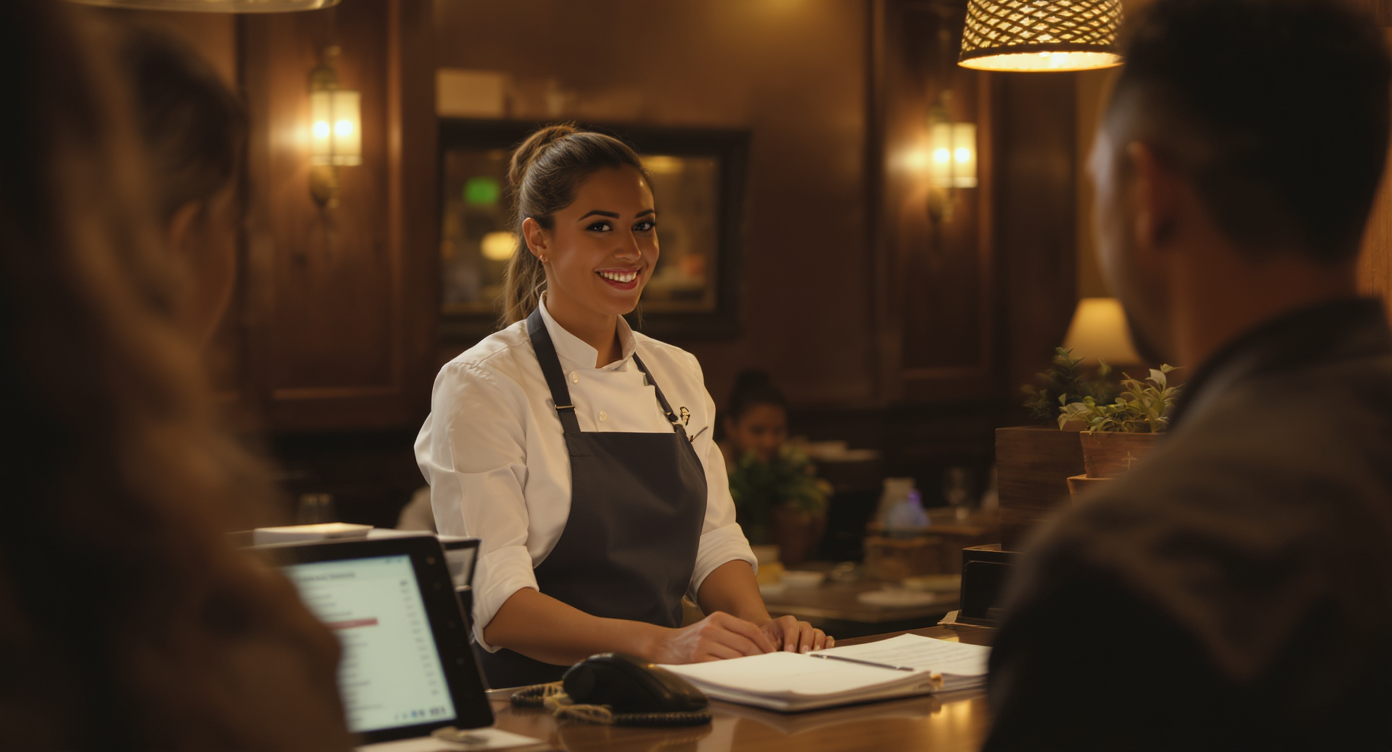
It’s 6:45 PM on a Friday. A customer calls your restaurant about a party of twelve. The phone rings six times and goes to voicemail. That reservation never happens. For restaurants across Seattle, missed calls during peak hours aren’t just an inconvenience. They’re lost revenue that adds up fast. And when your staff is already stretched thin between the dining room and the kitchen? It gets worse.
An AI receptionist for restaurants in Seattle is a voice-powered system that answers calls 24/7, handling reservations, menu questions, and directions without human staff. It captures calls during peak hours that would otherwise go to voicemail, reducing lost revenue from missed bookings.
What Is an AI Receptionist for Restaurants?
An AI receptionist for restaurants in Seattle is a voice-powered agent that answers incoming calls on behalf of your restaurant, 24 hours a day, without requiring a human to pick up the phone. It handles reservation requests, answers questions about your menu or hours, provides directions, qualifies catering inquiries, and routes urgent calls to the right person. Unlike a traditional answering machine, an AI receptionist holds a natural-sounding conversation with callers in real time. Sound familiar?
Think of it as a front-of-house team member. Its only job is the phone. It doesn’t take breaks, doesn’t get overwhelmed during the dinner rush, and doesn’t accidentally put a caller on hold for five minutes. According to industry research on the cost of missed calls, restaurants lose significant revenue annually from unanswered phones. An AI receptionist closes that gap.
Why Restaurants Struggle With Phone Communication
Restaurant communication has a unique set of challenges. Your busiest call volume happens at the exact same time your staff is busiest on the floor. That overlap creates a structural problem. No amount of hiring fully solves it.
Peak Hours Collide With Peak Call Volume
Lunch and dinner rushes generate the most phone calls. But they’re also when your hosts, servers, and managers are handling guests, coordinating orders, and managing the kitchen. Picking up the phone means pulling someone away from a table. Not picking up means losing a potential booking. According to missed call data for small businesses, the majority of callers who reach voicemail won’t leave a message and won’t call back. They’ll simply move on to the next restaurant.
The Staffing Reality
Seattle restaurants operate in one of the country’s most competitive labor markets. Finding and retaining front-of-house staff is already difficult. Bureau of Labor Statistics data on hosts and hostesses shows the scale of the restaurant workforce. Turnover in the industry remains persistently high. Hiring a dedicated phone person? Most restaurants can’t justify it. Especially when call volume fluctuates dramatically between lunch, dinner, and off-peak hours.
Multiple Channels Create Chaos
Phones are only part of the picture. Customers also reach out through Instagram DMs, Facebook Messenger, Google Business messages, website chat widgets, and text. Without a system to manage all of these in one place, messages fall through the cracks. A catering inquiry on Instagram goes unread for two days. A text about a dietary restriction never reaches the kitchen. Each missed touchpoint erodes trust and costs you business.
How AI Receptionists Actually Work in a Restaurant Setting
Understanding the technology helps you evaluate whether it’s the right fit. Modern AI voice agents aren’t the clunky phone trees of ten years ago. What does that look like in practice?
The Caller’s Experience
When someone calls, the AI agent picks up immediately. No hold music. No “please listen carefully as our menu options have changed.” Instead, the caller hears a natural-sounding voice that greets them and asks how it can help. If they want to make a reservation, the AI walks through date, time, and party size. For menu questions, it pulls from the information you’ve provided and answers directly. Complex requests get routed to a manager or flagged for follow-up.
What Happens Behind the Scenes
Every call generates a transcript and summary. Your team can review exactly what was discussed without listening to recordings. The AI logs reservation details, captures caller contact information, and triggers automated follow-ups like confirmation texts. All of this data flows into a centralized system where your team can see it alongside texts, chats, and social messages.
Here’s what a restaurant AI receptionist typically handles:
- Reservation booking: Collects date, time, party size, and special requests
- FAQ answering: Hours, location, parking, dress code, dietary accommodations
- Catering and event qualification: Captures budget, guest count, and preferred date before routing to your events team
- After-hours coverage: Answers calls when you’re closed and sends follow-up texts so you don’t lose the lead
- Spam blocking: Filters robocalls and solicitors so your team never wastes time on them
- Call routing: Sends urgent matters to a manager’s cell while handling routine questions independently
What It Doesn’t Replace
An AI receptionist isn’t meant to replace human hospitality. It handles the repetitive, high-volume phone interactions. Your staff can focus on the people sitting in front of them. When a caller needs a nuanced conversation, like discussing a custom wine pairing for a corporate dinner, the AI routes that call to a real person. The goal is triage, not total replacement.
Why Seattle Restaurants Should Pay Attention Now
Seattle’s restaurant scene is competitive. From Capitol Hill to Ballard to Pioneer Square, diners have options. Your response speed and consistency directly affect whether someone books with you or the place down the street.
Several trends make AI receptionists particularly relevant right now. The city’s minimum wage is among the highest in the nation. That makes dedicating staff to phone duty expensive. Seattle’s dining culture skews toward reservations and planned outings, so phone inquiries carry real revenue weight. And the growing density of multi-location restaurant groups means communication consistency across sites is a genuine operational challenge.
According to SpotOn’s analysis of restaurant industry statistics, customer expectations for speed and convenience continue to rise. An AI receptionist meets those expectations. You don’t need to expand your payroll. As the National Restaurant Association’s state of the industry report notes, labor remains the top challenge. Technology that reduces the burden on existing staff isn’t a luxury. It’s a competitive necessity.
What to Look for in an AI Receptionist Solution
Not every AI phone tool is built for restaurants. Some are designed for healthcare, others for sales teams. Here’s what matters when you’re evaluating options.
- Natural-sounding voice: Your callers shouldn’t feel like they’re talking to a robot. The agent needs to handle interruptions, pauses, and casual speech patterns gracefully.
- Multichannel support: Phone alone isn’t enough. You need a solution that also covers SMS, webchat, and social DMs so nothing slips through.
- Unified inbox: Every message from every channel should land in one place where your team can collaborate, not scattered across six different apps.
- Customizable call flows: Your lunch hours, dinner hours, and closed hours should each have different handling rules. A drag-and-drop builder makes this manageable without hiring a developer.
- Integrations with your existing tools: If you use scheduling software, a POS system, or a CRM, the AI receptionist should sync with them.
- Transparent pricing: Some platforms hide costs behind custom quotes. Look for clear per-location or per-minute pricing so you know what you’re paying before you commit.
Many popular business phone platforms, like Aircall or OpenPhone, were built for sales teams. Not restaurants.OpenPhone has minimal AI features and only seven integrations. These gaps matter when your use case revolves around reservations, event inquiries, and high-volume after-hours calls. A comprehensive AI receptionist buyer’s guide can help you compare platforms side by side.
How SalesCaptain Helps
SalesCaptain was built for exactly this problem. Its AI Phone Agent answers every call with a natural-sounding voice, 24/7. It handles reservations, FAQs, catering lead qualification, spam blocking, and call routing without any human intervention. For Seattle restaurants juggling multiple locations, the per-location pricing ($159/month for the Business plan) means you can scale without the math getting complicated. AI calls are billed at $0.12/minute. That’s a fraction of what a dedicated phone employee costs.
Beyond voice, SalesCaptain’s AI Chat Agents cover SMS, webchat, Instagram DMs, and Facebook Messenger. Every conversation lands in one Unified Inbox. Whether it’s a phone call about a private dining room or an Instagram DM asking about gluten-free options, your managers can see it all. Your hosts and event coordinators can all respond from the same place.
The platform includes features that matter for restaurant communication specifically:
- Missed call text-back: When a call can’t be completed, the system automatically texts the caller so you don’t lose them
- AI Summaries and Transcriptions: Every call gets a full transcript and a concise summary, perfect for handing off catering leads or reviewing reservation details
- Workflow Automation: Set up automatic confirmation texts, follow-up reminders for pending event inquiries, or CRM updates with a drag-and-drop builder
- 50+ integrations: SalesCaptain connects with tools like HubSpot, Zapier, and Shopify, so your restaurant’s tech stack works together
- 99.99% uptime: Your phone system won’t go down during Friday night service
There’s also a free Startup plan for single-location restaurants. Test the waters before committing. No credit card. No pressure.
Key Takeaways
An AI receptionist for restaurants in Seattle addresses the core tension every restaurant owner faces. Phones ring most when staff is least available to answer them. Rather than hiring dedicated phone personnel or accepting missed revenue, an AI agent handles the repetitive call volume. Complex conversations get routed to the right person.
Here’s what to remember:
- Missed calls during peak hours directly translate to lost reservations and catering revenue
- Seattle’s labor costs make a dedicated phone employee hard to justify
- AI receptionists handle reservations, FAQs, after-hours calls, and lead qualification around the clock
- Multichannel coverage (phone, text, chat, social) is essential because customers don’t only call
- Look for transparent pricing, natural voice quality, a unified inbox, and customizable call flows
The restaurants that capture every inquiry fill seats consistently. Whether that inquiry comes at 2 PM or 2 AM. AI reception isn’t futuristic technology. It’s available right now. And it pays for itself with the first few bookings it captures that would’ve otherwise been lost.
Frequently Asked Questions
Can an AI receptionist actually book restaurant reservations?
Yes. A well-configured AI phone agent walks callers through the reservation process. It collects date, time, party size, and any special requests. Then it logs that information, sends the caller a confirmation text, and alerts your host stand or reservation system. For restaurants using third-party booking tools, integrations through platforms like Zapier allow the AI to push reservation data where it needs to go.
What happens when a caller has a request the AI can’t handle?
The AI routes those calls to a designated team member. Maybe your manager or events coordinator. You define those rules in advance using custom call flows. So if someone asks about a buyout for 200 guests, the AI recognizes that’s beyond its scope. It transfers the call or takes a detailed message for follow-up. It doesn’t just hang up.
Does this work for restaurants with multiple Seattle locations?
Absolutely. Per-location pricing means each site gets its own AI agent. Each one has its own call flows, hours, and menu information. All locations feed into a single Unified Inbox, so ownership or management can monitor every conversation from one dashboard. That’s especially useful for groups operating in neighborhoods like Fremont, South Lake Union, and Georgetown with different menus or hours.
How much does an AI receptionist cost compared to hiring staff?
According to BLS wage data for restaurant hosts, the median hourly wage sits around $14-15/hour nationally. In Seattle, it’s higher due to the local minimum wage. A part-time phone employee working 20 hours a week costs over $1,200/month before taxes and benefits. SalesCaptain’s Business plan is $159/month per location plus $0.12/minute for AI calls. That typically works out to a fraction of staffing costs. Especially for off-peak and after-hours coverage.
Will callers know they’re talking to an AI?
Modern AI voice agents sound natural and conversational. Most callers won’t notice a difference. Especially for straightforward interactions like reservations or hours inquiries. The voice handles pauses, interruptions, and varied phrasing without sounding robotic. You can also customize the greeting and tone to match your restaurant’s personality. Whether that’s casual and warm or polished and formal.
Join Seattle Businesses Already Using SalesCaptain
If you’re tired of losing reservations to voicemail, SalesCaptain’s AI receptionist can change that starting today. Stop pulling staff off the floor to answer phones. Visit salescaptain.com to set up your restaurant’s AI phone agent and stop leaving revenue on the table.