
AI-powered customer experience marketing (CXM) platform that helps local businesses win.


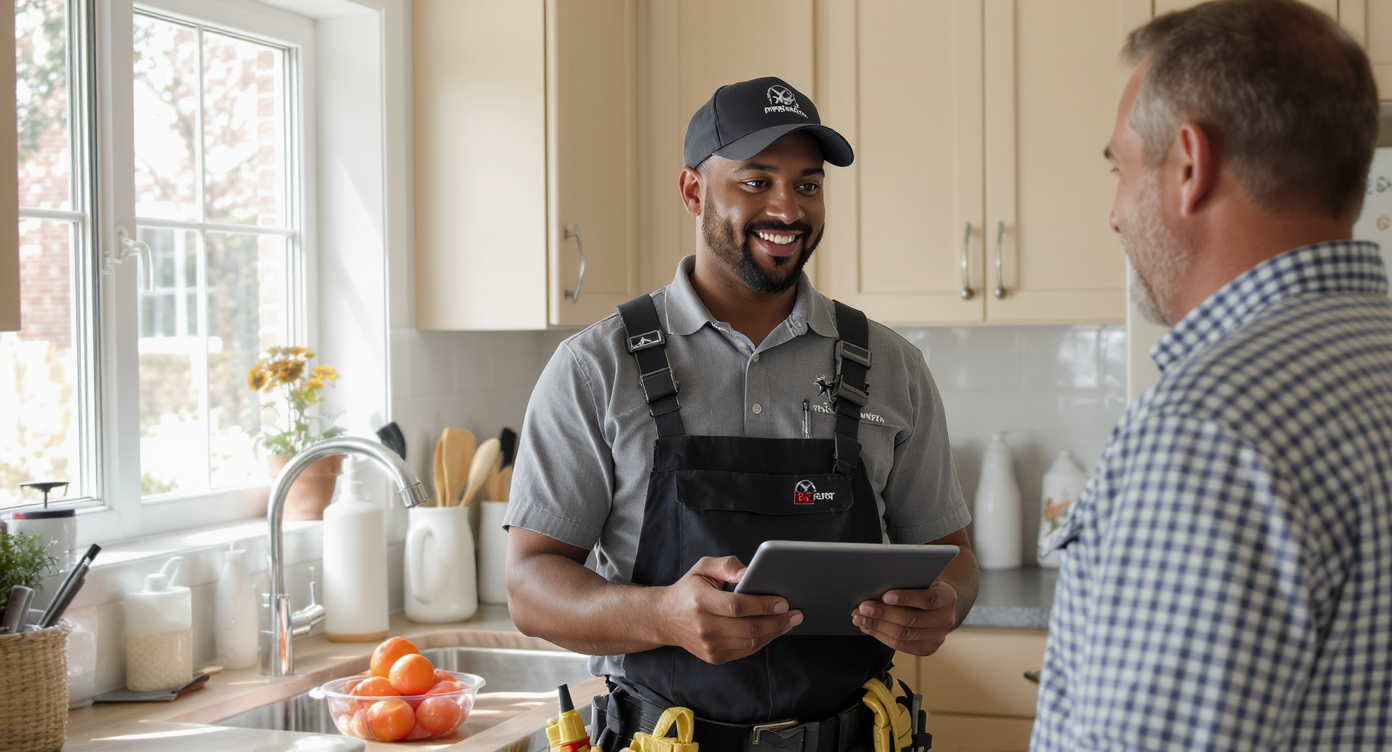
A homeowner spots termites in their basement and picks up the phone. Your line rings four times, hits voicemail, and they hang up. Within 30 seconds, they’ve called your competitor down the street. That lost call didn’t just cost you a one-time treatment. It cost you recurring quarterly service, referrals, and potentially thousands in lifetime revenue. Sound familiar? Finding the best phone system for pest control companies isn’t about getting fancy technology. It’s about making sure every call from a panicked customer actually reaches someone who can help.
The best phone system for pest control companies is a business communication platform that captures every inbound call through automated routing, voicemail management, and scheduling integration. It prevents missed calls that cost you customers, ensures calls reach available technicians, and syncs with your field service software to streamline operations.
What Is a Phone System for Pest Control Companies?
A phone system for pest control companies is a business communication platform designed to handle the high volume of inbound calls, scheduling requests, and follow-ups that define the pest control industry. It’s way more than a basic phone line. You get call routing, voicemail management, automated responses, and integrations with field service software your technicians already use.
Modern phone systems run on VoIP (Voice over Internet Protocol), which means calls travel over the internet instead of traditional phone lines. According to FinancesOnline’s analysis of business phone system trends, VoIP adoption among small businesses has grown substantially as costs have dropped and reliability has improved. For pest control operators, that translates to lower monthly bills, better call quality, and features that weren’t available five years ago at any price point.
Why Pest Control Companies Need a Better Phone System
Pest control is one of the most call-dependent service industries. Customers don’t browse your website for fun. They call because they have an urgent problem right now—maybe a wasp nest above their front door or mice in the kitchen. Every missed call is a missed job. In a business where the average service ticket runs $200 to $500, those losses add up fast.
The Real Cost of Missed Calls
Most pest control business owners underestimate how many calls they actually miss. According to SchedulingKit’s missed call research, a significant percentage of callers who reach voicemail won’t leave a message and won’t call back. They’ll simply move to the next company in their search results. During peak season, when call volume spikes from spring through fall, a single missed morning of calls could mean losing five or more jobs.
The financial impact compounds quickly. And it’s substantial. PCN’s missed call revenue study found that service businesses lose substantial revenue annually from unanswered calls. For a pest control company running two or three trucks, that could represent 10-15% of total annual revenue just evaporating because nobody picked up the phone.
Seasonal Demand Creates Communication Chaos
Pest control has extreme seasonality. Spring and summer bring a flood of calls for ants, mosquitoes, wasps, and termite swarms. Your office staff might handle 20 calls a day in January but 80 a day in June. That’s a massive jump. Hiring seasonal receptionists is expensive and unreliable. A phone system that can’t flex with your demand becomes a bottleneck that chokes your growth at exactly the wrong moment.
Key Features to Look for in a Pest Control Phone System
Not every phone system suits a pest control operation. You need specific capabilities that match how your business actually runs: technicians in the field, an office coordinator juggling schedules, and customers calling with urgent problems at all hours.
- Call routing and IVR: Incoming calls should be directed to the right person immediately. A simple menu (“Press 1 for scheduling, press 2 for billing”) keeps customers from bouncing between staff or sitting on hold while your coordinator finishes another call.
- After-hours call handling: Pests don’t wait for business hours, and neither do your customers. Your system should capture after-hours calls through voicemail, automated booking, or an AI agent that can actually answer questions and schedule service.
- SMS and text-back capability: Many customers prefer texting over calling. Missed-call text-back automatically sends a text when you can’t answer, keeping the lead warm instead of losing them to a competitor.
- CRM and field service integrations: Your phone system should sync with tools like ServiceFusion, HousecallPro, or your CRM so that customer information flows automatically between systems without double entry.
- Call recording and transcription: Recording calls helps with training new staff, resolving disputes, and understanding what customers actually ask about. Transcription makes those recordings searchable.
- Multi-location support: If you’ve expanded to multiple service areas, you need a system that handles separate phone numbers and routing rules for each location without requiring separate accounts or platforms.
Beyond these core features, consider how the system handles high-volume SMS. Pest control companies often send appointment reminders, treatment follow-up instructions, and seasonal promotion texts. A system that caps your messaging or charges steep per-text fees will cost you more than you expect. The small business phone systems market is growing rapidly, which means more options exist than ever. But that also makes choosing wisely more important.
How to Evaluate and Compare Phone Systems
With dozens of options on the market, narrowing your choice requires a structured approach. Here’s how to think through the decision without getting overwhelmed by feature lists and marketing claims.
Pricing Models Matter More Than Sticker Price
Some systems charge per user, which gets expensive fast if you want your office staff, owner, and technicians all connected. Others charge per location, which is often more predictable for service businesses. For context, common per-user pricing ranges from $15 to $30 per month per seat. A five-person team at $30/user already runs $150/month before you add any premium features. Per-location pricing tends to be more cost-effective once you’ve got more than two or three users.
Watch for hidden costs too. Some platforms charge extra for toll-free numbers, call recording storage, or SMS above a certain volume. Ask about these before you sign anything.
How Popular Options Stack Up
Several phone systems are commonly recommended for small service businesses. Each has strengths and notable gaps when evaluated specifically for pest control use cases.
| Feature | SalesCaptain | OpenPhone | Dialpad | Nextiva | RingCentral |
|---|---|---|---|---|---|
| Starting Price | Free (1 location) | $15/user | $15/user | $20/user | $20/user |
| AI Voice Agent | Yes | No | No | No | No |
| Missed-Call Text-Back | Yes | No | No | No | No |
| Unified Inbox | Yes | Limited | Limited | Limited | Limited |
| Call Coaching/Whispering | Yes | No | No | No | No |
| High-Volume SMS | Yes | No | No | Capped at 250/user | Yes |
| Field Service Integrations | ServiceFusion, HousecallPro, 50+ | 7 total | Moderate | Moderate | Yes |
| Per-Location Pricing | Yes | No | No | No | No |
A few things stand out from this comparison. OpenPhone offers a low entry price, but it provides only 7 integrations and lacks call coaching, voicemail drop, and real-time speech analytics. Dialpad is strong for sales-focused teams but doesn’t include toll-free minutes or audio conferencing. Nextiva caps SMS at 250 messages per user per month, which can be a serious constraint during peak pest control season when you’re sending dozens of appointment confirmations daily. And RingCentral? While feature-rich, it doesn’t offer per-location pricing, voicemail drop, or payments via text.
Test Before You Commit
Before committing to any system, run it through a real scenario. Call your own number after hours. How does the experience feel? Is the voicemail prompt clear? Does the text-back fire immediately? Can a new customer actually book service without talking to a human? According to ABS Call Center’s research on business phone behavior, speed of response is one of the strongest predictors of whether a caller converts into a customer. Your phone system should help you respond in seconds, not hours.
How SalesCaptain Helps Pest Control Companies
SalesCaptain was built for exactly the kind of communication challenges pest control companies face: high call volume, urgent customer needs, seasonal spikes, and the constant tension between wanting to grow and not wanting to hire more office staff.
The AI Phone Agent answers every call 24/7 with natural-sounding conversation. It doesn’t just take messages. It qualifies leads by asking about the type of pest, property size, and urgency. Then it books appointments directly into your calendar. During peak season, your phones never go unanswered, even when your coordinator is already on another call. And spam calls? They get blocked automatically, so your team isn’t wasting time on robocalls.
Beyond voice, the platform brings every communication channel into a single Unified Inbox. Calls, texts, webchat messages, Facebook DMs, and Instagram messages all appear in one place. Your office manager doesn’t need to check five different apps. When a customer texts asking about their upcoming treatment, their full call history and previous messages are right there in the same conversation thread.
Workflow automation handles the repetitive follow-up that eats your staff’s time. After a treatment, an automated sequence can send a follow-up text asking about satisfaction, remind the customer about their next quarterly service, and trigger a review request. You set it up once with a drag-and-drop builder, and it runs on autopilot. And integration with field service management platforms like ServiceFusion and HousecallPro means job data syncs without manual entry.
Pricing starts with a free plan for a single location. Paid plans run $159/month per location, which covers your entire team at that location instead of charging per user. For a pest control company with three office staff and six technicians, that’s dramatically cheaper than per-user platforms. AI call minutes are billed at $0.12/minute, keeping costs predictable.
Key Takeaways
- Pest control companies lose significant revenue from missed calls, especially during seasonal peaks when call volume can quadruple.
- The best phone system for pest control companies includes call routing, after-hours handling, SMS capability, field service integrations, and ideally an AI agent for 24/7 coverage.
- Per-user pricing adds up quickly for service businesses with field teams. Per-location models are typically more cost-effective.
- Features like missed-call text-back and AI call answering directly prevent lost leads, while workflow automation keeps customers coming back for recurring treatments.
- SalesCaptain combines AI voice agents, AI chat agents, and a unified inbox in one platform built specifically for service businesses like pest control.
Your phone system isn’t just infrastructure. It’s the front door to your business. Pick one that makes sure every customer who calls actually gets the help they need, whether it’s 2 PM on a Tuesday or 10 PM on a Saturday.
Frequently Asked Questions
Can an AI phone agent really handle pest control calls?
Yes, it can. Modern AI voice agents sound natural and can handle the specific conversations pest control companies have. They’ll ask callers about the type of pest, location of the problem, property type, and preferred appointment times. They can book service directly into your calendar and answer common questions about pricing, preparation steps, or treatment types. For calls that require a human touch, the AI routes them to the right team member.
What happens to calls after business hours?
With a system like SalesCaptain, after-hours calls are answered by an AI Phone Agent that can qualify the lead, answer FAQs, and book appointments. Callers don’t hear a generic voicemail greeting. Instead, they get a responsive conversation that captures their information and sets expectations for service. Missed-call text-back also fires automatically if a call goes unanswered for any reason.
How much does a phone system cost for a small pest control company?
Costs vary widely. Per-user platforms like OpenPhone start at $15/user/month, while others like Aircall run $30/user/month. For a team of five, that’s $75 to $150/month before add-ons. Per-location pricing, which SalesCaptain uses, starts at $159/month per location regardless of how many team members you’ve. That makes it more affordable for businesses with larger field crews.
Do I need a separate system for texting customers?
Not if you choose a unified platform. Many older phone systems don’t include SMS at all, or they cap messaging at low volumes. Look for a system that includes high-volume SMS, missed-call text-back, and appointment reminders built in. Pest control companies rely heavily on text communication for appointment confirmations, treatment prep instructions, and follow-up reminders. So texting shouldn’t be an afterthought.
Will a new phone system integrate with my pest control software?
That depends entirely on the platform. SalesCaptain integrates with over 50 tools including ServiceFusion, HousecallPro, Zapier, HubSpot, and QuickBooks. Some competitors offer far fewer integrations. OpenPhone, for example, supports only 7 total. Before choosing a system, confirm it connects with the specific field service or CRM tools you already use. That way customer and job data flows automatically without extra work.
See How SalesCaptain Can Help Your Pest Control Business
SalesCaptain gives pest control companies an AI-powered phone system, unified inbox, and workflow automation in one platform. Stop losing calls and start booking more jobs. Visit SalesCaptain to get started with a free plan today.