
AI-powered customer experience marketing (CXM) platform that helps local businesses win.


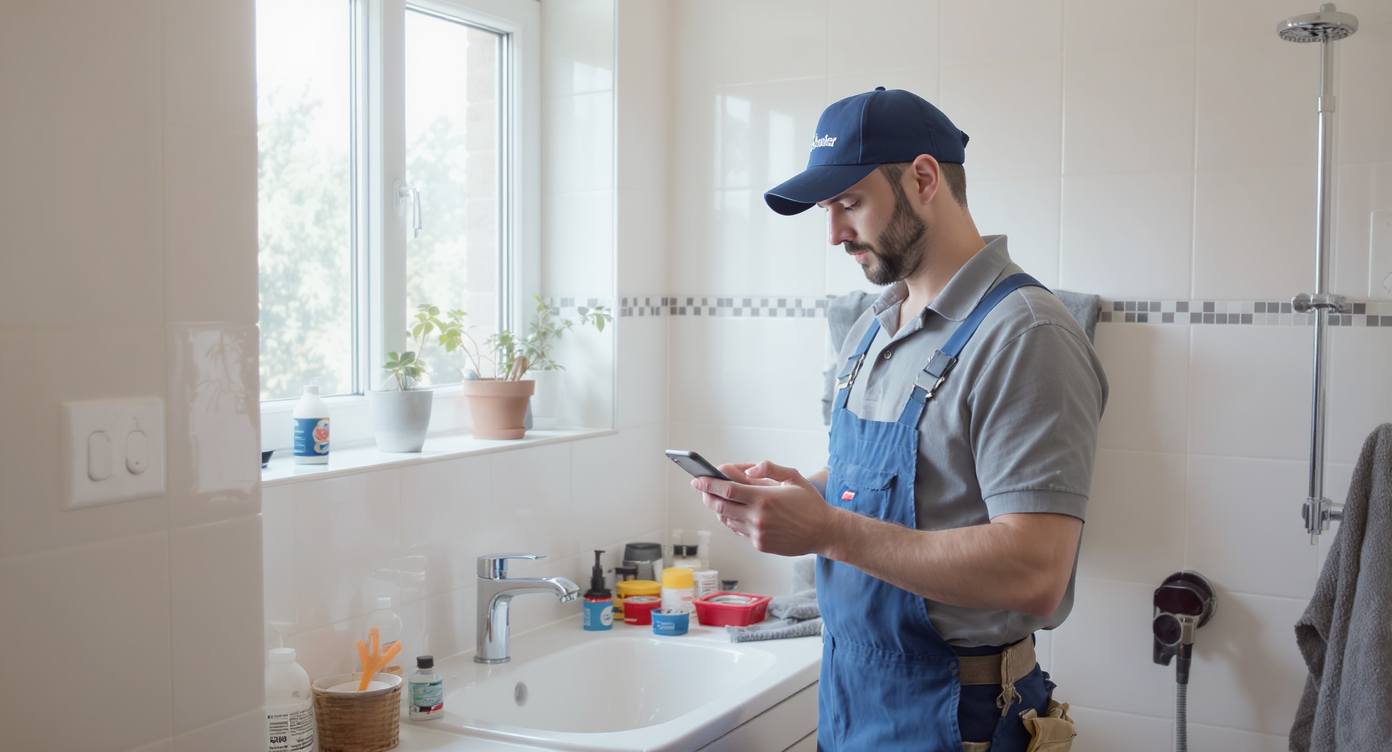
A homeowner’s pipe bursts at 9 PM on a Tuesday. They call three plumbing companies. Two go to voicemail. The third picks up, books the job, and earns a customer for life. Sound familiar? That scenario plays out thousands of times every week, and the best phone system for plumbers is the difference between winning that call and losing it to a competitor who simply answered faster.
The best phone system for plumbers is cloud-based VoIP software that routes calls to your cell, office, and AI agents 24/7. It captures emergency requests after hours, handles peak-season volume, and ensures no call goes unanswered—directly impacting revenue and customer acquisition.
What Is a business phone system for Plumbers?
A business phone system is the technology that handles how your plumbing company receives, routes, and manages calls. It’s way more than a phone number on the side of your van. Modern systems run over the internet (VoIP), so you’re not tied to a landline or a desk. Calls follow you everywhere—your cell, your office, even an AI agent that picks up when nobody else can.
Free weekly newsletter
Growth tips for home service businesses
Every Tuesday — actionable ideas to get more leads, reviews, and repeat customers. No fluff.
For plumbers specifically, a phone system needs to handle emergency calls, after-hours requests, and high call volume during peak seasons. Really high volume. According to recent market research on business phone systems, the VoIP and cloud-based phone market is growing rapidly as small businesses move away from legacy landlines. Plumbing companies are part of that shift, especially those with multiple trucks, techs, and service areas that need a phone setup matching their pace.
Why the Right Phone System Matters More for Plumbing Than Most Industries
Plumbing isn’t a “browse and decide later” business. When someone calls a plumber, they usually need help now. A leaking water heater. A clogged sewer line. A broken fixture before a holiday gathering. Every unanswered call is a job that goes to somebody else. And that customer probably won’t call back. So you’ve lost them forever.
The Real Cost of a Missed Call
Most plumbing jobs range from a few hundred to several thousand dollars. According to an analysis of missed call costs, the average small business loses significant revenue for every unanswered call. For plumbers, those numbers are even higher because emergency jobs carry premium pricing. SchedulingKit’s research puts the annual cost of missed calls in the thousands for even small service companies. That’s real money walking out the door.
Here’s what makes it worse: your team is out on jobs all day. They’re crawling under houses, running torches, pulling fixtures. Nobody’s sitting at a desk waiting for the phone to ring. So unless your system catches those calls automatically, you’re bleeding revenue without realizing it.
After-Hours Calls Are Where You Win or Lose
Plumbing emergencies don’t follow business hours. A burst pipe at midnight. A backed-up sewer on Sunday morning. These are high-value calls. High-urgency calls. Yet most plumbing companies either send after-hours calls to a generic voicemail or pay for an answering service that takes a message and hopes someone follows up in the morning. Neither option books the job on the spot. According to data compiled by Aira, a large percentage of business calls go unanswered entirely, and the revenue impact is staggering.
What to Look for in the Best Phone System for Plumbers
Not every phone system is built for field service businesses. Plumbing companies have specific needs that a generic office phone solution just won’t address. Here’s what actually matters when you’re evaluating options.
Must-Have Features
- Call routing and forwarding: Calls should reach the right person based on time of day, location, or job type. If your drain tech is closest to the caller, the system should know that.
- After-hours coverage: Whether it’s an AI agent, a call flow that captures details, or automatic text-back, your phone can’t just go dark at 5 PM.
- Mobile-friendly setup: Your techs live on their phones. The system needs to work from any device without clunky apps or dropped connections.
- Missed call text-back: When a call goes unanswered, an automatic text lets the caller know you’re on it. That alone can save dozens of jobs per month.
- Call recording and transcription: Dispute resolution, training new dispatchers, and tracking what customers actually asked for. Recordings pay for themselves.
- IVR (interactive voice response): A simple menu that lets callers press 1 for emergencies, 2 for estimates, and 3 for billing keeps calls organized without a full-time receptionist.
- Voicemail-to-text: Techs in the field can’t listen to voicemails in a noisy crawlspace. Text transcriptions solve that instantly.
Nice-to-Have Features That Separate Good From Great
- AI-powered call answering: An AI agent that can actually book appointments, qualify leads, and answer common questions without human help.
- Unified inbox: Calls, texts, webchat messages, and social media DMs all landing in one place so nothing slips through the cracks.
- Integrations with your existing tools: If you use ServiceFusion, HousecallPro, or QuickBooks, your phone system should sync with them automatically.
- High-volume SMS: Appointment confirmations, follow-ups, and review requests via text save hours of phone tag every week.
- Call coaching and whispering: When training a new office person, a manager can listen in and coach them in real time without the customer hearing.
Pricing Models to Understand
Phone systems typically price one of three ways: per user, per location, or per minute. Per-user pricing sounds affordable until you add your five technicians, two office staff, and yourself. That $15/user/month plan suddenly costs $120 before you’ve made a single call. Per-location pricing often works better for plumbing companies because it doesn’t penalize you for growing your team. Per-minute pricing applies mainly to AI call features, where you pay only for the minutes the AI agent actually handles. Simple as that.
According to SMB Group’s technology buying survey, small businesses increasingly prioritize total cost of ownership and integration capabilities over the sticker price alone. That’s a smart approach. That’s how you should evaluate options too.
How Popular Phone Systems Compare for Plumbing Companies
The market is crowded. Let’s cut through the noise. Here’s how some of the most commonly mentioned options stack up when you evaluate them specifically for plumbing use cases.
| Feature | SalesCaptain | OpenPhone | Dialpad | Nextiva | RingCentral |
|---|---|---|---|---|---|
| Starting Price | Free (1 location) | $15/user | $15/user | $20/user | $20/user |
| Missed Call Text-Back | Yes | No | No | No | No |
| Call Coaching / Whispering | Yes | No | No | No | No |
| Voicemail Drop | Yes | No | No | No | No |
| Unified Inbox (Calls + SMS + Chat) | Yes | Limited | Limited | Limited | Limited |
| Payments via Text | Yes | No | No | No | No |
| ServiceFusion / HousecallPro Integration | Yes | No | No | No | No |
| Pricing Model | Per location | Per user | Per user | Per user | Per user |
A few things stand out immediately. Per-user pricing punishes plumbing companies that add seasonal techs or part-time dispatchers. OpenPhone is affordable per seat, but it lacks call coaching, voicemail drop, and any meaningful AI capabilities. Not ideal. Dialpad brings strong transcription features but doesn’t include toll-free minutes or an AI voice agent. Nextiva caps SMS at 250 messages per user per month, which isn’t enough for a busy plumbing shop running appointment confirmations and follow-ups. And RingCentral, while full-featured, doesn’t offer payments via text or a built-in leads form.
For a deeper look at how the broader phone system market is shaping up, these business phone system statistics paint a clear picture of where the industry is headed, with AI and automation leading the charge.
How SalesCaptain Helps
SalesCaptain was built specifically for service businesses like plumbing companies. Not repurposed from a call center tool or a marketing agency platform. The difference shows up in every feature. Every single one maps to the daily reality of running a plumbing operation.
The AI Phone Agent answers calls 24/7 with a natural-sounding voice. It doesn’t just take messages. It books appointments, qualifies leads by asking the right questions (what’s the problem, what’s the address, how urgent), answers FAQs about your service area and pricing, and blocks spam. For a plumbing company, that means the 9 PM burst pipe call gets handled instantly, even if your entire crew is asleep. The AI agent costs $0.12 per minute, so you only pay for actual usage. No surprises.
Beyond voice, SalesCaptain’s unified inbox pulls every customer touchpoint into one screen. Calls, texts, webchat from your website, Facebook messages, Instagram DMs. Your dispatcher sees everything in one place. Nothing falls through the cracks. When a missed call does happen, the system automatically texts the caller back so they know you’re responsive.
The call flow builder uses drag-and-drop, so you don’t need a tech background to set up routing. Emergency calls go straight to the on-call tech. Estimate requests route to your office. After-hours calls hit the AI agent first, then forward if needed. Plus, integrations with HousecallPro, ServiceFusion, QuickBooks, and Zapier mean your phone system talks to the tools you already rely on. Everything syncs automatically.
Pricing starts free for a single location. The Business plan at $159/month per location covers your full team without per-user charges. So hiring another tech or adding a part-time dispatcher doesn’t increase your phone bill. For plumbing companies with multiple locations, that math gets very favorable very quickly. You can actually grow without worrying about phone costs.
Key Takeaways
The best phone system for plumbers isn’t the one with the longest feature list. It’s the one that catches every call, handles after-hours emergencies, works from the field, and doesn’t charge you more as your team grows. Here’s what to remember:
- Missed calls are missed revenue. Every unanswered call is a job going to your competitor.
- After-hours coverage isn’t optional for plumbing. Emergencies don’t wait until Monday.
- Per-user pricing hurts growing plumbing teams. Per-location models scale better.
- AI voice agents aren’t a novelty anymore. They book real jobs and qualify real leads around the clock.
- Integration with field service tools like HousecallPro and ServiceFusion should be non-negotiable.
- A unified inbox across calls, texts, and social media prevents leads from slipping away.
Your phone system should work as hard as your crew does. Pick one that’s built for the realities of plumbing, not just the realities of an office.
Frequently Asked Questions
Can an AI phone agent really handle plumbing emergency calls?
Yes, it can. Modern AI voice agents are trained to ask qualifying questions, capture caller details, determine urgency, and even book appointments on the spot. They won’t replace a human for complex troubleshooting over the phone. But they handle the critical first step of capturing the call and getting the customer into your system instead of your competitor’s. That’s everything.
How does per-location pricing work compared to per-user pricing?
Per-location pricing charges a flat rate for each business location, regardless of how many team members use the system. Per-user pricing charges for each individual login. If you’ve got six people who need phone access, per-user plans can cost double or triple what a per-location plan would. For plumbing companies with field techs who need mobile access, per-location pricing is almost always more economical.
Do I need a separate phone number for my plumbing business?
You should have a dedicated business number. It keeps personal and business calls separate, looks more professional, and lets you track marketing ROI by source. Most modern phone systems let you port your existing number or set up a new local or toll-free number in minutes. It’s straightforward.
What integrations should a plumber’s phone system have?
At minimum, look for integrations with your field service management software (HousecallPro, ServiceFusion), your accounting tool (QuickBooks), and a general automation connector like Zapier. These integrations ensure that booked calls automatically create jobs, invoices sync correctly, and follow-up workflows trigger without manual data entry. That saves you hours every week.
Is a free phone system plan actually usable for a plumbing business?
It depends on the platform. Some free plans are stripped down to the point of being impractical. However, a free plan that includes core features like call routing, voicemail, and basic automation can work well for a solo plumber or a very small shop just getting started. As call volume grows, upgrading to a paid tier with AI agents and advanced routing will likely pay for itself through captured leads alone.
Ready to see it in action?
See how plumbers use SalesCaptain to never miss a call and book jobs automatically.
Book a Free Demo →See How SalesCaptain Can Help Your Plumbing Business
SalesCaptain gives plumbing companies a complete phone system with AI voice agents, missed call text-back, a unified inbox, and field service integrations, all starting with a free plan. Stop losing jobs to missed calls and start capturing every lead around the clock.