
AI-powered customer experience marketing (CXM) platform that helps local businesses win.



AI customer service software for Retail Stores That Never Misses a Sale
If you run a retail store, you already know the phone doesn’t stop ringing. Customers call about store hours, product availability, returns, and order status. Your team’s busy helping the people standing right in front of them, so those calls go to voicemail. And here’s the thing: most callers won’t leave a message. They’ll just call your competitor instead. AI customer service software for retail stores fixes this problem by making sure every customer gets an instant response, whether they call, text, or message you on social media. SalesCaptain was built for exactly this kind of challenge, giving small and mid-sized retail businesses a way to handle high communication volume without hiring extra staff.
Retail is one of the most competitive spaces for small businesses. According to Chain Store Age’s research on small retailer spending, customers spend significant money at independent and small-format retail stores, which means every missed interaction is real revenue walking out the door. Yet most retail owners don’t have the budget for a dedicated call center or a team of customer service reps. That gap between what customers expect and what small retailers can deliver is where AI steps in.
Why Retail Businesses Struggle With Customer Communication
Retail stores face a unique communication problem that most other businesses don’t. Your staff has to be physically present on the sales floor, helping shoppers, restocking shelves, and running the register. When the phone rings, someone has to choose between the customer in front of them and the one on the line. That’s a lose-lose situation no matter how you look at it. And the problem gets worse during peak seasons, holidays, and sale events when call volume spikes right alongside foot traffic.
The After-Hours Problem No One Talks About
Most retail stores close by 6 or 7 PM. But customers don’t stop shopping for information at closing time. They’re browsing your website at 9 PM, checking Instagram at 10, and texting questions about product availability on Saturday morning before you open. Every one of those unanswered messages is a potential sale that evaporates. According to Talkdesk’s retail customer service research, customer expectations around response time have only gotten more demanding, and retailers who can’t keep up are losing ground to those who can.
The after-hours gap is especially painful for retail stores that rely on appointment-based services like personal shopping, fittings, consultations, or in-store demos. When someone calls after hours to book an appointment and gets voicemail, they rarely call back. Instead, they move on. So your morning starts with a voicemail box that tells you nothing about how many potential customers gave up before leaving a message at all.
Too Many Channels, Not Enough People
Here’s another challenge that’s gotten much worse in the last few years. Customers now reach out through phone calls, text messages, Instagram DMs, Facebook Messenger, website chat, and email. A single retail store might need to monitor six or seven different communication channels just to keep up. For a team of three to five people who also need to run the store, that’s simply not realistic. Messages fall through the cracks, responses come hours late, and the customer experience suffers. According to GoAudits’ analysis of retail communication challenges, fragmented communication is one of the top operational problems facing retail businesses today, and it directly impacts customer satisfaction and repeat purchases.
Small retail teams also struggle with consistency. One employee might respond to texts quickly while another forgets to check the Facebook page for days. There’s no system, no standard response time, and no way to track what happened with each customer conversation. That kind of inconsistency doesn’t just frustrate customers. It costs you money and makes your business look unprofessional, even if every person on your team is working as hard as they can.
How SalesCaptain Solves This for Retail Stores
SalesCaptain is an AI-powered communication platform that handles customer interactions across every channel your retail store uses. It’s not just a chatbot or an answering service. It’s a full system that includes an AI Phone Agent, AI Chat Agents, a Unified Inbox, and workflow automation, all built specifically for small and mid-sized businesses. What makes it different from enterprise tools like Zendesk or Intercom is that it doesn’t require technical expertise, and it’s priced for businesses with one to five locations, not Fortune 500 companies.
AI Phone Agent That Answers Like Your Best Employee
The AI Phone Agent picks up every call to your retail store, 24 hours a day, 7 days a week. It sounds natural, not robotic, and it can answer common questions about store hours, return policies, product availability, and directions. When a caller wants to book an appointment for a fitting, consultation, or in-store pickup, the AI agent handles the scheduling right on the call. It also qualifies leads by asking the right questions and routing high-value callers to a real person when needed. Spam calls get blocked automatically, so your team never wastes time on them again.
Think about what this means during your busiest Saturday afternoon. Your sales associates are helping customers on the floor, and the phone rings five times in 30 minutes. Without AI, those calls either go unanswered or pull someone away from an in-person sale. With SalesCaptain’s AI Phone Agent, every caller gets helped instantly while your team stays focused on the people in your store. That’s a genuine competitive advantage, especially during holiday rushes and promotional events when every sale counts.
AI Chat Agents Across SMS, Web, and Social Media
SalesCaptain’s AI Chat Agents work across SMS, website chat, Instagram DMs, and Facebook Messenger simultaneously. When a customer sends a text asking “Do you’ve this jacket in size medium?”, the AI responds instantly with the information you’ve provided. It can also capture lead details, send appointment reminders, and follow up with customers who showed interest but didn’t buy. The missed call text-back feature is particularly valuable for retail: when someone calls and you can’t pick up, the system automatically sends a text saying something like “Hey, sorry we missed your call! How can we help?” That simple follow-up recovers conversations that would otherwise be lost forever.
Social media messaging has become a huge channel for retail discovery and shopping. Customers see a product on your Instagram page and DM you to ask if it’s in stock. If you don’t respond within a few minutes, they scroll on. SalesCaptain’s chat agents respond to those DMs instantly, keeping the conversation going and moving the customer toward a purchase. And because all of these interactions feed into one central inbox, your team can see the full picture without jumping between apps.
One Inbox for Everything
SalesCaptain’s Unified Inbox pulls every conversation from every channel into a single view. Calls, texts, webchat, Instagram, Facebook, email, and internal notes all show up in one place. Your team can collaborate on responses, see the full contact history for each customer, and track conversations in real time. For retail stores where multiple employees might talk to the same customer across different channels, this is a game changer. No more “Did anyone respond to that Facebook message?” or “Who talked to Mrs. Johnson about her return?” Everything is right there, organized and searchable.
Key Features for Retail Store Businesses
Handling Peak Season Without Extra Hires
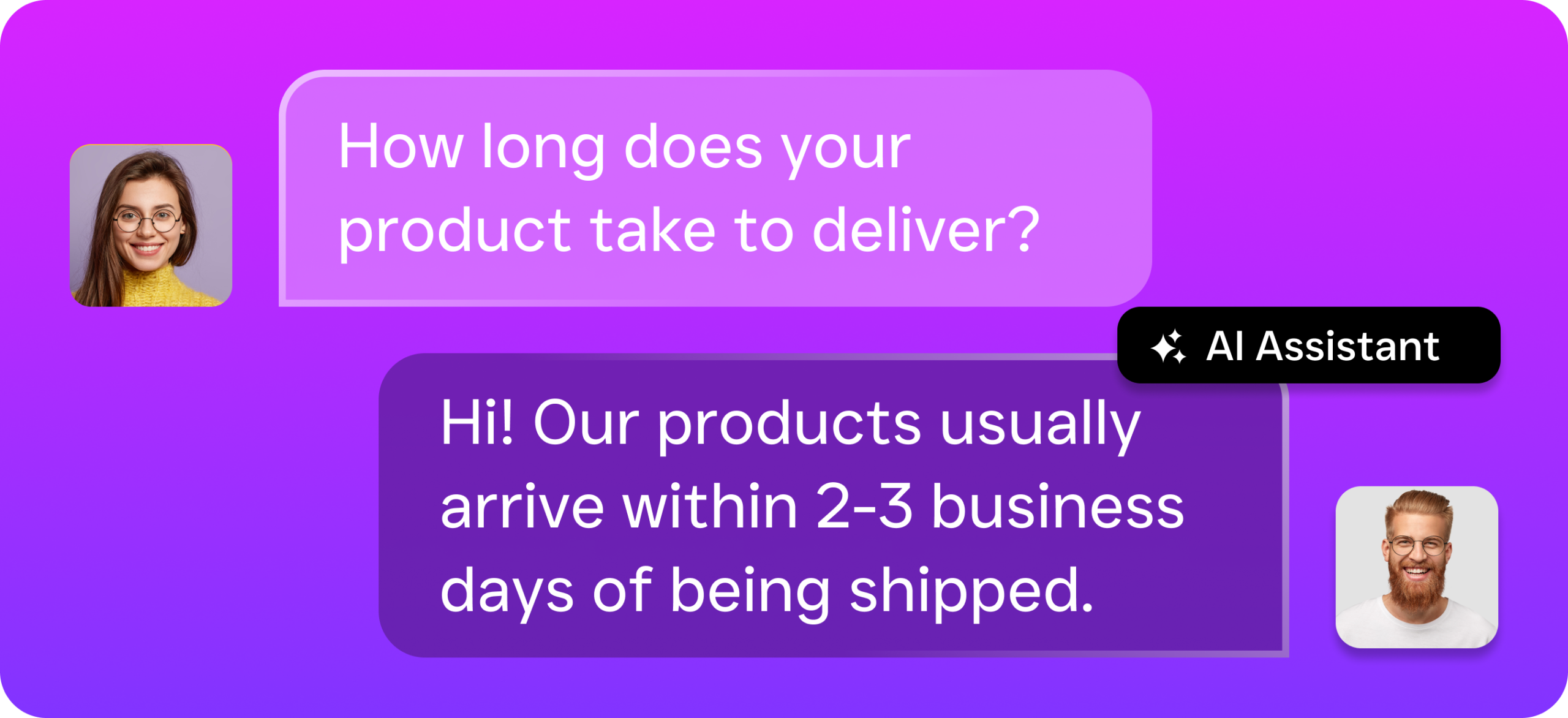
Retail is seasonal by nature. According to the Fiserv Small Business Index, retail leads the way in small business sales growth during peak periods, but that growth creates enormous pressure on small teams. SalesCaptain lets you handle three times the communication volume without bringing on seasonal staff. The AI agents don’t need training, don’t call in sick, and don’t slow down during a rush. They handle the repetitive questions, like “What time do you close?” and “Do you offer gift wrapping?”, so your human team can focus on the interactions that actually require a personal touch.
Workflow automation takes this even further. You can set up automatic follow-ups for customers who asked about a product but didn’t purchase, send appointment reminders for in-store events or consultations, and trigger CRM updates when a new lead comes in. SalesCaptain’s visual workflow builder uses a drag-and-drop interface, so you don’t need any coding knowledge to create these automations. Once they’re running, they work around the clock without anyone on your team lifting a finger.
Integrations That Fit Your Existing Tools
Retail stores already use a patchwork of software for inventory, point of sale, email marketing, and accounting. SalesCaptain connects with over 50 tools including Shopify, QuickBooks, HubSpot, Salesforce, Zoho, and Zapier. That means customer data flows between your systems automatically. When someone books an appointment through the AI Phone Agent, it can sync to your calendar and your CRM without manual entry. If you’re running a Shopify store alongside a physical location, you can manage customer conversations from both channels in the same inbox. These integrations save hours of manual work each week and reduce the errors that come from entering data in multiple places.
For retail stores using specialized tools, the Zapier integration opens up thousands of additional connections. You can link SalesCaptain to your email marketing platform, your inventory system, or your loyalty program software. According to NerdWallet’s 2024 Small Business Report, small business owners spend a significant portion of their week on administrative tasks that could be automated. Every connection you set up is time your team gets back to spend on selling and serving customers.
A Full Business Phone System Built In
Beyond the AI features, SalesCaptain includes a complete business phone system with 99.99% uptime and crystal-clear audio quality. You can get dedicated business phone numbers, set up an IVR menu (“Press 1 for store hours, Press 2 for order status”), configure call routing to different team members, and record calls for training purposes. Voicemail transcription means you can read messages instead of listening to them, which is much faster when you’re on the sales floor. For retail stores that have been using personal cell phones or an outdated phone system, this is a significant upgrade that also happens to come with built-in AI.
Real Results You Can Expect
Fewer Missed Opportunities, More Revenue
The most immediate impact of AI customer service software for retail stores is capturing conversations that currently slip away. Every call that goes to voicemail, every DM that sits unanswered for hours, and every after-hours text that gets no reply represents money left on the table. When you respond to every customer interaction instantly, 24/7, you convert more of those interactions into sales. Retail store owners who’ve adopted AI communication tools consistently report that the biggest surprise isn’t the technology itself, but how many opportunities they were missing before they had it.
Follow-up is where the real magic happens. Most retail stores do zero automated follow-up. A customer asks about a product, you answer, and that’s the end of it. But with SalesCaptain’s workflow automation, you can send a follow-up message the next day, notify the customer when a sold-out item is back in stock, or remind them about an upcoming in-store event. These touchpoints keep your store top-of-mind and bring people back. Research from Taylor’s retail industry statistics highlights how critical repeat customers are to retail revenue, and consistent follow-up is how you build that repeat business.
Your Team Gets to Focus on Selling
When your staff isn’t constantly interrupted by phone calls about basic questions, they can do what they were hired to do: help the customers in your store. That means better in-person experiences, higher average transaction values, and a more engaged team. AI doesn’t replace your employees. It handles the repetitive, low-value tasks so your people can focus on the high-value ones. For a retail store with three to five employees, that shift in focus can dramatically improve both employee satisfaction and sales performance.
Consider the math on hiring. A part-time customer service person costs $15 to $20 per hour for maybe 20 to 30 hours per week. That’s $1,200 to $2,400 per month, plus training time, management overhead, and that they still can’t answer calls at 10 PM. SalesCaptain’s Business plan costs $159 per month per location, and the AI works every hour of every day without breaks, vacations, or sick days. For retail stores watching their margins carefully, that kind of efficiency isn’t just nice to have. It’s a competitive necessity.
Consistent Customer Experience Across Every Channel
One of the hardest things for small retail stores to achieve is consistency. Different employees answer the phone differently, respond to messages with different tones, and give slightly different information about policies. SalesCaptain’s AI agents deliver the same accurate, on-brand response every single time, whether it’s a phone call at 2 PM or an Instagram DM at midnight. You control what the AI says, how it sounds, and what information it shares. That consistency builds trust with customers and makes your small store feel as professional as a much larger operation. According to Zipline’s State of Retail Communication Report, communication breakdowns are one of the primary reasons retail initiatives fail, and AI-driven consistency is a powerful antidote to that problem.
How to Get Started in 10 Minutes
Getting SalesCaptain up and running doesn’t require a consultant, an IT team, or a weekend of setup. You start by signing up for the free Startup plan, which covers one location and gives you access to the core platform. From there, you’ll set up your AI Phone Agent by telling it about your store: your hours, your return policy, your most common products, and any FAQs your customers regularly ask. The setup process walks you through each step with plain-language prompts, so you don’t need any technical background to get it right.
Next, you’ll connect your communication channels. Link your business phone number, add your website chat widget, and connect your Instagram and Facebook accounts. All of these conversations will flow into your Unified Inbox automatically. If you want to connect Shopify, QuickBooks, or your CRM, you can do that through the integrations menu or through Zapier. Most retail store owners have their AI agents live and answering customer messages within a single sitting. After that, you can fine-tune responses, build follow-up workflows, and customize call routing as you see what works best for your specific store.
The platform scales with you, too. If you’ve multiple locations, you simply add them to your account at $159 per month each on the Business plan, or $300 per month each on the Enterprise plan for higher-volume needs. AI phone calls are billed at $0.12 per minute, which is a fraction of what you’d pay a human receptionist. And because there’s a free plan to start, you can test everything before committing any budget at all.
Frequently Asked Questions
Can AI customer service software for retail stores handle product-specific questions?
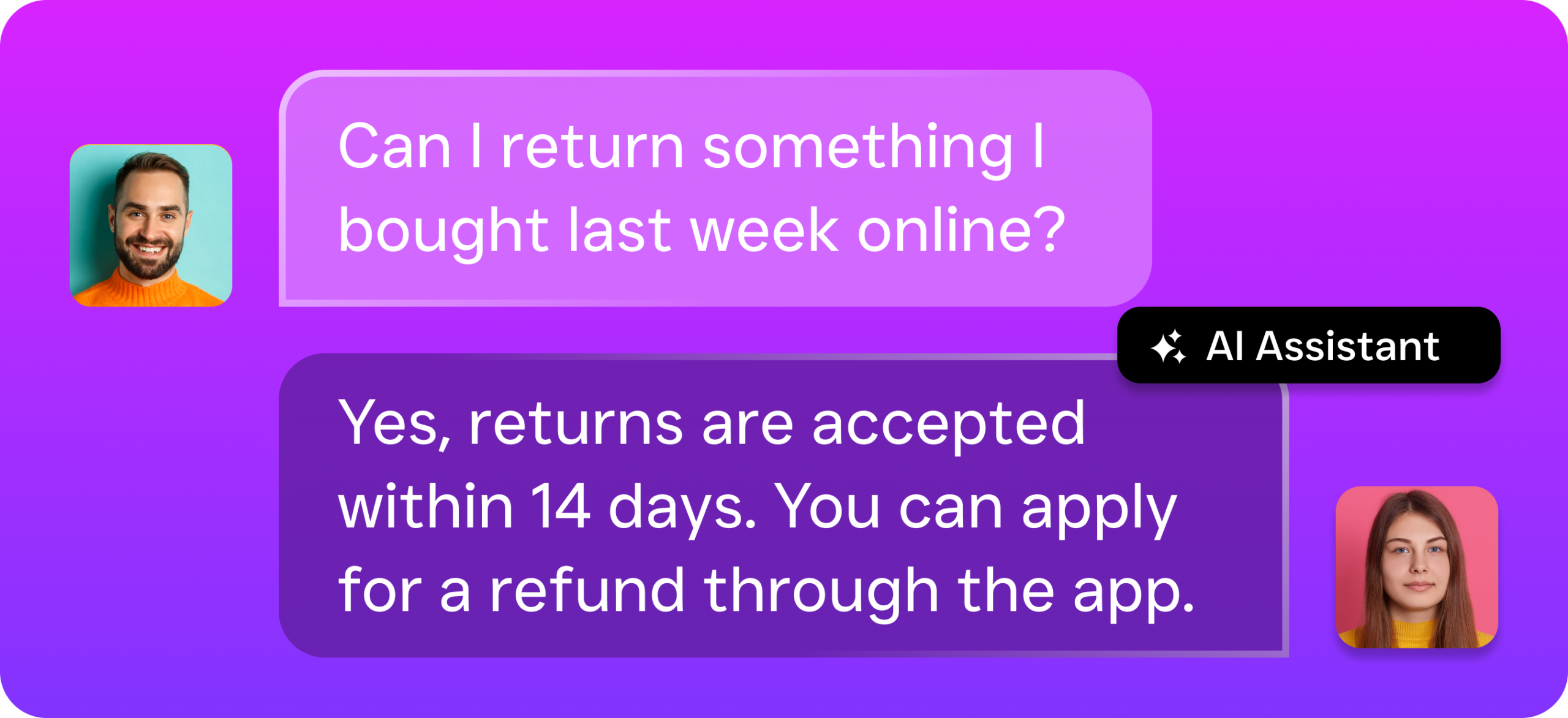
Yes. SalesCaptain’s AI agents are trained on the information you provide about your store. You can feed in details about your product lines, inventory, pricing, return policies, store hours, and anything else customers commonly ask about. The AI uses this knowledge base to answer questions accurately and consistently. If a question comes in that the AI can’t handle, it routes the conversation to a human team member automatically, so the customer never hits a dead end.
Will customers know they’re talking to an AI and not a real person?
SalesCaptain’s AI Phone Agent uses natural-sounding voice technology that doesn’t sound like a typical robot or automated system. Many callers won’t notice the difference during routine interactions like checking store hours or booking an appointment. However, you’re always in control of how transparent you want to be. Some retail stores mention that an AI assistant is helping, while others let the conversation flow naturally. Either way, the experience is smooth and professional.
How does this work for retail stores with multiple locations?
SalesCaptain’s pricing is per-location, which makes it straightforward for multi-store retailers. Each location gets its own AI agent configuration, phone number, and communication setup. So your downtown store can have different hours, product information, and call routing than your mall location. All conversations still flow into a shared Unified Inbox where managers can oversee everything, but the customer-facing experience is tailored to each specific store.
What happens if the AI can’t answer a customer’s question?
When the AI encounters a question outside its knowledge base or detects that a caller needs specialized help, it hands off the conversation to a human team member. You can configure exactly how this works through custom call flows and routing rules. For example, you might route complex return issues to your store manager and product questions to your sales team. The transition is smooth for the customer, and the AI provides context about the conversation so your team member doesn’t have to start from scratch.
Is SalesCaptain affordable for a small, single-location retail store?
Absolutely. The Startup plan is free for one location, so you can try the platform without any financial commitment or credit card. When you’re ready for more features and higher volume, the Business plan runs $159 per month per location, with AI calls billed at $0.12 per minute. Compare that to hiring even a part-time employee to answer phones and respond to messages, and the cost difference is dramatic. For small retailers operating on thin margins, it’s one of the most budget-friendly ways to deliver a premium customer experience.
Does it integrate with my Shopify store or POS system?
SalesCaptain offers native integration with Shopify, along with over 50 other tools including QuickBooks, HubSpot, Salesforce, and Zoho. For tools that don’t have a direct integration, the Zapier connection opens up thousands of additional options, including most popular POS and inventory management systems. Setting up these integrations takes just a few clicks and ensures that customer data, appointments, and lead information sync automatically across your business tools.
Start Free and Never Miss Another Customer
SalesCaptain gives your retail store AI-powered customer service across calls, texts, web chat, and social media. No credit card needed to get started.