
AI-powered customer experience marketing (CXM) platform that helps local businesses win.


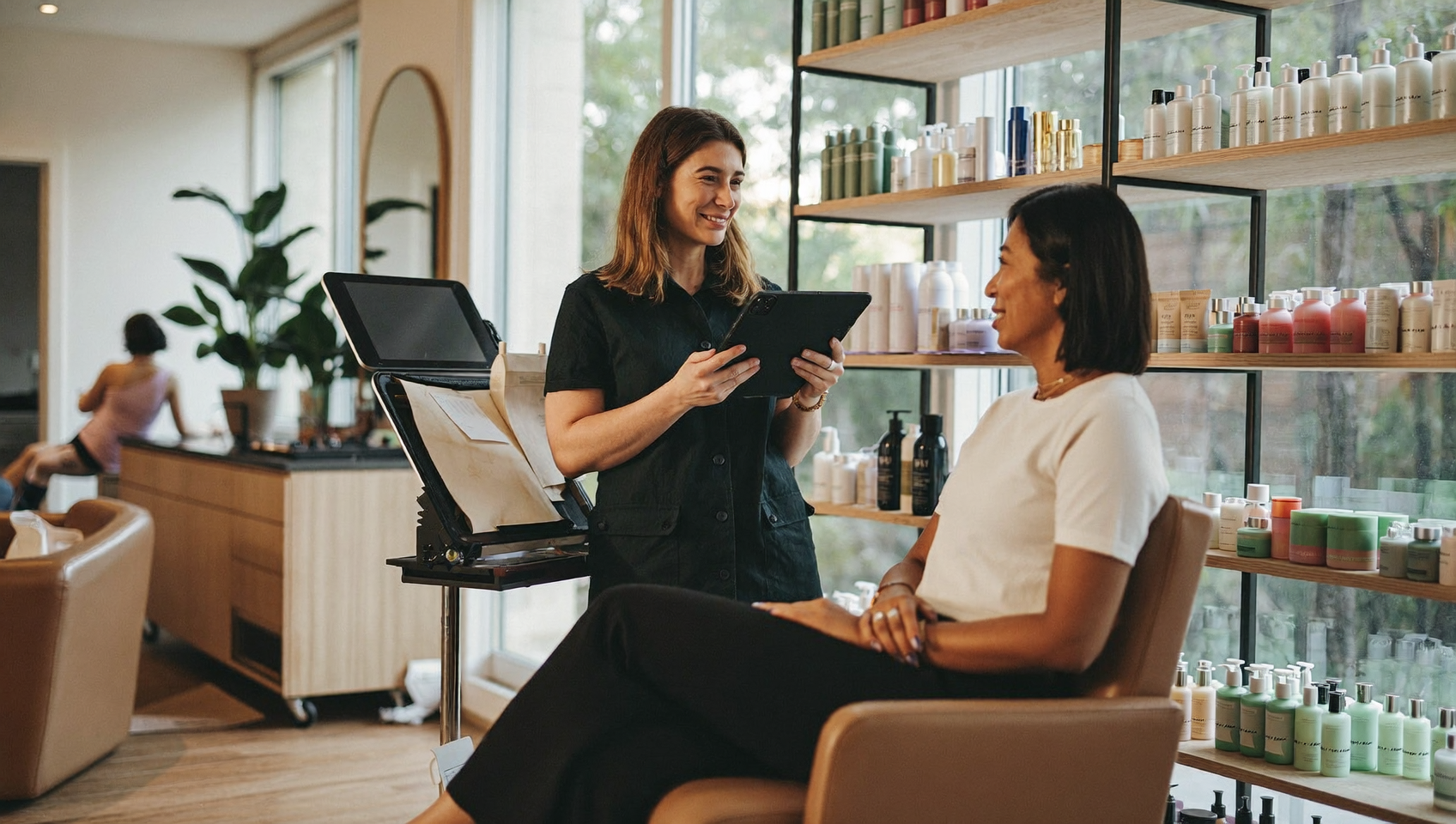
It’s 10 PM on a Saturday. A potential client finds your salon on Instagram, wants to book a balayage appointment, and nobody’s at the front desk to answer. By morning, she’s already booked with a competitor down the street. Sound familiar? This scenario plays out constantly across the beauty industry, and beauty booking apps have become the standard solution for capturing those after-hours appointments and streamlining day-to-day scheduling.
Beauty booking apps are software platforms that let clients schedule salon and spa appointments online without calling or walking in. These apps display available services, stylists, and time slots, letting customers book instantly 24/7. Many also include payment processing, automated reminders, and client management tools.
Free weekly newsletter
Growth tips for salons, gyms & beauty businesses
Every Tuesday — actionable ideas to get more leads, reviews, and repeat customers. No fluff.
Quick Answer
Beauty booking apps let clients schedule appointments online anytime, reducing no-shows and capturing bookings outside business hours. Top platforms offer calendar sync, automated reminders, payment processing, and client management tools. The best choice depends on your salon size, service types, and budget, but most integrate with existing systems and significantly improve appointment capture and customer retention.
What Are Beauty Booking Apps?
Beauty booking apps are software platforms that let clients schedule salon, spa, and wellness appointments on their own. No phone calls needed. No walking in required. These apps typically offer an online calendar where customers can browse available services, pick a stylist or technician, choose a time slot, and confirm their booking instantly. Some apps focus purely on scheduling, while others bundle in payment processing, automated reminders, client management, and marketing tools.
For beauty businesses specifically, these platforms solve a core operational challenge: managing a high volume of short, time-sensitive appointments across multiple service providers. A busy salon might juggle dozens of bookings per day across stylists, colorists, estheticians, and nail techs. Manual scheduling via phone or a paper book can’t keep up. Not even close. According to Market Intelo’s research on the appointment booking beauty app market, the category is projected to grow significantly through 2034, driven largely by consumer demand for self-service and mobile-first experiences.
Why Beauty Businesses Need Dedicated Booking Technology
Generic scheduling tools might work for a consultant or a solo coach. But beauty businesses? They’re different. Here’s what makes the beauty vertical unique and why it demands purpose-built solutions.
High Appointment Volume with Short Turnaround
A 30-minute blowout followed by a 90-minute color correction followed by a 15-minute brow wax. That’s three completely different service durations for one stylist in a single morning. What does that look like in practice? A scheduling nightmare without the right tools. Beauty booking apps handle variable time blocks automatically, preventing the double-bookings and awkward gaps that wreck a stylist’s productivity. They also account for processing time, so a colorist isn’t accidentally booked during the 20 minutes a client needs to sit with foils.
Staff-Specific Scheduling
Clients don’t just book “a haircut.” They book their stylist. And that matters. Each provider has different availability, skills, and pricing. A good booking app lets clients filter by provider, see only that person’s open slots, and even set preferences for future visits. This reduces front-desk confusion and keeps loyal clients connected to the people they trust.
No-Show Prevention
No-shows are a serious problem in beauty. An empty chair during a peak Saturday slot is lost revenue you can’t recover. Most booking apps include automated SMS and email reminders, which Zenoti’s beauty and wellness industry statistics highlight as a meaningful factor in reducing missed appointments. Some platforms also require credit card holds or deposits at booking to further discourage last-minute cancellations. It works.
After-Hours Availability
Clients browse beauty content on social media late at night. Inspiration strikes, and they want to act on it immediately. If your booking system is just a phone number that goes to voicemail after 6 PM, you’re losing those impulse bookings. A data-driven breakdown of missed call costs shows how each unanswered call can translate directly into lost revenue for small businesses. Always-on booking apps capture those clients when they’re most motivated.
Features That Matter Most in a Beauty Booking App
Not every booking app deserves your attention. Focus on what actually drives revenue and better operations. Here’s what to prioritize.
- Mobile-first client experience: Your clients are booking from their phones. If the booking flow isn’t fast, clean, and thumb-friendly, they’ll abandon it. Test any app on a phone screen before committing.
- Automated reminders and confirmations: SMS reminders sent 24 and 2 hours before an appointment drastically cut no-shows. Look for apps that handle this without manual effort from your team.
- Multi-provider calendar management: You need a bird’s-eye view of every stylist’s schedule, plus the ability for each provider to manage their own availability, block personal time, and set custom hours.
- Online payments and deposits: Collecting payment or a deposit at booking protects your revenue. Clients who’ve already paid are far less likely to ghost you.
- Waitlist functionality: When popular time slots fill up, a waitlist captures overflow demand. If someone cancels, the next person in line gets notified automatically. No revenue lost.
- Integration with your existing tools: Your booking app shouldn’t live in a silo. It needs to connect with your POS, CRM, email marketing, and communication platform so data flows without re-entry.
The 2024 Beauty and Wellness Benchmark Report underscores that businesses using integrated technology stacks outperform those cobbling together disconnected tools. So pick a booking app that plays well with everything else in your operation.
Common Mistakes Beauty Businesses Make with Booking Apps
Choosing and deploying a booking app isn’t rocket science. But there are pitfalls that trip up experienced salon owners. Let’s cover them.
Ignoring the Communication Gap
Most booking apps handle the scheduling part well. But what happens when a client calls with a question about a service before booking? Or sends an Instagram DM asking about availability? Booking apps typically don’t handle inbound calls, texts, or social media messages. That means you still need someone answering the phone, replying to DMs, and following up with leads who didn’t finish booking. The scheduling is only half the story.
Failing to Follow Up on Abandoned Bookings
A surprising number of potential clients start the booking process but don’t finish. Maybe they got distracted. Maybe they weren’t sure which service to pick. Without a follow-up system, those half-started bookings disappear. Automated text follow-ups work. (“Hey! Noticed you were looking at our balayage service. Want help choosing a time?”) can recover a meaningful chunk of that lost revenue.
Not Tracking Where Bookings Come From
Are your bookings coming from Google search, Instagram, your website, or walk-ins? If you don’t know, you can’t invest strategically. Make sure your booking platform, or the communication tools around it, tracks the source of each new client. According to recent beauty salon industry insights, businesses that track acquisition channels grow faster because they can double down on their most effective marketing.
Over-Relying on the App Alone
A booking app isn’t a growth strategy. It’s infrastructure. You still need to answer calls promptly, respond to messages quickly, and follow up consistently. The businesses that win aren’t just the ones with the best booking link. They’re the ones that respond fastest and communicate most reliably across every channel a client might use.
How SalesCaptain Helps
Beauty booking apps solve scheduling. But they don’t answer your phone at 9 PM, respond to an Instagram DM within seconds, or text back a missed caller automatically. That’s where SalesCaptain comes in. It fills that gap as the communication layer that works alongside your booking app.
With SalesCaptain’s AI Phone Agent, every call to your salon gets answered 24/7 with a natural-sounding voice that can answer FAQs about services and pricing, qualify new leads, and book appointments. No more voicemail black holes. The AI handles it, and your team reviews the results in the morning.
SalesCaptain’s AI Chat Agents extend that same instant responsiveness to SMS, webchat, Instagram DMs, and Facebook Messenger. When a potential client messages your salon page asking “Do you do keratin treatments?”, they get an immediate, accurate response. No waiting hours. That speed converts browsers into booked clients.
Everything flows into a single Unified Inbox where your front desk (or you, if you’re a solo operator) can see calls, texts, social messages, and notes in one place. No more switching between apps. No more missed messages buried in Instagram’s request folder.
For beauty businesses already using tools like Acuity Scheduling, SalesCaptain integrates natively with two-way availability and appointment creation. So when the AI books a client, it shows up in your existing calendar without any manual steps. You can also connect with salon and spa software platforms through Zapier and webhooks for a fully connected workflow. Plans start free for a single location, with paid plans at $159/month per location and AI calls billed at $0.12/minute.
Key Takeaways
Beauty booking apps are essential infrastructure for any salon, spa, or wellness business. They stop losing appointments to voicemail and manual scheduling chaos. They solve the “when can I come in?” question automatically, around the clock. But booking is only half the battle.
The businesses that grow fastest solve the communication side too: answering every call, responding to every message, and following up on every lead, regardless of channel or time of day. Pair a strong booking app with an AI-powered communication platform, and you’ve built a system that captures clients at every stage of their journey.
Focus on mobile-first client experiences, automated reminders, multi-provider scheduling, and tight integration between your booking tools and communication tools. Don’t let the gap between “interested” and “booked” cost you revenue.
What’s the difference between a beauty booking app and a communication platform?
A beauty booking app handles appointment scheduling, calendar management, and often payment collection. A communication platform handles inbound and outbound conversations across phone, text, chat, and social media. They serve different functions but work best together. The booking app manages when clients come in, while the communication platform ensures you never miss the conversation that leads to a booking in the first place.
Can beauty booking apps reduce no-shows?
Absolutely. Most quality booking apps include automated SMS and email reminders that significantly reduce no-show rates. Platforms that also collect deposits or credit card holds at booking time see even lower no-show numbers. Combining app-based reminders with an AI texting agent that can send personalized confirmations adds another layer of reliability, as noted in analyses of how missed communications affect small business revenue.
Do I still need a receptionist if I use a booking app?
It depends on your volume and service complexity. A booking app handles self-service scheduling, but clients still call with questions, request changes, ask about pricing, or need guidance choosing services. An AI receptionist solution can handle many of those interactions without a human, but complex consultations or high-touch client relationships may still benefit from a real person during peak hours.
What should a solo beauty professional look for in a booking app?
Solo operators should prioritize simplicity, low cost, and mobile management. You need an app you can manage entirely from your phone between clients. Automated reminders are non-negotiable since you can’t afford no-shows when you’re the only provider. Integration with a communication tool that handles calls and texts while you’re with a client is also critical. You literally can’t answer the phone mid-service.
How do beauty booking apps integrate with AI communication tools?
Most modern booking apps offer APIs, Zapier connections, or native integrations with communication platforms. For example, SalesCaptain connects natively with Acuity Scheduling for two-way availability and appointment creation. When an AI agent books a client via phone or text, the appointment syncs to your calendar automatically. This eliminates double-entry and ensures your schedule stays accurate across every channel.
Ready to see it in action?
See how beauty salons use SalesCaptain to book appointments without missing a single call.
Book a Free Demo →See How SalesCaptain Can Help
Your booking app handles the calendar. SalesCaptain handles every conversation that leads to a booking, from missed calls and late-night texts to Instagram DMs and webchat. Together, they make sure you never lose a client to slow response times again.