
AI-powered customer experience marketing (CXM) platform that helps local businesses win.


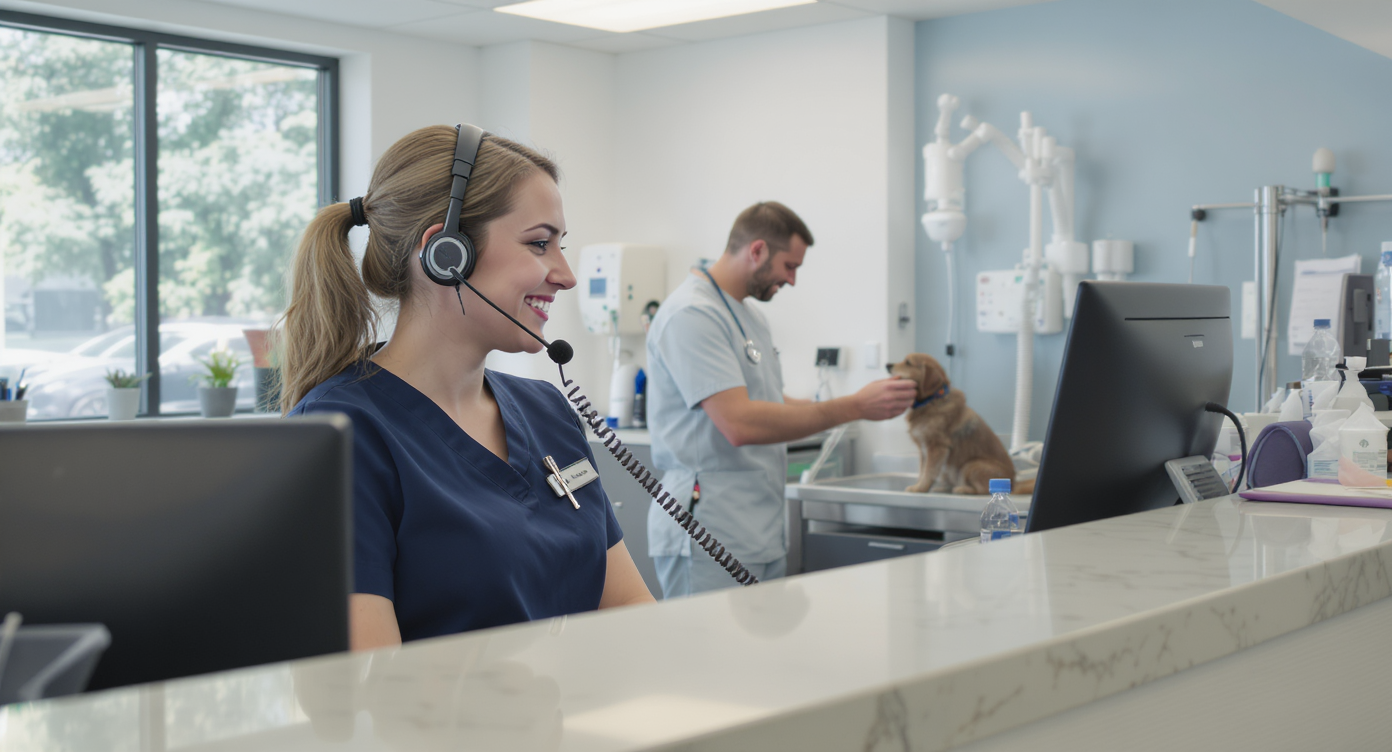
A new pet owner calls your veterinary clinic at 6:15 PM. Your front desk closed fifteen minutes ago. That call rings out. The owner books with the clinic down the street instead. It’s a scenario that plays out thousands of times a day across vet practices. Sound familiar? Finding the best phone system for veterinary clinics is the single most effective way to stop it from happening at yours.
The best phone system for veterinary clinics combines VoIP, call routing, and after-hours answering to capture every incoming call. Modern vet practices need systems that handle peak call volumes, send appointment reminders, and reduce front desk workload—preventing lost clients to competitors when your team isn’t available.
What Makes a Phone System “Best” for Veterinary Clinics
A veterinary phone system is the communication backbone connecting your practice to pet owners, from the first appointment request to post-surgery follow-ups. But “best” doesn’t just mean reliable dial tone anymore. Modern vet clinics need a system that handles high call volumes during peak hours, captures after-hours callers, sends appointment reminders, and ideally reduces the burden on your already-stretched front desk team.
Free weekly newsletter
Growth tips for dental & medical practices
Every Tuesday — actionable ideas to get more leads, reviews, and repeat customers. No fluff.
The best phone system for veterinary clinics goes beyond basic VoIP. It combines call routing, voicemail, IVR menus, and increasingly, AI-powered automation into a single platform your staff can actually use without a tech degree. Think of it as the difference between a landline that rings and a system that actively helps run your practice. According to recent business phone system market analysis, the shift toward cloud-based, AI-integrated phone platforms is accelerating rapidly, particularly among small and mid-size service businesses like veterinary practices.
Why Veterinary Clinics Have Unique Phone System Needs
Vet clinics aren’t like typical offices. Your call patterns look different. Your caller expectations are different too. And the stakes of a missed call can be genuinely life-or-death for someone’s pet. Understanding these differences matters before you evaluate any platform.
Extreme Call Volume Spikes
Monday mornings. The hour after lunch. Post-holiday weekends. Veterinary practices experience sharp, predictable call surges that overwhelm front desk staff. A two-receptionist team simply can’t handle twelve simultaneous callers. Every unanswered ring is a potential lost client. According to research on missed business calls, a startling percentage of calls to service businesses go unanswered, with significant revenue implications for each one.
After-Hours Emergencies and Inquiries
Pet emergencies don’t wait for business hours. Even non-urgent callers, like someone wanting to schedule a wellness exam, tend to call when it’s convenient for them: evenings, weekends, lunch breaks. Without after-hours call handling, you’re invisible to a huge portion of potential clients. What does that look like in practice? Studies on missed call costs consistently show that most callers won’t leave a voicemail and won’t call back. They’ll just move on.
Emotional and High-Stakes Callers
A pet owner calling about a sick animal isn’t in the same headspace as someone ordering pizza. They need reassurance, clear next steps, and quick answers. Your phone system needs to route these callers efficiently. Not trap them in a confusing menu maze. A well-designed IVR can triage urgent calls to on-call staff while directing routine scheduling inquiries to an automated booking flow.
Multi-Channel Expectations
Younger pet owners especially prefer texting over calling. They want to confirm appointments via SMS, ask quick questions through webchat, or message your practice on social media. A phone-only system forces you to manage five different inboxes. That means things inevitably fall through the cracks.
Essential Features to Look for in a Veterinary Phone System
Not every VoIP platform is built for the realities of running a vet clinic. Here’s what actually matters. Ranked by impact on your practice’s bottom line and patient experience.
- 24/7 call answering capability: Whether through AI agents, call forwarding rules, or after-hours routing, your system must capture every call regardless of when it comes in.
- IVR and call flow builder: A drag-and-drop builder that lets you create custom call paths, so emergency calls go straight to the on-call vet while refill requests route to a recorded message or automated system.
- Appointment booking integration: The phone system should connect to your scheduling software so callers can book without a human manually entering data.
- Missed-call text-back: When a call does go unanswered, the system automatically sends an SMS to the caller within seconds, keeping them engaged instead of losing them to a competitor.
- Call recording, transcription, and summaries: For training, compliance, and simply remembering what Mrs. Johnson said about Buster’s symptoms last Tuesday.
- SMS and multichannel messaging: Appointment reminders, follow-up care instructions, and prescription-ready notifications via text dramatically reduce no-shows and phone tag.
- Team collaboration tools: A unified inbox where your front desk, vet techs, and veterinarians can all see the communication history with each client.
One feature that’s rapidly becoming non-negotiable is an AI phone agent. As recent analysis of AI virtual receptionists shows, these tools have matured to the point where they sound natural, handle complex conversations, and cost a fraction of hiring additional staff. For a vet clinic averaging 60-80 calls per day? This isn’t a luxury. It’s a competitive necessity.
How Popular Phone Solutions Compare for Vet Clinics
The market is crowded. So let’s cut through the noise. Several platforms market themselves to veterinary and healthcare practices, but their feature sets vary dramatically. Here’s an honest comparison of what you’ll find.
| Feature | SalesCaptain | Weave | Nextiva | OpenPhone |
|---|---|---|---|---|
| AI Phone Agent (24/7) | Yes | No | No | No |
| Missed-Call Text-Back | Yes | Yes | No | No |
| Unified Inbox (All Channels) | Yes | Limited | Limited | Limited |
| IVR / Call Flow Builder | Drag-and-drop | Yes | Yes | No |
| Social Media Messaging | Instagram, Facebook, WhatsApp | No | No | No |
| AI Transcription + Summaries | Yes | No | No | Minimal |
| Call Coaching / Whispering | Yes | No | No | No |
| SMS Appointment Reminders | Yes | Yes | Limited (250/user cap) | Yes |
| Free Plan Available | Yes | No | No | No |
| Starting Price | Free (Business: $159/mo per location) | Not publicly listed | $20/user/mo | $15/user/mo |
Weave has built a strong presence in healthcare verticals. But it lacks social chat, WhatsApp integration, and AI-powered call features. It’s a solid option if your needs are limited to phone and text within the clinic. However, it doesn’t offer the advanced templating, click tracking, or URL shortening that modern patient communication demands.
Nextiva provides a reliable enterprise-grade phone system. Yet it caps SMS at 250 messages per user per month. For a busy vet clinic sending appointment reminders, follow-ups, and prescription notifications? That limit gets hit fast. Plus, it doesn’t offer voicemail drop, call coaching, or WhatsApp support.
OpenPhone works well as a basic business phone app for startups. Still, its AI capabilities are minimal. It supports only seven integrations and lacks call coaching, power dialer, and call queueing. For a practice handling dozens of daily calls with multiple staff members, those gaps add up quickly. Guides on choosing a small business phone system consistently emphasize that the right fit depends on matching features to your specific workflow, not just picking the cheapest option.
How SalesCaptain Helps Veterinary Clinics
SalesCaptain was built for exactly the kind of business a vet clinic is: appointment-heavy, relationship-driven, and stretched thin on staff. Here’s what that looks like in practice for a veterinary office.
The AI Phone Agent answers every call around the clock. When a pet owner calls at 9 PM about scheduling a dental cleaning, the AI agent handles the conversation naturally. It books the appointment and confirms via text. No voicemail. No missed opportunity. At $0.12 per minute, it costs a fraction of what you’d pay a part-time receptionist. And it doesn’t call in sick.
During peak hours, the call flow builder lets you design exactly how calls route through your practice. Emergency calls go directly to a vet tech. Refill requests hear an automated message with pickup instructions. New client inquiries get qualified by the AI agent before reaching your front desk. Every step is configurable with a drag-and-drop interface. No IT support needed.
Between calls, the unified inbox pulls together SMS conversations, webchat from your website, Instagram DMs, Facebook messages, and call logs into one screen. Your front desk team doesn’t have to bounce between tabs. When Dr. Patel needs context on a patient’s owner who called yesterday, it’s all there. Including AI-generated call summaries and full transcriptions.
Workflow automation handles the repetitive tasks that eat up your staff’s day. Appointment reminders go out automatically via SMS. Post-visit follow-ups trigger based on the type of procedure. No-show notifications prompt a rebooking text. All of this runs in the background, connecting with tools like your existing business systems through 50+ native integrations including HubSpot, Zoho, Zapier, and QuickBooks.
The per-location pricing model is particularly well-suited to veterinary groups. Whether you run one clinic or five, you pay $159 per month per location for the Business plan. Not per user. That means your whole team—receptionists, techs, vets—can use the platform without the cost spiraling as you grow. And there’s a free Startup plan if you want to test it at a single location first.
Key Takeaways
The best phone system for veterinary clinics isn’t just a better phone line. It’s a complete communication platform that captures every caller, automates routine tasks, and gives your team a single place to manage all patient-owner conversations. Here are the essentials to remember:
- Missed calls are missed revenue. A system with 24/7 AI answering and missed-call text-back eliminates this problem entirely.
- Vet clinics need call flows tailored to their unique patterns: emergency triage, appointment scheduling, prescription refills, and new client intake.
- Per-user pricing models get expensive fast. Per-location pricing keeps costs predictable as your team grows.
- Multichannel communication (SMS, webchat, social) isn’t optional anymore. Pet owners expect to reach you however they prefer.
- AI transcription and call summaries save hours of note-taking and improve care continuity across your staff.
Your phone system should be the hardest-working member of your team. Not its weakest link. Choose a platform that matches how your veterinary practice actually operates. You’ll see the difference in both client satisfaction and your bottom line.
Frequently Asked Questions
Can an AI phone agent really handle veterinary appointment scheduling?
Yes. Modern AI phone agents carry on natural-sounding conversations. They ask qualifying questions—new or existing patient, reason for visit, preferred time—and book directly into your scheduling system. They handle routine calls like wellness exams, vaccination appointments, and grooming bookings without any human involvement. For complex medical situations, the AI can route the caller to your on-call staff instead.
How much does a cloud-based phone system cost for a vet clinic?
Costs vary widely depending on the pricing model. Per-user platforms like Nextiva ($20/user) or Aircall ($30/license) add up quickly for a team of six or more. SalesCaptain’s per-location model starts at $159/month for the Business plan. Regardless of how many team members use it. A free plan is available for single-location practices. And AI calling costs $0.12 per minute on top of the base plan.
What happens to after-hours calls with a veterinary phone system?
With a properly configured system, after-hours calls follow a custom call flow you design. Emergency callers get routed to an on-call veterinarian’s cell phone. Routine callers hear a greeting and interact with an AI agent. The AI can book appointments, answer FAQs about your hours and services, or send a text message with relevant information. According to research on missed call revenue loss, most callers who reach voicemail won’t leave a message. So active after-hours handling is critical.
Do I need to replace my existing phone number?
No. Most cloud phone systems, including SalesCaptain, support number porting. You keep your existing business phone number and simply route it through the new platform. Your clients won’t notice any change. Except better, faster service.
How does a unified inbox work for a multi-vet practice?
A unified inbox consolidates every communication channel. Calls, texts, webchat, social media DMs, email. All into a single team-accessible view. Any staff member can see the full history with a pet owner, including past call recordings, text exchanges, and AI-generated summaries. That means when a client calls about their dog’s test results, whoever picks up already has full context. No need to ask the client to repeat themselves.
Ready to see it in action?
See how veterinary clinics use SalesCaptain to answer every call and book more appointments automatically.
Book a Free Demo →See How SalesCaptain Can Help Your Veterinary Clinic
SalesCaptain gives your vet practice a 24/7 AI phone agent, unified inbox, and automated workflows, all in one platform built for service businesses. Start with the free plan and explore the full feature set. See why clinics are switching from outdated phone systems to a smarter way of handling patient communication.