
AI-powered customer experience marketing (CXM) platform that helps local businesses win.



Looking for a business phone system? If you’re comparing Dialpad vs OpenPhone, you’re probably trying to find something that fits your team’s size, budget, and actual communication needs. Sound familiar? Both platforms offer VoIP calling and messaging, but they’re built for different audiences. And they both leave serious gaps for service businesses that depend on inbound calls, appointment booking, and reaching customers across multiple channels. This guide breaks down what each platform does well, where they fall short, and why a third option built specifically for service businesses might deserve your attention.
What Is Dialpad?
Dialpad is a cloud-based communications platform. It’s built primarily for technology-forward sales teams. The platform offers VoIP calling, video meetings, and AI-powered conversation intelligence—think real-time transcription, sentiment analysis, and custom sales playbooks. Starting at $15 per user per month, it positions itself as an enterprise-grade tool. You get AI scorecards and call coaching, which is genuinely useful for sales teams. But here’s the catch: Dialpad doesn’t include toll-free minutes, lacks native WhatsApp support, has no email channel, and requires add-ons for fax. According to a detailed comparison on ToolRadar, Dialpad’s strength lies in its AI analytics for outbound sales teams rather than inbound service business workflows.
What Is OpenPhone?
OpenPhone is a lightweight virtual phone system. It’s aimed at startups and small teams that need basic calling and texting. Affordable and simple to set up. That’s the appeal. Yet according to Parsers.vc’s VoIP comparison, OpenPhone comes up short on critical features for growing businesses. No 911 service support. No HIPAA compliance. Minimal AI capabilities. Only about 7 integrations. And no call coaching or power dialer. For any service business handling serious call volume or needing automation, these gaps become deal-breakers fast.
What Is SalesCaptain?
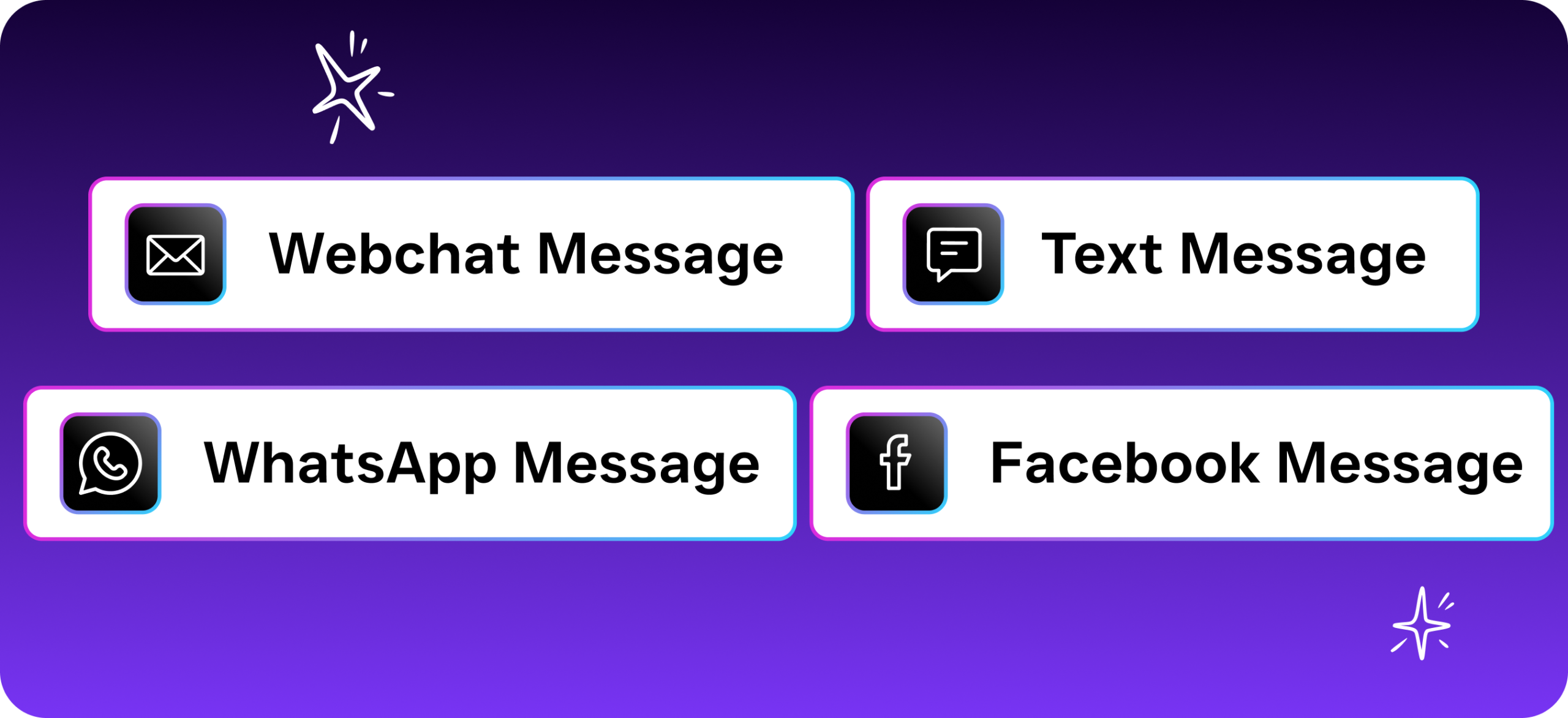
SalesCaptain is an AI-powered unified communication platform. It’s built specifically for service businesses and SMBs. What does that look like in practice? Instead of just providing a phone system, it combines an AI Phone Agent that answers calls 24/7, AI Chat Agents across SMS, webchat, Instagram, and Facebook Messenger, and a unified inbox that pulls every conversation into one place. You don’t need technical skills to set it up, and the per-location pricing model (starting free, then $159/month per location) scales affordably whether you run one shop or five.
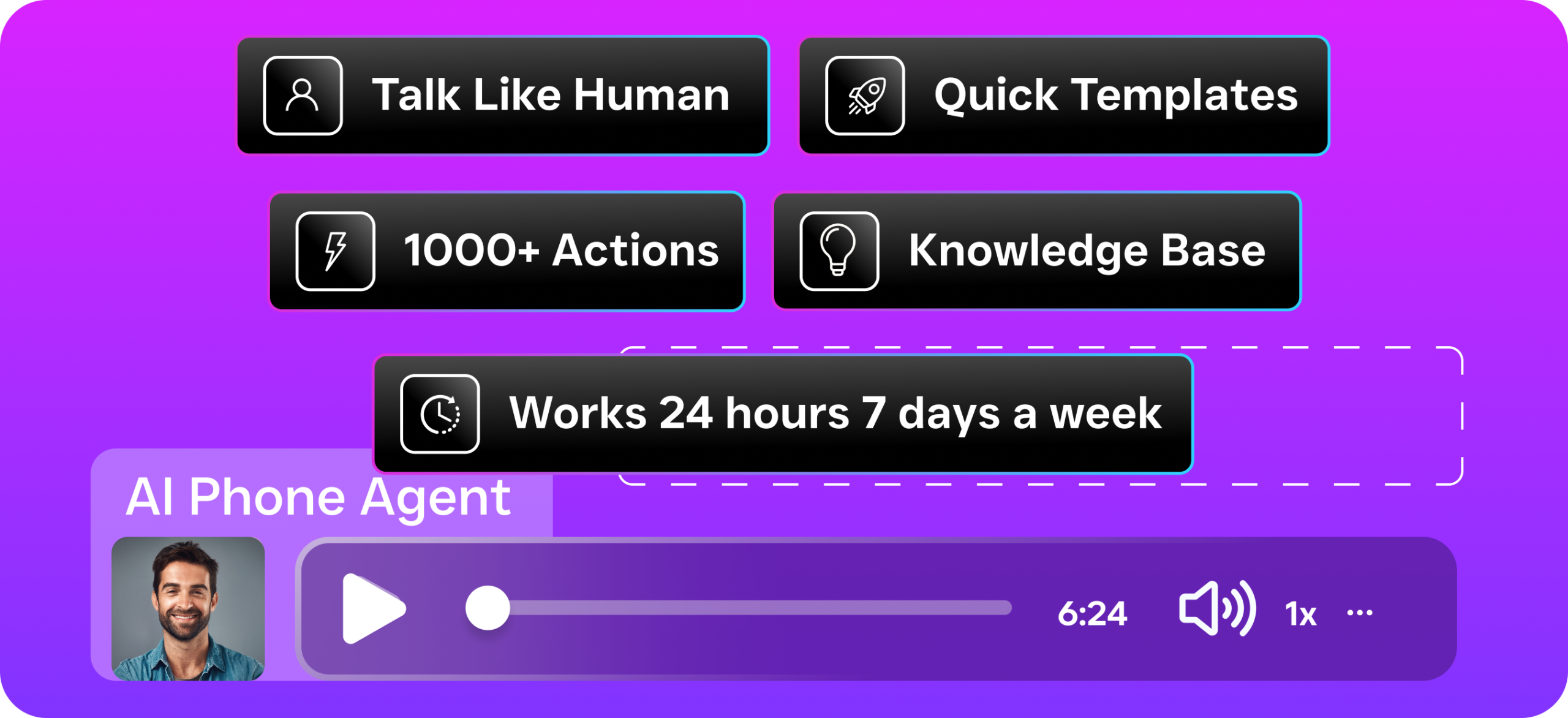
Where Dialpad focuses on sales team analytics and OpenPhone keeps things minimal, SalesCaptain fills the actual gap. Service businesses need to never miss a call, respond to leads instantly across every channel, and automate follow-ups without hiring additional staff. It integrates natively with tools like HubSpot, Salesforce, HousecallPro, ServiceFusion, Clio, and 50+ others.
Dialpad vs SalesCaptain: Feature Comparison
The Dialpad vs OpenPhone debate often misses a third contender entirely. This contender outperforms both for service-oriented businesses. Here’s how Dialpad and SalesCaptain compare on the features that actually matter most to businesses handling inbound customer communication.
| Feature | Dialpad | SalesCaptain |
|---|---|---|
| AI Voice Agent | ✗ | ✓ |
| Unified Inbox (calls, SMS, social, email) | Partial (no email, no social chat) | ✓ |
| WhatsApp Messaging | Partial (Zapier only) | ✓ (Native) |
| Review Management | ✗ | ✓ |
| Text-to-Pay | ✗ | ✓ |
| Workflow Automation | Very Basic | ✓ (Visual drag-and-drop builder) |
| Pricing | $15/user/month | Free (startup) / $159/location/month |
| Best For | Tech-forward sales teams | Service businesses & SMBs |
Notice the pattern here. Dialpad excels at outbound sales analytics. But it doesn’t offer an AI voice agent, native social media messaging, email in the inbox, text-to-pay, or high-volume SMS. These aren’t niche features. They’re essentials for service businesses.
Where Dialpad Falls Short
Dialpad is a strong product. There’s no question about that. The issue is what it’s designed to do. And what it’s designed to do doesn’t align with what most service businesses actually need. Here are the specific gaps that show up when you move beyond outbound sales use cases.
No AI Voice Agent for Inbound Calls
Dialpad offers AI transcription, sentiment analysis, and scorecards for calls your team handles. But it doesn’t offer an AI agent that can actually answer a call. It can’t qualify a lead, book an appointment, or handle an FAQ on its own. For a service business, that’s a critical distinction. According to Aira’s research on missed business calls, a significant percentage of business calls go unanswered. That translates to substantial lost revenue. Without an AI agent picking up calls 24/7, you’re relying entirely on human availability.
Missing Communication Channels
Dialpad doesn’t support email as a channel. There’s no native social chat for Facebook or Instagram DMs. WhatsApp is only available through third-party Zapier automations. So if a potential customer messages you on Instagram at 9 PM or texts a question on WhatsApp, Dialpad won’t help you respond. For a plumber, dentist, or salon owner whose customers reach out everywhere, these missing channels mean missed leads.
No Toll-Free Minutes or Text-to-Pay
Dialpad doesn’t include toll-free minutes in its plans. It also lacks payments via text. No lead capture forms. No auto URL shortening or click tracking. These features might seem minor in isolation. But together they form the operational backbone of a service business. You want to convert inquiries into booked and paid appointments without manual effort.
Workflow Automation Is Limited
While Dialpad has a basic message flow builder, workflow automation capabilities are thin. Service businesses need more than Dialpad offers. There’s no visual drag-and-drop builder for creating multi-step follow-up sequences, appointment reminders, or CRM-triggered actions. As the National Federation of Independent Business has noted, small business owners consistently rank time management as a top challenge. Limited automation makes that problem worse, not better.
Why SalesCaptain Is the Better Choice for Service Businesses
For businesses where every missed call is a lost customer and every unanswered message is a missed booking, the platform choice matters enormously. Here’s what makes SalesCaptain a stronger fit than either Dialpad or OpenPhone.
- AI Phone Agent that answers 24/7: SalesCaptain’s AI voice agent picks up calls after hours, on weekends, and during peak times. It books appointments, qualifies leads, answers common questions, and blocks spam. No human needed. At $0.12/minute for AI calls, it costs a fraction of hiring a receptionist or using a human answering service.
- AI Chat Agents across every channel: SMS, webchat, Instagram DMs, and Facebook Messenger all get instant AI-powered responses. Leads don’t wait. According to Callsetter’s analysis, slow response times are one of the primary drivers of lost revenue for small businesses.
- True unified inbox: Calls, texts, emails, social DMs, webchat, and internal notes live in a single collaborative inbox. Your team sees every interaction in one place. Full contact history and real-time tracking included. Dialpad can’t match this because it lacks email and social channels entirely.
- High-volume SMS and text-to-pay: Run large-scale text campaigns and send appointment reminders. Collect payments via text. These capabilities turn your phone number into a full revenue-generating tool. It’s not just a communication line anymore.
- Visual workflow automation: SalesCaptain’s drag-and-drop workflow builder lets you create trigger-based follow-ups, CRM updates, and notification sequences. Integrations with HubSpot, Salesforce, Zoho, ServiceFusion, HousecallPro, Mindbody, and Shopify mean your data flows automatically between systems.
- Per-location pricing that scales: Rather than paying per user (which gets expensive as you add staff), SalesCaptain charges per location. A 10-person team at one location pays $159/month. With Dialpad’s per-user model, that same team would cost $150/month minimum at the base tier.
- AI writer, translator, and grammar check: Respond to customers in multiple languages. Maintain professional messaging standards. Let AI draft responses your team can review and send.
Which Should You Choose?
If your business runs a dedicated outbound sales team, Dialpad might make sense. You need conversation intelligence, AI scorecards, and custom sales playbooks. It’s purpose-built for that. If you’re a solo founder or tiny startup that just needs a basic second phone number with simple texting, OpenPhone works. As G2’s comparison data shows, each platform has its loyal users for these specific scenarios.
But if you’re a service business, the Dialpad vs OpenPhone comparison is looking at the wrong category entirely. Neither was built for inbound-heavy, appointment-driven businesses. They don’t help you capture every lead, respond instantly on any channel, or automate follow-ups. Roofing companies, dental practices, HVAC businesses, salons, law firms, MedSpas, and fitness studios all share a common need: make sure no customer inquiry goes unanswered. Regardless of when it comes in or which channel it arrives on. That’s exactly what SalesCaptain was designed to solve. And according to Voksha’s analysis of missed call costs, the revenue impact of unanswered communication is too significant for growing service businesses to ignore.
Frequently Asked Questions
Is Dialpad or OpenPhone better for a service business?
Neither is ideal. Dialpad targets outbound sales teams with AI analytics. OpenPhone is a basic virtual phone for startups. Service businesses that rely on inbound calls, appointment booking, and multi-channel communication need a platform like SalesCaptain. It’s built for those exact workflows.
Does Dialpad have an AI agent that answers calls automatically?
No. Dialpad offers AI-powered transcription, sentiment analysis, and scorecards. These help human agents perform better on calls they handle. However, it doesn’t provide an AI voice agent that can autonomously answer calls, qualify leads, or book appointments without a human present.
Can I use Dialpad for WhatsApp and social media messaging?
Dialpad doesn’t support WhatsApp natively. You’d need to set up third-party Zapier automations. That adds complexity and cost. It also lacks native social chat for Facebook and Instagram DMs. SalesCaptain includes all of these channels natively in its unified inbox.
How does SalesCaptain’s pricing compare to Dialpad’s per-user model?
SalesCaptain charges per location ($159/month for Business, $300/month for Enterprise). Not per user. So a team of 10 at one location pays $159 total. With Dialpad at $15/user/month, that same team would pay at least $150. Higher-tier plans cost significantly more per seat. SalesCaptain also offers a free Startup plan.
Does OpenPhone support AI features like call transcription or chat agents?
OpenPhone has minimal AI capabilities. It doesn’t offer AI voice agents or AI chat agents. You won’t find advanced transcription and summary features like both Dialpad and SalesCaptain provide. For businesses wanting any level of AI automation, OpenPhone isn’t a realistic option.
Try SalesCaptain Free
Stop losing leads to missed calls and slow responses. SalesCaptain’s AI Phone Agent and AI Chat Agents handle customer communication 24/7. Your service business never misses an opportunity. Start with the free plan and see the difference for yourself.