
AI-powered customer experience marketing (CXM) platform that helps local businesses win.



Understanding the difference between contact center and call center matters more than you think, especially if you’re a service business owner deciding how to handle customer communication. A call center handles phone calls. A contact center handles everything: calls, texts, webchat, social media, and more. Most growing businesses need the second option but don’t want enterprise-level complexity or cost. SalesCaptain gives you a full contact center built for small and mid-sized service businesses, with AI agents that work across every channel, all managed from a single inbox.
What Is the Difference Between a Contact Center and a Call Center?
A call center is exactly what it sounds like. It’s a setup where your team answers phone calls, makes outbound calls, and handles voice-based customer interactions. For decades, this was enough. But customer expectations have shifted dramatically, and phone-only communication now leaves major gaps.
A contact center expands on that model by bringing in every communication channel your customers actually use. Think SMS, webchat, Instagram DMs, Facebook Messenger, email, and WhatsApp. Instead of forcing everyone to pick up a phone, a contact center meets people where they already are. According to Gartner research, over 70% of customer interactions now involve non-voice channels, which means a phone-only approach leaves the majority of conversations unaddressed.
Call Center Characteristics
- Single channel: Voice calls only (inbound and outbound)
- Hardware-dependent: Often requires physical phone systems or PBX setups
- Limited tracking: Metrics focus on call volume, hold times, and talk time
- Staffing-heavy: Scaling requires hiring more agents to handle more calls
Contact Center Characteristics
- Multichannel or omnichannel: Handles voice, SMS, chat, social media, and email
- Cloud-based: Runs on software with no physical infrastructure needed
- Unified data: Every interaction feeds into one customer record
- Automation-ready: AI agents and workflows reduce repetitive tasks
Here’s where it gets practical. Most 34.8 million small businesses in the U.S. don’t have the budget or headcount for a traditional call center, let alone a full enterprise contact center. Yet their customers still expect fast responses across multiple channels. That’s the gap SalesCaptain was built to fill.
How SalesCaptain’s Contact Center Works
SalesCaptain combines AI-powered voice and chat agents with a unified inbox, giving you contact center capabilities without the enterprise price tag or learning curve. Here’s how to get up and running:
- Set up your business phone number. Choose a local or toll-free number with SalesCaptain’s phone system, which runs on 99.99% uptime with crystal-clear audio.
- Build your AI Phone Agent. Use the drag-and-drop call flow builder to define how calls are handled: greetings, FAQ answers, appointment booking, lead qualification, spam blocking, and after-hours routing. No coding required.
- Activate AI Chat Agents. Deploy chat agents across SMS, webchat, Instagram DMs, and Facebook Messenger. Each agent responds instantly, captures lead information, and books appointments on your behalf.
- Connect your Unified Inbox. All conversations, whether they start as a phone call, a text, a webchat message, or a social DM, land in one collaborative inbox. Your team sees the complete history for every contact.
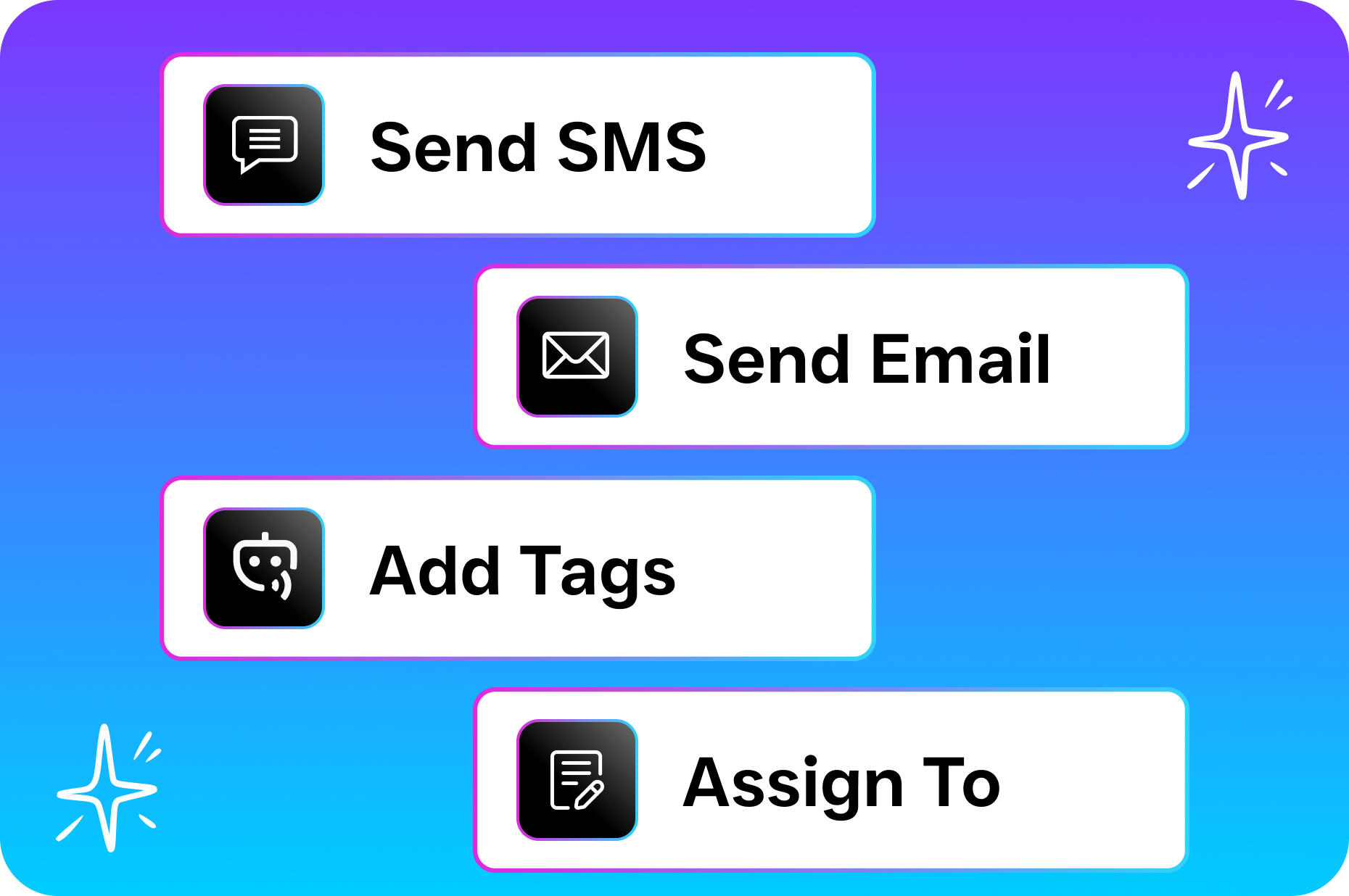
- Automate follow-ups and workflows. Use the visual workflow builder to trigger appointment reminders, CRM updates, review requests, and follow-up messages based on customer actions.
- Review AI summaries and transcriptions. Every call gets transcribed and summarized automatically, so your team can reference key details without listening to recordings.
Once everything is connected, your business operates like a fully staffed contact center. But instead of hiring a dozen agents, your AI handles the repetitive work while your human team focuses on high-value conversations.
Key Capabilities
- 24/7 AI Phone Agent: Answers every call regardless of time, day, or staffing level. It qualifies leads, books appointments, answers common questions, and routes complex callers to the right person. According to recent data from Aira, 62% of business calls go unanswered, and each missed call can cost hundreds in lost revenue.
- Multichannel AI Chat: Instant responses on SMS, webchat, Instagram, and Facebook Messenger. Customers don’t wait, and leads don’t slip through because someone was on another call.
- Unified Inbox with Full Context: One place for calls, texts, social messages, email, and internal notes. Every team member sees the same customer history, which eliminates the “let me transfer you and explain everything again” problem.
- Drag-and-Drop Call Flows: Build custom paths for incoming calls with IVR menus, routing rules, voicemail fallbacks, and AI agent handoffs. No IT team needed.
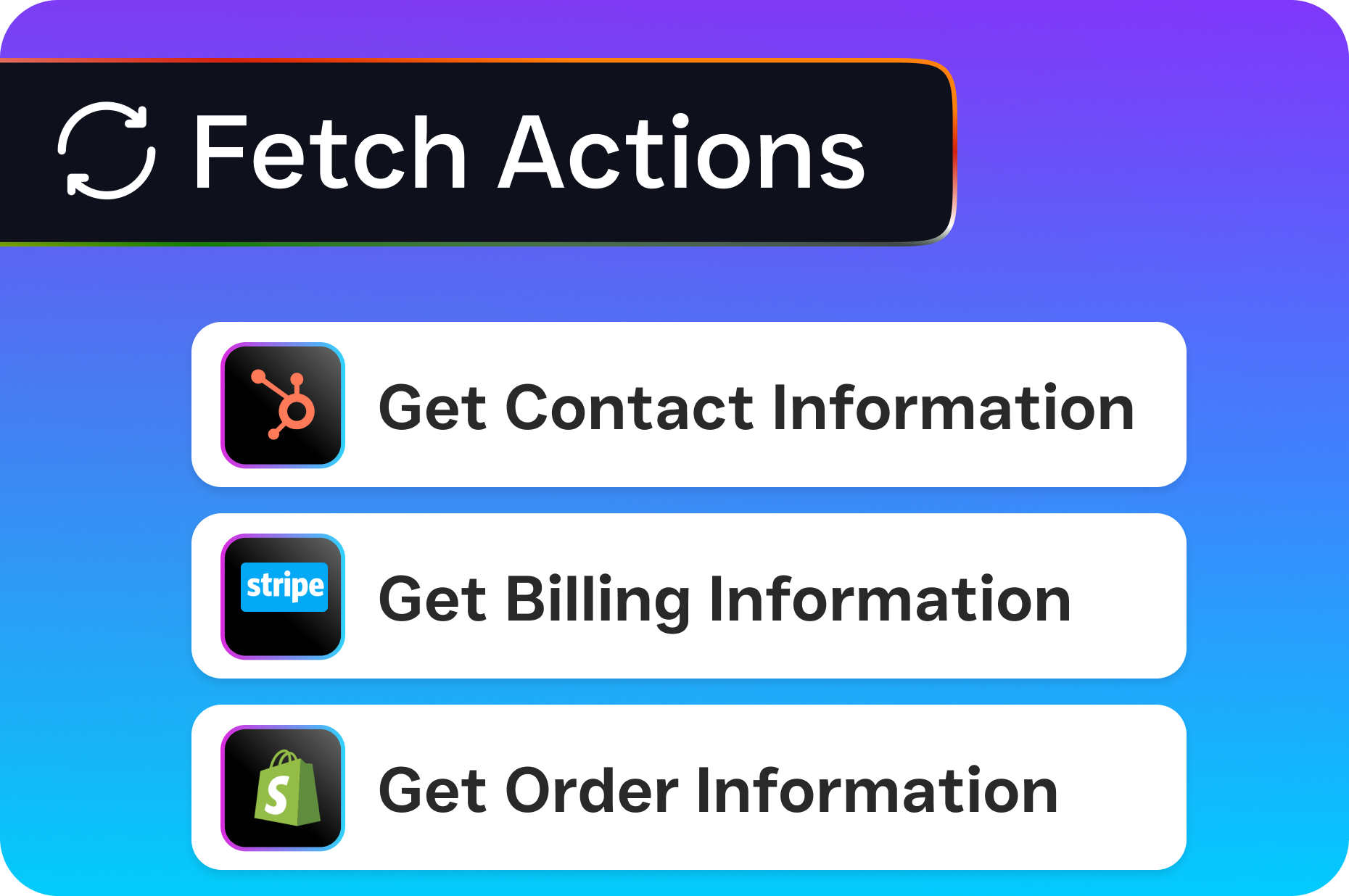
- Workflow Automation: Trigger-based automations handle follow-ups, reminders, CRM syncs, and notifications. Fifty-plus integrations connect SalesCaptain with tools like HubSpot, Salesforce, ServiceFusion, HousecallPro, and Clio.
- AI Transcription and Summaries: Every call is transcribed with speaker distinction, then summarized with key action items. Your team stays aligned without spending time on manual note-taking.
Who Needs This?
The difference between a contact center and call center isn’t just academic. It directly affects which businesses benefit and how. If your customers reach out through more than one channel (and they do), you need contact center capabilities.
- Home services businesses (roofers, plumbers, HVAC techs, landscapers): Missed calls during jobs mean missed revenue. The true cost of a missed call hits these businesses especially hard because each lead has high lifetime value.
- Healthcare and wellness practices (dental offices, MedSpas, therapy clinics): Patients expect to book via text, confirm via chat, and call for urgent needs. A phone-only system can’t keep up.
- Legal practices: Client intake involves sensitive, detailed conversations. AI summaries and transcriptions keep records accurate without extra admin work.
- Appointment-driven businesses (salons, gyms, fitness studios): Booking, rescheduling, and reminders happen across text and social media more often than phone calls now.
- Real estate agencies: Leads come from Instagram ads, website forms, and phone calls simultaneously. Without a unified inbox, follow-up falls apart.
- Operations managers and business owners juggling communication across multiple locations: Per-location pricing makes it feasible to scale without per-agent fees.
Benefits of a Unified Contact Center Approach
Stop Losing Revenue to Missed Communication
Every unanswered call, unread text, or ignored DM is potential revenue walking away. According to research from Ringlii, missed calls cost businesses thousands annually, and that only accounts for the voice channel. When you add in missed texts and social messages, the total grows significantly. SalesCaptain’s AI agents ensure every inbound communication gets a response, whether it’s 2 PM or 2 AM.
Scale Without Hiring
Traditional call centers scale by adding headcount. That’s expensive and slow. A contact center powered by AI scales by handling more conversations per channel without additional staff. Your AI Phone Agent doesn’t need breaks, training, or overtime pay. Your AI Chat Agents handle hundreds of simultaneous conversations across multiple platforms. For small businesses across top industries, this means growth doesn’t require a proportional increase in payroll.
Consistent Customer Experience
When communication is fragmented across separate tools, customers notice. They repeat themselves. They wait for callbacks that don’t come. A unified inbox eliminates that friction. Your team picks up any conversation with full context, regardless of which channel it started on. That consistency builds trust, and trust drives repeat business.
How SalesCaptain Compares
Most platforms force you to choose: either you get a strong phone system, or you get decent chat and messaging. Rarely both. SalesCaptain is the only platform that combines AI voice agents, AI chat agents, and a unified inbox in one tool, purpose-built for service businesses.
Consider the alternatives. Aircall charges $30 per license per month but doesn’t offer a Voice AI Agent, webchat, email channel, or missed-call text-back. It’s built for sales call centers, not service businesses managing inbound communication across channels. Nextiva caps SMS at 250 messages per user per month, lacks WhatsApp support, and doesn’t include a leads form or live transcription. For a business getting dozens of texts daily, that cap becomes a ceiling on growth.
OpenPhone sits at $15 per user but offers minimal AI capabilities (rated 1 out of 5 by reviewers), only seven integrations, no call coaching, and no HIPAA compliance. Birdeye, while strong on reputation management, has no call routing, no IVR, no call flow builder, and no AI for calls. It’s a review tool, not a communication platform.
SalesCaptain starts with a free plan for one location and scales to $159 per month per location on the Business plan. AI calls run at $0.12 per minute. That pricing model works for single-location shops and multi-location operations alike, without per-agent fees eating into margins. Plus, with 50-plus native integrations including HubSpot, Salesforce, Zoho, QuickBooks, and Zapier, your existing tools stay connected.
Frequently Asked Questions
Can a small business run a contact center without a large team?
Yes. That’s precisely what SalesCaptain enables. AI Phone Agents handle calls 24/7, AI Chat Agents manage texts and social messages, and workflow automations take care of follow-ups. You don’t need a large staff because the AI handles the volume that would normally require multiple hires.
What’s the main difference between a contact center and a call center for a service business?
A call center only handles phone calls. A contact center manages every customer communication channel, including calls, SMS, webchat, social media DMs, and email, from a single platform. For service businesses where customers reach out through multiple channels, a contact center approach captures far more leads and delivers faster response times.
Does SalesCaptain replace my existing phone system?
It can. SalesCaptain includes a full business phone system with 99.99% uptime, IVR, call routing, voicemail, and call recording. You can port your existing number or get a new one. On top of that, you get AI agents and multichannel messaging that a traditional phone system simply doesn’t offer.
How does SalesCaptain’s pricing compare to traditional contact center solutions?
Traditional contact centers charge per agent per month, which gets expensive fast. SalesCaptain uses per-location pricing: free for one location, $159 per month for the Business plan, and $300 per month for Enterprise. AI call minutes are billed at $0.12 per minute. There are no per-seat fees, so your whole team can use the platform without additional license costs.
Get Contact Center Power Without Contact Center Complexity
SalesCaptain gives your service business AI-powered voice agents, multichannel chat agents, and a unified inbox, all in one platform with pricing that actually makes sense. Stop losing leads to missed calls and slow responses. Start free with SalesCaptain today.