
AI-powered customer experience marketing (CXM) platform that helps local businesses win.



If you’re running an e-commerce business, your customer relationships don’t start and end at checkout. They span abandoned carts, post-purchase questions, shipping inquiries, repeat orders, and dozens of micro-interactions across channels. E commerce crm software is built to track, organize, and act on all of those touchpoints so you can turn one-time buyers into loyal customers. But most CRMs weren’t designed for the way e-commerce actually works. They’re either bloated enterprise tools that take months to configure or basic contact databases that can’t handle real-time customer communication. SalesCaptain takes a different approach, combining AI-powered voice and chat agents with a unified inbox and workflow automation so your customer data doesn’t just sit in a spreadsheet. It drives action.
What Is E Commerce CRM Software?
At its core, e commerce CRM software is a system that centralizes every customer interaction, from the first website visit through post-purchase support, into one accessible record. Unlike a generic CRM that’s designed for B2B sales pipelines or enterprise deal tracking, an e-commerce CRM focuses on buyer behavior, order history, communication preferences, and the high-volume, fast-moving nature of online retail.
traditional CRMs fall short for e-commerce companies because they weren’t built for the speed and volume of online transactions. A roofing contractor might close 20 deals a month. An e-commerce store might process 20 orders an hour. That’s a fundamentally different data challenge, and it requires different tools. According to Freshworks’ 2024 CRM statistics report, businesses that adopt CRM systems see an average ROI of $8.71 for every dollar spent. For e-commerce, that return compounds because every automated follow-up, every instant reply, and every recovered cart adds directly to revenue.
What makes e-commerce CRM distinct is its emphasis on real-time communication. Your customers don’t wait. They text, DM, call, and chat simultaneously, often about the same order. A CRM that can’t keep up with multichannel conversations isn’t a CRM at all. It’s a liability.
How E Commerce CRM Software Works in SalesCaptain
SalesCaptain isn’t a traditional CRM with a bolted-on communication layer. It’s a communication platform with built-in CRM intelligence. Here’s how it works for e-commerce businesses, step by step.
- Connect your channels. Link your business phone number, SMS, webchat widget, Instagram DMs, Facebook Messenger, and email to SalesCaptain’s unified inbox. Every customer message, regardless of channel, flows into one place.
- Deploy AI agents. Set up an AI Phone Agent to handle inbound calls about order status, returns, and product questions. Configure AI Chat Agents for your website, Instagram, and Facebook to respond instantly to inquiries without human intervention.
- Capture and organize contacts automatically. Every interaction creates or updates a contact record. Purchase history, communication logs, notes, and tags are all stored in a single profile. No manual data entry required.
- Automate follow-ups and workflows. Use the drag-and-drop workflow builder to trigger actions based on customer behavior. A missed call? Automatic text-back. An abandoned conversation? Follow-up SMS after 30 minutes. A completed purchase? Review request two days later.
- Sync with your existing tools. SalesCaptain integrates natively with Shopify, HubSpot, Salesforce, Zoho, QuickBooks, and 50+ other platforms through direct connections and Zapier. Your CRM data stays in sync across every system you use.
- Review AI summaries and transcriptions. After every call, SalesCaptain generates an AI-powered summary and full transcription. Your team can scan the key takeaways in seconds instead of listening to 10-minute recordings.
Key Capabilities
SalesCaptain’s feature set is purpose-built for businesses that handle high volumes of customer communication. Here’s what matters most for e-commerce operations.
- 24/7 AI Phone Agent: Handles inbound calls around the clock, answers product FAQs, qualifies leads, books appointments, and blocks spam. Customers calling about order issues at 10 PM get a real answer, not a voicemail box.
- Multichannel AI Chat Agents: Instant, automated responses across SMS, webchat, Instagram DMs, and Facebook Messenger. These agents capture leads, answer common questions, and route complex issues to your team.
- Unified Inbox with Full Contact History: One collaborative inbox for every channel. Your team sees the complete conversation history for each customer, whether they called last Tuesday, texted yesterday, or sent an Instagram DM this morning.
- Payments via Text: Send payment links directly through SMS conversations. This capability alone can reduce cart abandonment and speed up collections for e-commerce businesses that handle custom orders or deposits.
- Workflow Automation with 50+ Integrations: Build trigger-based automations for follow-ups, appointment reminders, CRM updates, and notifications. Connect to Shopify for order-triggered workflows or HubSpot for marketing automation sync.
- AI Summaries and Transcriptions: Every call is transcribed and summarized automatically. This gives your support team instant access to what was discussed, what the customer needs, and what follow-up is required.
Who Needs This?
E commerce CRM software isn’t just for massive online retailers with dedicated IT teams. In fact, according to Fit Small Business’s CRM research, small businesses see some of the highest returns from CRM adoption because they’re starting from a baseline of manual processes and missed opportunities. Here’s who benefits most from SalesCaptain’s approach.
- Shopify and e-commerce store owners who handle customer inquiries across multiple channels but don’t have a dedicated support team.
- Multi-location retail businesses that need consistent communication and CRM practices across every storefront and online channel.
- Operations managers responsible for reducing response times and improving customer satisfaction scores without adding headcount.
- Sales managers at e-commerce brands who need to track lead sources, follow up on high-value prospects, and close deals faster through phone and text.
- Service-based e-commerce businesses like MedSpas, salons, and fitness studios that sell products online but also book appointments and handle complex scheduling.
- Home service businesses with online storefronts that sell parts, maintenance plans, or accessories alongside their core services.
The common thread? These are businesses where customer communication is revenue. SchedulingKit’s research on missed calls shows that businesses lose thousands annually just from unanswered phone calls. For e-commerce, the same principle applies across every channel. A missed DM or slow text reply is a missed sale.
Benefits of E Commerce CRM Software
Unify Customer Data Across Every Touchpoint
Most e-commerce businesses have customer data scattered across five or six tools: their Shopify backend, email marketing platform, phone system, social media inboxes, and maybe a spreadsheet or two. SalesCaptain pulls all of that communication data into one unified inbox with a complete contact history for each customer. That means your team doesn’t have to ask “Can you remind me what we discussed?” because the entire conversation, across every channel, is already there.
Respond Faster Without Hiring More Staff
Speed is everything in e-commerce. A lead that waits five minutes for a reply is significantly less likely to convert than one who gets an instant response. SalesCaptain’s AI Chat Agents respond to SMS, webchat, and social media messages in seconds, not minutes. Your AI Phone Agent picks up every call on the first ring, 24 hours a day. According to Aira’s missed business calls data, the average small business misses nearly a third of incoming calls. Each one of those is a potential customer who went somewhere else.
Personalize at Scale Without Manual Effort
Real personalization isn’t just using someone’s first name in a subject line. It’s knowing their order history, their preferred communication channel, and their last three interactions with your brand. SalesCaptain’s contact profiles and workflow automation make this possible without requiring your team to manually look up records before every conversation. Automated workflows can trigger personalized follow-ups based on specific customer actions, purchase patterns, or communication history.
Save Employee Bandwidth for High-Value Work
Your best salespeople and support reps shouldn’t spend their day answering the same ten questions about shipping times and return policies. Let AI handle the repetitive volume. SalesCaptain’s AI agents manage FAQ-level inquiries across phone, text, and chat while routing complex issues to human team members. According to WPForms’ CRM statistics roundup, businesses using CRM and automation tools report significant time savings in daily operations. Those saved hours go directly to revenue-generating work.
How SalesCaptain Compares
The e-commerce CRM landscape is crowded, but most tools force you to choose between communication and data management. HubSpot is a powerful CRM, but it’s expensive at scale, doesn’t include an AI voice agent, and doesn’t offer missed-call text-back. It’s built for marketing teams at mid-market companies, not for SMBs that need fast, automated customer communication.
Podium focuses on reputation management and texting but lacks outbound workflow automation, and its pricing isn’t transparent. SalesCaptain includes capabilities Podium doesn’t offer, such as audio conferencing, an internet fax, a power dialer, and real-time speech analytics. On the phone system side, Aircall charges $30 per license per month and still doesn’t include a Voice AI Agent, webchat, or missed-call text-back. It’s a call center tool, not an e-commerce communication platform.
What makes SalesCaptain different is that it’s the only platform combining AI voice agents, AI chat agents, and a unified inbox in one tool. You don’t need to stitch together a phone system, a chatbot, a CRM, and an automation platform. According to industry CRM statistics, CRM adoption continues to grow among small businesses because consolidated platforms reduce both cost and complexity. SalesCaptain’s per-location pricing, starting with a free plan and scaling to $159 per month per location, keeps costs predictable as you grow. And with native Shopify integration, your e-commerce data flows directly into the communication workflows that drive repeat purchases.
Does SalesCaptain work as a CRM for e-commerce stores?
Yes. While SalesCaptain isn’t a traditional CRM with deal pipelines and forecasting dashboards, it functions as a communication-first CRM that centralizes every customer interaction across phone, text, chat, and social media. It integrates with Shopify and other e-commerce tools, and syncs with full CRMs like HubSpot, Salesforce, and Zoho for businesses that need both communication automation and traditional CRM capabilities.
Can AI agents handle e-commerce customer inquiries?
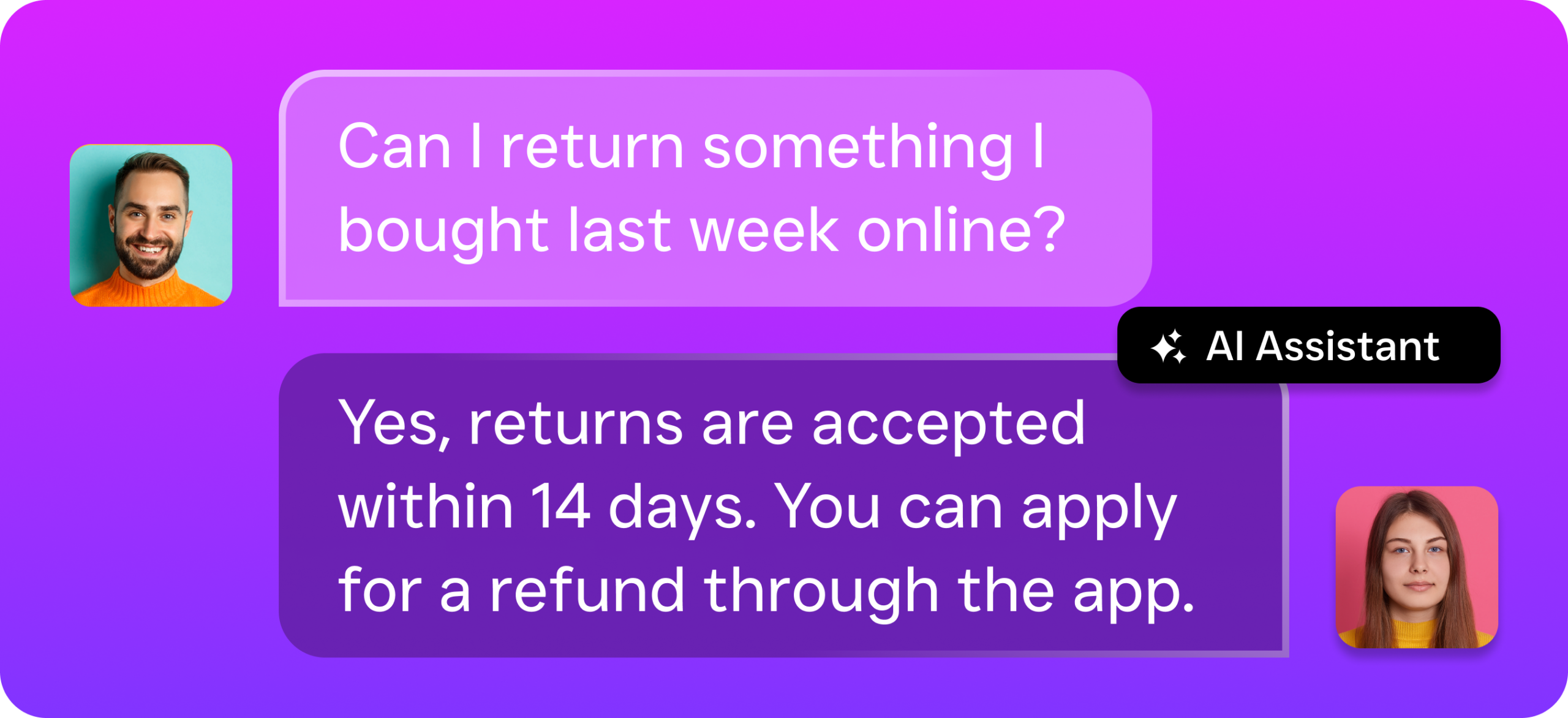
Absolutely. SalesCaptain’s AI Phone Agent and AI Chat Agents are designed to answer common customer questions like order status, return policies, product availability, and business hours. They can also book appointments, qualify leads, and route complex issues to human team members. These agents work 24/7 across phone, SMS, webchat, Instagram, and Facebook Messenger.
How does SalesCaptain integrate with Shopify?
SalesCaptain connects to Shopify through its native integration ecosystem. This allows you to trigger automated workflows based on Shopify events, sync customer data between platforms, and ensure your communication history stays connected to order records. Additional integrations through Zapier extend connectivity to virtually any e-commerce tool.
What does SalesCaptain cost for e-commerce businesses?
SalesCaptain offers a free startup plan for one location. The Business plan is $159 per month per location, and the Enterprise plan is $300 per month per location. AI call minutes are billed at $0.12 per minute. There are no per-user fees, which makes it significantly more affordable than platforms like Aircall that charge $30 per license per month.
Stop losing customers to slow responses and scattered communication.
SalesCaptain gives your e-commerce business AI-powered phone and chat agents, a unified inbox, and workflow automation, all in one platform starting free.