
AI-powered customer experience marketing (CXM) platform that helps local businesses win.


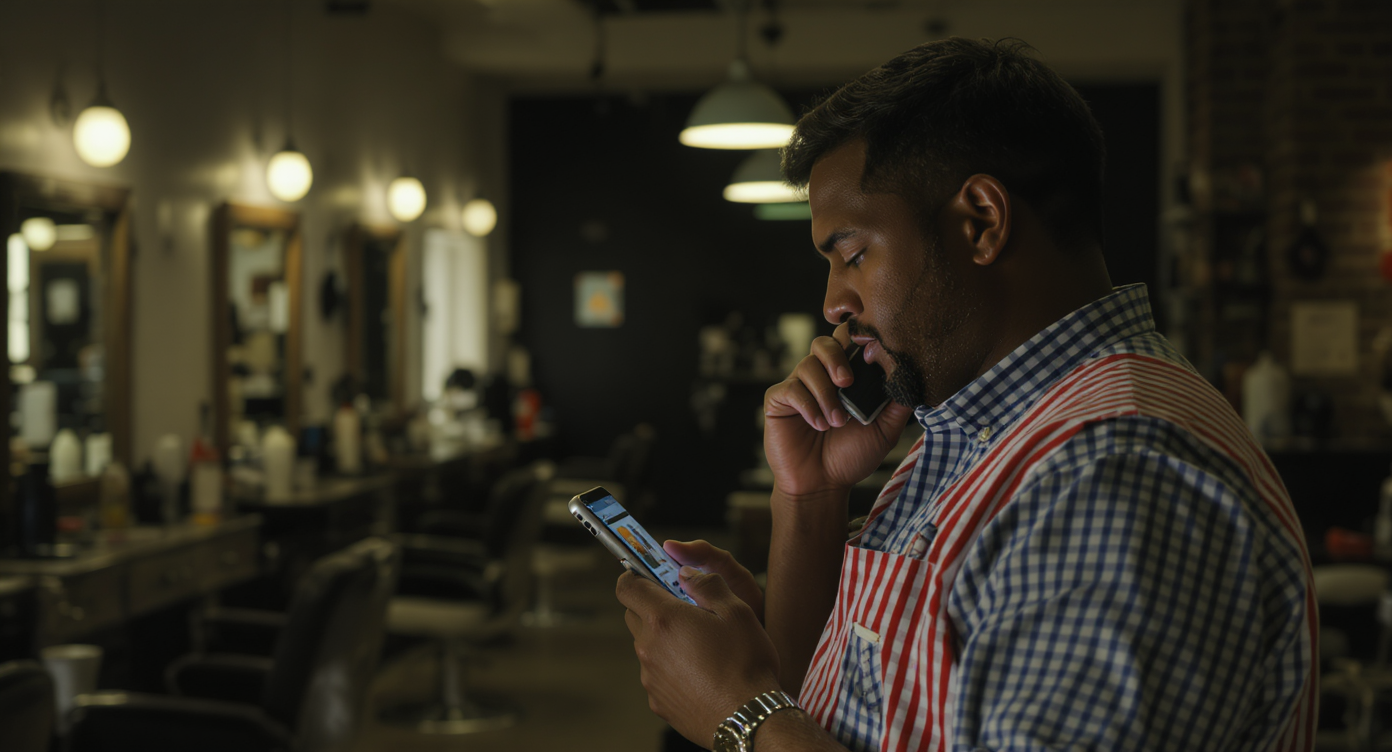
A client calls your barbershop at 7:30 PM to book a fade for tomorrow morning. Nobody picks up. By the time you check voicemail the next day, they’ve already booked with the shop down the street. That lost call wasn’t just a missed appointment—it was lost revenue you’ll never recover. And it happens constantly. Learning how to handle after hours calls for barbershops is one of the most practical steps you can take to protect your bottom line and keep your chairs full.Handling after hours calls for barbershops means capturing incoming calls when your shop is closed using voicemail, call forwarding, or automated systems. These missed calls—appointment requests, pricing questions, and availability checks—represent lost revenue. Setting up proper call management ensures clients can book appointments and reach you even outside business hours.
Quick Answer
Barbershops should use a combination of voicemail greetings directing callers to call back during business hours, an automated callback system, or a service that captures messages and forwards them to staff. Setting clear expectations in your voicemail about response times, offering online booking for future appointments, and having one staff member check messages before opening the next day ensures no potential clients slip away. Some shops also use text-to-book links or chatbots to capture leads overnight.
Free weekly newsletter
Growth tips for salons, gyms & beauty businesses
Every Tuesday — actionable ideas to get more leads, reviews, and repeat customers. No fluff.
What Are After Hours Calls for Barbershops?
After hours calls are any incoming phone calls that arrive when your shop isn’t staffed or open for business. For most barbershops, that means evenings, early mornings, weekends (if you’re closed), lunch breaks, and holidays. These calls typically fall into a few categories: appointment requests, pricing questions, directions, walk-in availability checks, and rescheduling.Here’s what makes this tricky for barbershops specifically. Your busiest calling hours often overlap with your busiest cutting hours. When you’re behind the chair with clippers in hand, you can’t answer the phone. And once the shop closes, there’s nobody there at all. According to recent missed call statistics, a significant percentage of small business calls go unanswered. Most of those callers won’t leave a voicemail or try again. They’ll just call your competition.Why Missed After Hours Calls Cost Barbershops Real Money
Every unanswered call represents a potential booking that goes to a competitor. It’s that simple. But the compounding effect is what most shop owners underestimate.The Revenue Impact of Missed Calls
Think about your average ticket. A men’s haircut runs $25 to $50 in most markets. If you miss just three after hours calls per day, that’s potentially $75 to $150 in daily lost revenue. Over a month, you’re looking at $2,000 or more in lost money. That adds up fast. A missed call revenue study from PCN found that the financial impact of unanswered calls hits small service businesses especially hard, since each call often represents a ready-to-book customer.What compounds the damage is repeat business. Barbershops thrive on regulars. Lose a first-time caller to a competitor, and you don’t just lose one haircut. You lose years of biweekly appointments, product purchases, and referrals. That’s the real cost.Call Patterns Most Barbershops Miss
Pull up your call logs if you haven’t already. You’ll likely notice patterns that reveal when you’re losing the most business. SCORE recommends using business data to identify exactly these kinds of gaps. For barbershops, the high-miss windows are predictable:- Lunch hours (11 AM to 1 PM): Your barbers are cutting, and your front desk (if you have one) is handling walk-ins. Phones go unanswered.
- Evenings after close (6 PM to 9 PM): People browse their phones after work and decide to book. Your shop is dark.
- Sunday and Monday: Many barbershops close these days, but clients still call to plan their week.
- Holidays and seasonal rushes: Before prom, graduation, weddings, and major holidays, call volume spikes just when your team is most stretched.
📺 Watch: After-Hours Call Routing Setup: Never Miss a Lead
Practical Strategies to Handle After Hours Calls
You’ve got several options, and the right approach depends on your shop’s size, budget, and how much automation you’re comfortable with. Let’s walk through them from simplest to most effective.Set Up Professional Voicemail With Clear Instructions
This is the bare minimum. Record a greeting that tells callers your hours, your location, and how to book online if you’ve got a website. Keep it under 30 seconds. But here’s the problem. Research from Voksha shows that most callers won’t leave a voicemail. They’ll hang up and call someone else instead. Voicemail is better than nothing, but it’s a safety net with holes in it.Use Missed Call Text-Back
This is a significant upgrade from voicemail alone. When a call goes unanswered, the caller automatically receives a text message within seconds. Something like: “Hey, thanks for calling [Shop Name]! We’re currently closed but we’d love to get you booked. Reply with your preferred day and time.” This keeps the conversation alive. Most people are far more likely to engage via text than to leave a voicemail. It works.Configure Call Forwarding and Routing
If you or a staff member can take calls during certain off-hours, set up conditional call forwarding. Route calls to a personal cell phone during specific windows, like Saturday evenings, and send everything else to voicemail or an automated system. The key is building a call flow that matches your actual availability. Don’t just forward everything blindly. That leads to burnout.Deploy an AI Phone Agent
This is the most effective option for barbershops that want true 24/7 coverage without hiring staff. A well-configured AI voice agent can answer calls in a natural-sounding voice, respond to common questions about pricing and hours, and book appointments directly into your calendar. No hold music. No “press 1 for appointments.” Just a conversation that handles what the caller needs.AI answering services have matured rapidly, and small business data from NAWBO suggests that adoption of AI tools among service businesses is accelerating. For a barbershop owner, the appeal is straightforward: you’re not paying per-minute rates for a human receptionist, and coverage never calls in sick. It’s available 24/7.Best Practices for Maximizing After Hours Availability
Whichever method you choose, a few principles will help you get the most from your setup.Analyze Your Call Logs First
Before you invest in any solution, spend a week tracking every incoming call. Note the time, whether it was answered, and what the caller wanted. This data tells you exactly where your gaps are. You might discover that 40% of your missed calls happen during a two-hour lunch window, not after hours at all. That insight changes your strategy entirely. The SBA’s guidance on using business data applies here too: make decisions based on what the numbers show, not assumptions.Keep Your Automated Responses Personal
Whether it’s an AI agent or a text-back message, the tone should match your shop’s vibe. If your barbershop is laid-back and friendly, your automated responses shouldn’t sound like a corporate call center. Use your shop’s name. Reference your services. Make it feel like an extension of the experience clients get when they walk through your door. Personality matters.Handle Seasonal Rushes Proactively
Before high-volume periods, adjust your coverage. Holiday weekends, back-to-school season, and prom week all bring a surge of calls. You can prepare by:- Extending your after hours AI or forwarding coverage by an extra hour or two
- Sending proactive text reminders to existing clients to book early
- Updating your greeting or AI agent’s responses to reflect holiday hours
- Setting up automated appointment reminders to reduce no-shows and free up slots
Don’t Burn Out Trying to Answer Every Call Yourself
Some barbershop owners try to be the 24/7 answer by forwarding every call to their personal phone. That’s unsustainable. You need boundaries. Automate the routine stuff, like booking requests, hours questions, and pricing inquiries. Save your personal attention for the calls that actually need a human touch, like complaints or complex scheduling for wedding parties. That’s smart.How SalesCaptain Helps
SalesCaptain’s AI Phone Agent was built for exactly this scenario. It answers calls around the clock with a natural-sounding voice, handles appointment booking, answers FAQs about your services and pricing, and blocks spam calls from wasting your time. You don’t need any technical background to set it up. It’s intuitive.Beyond the phone, SalesCaptain gives barbershops a complete communication toolkit:- Missed call text-back: Every unanswered call triggers an instant text to keep the lead warm
- Drag-and-drop call flow builder: Create custom routing rules for lunch hours, after hours, and holidays without touching code
- Unified inbox: See calls, texts, webchat messages, and social DMs in one place so nothing slips through
- AI summaries and transcriptions: Review what callers asked without listening to every recording
- Workflow automation: Automatically send appointment reminders, follow-up texts, and review requests
Key Takeaways
Handling after hours calls isn’t optional for barbershops that want to grow. Every missed call is a potential regular client who booked with someone else instead. Start by analyzing your call logs to find the biggest gaps, then layer in the right solutions. What does that look like in practice?At minimum, set up professional voicemail and missed call text-back. For full coverage, an AI phone agent gives you 24/7 answering, appointment booking, and FAQ handling without adding payroll. Pair that with smart call flows and automated follow-ups, and you’ll capture revenue that’s currently walking out the door every single evening and weekend. The difference is real.The barbershops that win aren’t necessarily the ones with the best fades. They’re the ones that answer the phone.Frequently Asked Questions
How many after hours calls does a typical barbershop miss per week?
It varies by market and shop size, but most single-location barbershops miss between 15 and 30 calls per week during off hours and busy cutting times. Tracking your own call logs for one to two weeks will give you an accurate picture of your specific gap. The number might surprise you.Can an AI phone agent actually book barbershop appointments?
Yes. Modern AI phone agents can integrate with your scheduling system and book appointments in real time during the call. The caller picks a time slot, the AI confirms it, and the booking shows up on your calendar without any manual input from you or your staff. It’s seamless.Is an AI answering service better than hiring a part-time receptionist?
For most barbershops, yes. It’s significantly more cost-effective. A part-time receptionist might cost $1,500 or more per month and only covers limited hours. An AI phone agent runs around the clock and costs a fraction of that, typically $159 per month plus usage. However, if you’ve complex client needs that require human judgment frequently, a hybrid approach can work well. Consider your specific needs.What happens if a caller has a question the AI can’t answer?
A well-configured AI agent can route calls it can’t handle to a voicemail, a specific team member’s cell, or a follow-up text workflow. You set the rules in your call flow, so there’s always a fallback path for unusual requests. Nothing gets dropped.Will my clients know they’re talking to an AI?
Today’s AI voice agents sound natural and conversational, so many callers won’t notice the difference. That said, transparency is a good practice. Some shops include a brief note like “You’ve reached our automated assistant” at the start of the call, and clients appreciate the honesty along with the instant response. It builds trust.Ready to see it in action?
See how barbershops use SalesCaptain to capture every after-hours call and book appointments automatically.
Book a Free Demo →