
AI-powered customer experience marketing (CXM) platform that helps local businesses win.


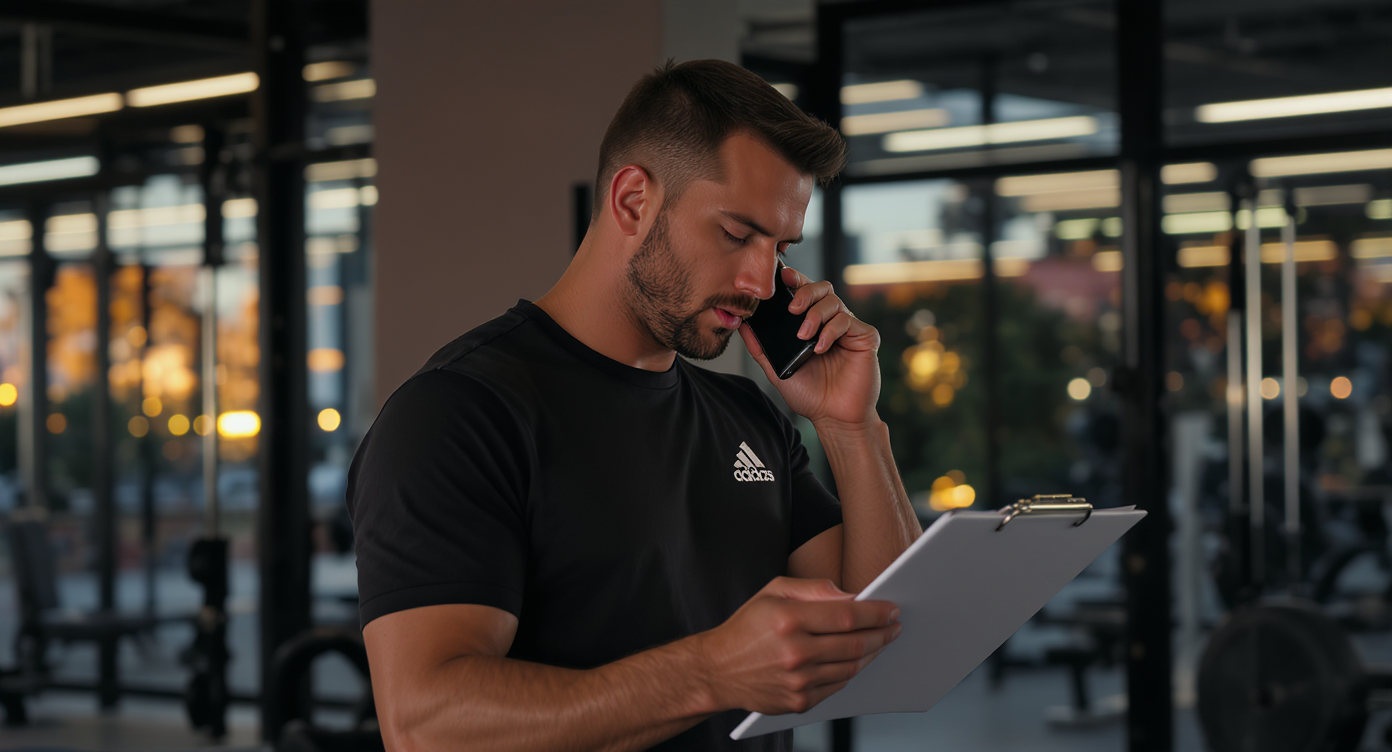
A potential client calls your gym number at 8:47 PM. They’re motivated, credit card ready, looking for a trainer who can start this week. Nobody answers. By morning, they’ve already booked with the trainer down the street who texted them back at 9 PM. Learning how to handle after hours calls for personal trainers isn’t just about convenience. It’s about capturing revenue that’s slipping through your fingers every single evening and weekend.Handling after hours calls for personal trainers means capturing inbound calls outside standard gym hours—evenings, weekends, and holidays—when prospective clients often research trainers. Use call forwarding, voicemail with callbacks, or automated text responses to engage callers immediately and prevent losing potential revenue to competitors.
Quick Answer
Personal trainers can capture after-hours calls by setting up voicemail with a callback request option, using an automated answering service that takes messages, or implementing a chatbot on their website. Many also use scheduling software that allows clients to book appointments directly without human interaction. Responding to messages within 24 hours maintains client satisfaction and prevents losing motivated leads.
Free weekly newsletter
Growth tips for service businesses
Every Tuesday — actionable ideas to get more leads, reviews, and repeat customers. No fluff.
What Are After-Hours Calls for Personal Trainers?
After-hours calls are any inbound phone calls that come in outside your normal training or office hours. For most personal trainers, that means evenings after 6 or 7 PM, early mornings before the gym opens, weekends, and holidays. These aren’t random robocalls. They’re often prospective clients researching trainers after their own workday ends, current clients needing to reschedule, or people responding to your social media posts and ads during their downtime.Here’s what makes this tricky for trainers specifically: your “working hours” are someone else’s workout hours. When you’re actively coaching a 6 AM session or running a group class at noon, you can’t pick up the phone. And when you finally finish your last client at 8 PM, you’re exhausted. But here’s the thing: according to research on missed call revenue loss, the majority of callers who reach voicemail won’t leave a message and won’t call back. That one missed call could easily represent a $200-per-month recurring client you’ll never hear from again.Why After-Hours Calls Matter More Than You Think
The Revenue You Don’t See Leaving
personal training is a high-intent purchase. When someone picks up the phone to call a trainer, they’ve already decided they want to start. They’re not browsing. They’re buying. Every unanswered call is a warm lead going cold, and missed call data for small businesses shows that most consumers will simply contact the next option on their list rather than wait for a callback. The fitness industry is competitive enough without handing leads to your competitors by default.Think about your own marketing spend. You’re paying for Instagram ads, Google listings, or maybe referral cards. Every dollar invested is designed to make that phone ring. But if it rings at 7:30 PM on a Tuesday? All that marketing spend evaporates. You’re essentially paying to generate leads you can’t capture.The Types of Calls Trainers Actually Get After Hours
Not every after-hours call carries the same urgency. Understanding the mix helps you build a system that handles each one appropriately.- New client inquiries: People asking about pricing, availability, your training style, or location. These are the highest-value calls and the most time-sensitive.
- Scheduling changes: Current clients who need to cancel or reschedule tomorrow’s session. A quick text response can handle this without a full conversation.
- Billing and payment questions: Clients asking about charges, package renewals, or payment methods.
- Emergency or injury concerns: Rare, but a client might call about an injury from a session. These need a clear protocol even if you can’t answer live.
- Spam and robocalls: A significant portion of any business phone’s inbound volume. Your system should filter these out automatically.
📺 Watch: After-Hours Call Routing Setup: Never Miss a Lead
Building an After-Hours Call Strategy That Works
Set Clear Boundaries Without Losing Clients
Burnout is real for personal trainers. According to the Bureau of Labor Statistics, fitness trainers often work irregular hours including early mornings, evenings, and weekends. Adding 24/7 phone availability on top of that isn’t sustainable. So the goal isn’t to answer every call yourself. It’s to make sure every caller gets handled.Write your after-hours rule in one sentence. Something like: “After 7 PM, all calls receive an instant text with booking options and get a personal callback by 9 AM.” This gives you permission to unplug. You’re ensuring no lead goes dark. Post it on your voicemail greeting so callers know exactly what to expect.Voicemail vs. Live Answer vs. AI
Traditional voicemail is the worst option for personal trainers. Most callers won’t leave one. Those who do expect a fast callback you might not deliver. A live answering service fixes the problem but creates another: cost. Services like Ruby and Smith.ai charge per minute or per call. Those fees add up fast when you’re solo.AI-powered phone agents represent a middle ground. They’re increasingly popular among small businesses across industries. An AI agent can answer calls in a natural voice, ask qualifying questions (“Are you a new or existing client?”), provide your pricing and availability, and even book appointments directly into your calendar. The caller gets an immediate, professional experience. You get a qualified lead waiting in your inbox the next morning.The Missed-Call Text-Back Approach
If you’re not ready for a full AI phone agent, missed-call text-back is the minimum viable strategy. Here’s how it works: when a call goes unanswered, an automated text fires to the caller. Something like, “Hey! Thanks for calling [Your Name] Personal Training. I’m with a client right now. Can I help you over text, or would you prefer I call you back in the morning?”This approach works because texting matches how most people communicate anyway. You’ve acknowledged their call within seconds. You’ve opened a conversation channel. You’ve given them a reason to stay engaged instead of calling your competitor. According to research on the hidden cost of missed calls, businesses that respond within five minutes are dramatically more likely to convert leads than those who wait even 30 minutes.Weekend and Early Morning Coverage
Weekends are peak inquiry time for personal trainers. People reflect on their fitness goals on Saturday morning. They see a friend’s transformation post on Instagram Sunday night. Yet most trainers treat weekends as completely off-limits for business communication.A few strategies that balance availability with sanity:- Batch your callbacks: Designate one 30-minute window on Saturday and one on Sunday for returning calls. Let your voicemail or auto-text mention this specific window.
- Use automated booking links: Include a direct scheduling link in every auto-reply text so motivated prospects can book without waiting for you at all.
- Rotate coverage with a training partner: If you work with other trainers, take turns handling weekend inquiries. Even a simple shared Google Voice number can work as a stopgap.
- Deploy an AI agent for weekends: Let automation handle the initial conversation, qualification, and booking while you enjoy your time off.
How SalesCaptain Helps
SalesCaptain’s AI Phone Agent was built for exactly this scenario. It answers calls 24/7 in a natural-sounding voice. Your 8:47 PM caller gets a real conversation, not a cold voicemail. The agent can answer FAQs about your training packages, qualify whether someone is a new or returning client, and book appointments directly into your calendar. Spam calls get blocked automatically, keeping your inbox clean.Beyond voice, SalesCaptain’s AI Chat Agents handle SMS, webchat, Instagram DMs, and Facebook Messenger from one unified inbox. So when that missed-call text-back fires, the follow-up conversation flows into the same place as your Instagram inquiries and website chats. Your team sees every interaction in one view without switching between apps.The platform also includes workflow automation for follow-ups. After an AI agent books a new consultation, SalesCaptain can automatically send a confirmation text, a reminder 24 hours before, and a follow-up if the prospect doesn’t show. These are the repetitive tasks that eat into your training hours and mental energy. With integrations for tools like HousecallPro, Mindbody, and Zapier, the system fits into whatever scheduling and payment stack you’re already using.Pricing starts with a free plan for a single location. Making it accessible for solo trainers just getting started. As SCORE’s guidance on small business data emphasizes, the smartest growth investments are ones that capture existing demand rather than generate new demand. Answering the phone is the ultimate example of capturing demand you’ve already earned.Key Takeaways
Handling after-hours calls effectively isn’t about being available around the clock. It’s about making sure every caller feels acknowledged and has a clear path forward, even when you’re offline. The biggest revenue leaks for personal trainers aren’t from bad marketing. They’re from good marketing that generates calls nobody answers.- Most callers won’t leave a voicemail or call back. Instant response, even automated, is essential.
- Missed-call text-back is the minimum viable strategy for solo trainers on a budget.
- AI phone agents provide a 24/7 live-answer experience without the cost of human receptionists.
- Weekend and evening coverage matters most because that’s when prospects are actively searching.
- A unified inbox prevents conversations from falling through the cracks across calls, texts, and social DMs.
Frequently Asked Questions
How many after-hours calls does a typical personal trainer miss per week?
It varies by how much marketing you’re running. Most solo trainers and small studios miss between 5 and 15 calls per week during off-hours. According to missed call statistics compiled by SchedulingKit, a significant share of small business calls go unanswered. Even converting two or three of those into clients each month can represent substantial recurring revenue.Should personal trainers answer calls during training sessions?
No. Your paying client deserves your full attention. Interrupting a session to take a call is unprofessional. Instead, set up an automated system like missed-call text-back or an AI phone agent that handles the call instantly without your involvement. You can review and follow up between sessions or during a designated admin block.Is an AI phone agent better than a traditional answering service for trainers?
For most trainers, yes. Traditional answering services charge per call or per minute. The operators typically can’t answer specific questions about your training style, pricing, or availability. An AI agent is trained on your business details, costs a fraction of what human receptionists charge, and doesn’t require you to scale staffing as call volume grows.What should my after-hours voicemail say if I don’t have automation set up yet?
Keep it short and action-oriented. Mention your name, that you’re unavailable, and when you’ll return the call. Most importantly, give them an alternative action: “Text me at this number for a faster response” or “Visit [your website] to book a free consultation.” Always give the caller something to do besides wait.How do I handle emergency calls from clients after hours?
Define “emergency” clearly in your client onboarding. A sore muscle isn’t an emergency. A potential injury during a prescribed at-home workout might be. For genuine emergencies, instruct clients to contact medical professionals first. You can set up a call flow that routes calls flagged as urgent to your personal phone while sending everything else to your AI agent or voicemail.Ready to see it in action?
See how personal trainers use SalesCaptain to book clients on calls they’d normally miss.
Book a Free Demo →