
AI-powered customer experience marketing (CXM) platform that helps local businesses win.


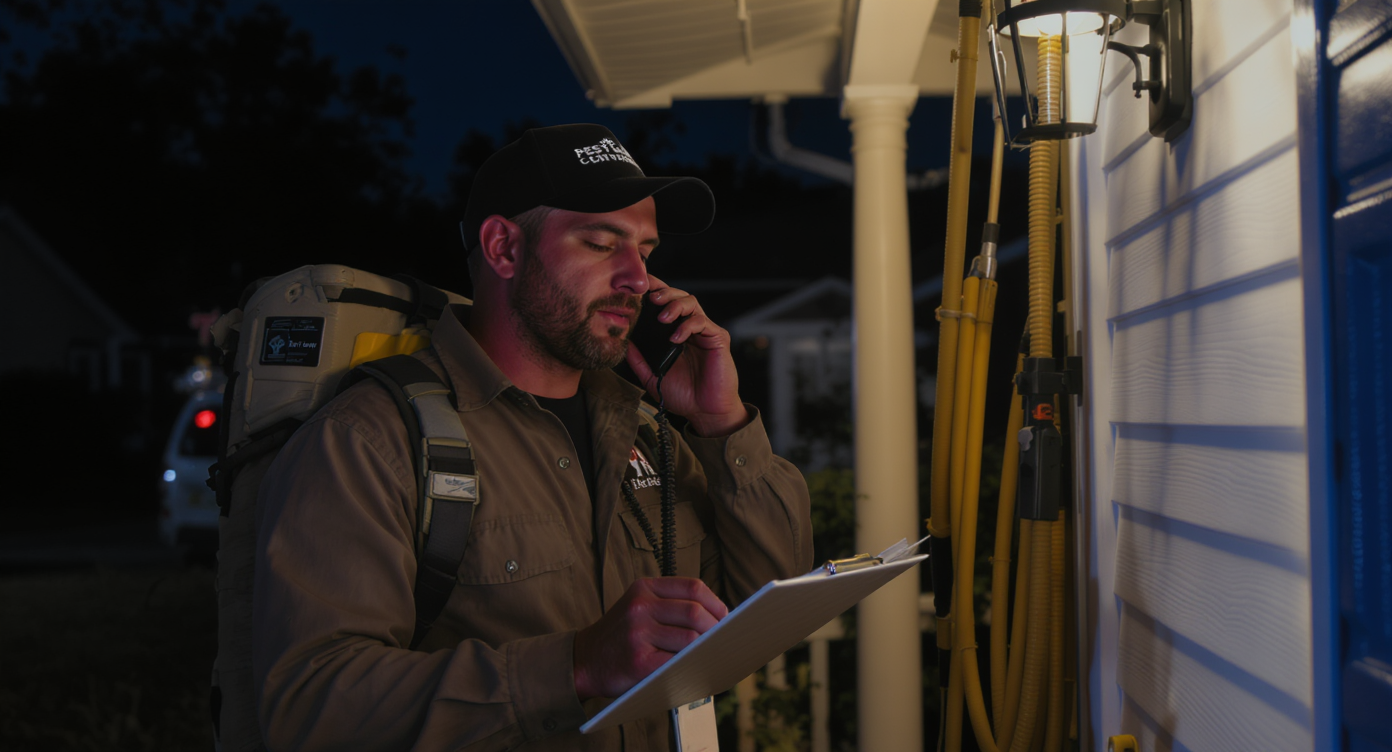
A homeowner discovers termites at 9 PM on a Tuesday. They call your pest control company, get voicemail, and immediately dial the next number on Google. By morning, that job belongs to your competitor. Learning how to handle after hours calls for pest control companies isn’t just a nice operational detail. It’s the difference between growing your business and watching revenue walk out the door every single night.Handling after hours calls for pest control companies means capturing customer inquiries outside standard business hours—evenings, weekends, and holidays. Since pest emergencies don’t wait, implementing systems like answering services, automated callbacks, or on-call staff ensures you capture leads your competitors might miss and prevent revenue loss.
Quick Answer
After hours calls represent your biggest sales opportunity—don’t let them go to voicemail. Use an answering service that qualifies leads, schedules appointments, and can dispatch technicians immediately. Live agents handle calls 24/7, ensuring no prospect reaches your voicemail, while automated systems capture basic information and route urgent jobs to on-call staff.
Free weekly newsletter
Growth tips for home service businesses
Every Tuesday — actionable ideas to get more leads, reviews, and repeat customers. No fluff.
What Are After Hours Calls in Pest Control?
After hours calls are any incoming phone calls your pest control business receives outside your standard operating window. For most companies, that means evenings after 5 or 6 PM, weekends, and holidays. But here’s what makes pest control unique: pest emergencies don’t follow a schedule. Rodents in the attic. Wasps near a kid’s play area. Bedbugs in a hotel room. These problems feel urgent to customers, and they’ll call whenever they discover them.Related guide: how to handle after hours calls for cleaning companies.
Unlike a routine service inquiry that can wait until morning, many pest control calls carry genuine urgency. According to research on missed call behavior, a significant percentage of callers won’t leave a voicemail and won’t call back. They just move on. So every unanswered after hours call represents a potential customer your business will never hear from again.Why After Hours Calls Matter More in Pest Control Than Most Industries
Pest control sits in a category where timing and emotion drive purchasing decisions. Nobody plans for a cockroach infestation. When it happens, the homeowner wants help immediately. Their tolerance for waiting? Nearly zero. That emotional urgency creates a narrow window. The first company to respond wins the job.The Revenue You’re Losing Without Knowing It
Most pest control owners underestimate how many calls come in after hours. Studies on small business missed call revenue consistently show that missed calls cost service businesses thousands of dollars per month. For pest control specifically, the average job value ranges from $150 to $500 or more for termite work. Just a handful of missed evening calls can add up to serious losses over a month.Beyond the immediate revenue, there’s a bigger problem. Customers who can’t reach you often tell their friends and family. One missed call doesn’t just cost you one job. It can cost you referrals that would’ve generated revenue for years.Seasonal Spikes Make This Even Worse
Pest control is inherently seasonal. Spring and summer bring a flood of calls about ants, mosquitoes, wasps, and termites. During peak season, your daytime staff is already stretched thin on routes and treatments. After hours call volume spikes too. Right when you’re least equipped to handle it. If you don’t have a system in place before the rush hits, you’ll bleed leads during your most profitable months.📺 Watch: After-Hours Call Routing Setup: Never Miss a Lead
Proven Strategies to Handle After Hours Pest Control Calls
There are several approaches to managing after hours communication, each with different cost profiles and effectiveness levels. The right choice depends on your call volume, budget, and growth goals. Let’s break down the most practical options.Option 1: Traditional Answering Services
Human answering services have been the default solution for decades. A live receptionist picks up your calls after hours, takes a message, and either forwards the information to you or attempts to schedule an appointment. It works, but it comes with significant downsides. Per-minute pricing (often $0.99 or more per minute) adds up fast during busy seasons. Quality varies depending on the operator. And the receptionist typically can’t answer specific pest control questions, check your actual calendar availability, or qualify leads effectively.Companies like Smith.ai and Ruby offer polished human receptionist services. But their costs scale with call volume. That’s a tough model for seasonal businesses where call counts can double or triple during peak months.Option 2: Voicemail with Callback Systems
The simplest approach is routing after hours calls to voicemail and calling people back the next morning. It’s cheap. But it’s also the least effective. Data on local business missed calls shows that most callers simply hang up when they reach voicemail. They’re already dialing your competitor before your greeting finishes playing. Even callers who do leave messages often book with whichever company calls them back first. If you’re not returning calls within minutes, you’ve already lost.Option 3: On-Call Staff Rotation
Some pest control companies rotate an on-call technician or office manager to answer evening and weekend calls. While this ensures a human picks up, it creates burnout. Your on-call person might be at dinner, at their kid’s soccer game, or simply exhausted from a full day of treatments. The quality of those interactions suffers. Plus, you’re paying overtime or on-call premiums for work that an automated system could handle more reliably.Option 4: AI-Powered Phone and Text Agents
This is the approach that’s rapidly becoming the new standard for service businesses. An AI phone agent answers every call in a natural, human-sounding voice. It can greet the caller, ask qualifying questions (what type of pest, property size, location), answer common FAQs about your services and pricing, and book appointments directly on your calendar. All 24/7 without any human involvement.What makes AI agents particularly well-suited for pest control is their ability to handle the repetitive nature of most after hours calls. Think about it: the majority of evening calls fall into predictable categories.- Emergency inquiries: “I found rats in my attic, can someone come tomorrow?”
- Price shopping: “How much do you charge for a termite inspection?”
- Scheduling requests: “I need to book a quarterly treatment.”
- General questions: “Do you service my zip code?” or “Are your products pet-safe?”
Best Practices for Setting Up After Hours Call Handling
Regardless of which approach you choose, certain principles will maximize your results. These aren’t theoretical suggestions. They’re drawn from what actually works for pest control companies managing high call volumes.Respond Instantly, Even If You Can’t Dispatch Immediately
The goal isn’t necessarily to send a technician at 10 PM (though some emergencies warrant it). The goal is to capture the lead before they call someone else. According to the U.S. Small Business Administration’s guidance on competitive analysis, understanding your competitors’ response times is critical to differentiation. If every pest control company in your market sends after hours calls to voicemail, the first one to answer live wins by default.Even a simple text-back confirming you received their call dramatically increases the chance they’ll wait for you. Send it first thing in the morning. Missed call text-back is one of the simplest and most effective tactics available.Qualify Leads During the Call, Not After
When someone calls after hours, you’ve got their attention right then. Use that moment to gather the information your team needs to prioritize and prepare. What does that look like in practice? Effective qualifying questions for pest control include:- What type of pest are they dealing with?
- Is this a residential or commercial property?
- How severe is the issue (single sighting vs. active infestation)?
- What’s their preferred appointment window?
- Have they used a pest control service before?
Use Call Flows to Route Urgent vs. Routine Calls
Not every after hours call requires the same response. A wildlife emergency (like a bat in someone’s living room) might warrant waking up your on-call tech. A routine inquiry about quarterly pricing can wait until morning. Smart call flows let you triage automatically. Set up your system so callers who describe emergencies get routed differently than those asking about scheduled services.Track Everything for Continuous Improvement
You can’t improve what you don’t measure. Record after hours calls, track how many convert to booked jobs, and benchmark your performance against industry standards. Review patterns monthly. Are you getting more calls on certain evenings? During specific seasons? About particular services? These insights help you staff appropriately and refine your call handling scripts.How SalesCaptain Helps Pest Control Companies Handle After Hours Calls
SalesCaptain was built specifically for service businesses like pest control companies that can’t afford to miss calls but also can’t afford to staff a 24/7 call center. Its AI Phone Agent answers every after hours call in a natural-sounding voice, asks your custom qualifying questions, answers FAQs about your services, blocks spam calls, and books appointments directly onto your calendar.Here’s what makes this particularly effective for pest control operations:- Custom call flows let you route emergency pest calls differently than routine scheduling requests, so your on-call tech only gets woken up when it truly matters.
- Missed call text-back automatically sends an SMS to any caller who doesn’t connect, keeping the lead warm even if the AI agent is handling another call.
- AI summaries and transcriptions mean your office manager starts each morning with a complete, organized log of every after hours interaction, including what was discussed and what follow-up is needed.
- Unified inbox brings calls, texts, webchat, and social media messages into one place, so nothing falls through the cracks across channels.
- Workflow automation triggers instant follow-up sequences. A caller who asks about termite treatment at 8 PM can automatically receive a confirmation text, a follow-up email with your termite service details, and a calendar reminder for their appointment.
Key Takeaways
After hours calls are one of the highest-value, most overlooked growth levers for pest control companies. Every unanswered evening or weekend call is a customer choosing your competitor by default. The shift from voicemail-based systems to AI-powered call handling isn’t a luxury anymore. It’s becoming a competitive necessity. Especially during peak season when call volume surges.The most effective approach combines instant response (AI phone agents or missed call text-back), lead qualification during the initial interaction, smart call routing that separates emergencies from routine inquiries, and automated follow-up that keeps leads warm until your team can act on them. Pest control companies that nail this process don’t just capture more leads. They build a reputation as the responsive, reliable company in their market. And that compounds into more referrals and higher lifetime customer value over time.Frequently Asked Questions
How many after hours calls does a typical pest control company receive?
It varies by market size and season. But most pest control companies report that 30% to 40% of their inbound calls arrive outside business hours. During peak season (spring and summer), that percentage climbs even higher. According to data on the cost of missed calls for service businesses, even a modest volume of missed after hours calls translates into substantial monthly revenue loss.Can an AI phone agent really sound natural enough for pest control customers?
Modern AI voice agents use advanced speech synthesis that sounds remarkably human. Most callers can’t tell the difference. Especially for structured interactions like answering questions, collecting information, and booking appointments. SalesCaptain’s AI Phone Agent is designed for exactly these types of service business conversations. And it handles them with natural pacing, appropriate pauses, and clear responses.What should I do about true pest emergencies that come in after hours?
Set up call flows that triage based on urgency. When a caller describes an active wildlife intrusion or a situation involving safety concerns (like a wasp nest near a doorway), your system should route that call to your on-call technician. Routine inquiries about scheduling or pricing should be handled by the AI agent or captured for morning follow-up. This way, your team only gets interrupted for situations that genuinely require immediate attention.Is an AI answering system cost-effective for a small pest control company?
Absolutely. At $0.12 per minute, AI call handling costs a fraction of traditional answering services. Even a one-person pest control operation can justify the expense when you consider that capturing just one or two additional jobs per month from after hours calls more than covers the cost. SalesCaptain’s free plan for a single location makes it easy to test before committing.How do I make sure after hours leads actually get followed up on the next morning?
Automation is the key. With tools like SalesCaptain’s workflow automation, every after hours interaction can automatically trigger a follow-up sequence: a confirmation text to the caller, a task assignment to your team, and a CRM update with all the qualifying details. Your office manager walks in each morning to a prioritized list instead of a messy voicemail box. Which means faster follow-up and higher conversion rates.Ready to see it in action?
See how pest control companies use SalesCaptain to capture after hours calls and book jobs automatically.
Book a Free Demo →