
AI-powered customer experience marketing (CXM) platform that helps local businesses win.


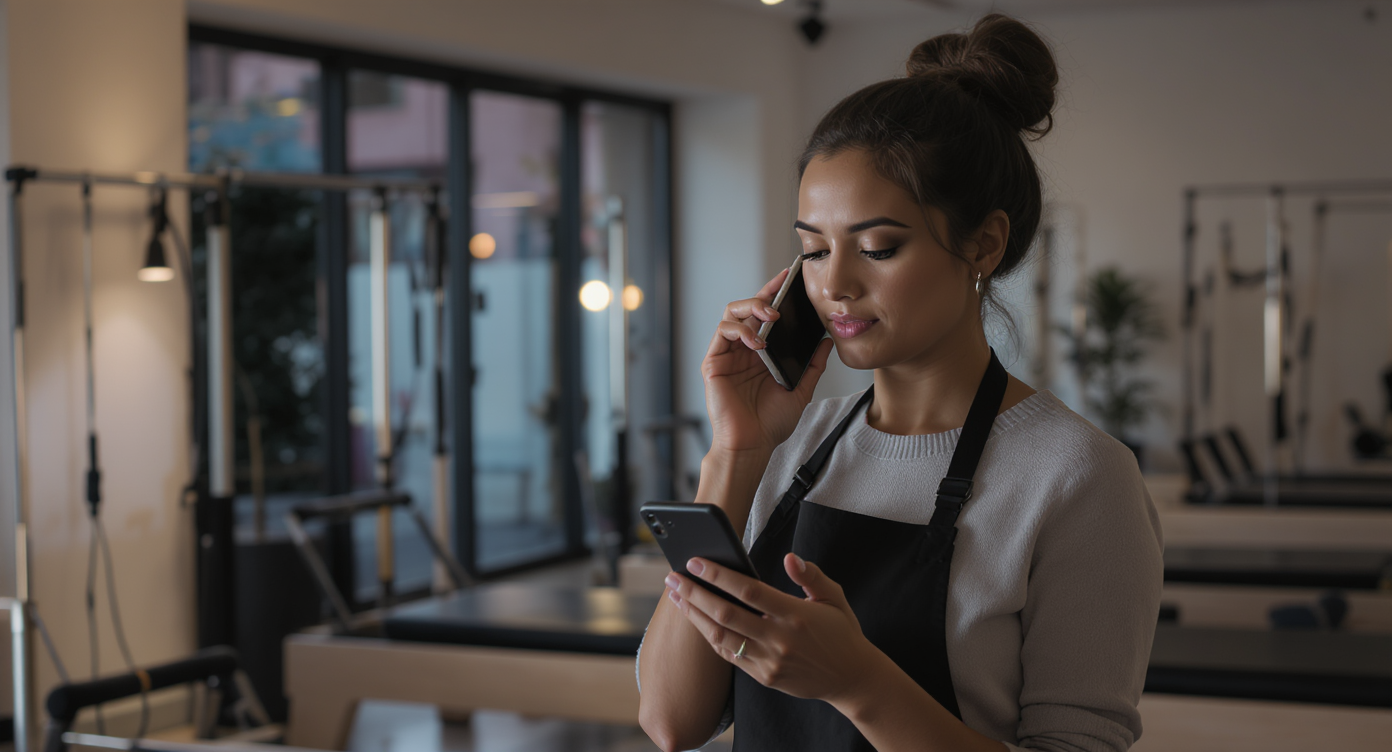
A prospective client calls your pilates studio at 7:45 PM, ready to book their first reformer class. Nobody picks up. By morning, they’ve already signed up at the studio down the street. This scenario plays out constantly for studio owners, and learning how to handle after hours calls for pilates studios is the difference between growing your client base and watching it walk out the door.Handling after hours calls for pilates studios means capturing inbound leads when your staff isn’t available. High-intent prospects often call evenings and weekends to book classes. Using an answering service, call forwarding, or automated systems ensures you respond quickly and don’t lose clients to competitors.
Quick Answer
Set up an automated voicemail greeting that captures caller information and explains your business hours. Use call forwarding to route urgent inquiries to an on-call staff member or answering service. Follow up with all after-hours callers within your first business hour. This prevents lost leads while respecting your team’s time off and ensuring potential clients feel valued regardless of when they reach out.
Free weekly newsletter
Growth tips for salons, gyms & beauty businesses
Every Tuesday — actionable ideas to get more leads, reviews, and repeat customers. No fluff.
What Are After-Hours Calls and Why Do They Matter for Pilates Studios?
After-hours calls are any inbound calls that come in when your front desk isn’t staffed. For most pilates studios, that means evenings after the last class, weekends between sessions, early mornings, and holidays. These aren’t junk calls. They’re often your highest-intent prospects: people who just finished researching studios online and are ready to commit.Pilates studios face a unique challenge here. Your instructors are teaching, not answering phones. Your front desk staff, if you even have one, works limited hours. Yet your clients and prospects don’t operate on your schedule. According to recent research on missed calls in small businesses, a significant portion of callers won’t leave a voicemail and won’t call back. Every unanswered call costs you. That means lost memberships, cancelled private sessions, and referrals that never materialize.Why Pilates Studios Lose Clients After Hours
The fitness and wellness industry runs on relationships and convenience. When someone decides to try pilates, they’re often motivated by a specific moment—maybe a friend’s recommendation, a doctor’s suggestion, or a New Year’s resolution. That motivation doesn’t stick around long. If your studio doesn’t respond quickly, the momentum fades. A competitor captures it instead.The Real Cost of Missed Calls
Think about what a single pilates client is worth to your studio over 12 months. Between memberships, private sessions, and retail purchases, that number adds up fast. Now multiply that by the calls you’re missing every week. Research from DialIQ’s analysis on revenue lost to missed calls shows that small businesses routinely lose substantial revenue annually from unanswered calls alone. For a pilates studio operating on tight margins, even a handful of missed calls per week can represent thousands in lost annual revenue.Peak Inquiry Times Don’t Match Peak Staffing
Here’s the frustrating reality: people research and call about pilates classes during their free time. That’s usually your off-hours. Lunch breaks, after work, weekends. Your busiest class times overlap with your busiest inquiry times. But your team can’t do both. Studio owners consistently report that their highest call volumes happen exactly when they’re least equipped to answer. According to the Bank of America’s 2024 small business report, staffing challenges remain one of the top concerns for small business owners. Hiring additional front desk coverage for off-peak hours rarely makes financial sense.📺 Watch: After-Hours Call Routing Setup: Never Miss a Lead
Proven Strategies for Handling After-Hours Calls
You’ve got several options. Each one has distinct trade-offs. The right choice depends on your studio’s size, budget, and growth goals. Let’s walk through them from simplest to most effective.Voicemail with a Strong Greeting
This is the baseline. Honestly, it’s not enough on its own. Most callers won’t leave a message. But if you’re going to use voicemail, at least make it work harder for you. Record a greeting that includes your studio hours, your website for online booking, and a promise to return calls within a specific window. Always follow through on that promise.Call Forwarding to a Personal Phone
Some studio owners forward calls to their cell phone after hours. It shows dedication. But it’s not sustainable. You’ll burn out answering the same questions about class schedules, pricing, and parking every evening. Plus, you deserve boundaries between your business and personal life.Hiring an Answering Service
Traditional answering services use live operators to take messages on your behalf. They’re better than voicemail, but they come with significant limitations:- Operators don’t know your class schedule, instructor specialties, or studio policies in detail
- Per-minute pricing adds up quickly, especially if callers have multiple questions
- Messages still require manual follow-up the next business day
- No ability to actually book appointments or process inquiries in real time
AI-Powered Call Handling
This is where the industry is heading. And for good reason. AI phone agents can answer calls around the clock with natural-sounding voices. They respond to FAQs about your studio, book appointments directly into your scheduling system, and qualify leads. Unlike a voicemail box, an AI agent actually resolves the caller’s need in the moment. Unlike a human answering service, it doesn’t charge you more as call volume increases.Missed-Call Text-Back
If a call does go unanswered, an automated text-back ensures the caller gets an immediate response. A simple message like “Thanks for calling [Studio Name]! We’re currently in a session. How can we help?” keeps the conversation alive. It captures the lead via SMS. According to SCORE’s guidance on using data to grow your business, responsiveness is one of the strongest predictors of whether a prospect converts into a customer.Building an After-Hours System That Actually Works
The best approach combines multiple strategies. No single tactic is enough. What does that look like in practice? Here’s what a comprehensive after-hours call strategy looks like for a pilates studio.Step 1: Map Your Call Patterns
Before you set anything up, spend two weeks tracking when calls come in and what callers ask. You’ll likely find that 80% of after-hours inquiries fall into a handful of categories:- Class schedule and availability questions
- Pricing and membership options
- First-time visitor logistics (what to wear, where to park, what to expect)
- Cancellation and rescheduling requests
- Private session booking
Step 2: Set Up Intelligent Call Routing
Not every after-hours call needs the same treatment. Emergency calls from current members (like an injury report) should route differently than a first-time inquiry. Build call flows that sort callers by intent and direct them to the right resource. A well-designed IVR menu can handle this efficiently. Keep it feeling personal, not robotic. Stick to three or fewer options and always offer a path to a live response.Step 3: Automate the Repetitive Stuff
Class schedules, pricing tiers, studio location, cancellation policies: these don’t change from call to call. Automating responses to these common questions frees up your team’s time during business hours. Callers get accurate answers at 9 PM on a Tuesday. As Fit Small Business reports in their 2024 statistics roundup, small businesses that adopt automation tools consistently outperform those that rely solely on manual processes.Step 4: Capture Every Lead
Every after-hours interaction should capture the caller’s name, phone number, and reason for calling. At minimum. Whether it’s through an AI agent, a text-back sequence, or even a well-designed voicemail prompt, your goal is clear: never let a potential client disappear without a trace. Workflow automations can then trigger follow-up sequences: a welcome text the next morning, a reminder to book their intro class, or a special offer for first-time visitors.Step 5: Review and Refine
Check your call data monthly. Are certain after-hours calls still falling through the cracks? Are callers asking questions your system doesn’t address? Use call transcriptions and summaries to spot patterns. Continuously improve your setup. According to Zadarma’s research on the hidden cost of missed calls, businesses that actively monitor and optimize their call handling see measurable revenue improvements within months.How SalesCaptain Helps
SalesCaptain was built for exactly this kind of challenge. Its AI Phone Agent answers calls 24/7 with a natural-sounding voice. It handles the most common pilates studio inquiries: class schedules, booking first-time sessions, you name it. All without any human involvement. Because it connects directly to your scheduling tools, the AI agent can book appointments in real time. No more just taking messages.Beyond voice calls, SalesCaptain’s AI Chat Agents handle SMS, webchat, Instagram DMs, and Facebook Messenger from one unified inbox. So when a prospect texts your studio at 10 PM after seeing your Instagram post, they get an instant, helpful response. Missed-call text-back is built in. Even if a call somehow goes unanswered, the caller receives an immediate text keeping the conversation going.The platform’s drag-and-drop call flow builder lets you design exactly how after-hours calls are routed. No technical skills required. You can set up custom greetings, route callers based on their needs, and trigger follow-up automations that keep leads warm until your team is back in the studio. With integrations to tools like HousecallPro, Mindbody, and Zapier, SalesCaptain fits into the systems you’re already using. Pricing starts with a free plan for a single location. That’s accessible for independent studios. Multi-location businesses pay $159 per month per location.Key Takeaways
After-hours calls represent some of the highest-value interactions your pilates studio will receive. These are motivated prospects ready to commit. They deserve an immediate, helpful response regardless of when they call. Voicemail alone isn’t cutting it anymore.The most effective approach combines AI-powered call answering, missed-call text-back, intelligent call routing, and automated follow-up workflows into a single system. This gives every caller a great experience while freeing your team from repetitive phone work during business hours. You don’t need to hire additional staff to handle growing call volume. The right technology handles it for you, around the clock, at a fraction of the cost of a single part-time employee.Frequently Asked Questions
How many calls does a typical pilates studio miss after hours?
It varies by studio size and marketing activity. But most small fitness businesses miss between 30% and 60% of inbound calls. After hours, that number jumps even higher since there’s no one available to pick up. Tracking your own call data for two weeks will give you a clear picture of where your studio stands.Can an AI phone agent really book pilates classes without a human?
Yes. When connected to your scheduling software. Modern AI phone agents like SalesCaptain’s can check real-time availability, book intro sessions, confirm class times, and send confirmation texts. All during the call itself. Callers don’t need to wait for a callback.Won’t callers be frustrated talking to an AI instead of a real person?
Today’s AI voice agents sound remarkably natural. They can handle conversational back-and-forth. Most callers prefer getting their question answered immediately over leaving a voicemail and waiting for a callback. The key is choosing a solution that sounds professional and can actually resolve requests. Not one that just reads a script.Is it expensive to set up after-hours call handling for a single studio?
Not necessarily. Traditional answering services charge per minute. That gets costly. AI-based solutions like SalesCaptain offer a free plan for single locations. AI call minutes run at $0.12 per minute. Compare that to a part-time receptionist’s wages and it’s a fraction of the cost.What should my after-hours voicemail say if I’m also using AI or text-back?
If you’ve got AI answering and missed-call text-back in place, voicemail becomes a backup for edge cases. Keep it brief. State your studio name, mention that a text response is on its way, and provide your website URL for online booking. Don’t over-invest in voicemail scripting when your primary system should be catching calls before they reach voicemail.Ready to see it in action?
See how pilates studios use SalesCaptain to book classes from after-hours calls automatically.
Book a Free Demo →