
AI-powered customer experience marketing (CXM) platform that helps local businesses win.


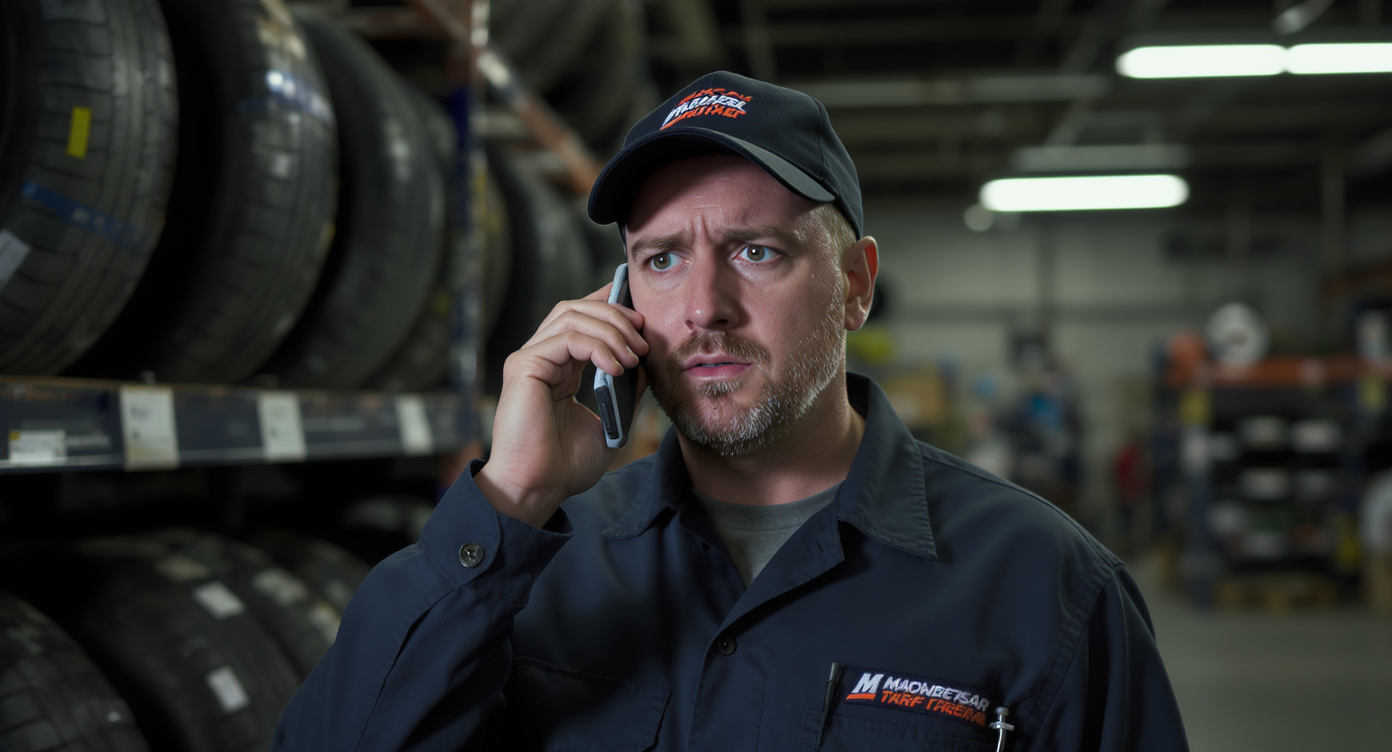
A customer blows a tire at 9 PM on a Tuesday. They search “tire shop near me,” find your number, and call. It rings five times, then goes to a generic voicemail. They hang up. The next shop picks up instead. You just lost a $200+ service job in under 30 seconds. Knowing how to handle after hours calls for tire shops is what separates shops that capture that revenue from those handing it straight to competitors.Handling after hours calls for tire shops means capturing inbound calls outside normal business hours—evenings, weekends, and holidays—when drivers face urgent tire emergencies. Many shops lose $200+ jobs by missing these calls. An answering service or automated callback system ensures no customer goes to a competitor.
Quick Answer
Tire shops can handle after-hours calls by using an automated answering service that captures customer information, schedules appointments, and routes urgent requests to on-call staff. This ensures no leads go unanswered overnight, allows customers to book services immediately, and lets your team focus on daytime operations while maintaining round-the-clock availability that builds customer loyalty and prevents competitors from stealing midnight tire emergencies.
Free weekly newsletter
Growth tips for auto dealerships & repair shops
Every Tuesday — actionable ideas to get more leads, reviews, and repeat customers. No fluff.
What Are After Hours Calls for Tire Shops?
After hours calls are any inbound calls your tire shop receives outside of normal business hours. Evenings, weekends, holidays, early mornings. For most shops, that’s a lot of calls. These aren’t casual inquiries either. Many come from drivers dealing with flats, blowouts, or urgent replacement needs who can’t wait until 8 AM.What makes tire shops different is the emergency nature of the work. A stranded driver needs help now. They can’t wait. Even if your bay doors are closed, that caller still expects some kind of response. If they don’t get one, they’re gone. According to research on the cost of missed calls for small businesses, a single unanswered call can represent hundreds of dollars in lost revenue. For tire shops with high per-ticket values? That number climbs even faster.Why After Hours Calls Matter More for Tire Shops Than Most Businesses
Emergencies Don’t Follow Business Hours
Flat tires happen at all hours. A driver stranded on the shoulder at 7 PM isn’t going to bookmark your number and call back tomorrow. They need help now. When you miss that call, you don’t just lose the tire sale. You lose the alignment, the rotation package, and possibly a long-term customer. That’s a big hit to your bottom line.Fleet Customers Expect 24/7 Availability
If you service fleet vehicles—delivery companies, construction firms, logistics operations—those customers expect round-the-clock responsiveness. And they should. A truck sitting idle with a bad tire costs their business money every hour. Fleet managers choose tire shops based on availability just as much as price. Missing one Saturday call? That could cost you an entire fleet contract down the road.Competitors Are Already Capturing These Calls
The tire industry is intensely local and competitive. According to the SBA’s guidance on competitive analysis, understanding how competitors serve customers is essential for small businesses. If the shop two miles away answers calls at 10 PM and you don’t, they’re picking up your business. Every unanswered after hours call is direct revenue transfer to a competitor who bothered to set something up.📺 Watch: After-Hours Call Routing Setup: Never Miss a Lead
Proven Methods to Handle After Hours Calls
There’s no single right answer here. What works best depends on your call volume, budget, and how much automation you want. Here are the most common methods, with real tradeoffs.Voicemail with a Strong Greeting
This is the baseline. Record a professional greeting with your hours, location, and a callback promise. It’s free and beats a robot voice. But here’s the problem: research from OVox AI on missed call costs shows a huge percentage of callers won’t leave a voicemail at all. They’ll hang up and try someone else instead. Voicemail’s a safety net. Nothing more.Call Forwarding to a Personal Cell Phone
Many owners forward after hours calls to their phone or a manager’s phone. This gives callers a live person, which helps. But the burnout is real. Taking calls during dinner, on weekends, during family time—it wears people down fast. Plus, personal phones don’t have call routing, recording, or tracking. You’re flying blind on what’s actually being promised to customers.Hiring an Answering Service
Traditional answering services use live operators. They’re professional, but expensive. Services like Smith.ai and Ruby charge premium rates per minute or per call, and costs spiral quickly. Their operators can’t do much beyond taking a message. They don’t know your inventory, can’t book appointments in your system, and won’t answer tire size questions. For shops handling 20+ after hours calls per week? The monthly bill easily exceeds $500 with limited value to show for it.AI Phone Agents
AI phone agents are the newest approach. And they’re perfect for tire shops. A natural-sounding AI voice agent answers every call 24/7, provides information about your services, books appointments directly into your calendar, and qualifies leads by asking the right questions. Unlike voicemail or phone forwarding, an AI agent doesn’t get tired, doesn’t forget to ask for the vehicle year and tire size, and doesn’t cost you per-minute fees that spiral.Missed Call Text-Back
When a call goes unanswered, a missed call text-back automatically sends an SMS within seconds. Something like: “Hey, sorry we missed your call! What can we help you with?” This re-engages the caller immediately through text. Many people actually prefer texting. It’s especially effective for tire shops because customers can text their tire size, describe the issue, or confirm an appointment without waiting on hold. Combined with an AI chat agent? You capture leads even when nobody’s in the building.Best Practices for Setting Up After Hours Call Handling
Build a Proper Call Flow
A call flow is the step-by-step path an incoming call follows when it reaches your business. Instead of just ringing and hoping someone picks up, a well-designed call flow routes each caller based on their needs. For a tire shop, that might look like this:- Play a professional greeting with your shop name and hours
- Offer a menu: “Press 1 for emergency roadside, Press 2 to schedule an appointment, Press 3 for store hours and location”
- Route emergency callers to a forwarding number or AI agent that can dispatch help
- Route appointment requests to an AI booking system or voicemail with callback confirmation
- Send a missed call text-back if the caller hangs up at any point
Keep Response Time Under Two Minutes
Speed matters enormously for after hours callers. According to data on the true cost of missed calls, response time is one of the strongest predictors of whether a lead converts. For tire shops, two minutes is the benchmark. An AI phone agent or automated text-back achieves this instantly. If you’re forwarding to a personal phone, answer within a few rings or let the automation handle it.Track Every After Hours Interaction
You can’t improve what you don’t measure. Every after hours call, text, and voicemail should be logged somewhere central. How many calls came in last week after 6 PM? How many converted to appointments? What’s your callback rate on voicemails? Without this data, you’re guessing. Benchmarking your business against industry averages helps you understand whether your after hours capture rate is strong or leaking revenue. A unified inbox consolidates calls, texts, and messages into one view so you get this visibility without juggling multiple apps.Train Your AI or Staff on Tire-Specific Questions
Generic call handling won’t cut it. Your after hours system needs to handle questions like:- “Do you carry 265/70R17 tires?”
- “How much is a tire rotation and balance?”
- “Can you fit me in first thing tomorrow morning?”
- “Do you work on commercial trucks?”
How SalesCaptain Helps
SalesCaptain combines several methods above into one platform built specifically for service businesses like tire shops. Its AI Phone Agent answers calls 24/7 with a natural voice. It handles appointment booking, qualifies leads by asking about vehicle type and tire needs, answers FAQs, and blocks spam calls. No human intervention required.Beyond voice, SalesCaptain’s AI Chat Agents handle the text side. When a missed call text-back goes out, the AI continues the conversation over SMS. It captures lead information and books appointments directly. Everything flows into a single unified inbox where your team can see calls, texts, webchat messages, and social media DMs in one place. No more checking three different apps to piece together a customer interaction.The platform includes a drag-and-drop call flow builder, so you can set up custom routing for after hours, weekends, and emergencies without any technical skill. AI-powered transcriptions and summaries of every call mean your team can review conversations quickly and follow up with context. And with research showing how much revenue SMBs lose to phone leakage, having a system that captures every interaction matters more than most realize.Pricing starts with a free plan for one location. Paid plans run $159/month per location. AI call minutes cost $0.12/minute, which is a fraction of traditional answering service rates. For a multi-location tire shop, per-location pricing keeps costs predictable as you scale. SalesCaptain integrates with HubSpot, Salesforce, ServiceFusion, HousecallPro, and Zapier, so it fits into whatever systems you’re already running.Key Takeaways
- After hours calls at tire shops are often urgent, high-value opportunities that won’t wait until morning.
- Voicemail alone isn’t enough. Most callers hang up without leaving a message.
- AI phone agents and missed call text-back are the most effective combination for capturing leads around the clock.
- A well-designed call flow routes each caller to the right outcome, whether that’s emergency dispatch, appointment booking, or information.
- Tracking every after hours interaction gives you the data to benchmark your performance and identify revenue gaps.
- Response time under two minutes dramatically increases conversion rates for after hours callers.
Frequently Asked Questions
How many after hours calls does a typical tire shop miss per week?
It varies by market and shop size. Most small tire shops miss between 10 and 30 calls per week outside business hours. According to industry data on missed call costs, even a modest number of missed calls can represent thousands in lost monthly revenue when you factor in average tire service ticket values.Is an AI phone agent reliable enough for emergency tire calls?
Yes, modern AI phone agents handle natural conversation, answer specific questions, and route emergency callers correctly. They won’t replace a technician on the road, but they can gather the caller’s location, vehicle info, and tire needs, then book a first-available appointment or forward true emergencies to an on-call number. The key is setting up your call flow to distinguish between “I need tires next week” and “I’m stranded on the highway right now.”What’s the cost difference between an answering service and an AI phone agent?
Traditional answering services typically charge $1 to $2+ per minute or $5 to $10+ per call. For a shop fielding 100 after hours calls per month, that’s $500 to $1,000+. An AI phone agent through SalesCaptain costs $0.12 per minute, and the platform subscription starts at $159/month per location. For most tire shops, the AI approach costs 50-70% less while delivering more functionality like appointment booking and lead qualification.Can an AI agent handle questions about specific tire sizes and pricing?
Absolutely. You train the AI agent with your shop’s specific information. That includes tire brands you carry, common sizes in stock, general pricing ranges, and service offerings. It won’t look up live inventory unless you integrate it with your POS system, but it can answer the most common questions callers ask and capture detailed information for your team to follow up on.How quickly can I set up after hours call handling for my tire shop?
With a drag-and-drop call flow builder, most shop owners configure a complete after hours system in under an hour. That includes recording or generating a greeting, setting up routing rules, enabling missed call text-back, and training the AI agent on your FAQs. You don’t need any technical background or IT support to get it running.Ready to see it in action?
See how tire shops use SalesCaptain to book appointments from every after-hours call.
Book a Free Demo →