
AI-powered customer experience marketing (CXM) platform that helps local businesses win.


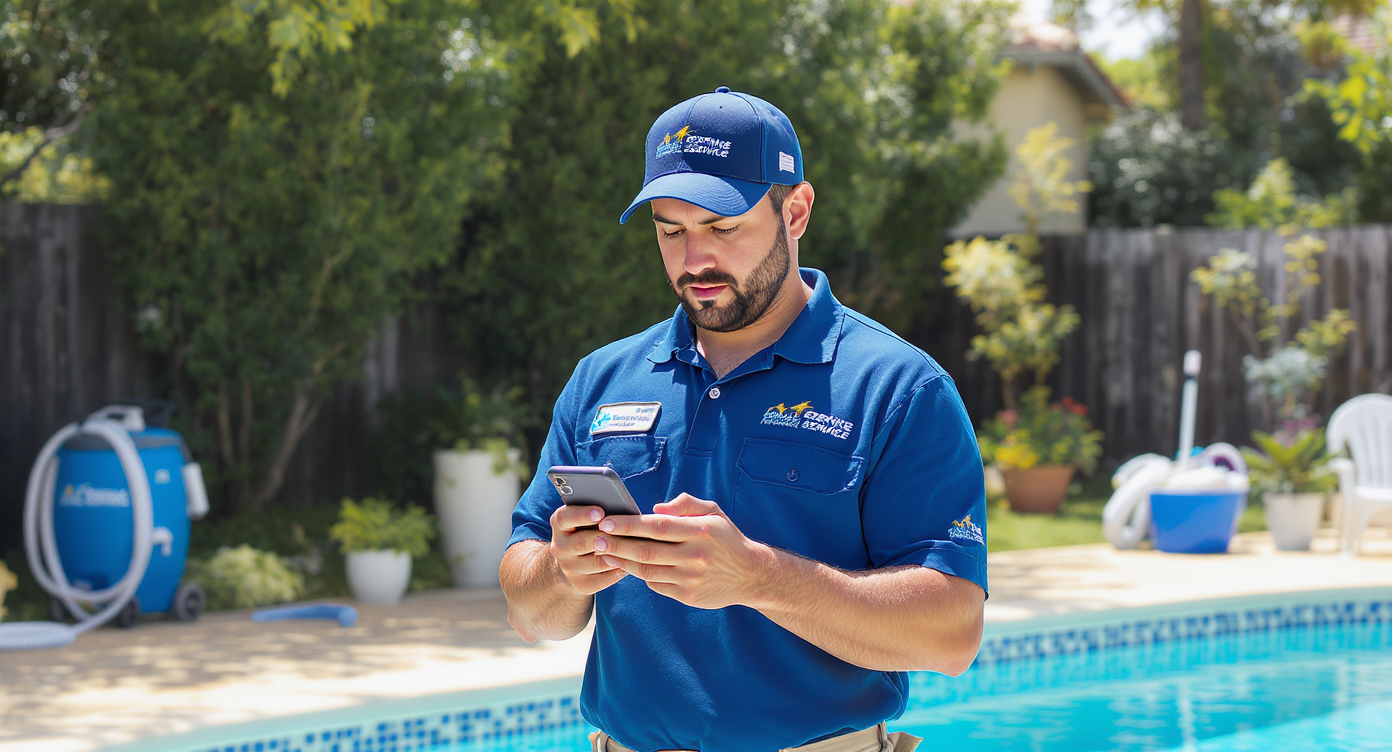
A homeowner’s pool pump just died in the middle of July. They search for a local pool service, find your number, and call. It rings five times. No answer. They hang up and call the next company on the list. That lead is gone. You probably don’t even know it happened. For pool service companies, learning how to reduce missed calls isn’t just a phone problem. It’s a revenue problem that compounds every single week of pool season.To reduce missed calls for pool service companies, implement a combination of strategies: hire dedicated phone staff during peak season, use call routing systems to distribute incoming calls, set up automated call capture for after-hours, and train staff on call prioritization. Each missed call represents lost revenue during busy pool season.
Quick Answer
Pool service companies lose revenue when they miss customer calls. Implement a dedicated phone line with voicemail-to-text, use call forwarding to route calls to available staff, set up automated scheduling systems to capture appointment requests, and train team members on call protocols. Consider rotating on-call schedules during peak seasons so someone always answers. Real-time notifications ensure urgent calls get immediate attention before prospects contact competitors.
Free weekly newsletter
Growth tips for home service businesses
Every Tuesday — actionable ideas to get more leads, reviews, and repeat customers. No fluff.
What Are Missed Calls and Why They Matter for Pool Service
A missed call is any incoming call that goes unanswered by a live person or an automated system capable of capturing the caller’s information. It includes calls that ring out, hit a generic voicemail that callers hang up on, or drop because your line was busy. For pool service companies specifically, each missed call often represents a high-value customer. Whether that’s a new pool build inquiry worth thousands of dollars or a recurring maintenance contract worth hundreds per month, you’re losing real money.The financial impact is steep. According to a small business missed call revenue study by PCN, most small businesses lose significant revenue each month from unanswered calls. Pool service sits in an especially vulnerable spot because the work is seasonal, competitive, and urgent. When someone’s pool turns green before a weekend party, they aren’t leaving a voicemail and waiting. They’re calling the next company on Google right now.Why Pool Service Companies Miss So Many Calls
Pool service has a unique set of challenges that make missed calls almost inevitable without the right systems. Understanding these causes is the first step toward fixing them.Crews in the Field, Nobody at the Desk
Most pool service companies run lean. Your technicians are driving between jobs, cleaning filters, balancing chemicals, and troubleshooting equipment. Nobody’s sitting at a desk answering phones. Very few pool companies have a dedicated office receptionist, and even those that do can only answer one call at a time. So when two customers call within the same minute, one of them gets voicemail. According to missed call statistics compiled by SchedulingKit, a large percentage of callers won’t leave a voicemail at all. They’ll simply move on to your competitor.Seasonal Call Volume Spikes
Pool service is one of the most seasonal industries in home services. Call volume can triple between April and June as homeowners open their pools. Then it spikes again in late summer when equipment fails under heavy use. You can’t realistically hire and train temporary office staff for these four-month windows. But you also can’t afford to miss 30-40% of your inbound calls during your most profitable months.After-Hours and Weekend Inquiries
Homeowners often research and call service providers during evenings and weekends, exactly when your office is closed. Pool emergencies don’t respect business hours. A cracked pump seal on Saturday morning or a cloudy pool noticed on a Friday evening generates calls that go straight to voicemail. Yet these are some of your most motivated callers. People who need help right now will book with whoever picks up first.📺 Watch: Missed Call Text Back Setup in 5 Minutes
Proven Strategies to Reduce Missed Calls
Reducing missed calls isn’t about working harder. It’s about building systems that capture every caller’s intent, whether a human answers or not. Here are the strategies that actually work for pool service companies.Set Up Call Routing and Forwarding Rules
Basic call routing ensures that if your office line goes unanswered after a set number of rings, the call forwards to a mobile phone, a secondary team member, or an automated system. A surprising number of pool service companies still run on a single phone line with no forwarding rules at all. Even simple sequential forwarding makes a huge difference. Calls try your office first, then your cell, then a partner’s cell. This alone can cut missed calls significantly.More advanced setups use IVR menus to route callers based on their needs. A caller pressing “1” for new service gets sent to your sales line, while someone pressing “2” for existing accounts reaches your service coordinator. This prevents bottlenecks where one person handles everything.Use Missed Call Text-Back
When you do miss a call, the worst outcome is silence. Missed call text-back solves this by automatically sending an SMS to anyone whose call you didn’t answer. The text might say something like, “Hey, sorry we missed your call! How can we help?” That instant response keeps the conversation alive. The caller gets a reason to wait rather than call your competitor.This single feature recovers a remarkable number of leads. Think about it from the customer’s perspective. They called, didn’t get through, but within seconds received a text acknowledging them. That’s dramatically better than a voicemail box.Staff Smarter During Peak Windows
Review your call logs from previous seasons. You’ll likely find that 60-70% of your calls come during specific windows. Usually Monday mornings and the hours right after lunch. Small business data from Fit Small Business shows that most service companies understaff during their highest-volume hours. You don’t need a full-time receptionist. Even having someone cover phones during those peak three-hour blocks makes a measurable difference.Deploy an AI Phone Agent
An AI phone agent answers calls 24/7 with a natural-sounding voice. It doesn’t just take messages—it can do way more. It answers frequently asked questions (“Do you service my area?”), qualifies leads (“What type of pool do you’ve?”), and books appointments directly onto your calendar. For pool service companies, this is the closest thing to hiring a receptionist who never calls in sick. It never takes a lunch break and handles your busiest Saturday morning without breaking a sweat.The cost difference matters too. Traditional answering services like Smith.ai or Ruby charge per call or per minute, which gets expensive fast during peak season. An AI agent runs on a flat, predictable cost that doesn’t spike when your call volume doubles in June.Unify Your Communication Channels
Missed calls are part of a bigger problem: fragmented communication. Your customers reach out via phone, text, Facebook messages, website chat, and email. If each channel lives in a separate app, messages slip through the cracks. A unified inbox pulls every conversation into one place. Regardless of the channel, your team can see and respond to everything.Pool service companies that unify their channels report catching leads they never knew they were losing. Particularly from social media DMs and webchat inquiries that previously went unnoticed for hours or days.Automate Follow-Ups
Even when you do capture a lead’s information, the follow-up often falls apart. Your technician writes a name on a sticky note, forgets about it, and three days later you’ve lost a $200/month maintenance contract. Automated follow-up workflows solve this problem. They trigger a text message, email, or task assignment the moment a new lead comes in. No manual effort required.The key is speed. Research from RingReady on the cost of missed calls shows that response time is one of the strongest predictors of whether a lead converts. Businesses that respond within five minutes are dramatically more likely to win the job than those that wait an hour or more.Building a Communication System That Never Drops a Call
Individual tactics help, but the real transformation comes from combining them into a complete system. What does that look like in practice for a pool service company?- During business hours: Calls ring your office first, then forward to a mobile device, then to an AI phone agent if nobody picks up. The AI qualifies the caller and books them onto your schedule.
- After hours: The AI phone agent answers immediately. It handles routine questions, captures lead details, and sends an automated follow-up text confirming you’ll reach out the next business day.
- Missed calls: Any call that slips through triggers an instant text-back so the caller stays engaged.
- Other channels: Texts, webchat, and social DMs all flow into a single inbox so nothing gets lost between platforms.
- Follow-ups: Automated workflows send reminders, appointment confirmations, and re-engagement texts without your team lifting a finger.
How SalesCaptain Helps
SalesCaptain brings every strategy mentioned above into a single platform built specifically for service businesses like pool companies. Instead of stitching together separate tools for your phone system, texting, chat, and follow-ups, you get everything in one place. That’s huge.The AI Phone Agent answers calls around the clock with a natural-sounding voice. It books appointments and qualifies leads by asking the questions you’d ask (“What’s your pool type? What zip code?”). It answers common questions about your services and blocks spam calls so your team doesn’t waste time. You don’t need any technical skills to set it up, either.Beyond voice, SalesCaptain’s AI Chat Agents handle SMS, webchat, Instagram DMs, and Facebook Messenger automatically. The Unified Inbox pulls every conversation from every channel into one screen. So your office coordinator or you personally can see exactly what’s happening at a glance. Workflow Automation handles the follow-up sequences, appointment reminders, and CRM updates that most pool service companies do manually or forget to do entirely.The pricing works well for pool companies because it’s per-location, not per-user. A free plan covers one location. Paid plans start at $159/month per location, with AI calls billed at $0.12/minute. Compare that to hiring an answering service at several dollars per call—the math speaks for itself. SalesCaptain also integrates with tools pool companies already use, including HousecallPro, ServiceFusion, QuickBooks, and Zapier. It fits into your existing workflow without ripping anything out.Frequently Asked Questions
How many calls does a typical pool service company miss per week?
It varies by company size and season, but SBA data on small business operations shows that most small service businesses operate with minimal office staff. Industry estimates suggest that companies without dedicated phone coverage miss anywhere from 20-40% of inbound calls. That’s easily 15-30 missed calls per week during peak season for a busy pool service operation.Is an AI phone agent better than hiring an answering service?
For most pool service companies, yes. Traditional answering services charge per call or per minute, which gets expensive during seasonal spikes. They also can’t book appointments directly onto your calendar or answer detailed questions about your services. An AI phone agent costs a predictable amount each month. It handles unlimited concurrent calls and can qualify leads with custom questions specific to pool service.What should my missed call text-back message say?
Keep it short, friendly, and action-oriented. Try something like: “Hi, this is [Company Name]. Sorry we missed your call! What can we help you with?” Avoid long messages or links in the first text. The goal is to start a conversation and keep the lead warm until you can follow up personally or let your AI chat agent take over.How quickly do I need to respond to a missed call to save the lead?
Within five minutes is the benchmark. After that, conversion rates drop sharply. Automated text-back achieves this instantly without requiring anyone on your team to take action. For leads that need a callback, set up workflow automation to create a task and notify you within minutes. Nothing should sit untouched until the next morning.Can I reduce missed calls without buying new software?
You can make progress with basic steps. Set up call forwarding on your existing phone so unanswered calls route to a cell phone. Update your voicemail greeting to set expectations and encourage texting. Review your call logs to identify peak hours and make sure someone’s available during those windows. These steps won’t eliminate the problem entirely. But they’ll make a noticeable dent while you evaluate more complete solutions.Ready to see it in action?
See how pool service companies use SalesCaptain to capture every missed call and book more jobs.
Book a Free Demo →