
AI-powered customer experience marketing (CXM) platform that helps local businesses win.


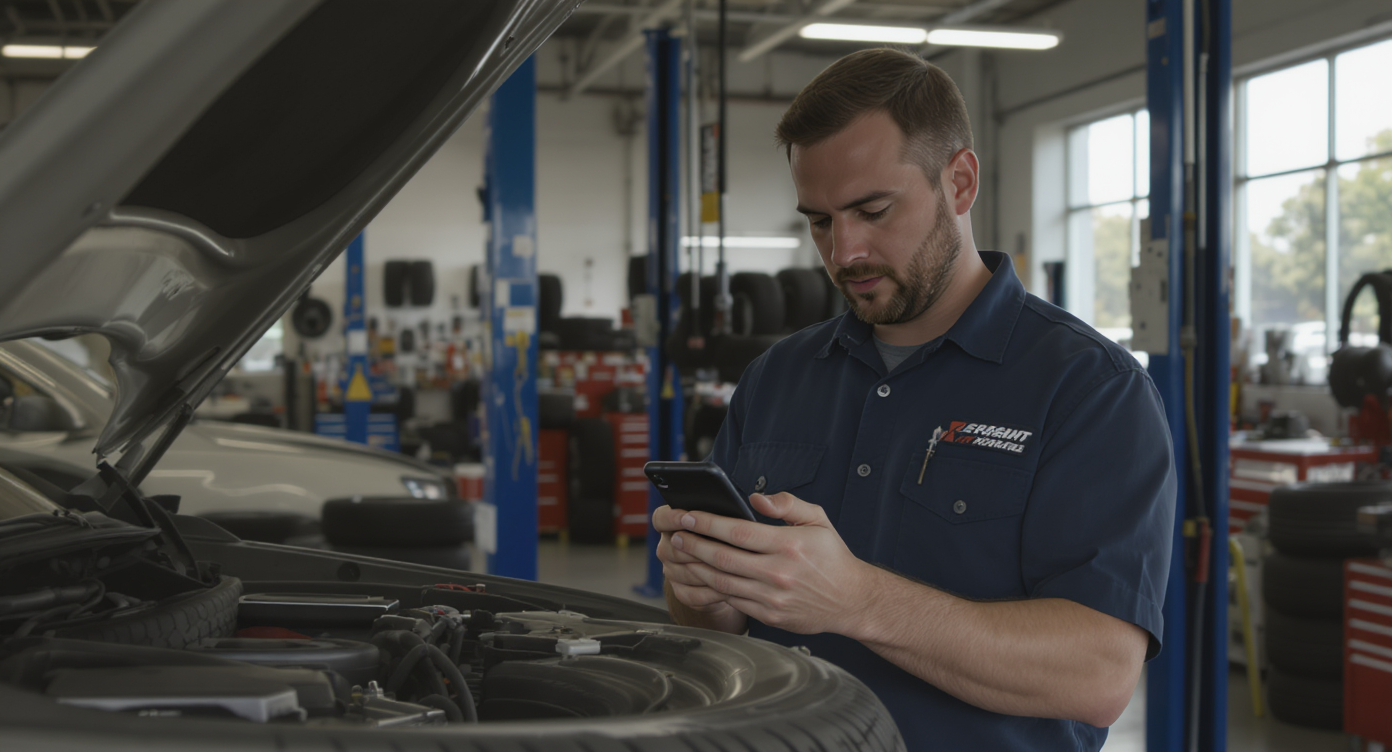
A customer calls your tire shop at 5:47 PM on a Friday. Your front desk is slammed, two technicians are finishing up alignments, and nobody picks up. That caller needed four new tires and an alignment. They won’t leave a voicemail. Instead, they’ll call the next shop on Google. Figuring out how to reduce missed calls for tire shops isn’t just a customer service problem. It’s a revenue problem that compounds every single day.Reducing missed calls for tire shops means implementing systems to answer or capture every inbound call, whether through staff scheduling, call routing, or automated solutions like missed call texting. Since calling customers are ready to book services, missed calls directly cost revenue—capturing even one extra customer per day can mean thousands in annual sales.
Quick Answer
Tire shops reduce missed calls by implementing dedicated phone lines, hiring support staff or using call answering services, setting up call forwarding to mobile devices, installing automated appointment scheduling systems, and training team members on call handling protocols. Many shops also use voicemail transcription and callback systems to ensure no customer inquiry goes unaddressed, capturing leads that would otherwise convert to competitors.
Free weekly newsletter
Growth tips for auto dealerships & repair shops
Every Tuesday — actionable ideas to get more leads, reviews, and repeat customers. No fluff.
What Are Missed Calls Costing Your Tire Shop?
A missed call is any inbound call your business doesn’t answer, whether it rings out, goes to voicemail, or gets dropped during a hold queue. For tire shops, these calls usually represent high-intent customers ready to book tire changes, alignments, rotations, or seasonal swaps. Unlike browsing traffic on a website, someone calling your shop is almost always ready to spend money.The financial impact is significant. According to research on the hidden cost of missed calls, small businesses lose substantial revenue from unanswered phones. A single missed tire replacement call could represent $400 to $1,200 in lost revenue depending on the vehicle and tire brand. What does that look like in practice? Multiply that across a busy week, and you’re looking at thousands of dollars walking out the door. Industry-specific data from Callsetter suggests service businesses can lose over $100,000 annually from missed calls alone.Why Tire Shops Miss So Many Calls
Before solving the problem, you need to understand why it keeps happening. Tire shops face a unique set of operational challenges that make consistent call answering difficult.Peak Season Overload
Seasonal demand creates brutal call volume spikes. When the first frost hits or spring arrives, everyone wants tire changeovers at the same time. Your phones ring constantly for two to three weeks, and your team can’t physically answer every call while also servicing vehicles. These are your highest-value calls of the year. Yet they keep going unanswered.Small Teams Wearing Multiple Hats
Most independent tire shops run lean. The person answering phones is also writing up service orders, checking customers out, and sometimes pulling tires from the back. It’s a lot for one person. According to the NFIB’s Small Business Problems and Priorities report, staffing remains one of the top challenges for small businesses. So hiring a dedicated receptionist often isn’t in the budget.After-Hours and Weekend Gaps
Many customers research and call outside of standard business hours. They’re at home on a Sunday evening, looking at their worn tires, and picking up the phone. If nobody answers and there’s no intelligent system in place, that lead goes cold overnight. By Monday morning, they’ve already booked elsewhere.Hold Times and Abandoned Calls
Even when your team does answer, putting callers on hold creates its own problem. People won’t wait more than 60 seconds on hold before hanging up. During busy periods, your shop might technically “answer” every call but still lose customers who abandon the hold queue.📺 Watch: Missed Call Text Back Setup in 5 Minutes
Proven Strategies to Reduce Missed Calls
Reducing missed calls requires a combination of process changes, technology upgrades, and smart automation. Here’s what actually works for tire shops.Set Up Intelligent Call Routing
Don’t let every call ring one phone. A proper call routing system distributes calls based on availability, time of day, and caller needs. For example, appointment-related calls can route to your scheduling staff, while parts inquiries go to your counter team. Nobody becomes a bottleneck. This alone can cut missed calls significantly.Key routing strategies include:- Ring groups: Multiple phones ring simultaneously so the first available person answers
- Time-based routing: Calls during business hours go to staff; after-hours calls get handled differently
- IVR menus: A brief automated menu (“Press 1 for appointments, 2 for pricing”) routes callers to the right person faster
- Overflow routing: If nobody answers within three rings, the call forwards to a backup number or system
Use Missed Call Text-Back Automation
This is one of the simplest and most effective tactics available. Every time a call goes unanswered, an automated text message instantly goes to the caller saying something like: “Sorry we missed your call! How can we help? Reply here to book an appointment or ask a question.” Most customers prefer texting anyway. You’ve just saved a lead that would’ve been lost entirely.The beauty of this approach is that it works even when your team is busy. The text goes out immediately, and the customer can respond on their own time. Your staff can reply between jobs, during breaks, or whenever they’re free. It turns a missed call into an open conversation instead of a dead end.Extend Your Availability Without Extending Hours
You don’t need to keep your shop open until 10 PM to capture evening calls. Technology lets you separate “answering the phone” from “being physically present.” After-hours call handling gives customers a way to book appointments, get pricing, and ask questions even when your doors are locked.Options range from basic voicemail with transcription to fully automated AI systems that can hold real conversations. The right choice depends on your call volume and budget. But doing nothing after hours is the single biggest source of missed revenue for most tire shops.Track and Measure Your Call Data
You can’t fix what you don’t measure. Start tracking these metrics weekly:- Total inbound calls versus calls answered
- Average hold time before calls are abandoned
- Peak call hours so you can staff accordingly
- After-hours call volume to quantify what you’re missing
- Call-to-appointment conversion rate to understand call quality
How AI Is Changing Call Management for Tire Shops
Traditional solutions like hiring more staff or using an answering service have obvious limitations. Staff costs money you may not have, and answering services often can’t book appointments or answer specific questions about your tire inventory and services. AI phone agents represent a fundamentally different approach.What an AI Phone Agent Actually Does
A modern AI phone agent isn’t a robotic menu system. It’s a natural-sounding voice agent that can hold a real conversation with callers. Think of it as a virtual front desk employee who never takes a break, never calls in sick, and handles calls at 2 AM with the same quality as 2 PM.For tire shops, an AI phone agent can:- Answer common questions about tire pricing, brands in stock, and service times
- Book appointments directly into your scheduling system
- Qualify leads by asking about vehicle type, tire size, and urgency
- Block spam calls so your team doesn’t waste time
- Route complex calls to the right staff member when human expertise is needed
- Capture caller information for follow-up even if the customer doesn’t book immediately
Boosting Revenue Through Better Lead Capture
Every answered call is a chance to increase revenue. AI doesn’t just prevent missed calls, it actively improves conversion. When a caller asks about tire prices, the AI can mention current promotions, suggest alignment services as an add-on, or recommend seasonal packages. That kind of consistent upselling is hard to maintain with a busy human team.Repeat business also improves when customers have a good phone experience. According to FitSmallBusiness’s small business statistics, customer retention is significantly cheaper than acquisition. An AI agent that remembers customer preferences and follows up on quotes creates the kind of personalized experience that drives loyalty.Reducing No-Shows and Cancellations
Missed calls aren’t the only phone-related revenue leak. No-shows and last-minute cancellations cost tire shops money too. Automated appointment reminders via text or call, sent 24 hours and 2 hours before the appointment, cut no-show rates dramatically. Pair that with easy rescheduling through text, and you’ll keep your bays full instead of sitting idle.How SalesCaptain Helps
SalesCaptain was built specifically for service businesses like tire shops that need to answer every call without hiring a full-time receptionist. Its AI Phone Agent answers calls 24/7 with natural-sounding voice conversations. Callers can book tire changes, ask about alignment pricing, or get answers to FAQs, all without a human needing to pick up the phone.What makes the platform different is that it combines AI voice, AI chat agents for SMS and webchat, and a unified inbox in a single tool. So when a caller can’t get through, missed call text-back kicks in automatically. If a customer messages on Facebook asking about winter tire availability, the same AI handles it. Everything flows into one collaborative inbox. Nothing slips through the cracks.The platform also includes drag-and-drop call flows that let you customize exactly how calls are handled. Build routing rules for peak hours, set up after-hours AI coverage, and create automated follow-up workflows for leads who didn’t book on the first call. SalesCaptain integrates with tools like HubSpot, ServiceFusion, and Zapier, so appointment data flows into whatever systems you’re already using.Pricing starts with a free plan for single-location shops, with paid plans at $159/month per location. AI calls run $0.12/minute, which is a fraction of what a human receptionist or answering service costs. For a tire shop handling 50 to 100 calls per day during peak season, that math works out heavily in your favor.Key Takeaways
- Every missed call at your tire shop likely represents $400 to $1,200+ in lost revenue from tire sales and services.
- Peak seasons, small teams, after-hours gaps, and hold-time abandonment are the four biggest causes of missed calls.
- Intelligent call routing, missed call text-back, and after-hours automation are proven strategies that work immediately.
- AI phone agents can answer calls 24/7, book appointments, qualify leads, and upsell services without adding headcount.
- Tracking call data weekly lets you identify patterns and make targeted improvements.
- Automated appointment reminders reduce no-shows and keep your service bays productive.
Frequently Asked Questions
How many calls does a typical tire shop miss per week?
It varies by season and shop size, but missed call data for small businesses suggests that service businesses miss 20% to 40% of inbound calls on average. For a busy tire shop receiving 30 to 50 calls per day during peak season, that could mean 6 to 20 missed calls daily. That’s a lot of lost business.Will customers actually talk to an AI phone agent?
Modern AI voice agents sound natural, respond conversationally, and handle common questions quickly. Most callers care about getting their problem solved fast, not whether they’re speaking to a human. As long as the AI can book their appointment or answer their question, acceptance rates are high. According to recent AI receptionist comparisons, customer satisfaction with AI phone agents has improved significantly.What’s the cheapest way to start reducing missed calls?
Missed call text-back is the lowest-cost, highest-impact starting point. It requires minimal setup and immediately re-engages callers you couldn’t answer. From there, adding call routing and after-hours automation gives you increasingly better coverage.Can an AI phone agent handle tire-specific questions like sizing and pricing?
Yes, if the system is configured with your shop’s specific information. You can train AI agents on your tire brands, pricing, service menu, turnaround times, and current promotions so callers get accurate, relevant answers.How do I know if missed calls are actually hurting my revenue?
Start by checking your phone system’s call logs for unanswered calls over the past 30 days. Multiply missed calls by your average ticket value for tire services. Even a conservative estimate usually reveals tens of thousands of dollars in lost annual revenue. That makes the case for better call handling very clear.Ready to see it in action?
See how tire shops use SalesCaptain to capture every missed call and convert it to revenue.
Book a Free Demo →