
AI-powered customer experience marketing (CXM) platform that helps local businesses win.


How to Reduce No-Shows for service businesses: Practical Strategies That Actually Work
You blocked off an hour for a customer. They never showed up. No call, no text, no warning. Now you’re staring at an empty chair, an idle technician, or a truck that could’ve been somewhere else. This happens a few times a week? You’re losing thousands of dollars a year in wasted labor, lost revenue, and missed opportunities to serve customers who actually wanted your time. Learning how to reduce no-shows for service businesses isn’t just a scheduling problem, it’s the difference between a profitable operation and one that’s constantly scrambling to fill gaps.
What Exactly Is a No-Show, and Why Does It Hit Service Businesses So Hard?
A no-show happens when a customer books an appointment or service slot and fails to show up without canceling or rescheduling beforehand. It’s different from a last-minute cancellation. You typically get zero notice, meaning you can’t fill the slot with another paying customer. For service businesses that depend on scheduled time blocks, think HVAC technicians, dental offices, salons, law firms, fitness studios, every no-show represents a chunk of revenue that simply vanishes from your day.
The financial damage adds up fast. According to industry data compiled by SkipCalls, small businesses can lose $26,000 or more per year from missed customer interactions alone, and no-shows are a major contributor. Factor in staff standing idle, fuel for service trucks that dispatched for nothing, and the opportunity cost of turning away other customers? The true price per no-show ranges from $50 to $500 depending on your industry. For a small business operating on thin margins, even a 10% no-show rate can erode monthly profits significantly.
Here’s what makes it especially frustrating: most no-shows aren’t malicious. Customers forget. Life gets busy. They booked three weeks ago and the appointment slipped off their radar. Sound familiar? Some meant to reschedule but couldn’t find your number, got stuck on hold, or procrastinated until it was too late. But here’s the good news, most no-shows are preventable if you put the right systems in place. Understanding why customers miss appointments is the first step toward building a process that keeps your schedule full and your revenue predictable.
How to Reduce No-Shows for Service Businesses: Seven Proven Strategies
Reducing no-shows requires a layered approach. No single tactic will eliminate them entirely, but combining several strategies can cut your no-show rate dramatically. Here are the methods that consistently deliver results for service businesses across industries, from roofing companies to MedSpas to law offices.
1. Send Multi-Channel Appointment Reminders
The most effective way to reduce no-shows? Remind people about their appointment. But here’s the thing, a single reminder isn’t enough. The channel matters too. Research consistently shows that SMS reminders have significantly higher open rates than email, often above 90%, which means text-based reminders reach customers far more reliably than inbox messages that get buried. The best approach uses multiple reminder touchpoints: a confirmation message immediately after booking, a reminder 48 hours before, and a final nudge 2-4 hours before the scheduled time.
What separates effective reminders from annoying ones? Personalization and utility. Include the customer’s name, the specific service booked, the date and time, and a clear option to confirm, reschedule, or cancel. When customers can respond to a text with a simple “C” to confirm or “R” to reschedule, they’re far more likely to engage. Automated voice call reminders work well too, especially for older customers or those in industries like healthcare and home services where the appointment may’ve been booked by phone in the first place.
2. Shorten the Gap Between Booking and Appointment
The longer the gap between booking and appointment, the higher the no-show risk. A customer who books three weeks out has plenty of time to forget, change their mind, or find an alternative provider. You can’t always control scheduling timelines, especially in high-demand industries. But you can minimize the risk. Offer waitlist spots for earlier openings, send “we have an earlier slot available” messages, and keep your scheduling system flexible enough to accommodate same-week bookings.
For service businesses that routinely book weeks in advance, the multi-reminder approach becomes even more critical. A customer who booked a roof inspection 21 days ago needs more than one nudge. Add a mid-point reminder around the 10-day mark in addition to the 48-hour and day-of reminders. Each touchpoint re-engages the customer and reinforces the value of the upcoming appointment, making it harder for the booking to fade from memory.
3. Make Rescheduling and Canceling Effortless
This might sound counterintuitive. Why would you make it easier for someone to cancel? Because a cancellation is infinitely better than a no-show. When a customer cancels, you get the slot back and can fill it with someone else. When they no-show, the slot vanishes. Many customers who end up as no-shows actually wanted to reschedule, but found the process too cumbersome. They’d have to call during business hours, wait on hold, navigate a clunky online system. So they just… didn’t do anything.
The fix is simple: include a one-tap reschedule or cancel option in every reminder message. A text that says “Reply 2 to reschedule” removes all friction. Research on the cost of missed calls shows that when businesses make it difficult for customers to reach them, the result isn’t just lost revenue from that single interaction, it damages the customer relationship long-term. Making it easy to reschedule actually increases customer loyalty because people appreciate the flexibility, and you recapture revenue that would otherwise disappear.
4. Identify At-Risk Customers and Adapt Your Approach
Not all customers carry the same no-show risk. First-time customers no-show at higher rates than returning ones because they haven’t yet built a relationship with your business. Customers who booked late at night? Those are riskier too. So are customers without a phone number on file or those with a history of missed appointments. What does that actually look like? If your scheduling system or CRM tracks this data, you can create different reminder workflows for different risk levels. More frequent reminders, a personal phone call the day before, even requiring a deposit to hold the slot.
This approach works especially well for high-value appointments. A legal consultation worth $300, a MedSpa treatment worth $500, an HVAC installation estimate worth thousands, these all justify extra outreach effort. A quick personal call from your team (or an AI phone agent, which we’ll discuss later) can dramatically reduce the no-show rate for these premium appointments. Use data rather than gut feeling to decide who gets extra attention, and you’re spending your effort where it has the highest return.
5. Collect Deposits or Require Prepayment
Nothing reduces no-shows quite like financial commitment. When a customer has already put money down, they have a tangible reason to show up. Deposits work particularly well in industries like salons, MedSpas, fitness studios, and consulting, anywhere the service is clearly defined and priced upfront. Even a small deposit of $20-$50 creates psychological ownership that a simple confirmation text can’t replicate.
The concern many business owners have? That requiring deposits will scare away customers. In practice, the opposite often happens. Customers who balk at a small deposit were likely low-commitment prospects who might not have shown up anyway. According to Forbes Advisor’s small business statistics, small businesses across the country struggle with cash flow, and no-shows directly contribute to unpredictable revenue. A deposit policy, clearly communicated at booking with a reasonable refund window for cancellations, protects your cash flow without creating a negative customer experience.
6. Respond to New Leads Instantly
Speed-to-lead is underappreciated. When a potential customer reaches out and has to wait hours (or until the next business day) for a response, they often book with a competitor instead. Then, even if you eventually get back to them and they accept an appointment, you’re their backup option. Backup appointments get no-showed at much higher rates.
The data is stark: research on missed calls and response times consistently shows that the probability of converting a lead drops dramatically after just the first five minutes. When customers feel valued from their first interaction, they’re significantly more likely to honor the appointment. Instant responses, whether from a live person or an automated agent, set the tone for the entire customer relationship and signal that your business is organized, reliable, and respectful of people’s time.
7. Build Confirmation Into Your Workflow
There’s a meaningful difference between a reminder and a confirmation request. A reminder says “Don’t forget your appointment tomorrow at 2 PM.” A confirmation request says “Please reply YES to confirm your appointment tomorrow at 2 PM.” The second approach is more effective because it requires active engagement. Engaged customers show up. If they don’t confirm, you now have an early warning signal that this slot may open up, giving you time to fill it from a waitlist or reach out to other interested customers.
The best confirmation workflows use escalating outreach. If the customer doesn’t respond to a text confirmation, follow up with an automated voice call. If they don’t answer that, try a different channel, email, Instagram DM, Facebook Messenger, depending on how they originally contacted you. This multi-channel persistence doesn’t feel pushy when done correctly. It feels attentive. And for your business, the result is a much clearer picture of who’s actually showing up tomorrow, allowing you to manage your team’s time and capacity accordingly.
Why Reducing No-Shows Is About More Than Just Revenue
The financial impact of no-shows is obvious. But the ripple effects go much deeper. When a technician, stylist, therapist, or attorney sits idle because a customer didn’t show, it affects team morale. Staff members who regularly prepare for appointments that don’t happen become frustrated and disengaged. In industries facing labor shortages, a challenge affecting small businesses across sectors, keeping good employees motivated matters enormously. A well-managed schedule is part of that equation.
No-shows also damage the experience for your other clients. When your calendar is packed with unreliable bookings, you may turn away customers who genuinely want your service. Then when those unreliable bookings don’t materialize? You’re left with empty slots and a frustrated waitlist. The downstream effect is a poorly optimized schedule. Reducing no-shows is really about operational excellence, making sure every hour of your business day is productive, predictable, and profitable.
There’s also a compounding benefit over time. Businesses that implement strong anti-no-show systems develop a reputation for professionalism. Automated reminders, easy rescheduling, deposit policies, they all signal that you take scheduling seriously. Regular customers internalize the reminder cadence and begin to proactively reschedule when conflicts arise, rather than simply ghosting. Over six to twelve months, you’ll notice your no-show rate dropping not just because of the systems, but because your customer base has shifted toward more committed, reliable clients.
How SalesCaptain Helps Reduce No-Shows Automatically
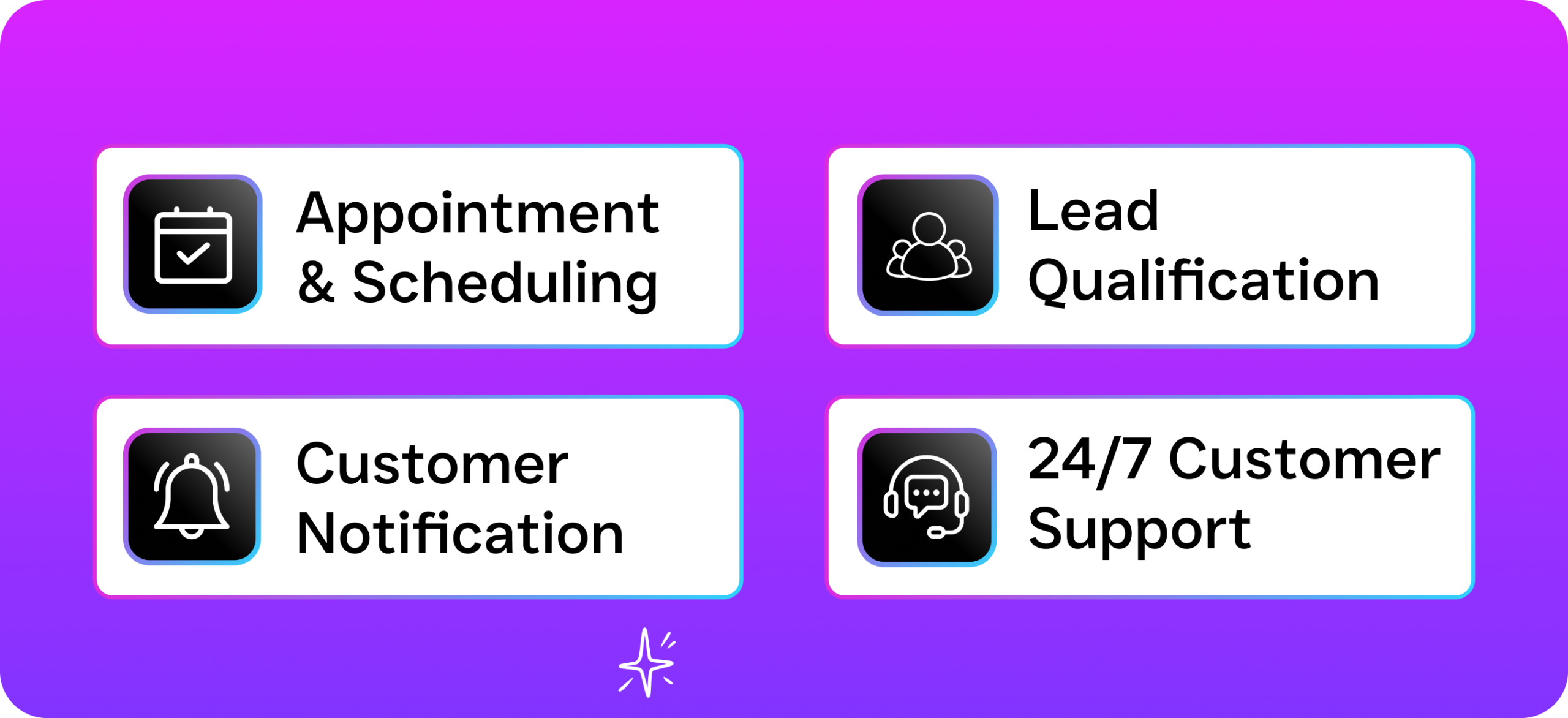
Implementing the strategies above manually would require significant staff time that most small service businesses simply don’t have. Tracking at-risk customers, sending multi-channel reminders, following up on unconfirmed appointments, responding to leads instantly, it’s a lot. This is where SalesCaptain comes in. The AI Phone Agent answers every call 24/7, so potential customers never get sent to voicemail and lose interest before they even book. When a customer does schedule an appointment, SalesCaptain’s workflow automation can trigger SMS, voice, and chat reminders at exactly the intervals you choose, without your team lifting a finger.
The platform’s AI Chat Agents handle the rescheduling friction problem across multiple channels simultaneously. Whether a customer replies to a text reminder, responds through Instagram DMs, or messages through your website’s webchat, the AI agent can process the reschedule or cancellation instantly and update your calendar. This means customers can adjust their appointments at 10 PM on a Sunday, when they’re actually thinking about their week ahead, rather than having to remember to call your office Monday morning. And the missed-call text-back feature is particularly valuable: when a customer calls but can’t get through, they immediately receive a text that keeps the conversation alive and prevents them from moving on to a competitor.
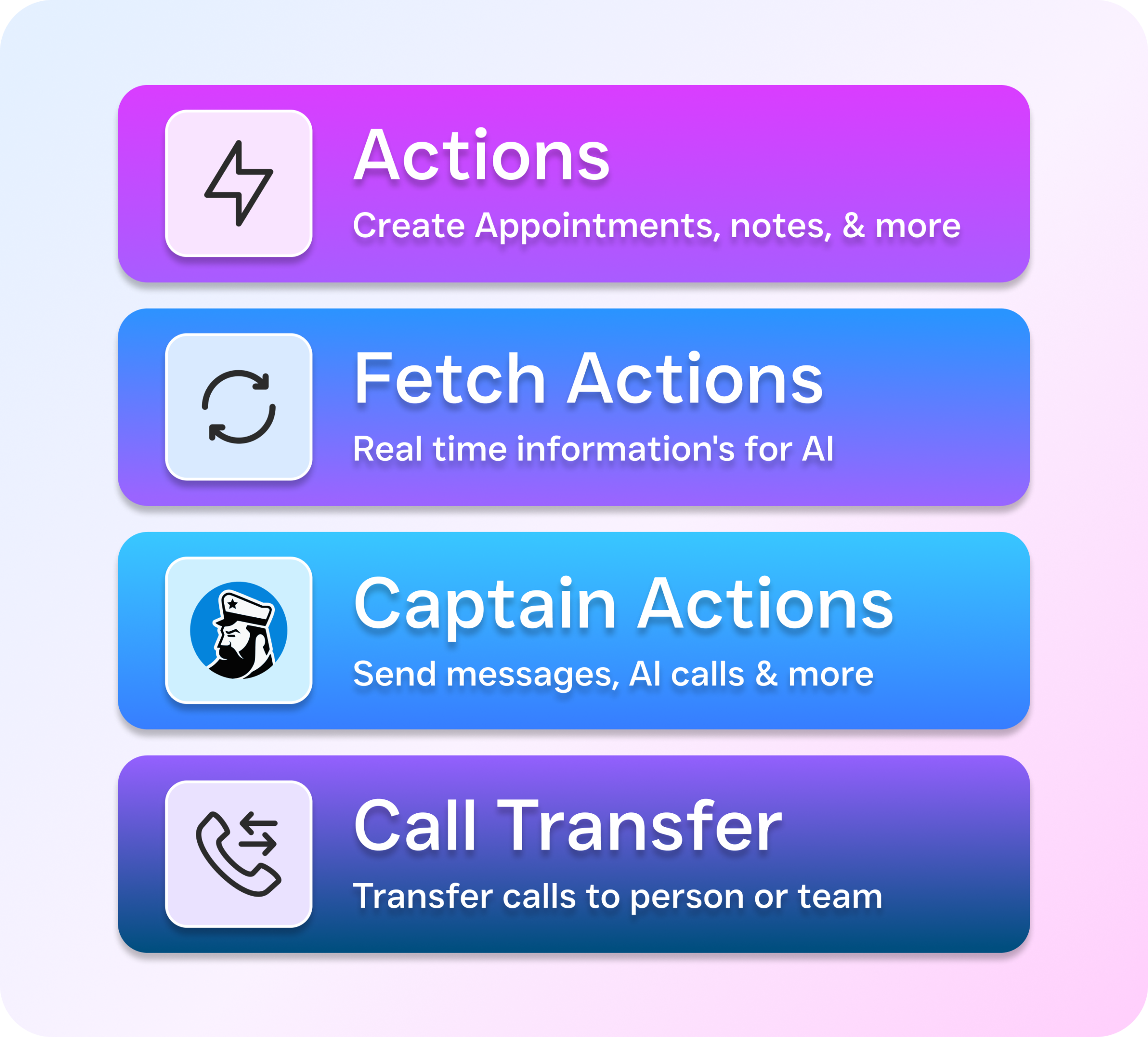
Everything flows into a single unified inbox where your team can see call transcripts, text conversations, chat interactions, and notes for every customer in one place. If a customer has a pattern of late cancellations, your staff can see that history and proactively reach out. SalesCaptain integrates with tools service businesses already use, CRMs, scheduling platforms, and industry-specific software like HousecallPro, ServiceFusion, Clio, and Mindbody, so appointment data stays synchronized without manual entry. The result? A no-show reduction system that runs on autopilot, costs a fraction of what you’d pay an additional staff member, and scales whether you’ve got one location or five.
Key Takeaways
Send reminders across multiple channels, SMS, voice calls, and chat, at 48 hours and 2-4 hours before each appointment for the best results. Make canceling and rescheduling effortless. A cancellation is always better than a no-show because you can fill the slot. Shorten the time between booking and appointment whenever possible, and add extra reminder touchpoints for appointments booked far in advance. Identify high-risk customers (first-timers, late-night bookers, previous no-shows) and give them extra outreach attention. Require deposits for high-value appointments to create financial commitment without scaring away serious customers. Respond to new leads within minutes, not hours, customers who feel valued from the first interaction are far less likely to no-show. Use confirmation requests, not just reminders. Require active engagement so you get early warning about potential empty slots. And automate as much as possible. Manual reminder systems break down as you grow; AI-powered automation scales with your business.
Frequently Asked Questions
What is a normal no-show rate for service businesses?
No-show rates vary widely by industry, but most service businesses see rates between 5% and 30%.