
AI-powered customer experience marketing (CXM) platform that helps local businesses win.


lead response time for Roofing Contractors: Why the First Call Back Wins the Job
A homeowner notices a leak after a storm and calls three roofing contractors. One calls back in under a minute. The other two? They respond later that afternoon, or the next day. Guess who gets the job? For roofing contractors, the gap between a fast response and a slow one isn’t just an inconvenience, it’s the difference between a signed contract and a lost customer. And here’s the thing: most roofers are still getting it wrong. Lead response time has become one of the most critical factors in winning jobs, but the industry hasn’t caught up to what homeowners expect.
The roofing industry is fiercely competitive. Homeowners rarely call just one company, especially after storm damage when urgency is high and patience is low. If your crew does great work but your office takes hours to return calls, you’re handing revenue to competitors who simply picked up the phone faster. This article breaks down what lead response time actually means, why it matters so much in roofing, what the benchmarks are, and how to fix slow response times without hiring a bigger office staff.
What Is Lead Response Time?
Lead response time is simple: it’s the gap between when a potential customer first reaches out, by phone call, form submission, text message, or social media DM, and when your business responds. Not the time to schedule an estimate. Not the time to close the deal. Just that first meaningful contact back. For roofing contractors, this usually means returning a missed call, replying to a website inquiry, or answering a text from someone who found you on Google or a referral.
Sometimes it’s called “speed-to-lead,” and it’s one of the most studied metrics in sales. According to research compiled by GreetNow, the odds of qualifying a lead drop dramatically after the first five minutes. Sound familiar? That means if a homeowner submits a request for a roof inspection at 2:00 PM and you don’t call back until 4:30 PM, you’ve likely already lost them. Not because your work is worse. But because someone else answered first. In the roofing world, where the average job can be worth thousands of dollars, those lost minutes translate directly to lost revenue.
And here’s what most contractors miss: lead response time applies to every channel, not just phone calls. Someone sends a message through your website chat at 9 PM on a Saturday? The clock starts ticking right then. They slide into your Instagram DM asking for a quote? Same thing. The modern homeowner expects a fast reply regardless of the channel, and they don’t care if it’s after business hours.
Why Lead Response Time for Roofing Contractors Matters More Than You Think
The Data Behind Fast Responses
The numbers on lead response time are striking. According to speed-to-lead statistics published by Verse.ai, responding within the first minute can increase lead conversions by as much as 391% compared to waiting even just a few minutes. That’s not marginal improvement. That’s a fundamentally different business outcome. For a roofing contractor running on tight margins and seasonal demand, that kind of conversion lift can mean the difference between a record-breaking quarter and a slow one.
But here’s where it gets sobering: most businesses are nowhere near those benchmarks. According to contractor-specific data from Rapport Agent, the average response time for service businesses is measured in hours, not minutes. Many roofing contractors don’t respond to web leads for a full day or more. That’s not because they don’t care. It’s because they’re on a roof, driving to a job site, or managing a crew. The operational reality of roofing makes fast follow-up extremely difficult without some form of automation or dedicated office support.
Roofing-Specific Dynamics That Amplify the Problem
Roofing has unique characteristics that make lead response time even more critical than in other industries. First, roofing work is often urgency-driven. Storm damage, leaks, and insurance deadlines create situations where homeowners need answers immediately. A homeowner with water dripping through their ceiling isn’t going to wait around for a callback. They’ll move to the next contractor on their list within minutes. Second, roofing is a high-ticket service. The average residential roofing job in the United States ranges from $5,000 to $15,000 or more, according to Forbes Home estimates. Every missed or slow-responded lead represents significant revenue walking out the door.
Third, and this one matters: roofing contractors often operate in hyper-local markets where reputation and word-of-mouth are everything. When a homeowner calls three roofers and one responds instantly with a friendly, professional interaction while the others ghost them for hours, that fast responder doesn’t just win the job, they earn a referral source for years. The compounding effect of consistently fast response times builds a reputation that’s hard for competitors to match, even if those competitors technically do better work on the roof itself.
The Cost of Missed and Slow-Returned Calls
It’s easy to dismiss a missed call. But when you add up the actual revenue impact, the numbers are sobering. According to analysis from Phone2, small businesses lose significant revenue annually from missed calls alone. That’s before accounting for web form inquiries, texts, and social media messages that go unanswered. For a roofing contractor doing 50 to 100 jobs per year, even losing two or three leads per month to slow response times could mean $100,000 or more in annual lost revenue.
But that’s only part of the picture. A homeowner who can’t reach you tells their neighbor, their insurance adjuster, and their real estate agent that you were unresponsive. That negative word-of-mouth is invisible. You never see the referrals you didn’t get. Meanwhile, the contractor who answered on the first ring is building a pipeline of warm referrals that feed their business for years. Why does this matter so much? Because the true cost of slow lead response time far exceeds any single lost job.
What’s the Ideal Lead Response Time for Roofing Contractors?
The Five-Minute Rule (And Why Even That’s Too Slow)
Industry benchmarks from CalLeads AI’s 2026 research suggest that the ideal lead response time for any service business is under five minutes. The best-performing companies? They respond in under one minute. For roofing specifically, aim for immediate acknowledgment, even if that’s just an automated text message. Let the homeowner know you received their inquiry and will follow up shortly. That initial touchpoint buys you time and signals professionalism. Often, that’s all it takes to prevent the homeowner from calling your competitor.
Think of the five-minute benchmark as a floor, not a ceiling. If you can respond in 30 seconds with an automated reply like “Thanks for reaching out to [Your Roofing Company]. We got your message and will call you back within the hour,” you’ve already separated yourself from the vast majority of contractors. The homeowner feels seen. They stop calling around. And you’ve dramatically increased your odds of winning the job. The key insight? That first response doesn’t have to be detailed. It just needs to be fast and human-sounding.
After-Hours Responses Are Non-Negotiable
Here’s where most roofing contractors fall apart. Evenings. Weekends. Holidays. Homeowners don’t discover roof damage on a convenient 9-to-5 schedule. They notice leaks at night. They browse contractors on Sunday morning. They fill out website forms at 11 PM after finally getting the kids to bed. If your lead response system goes dark after business hours, you’re ignoring what might be the majority of your inbound leads. According to missed business call statistics compiled by Aira, a significant percentage of calls to service businesses go unanswered, and after-hours calls represent a large portion of that volume.
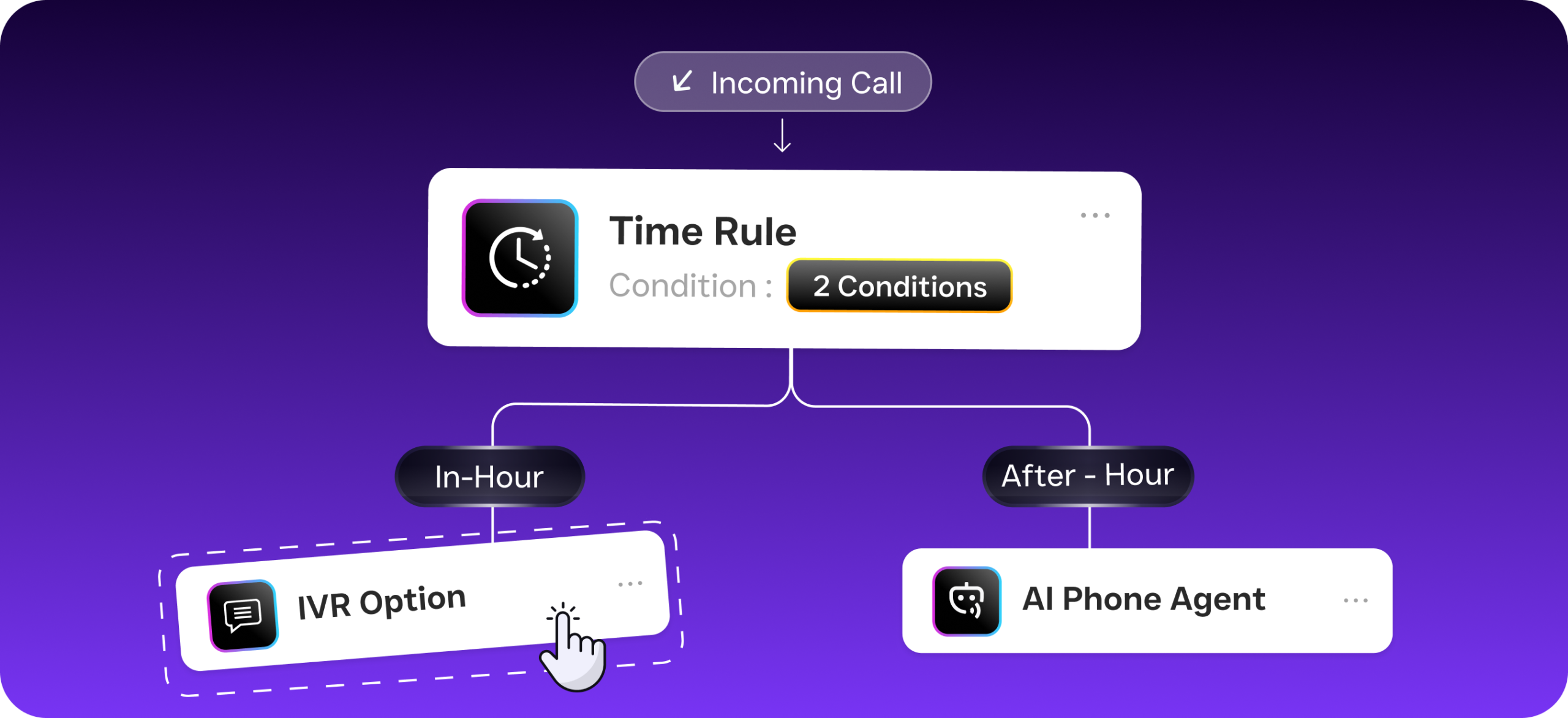
But here’s the good news: the solution isn’t to chain yourself to your phone 24 hours a day. That’s not sustainable, and it’s a fast track to burnout. The solution is to have a system, whether it’s an AI phone agent, an automated text responder, or a trained answering service, that can handle first-touch responses around the clock. The homeowner gets an immediate interaction. Their information gets captured. And a real person can follow up during business hours with a warm lead instead of a cold one. This approach alone transforms the lead pipeline for a roofing business without adding any staff.
How to Improve Your Lead Response Time Without Adding Staff
Audit Your Current Response Time
Before fixing anything, you need a baseline. Call your own business from an unknown number at different times of the day. Try during work hours. Try at lunch. Try at 7 PM. Try on a Saturday. Submit an inquiry through your website. Send a text. Track how long it takes to get a response for each channel. Most roofing contractors who do this are shocked by what they discover. Your receptionist might be great, but when she’s handling two calls at once and a walk-in, that third caller goes to voicemail. And that voicemail might not get returned until the next day.
Once you’ve got a baseline, set a specific target. If your average response time is currently two hours, aim for 15 minutes in the first month and five minutes in the second. Make it measurable. Make it visible to your team. Track it weekly. The simple act of measuring and discussing lead response time often produces immediate improvement because your staff becomes aware of how much time is actually passing between inquiry and response.
Automate the First Touch
This is the highest-impact change most roofing contractors can make. Automate the initial response. This doesn’t mean replacing human interaction. It means ensuring that no lead ever goes unacknowledged for more than a few seconds. Missed call text-back is one of the simplest and most effective tools available. When someone calls and you can’t answer, they immediately receive a text message acknowledging their call and asking how you can help. This single automation recovers a large percentage of leads that would otherwise go to your competitor.
Beyond missed call text-back, consider automating responses on your website chat, Facebook page, and Google Business Profile messages. Each channel generates leads. Each one has the same clock ticking the moment someone reaches out. Create a system where every inbound inquiry, from every channel, gets an instant first response, whether your team is available or not. Then your staff follows up with the detailed, personal conversation that actually books the estimate and closes the job.
Build a Follow-Up Workflow That Doesn’t Depend on Memory
Fast first responses are critical. But they’re only half the equation. The follow-up sequence after that initial touchpoint is what actually converts the lead into a booked appointment. Too many roofing contractors respond quickly to the first inquiry and then forget to follow up when the homeowner doesn’t immediately commit. A structured follow-up workflow, a series of texts, calls, or emails sent at predetermined intervals, ensures that no lead falls through the cracks, even when things get busy on the job site.
What does a good follow-up sequence for roofing actually look like? Instant automated text response, followed by a personal call within 30 minutes during business hours, then a follow-up text the next day if no appointment was booked, and a final check-in three days later. This sequence should run automatically based on triggers, not based on someone remembering to check a spreadsheet. The National Association of Home Builders has noted that consistent follow-up is one of the top characteristics of high-performing remodeling and roofing businesses. And automating that follow-up is the only reliable way to make it happen every single time.
How SalesCaptain Helps Roofing Contractors Respond Faster
SalesCaptain was built specifically for service businesses like roofing contractors who need to respond to leads instantly but can’t afford a call center. The platform’s AI Phone Agent answers every inbound call 24/7 with a natural-sounding voice that greets callers, answers common questions about your services, qualifies the lead, and books an appointment on your calendar, all without a human picking up the phone. For a roofing contractor who’s on a roof all day, this means every call gets answered on the first ring, whether it comes in at 10 AM or 10 PM.
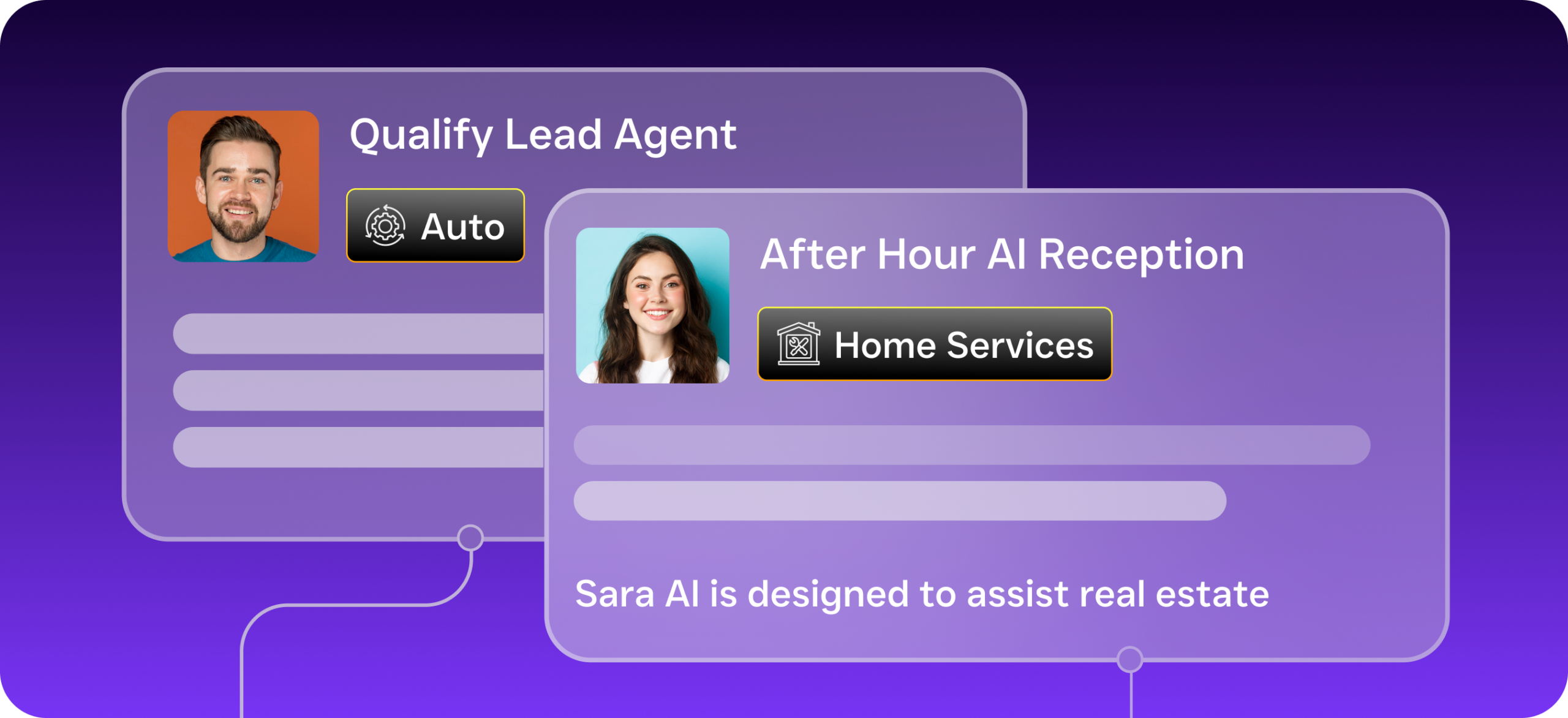
Beyond phone calls, SalesCaptain’s AI Chat Agents handle the same instant-response function across SMS, webchat, Instagram DMs, and Facebook Messenger. A homeowner submits a form on your website or sends a text asking about storm damage repair? The AI agent responds immediately, captures their information, and can schedule an estimate. All of these conversations, calls, texts, social media messages, flow into a single Unified Inbox where you and your team see every interaction in one place. No more checking five different apps. No more wondering if someone followed up on that lead from yesterday.
The platform also includes a visual Workflow Automation builder that lets you set up the kind of follow-up sequences described earlier, automatic text reminders, follow-up calls, CRM updates, without any technical skills. SalesCaptain integrates with tools roofing contractors already use, including HousecallPro, ServiceFusion, and Zapier, so it fits into your existing workflow rather than replacing it. The free Startup plan covers one location, making it accessible for independent contractors who want to test the impact of faster lead response without a financial commitment.
Key Takeaways
Lead response time for roofing contractors is one of the most impactful metrics for winning more jobs. The contractor who responds first almost always gets the business. The ideal response time is under five minutes, with the best performers responding in under one minute through automated first-touch messages. After-hours coverage is critical because homeowners discover roof problems and research contractors outside 9-to-5 business hours. Missed and slow-returned calls cost roofing businesses tens of thousands of dollars annually in direct lost revenue and referrals that never happen. Automation is the key to fast responses without more staff. Tools like AI phone agents, missed call text-back, and automated follow-up workflows can bring response times down to seconds. And start by auditing your current response time. Call your own business. Submit inquiries. Establish a baseline before implementing changes.