
AI-powered customer experience marketing (CXM) platform that helps local businesses win.


Lead Response Time for Roofing Contractors: Why the First Call Back Wins the Job
n the roofing industry, a lead is most valuable the exact second it is generated. Whether a homeowner has just discovered a leak during a thunderstorm or is finally ready to pull the trigger on a full replacement, their intent is at its absolute peak when they hit “submit” on your contact form. If you aren’t the first to respond, you are likely already losing the job.
Most roofing contractors understand that they need to be “responsive,” but few realize how narrow the window of opportunity actually is. In an industry where 35-50% of sales go to the vendor that responds first, lead response time isn’t just a customer service metric—it is the single most important factor in your company’s growth and profitability.
By moving from a “next-day” follow-up model to a 5-minute automated response system, roofing companies can dramatically increase their close rates without spending an extra dollar on lead generation or marketing.
Quick Answer
Roofing contractors who respond to leads within one hour close approximately 40% more jobs than those waiting 24 hours or longer. Speed matters because homeowners typically contact multiple contractors simultaneously. The first qualified response wins the appointment. Implementing automated acknowledgments and dedicated callback systems ensures no lead sits idle, directly impacting your conversion rates and revenue.
The Mathematics of Speed: Why Minutes Matter
The data surrounding lead response times is startling. While many roofers believe that returning a call within a few hours is “fast enough,” the actual window of conversion is measured in minutes.
According to the MIT Lead Response Management Study, there is a massive drop-off in engagement after the first five minutes. The statistics for the home service industry reveal a clear hierarchy of success.
Free weekly newsletter
Growth tips for home service businesses
Every Tuesday — actionable ideas to get more leads, reviews, and repeat customers. No fluff.
The “100x” Rule
Further research from InsideSales.com found that the odds of making successful contact with a lead are 100 times greater when the attempt is made within 5 minutes versus 30 minutes after the lead was submitted. In the roofing world, where homeowners are often calling three or four companies in a row, being the first to call means you are the one who sets the standard and schedules the inspection first.
Why Lead Response Time for Roofing Contractors Matters More Than You Think
The Psychology of the Roofing Customer
To improve your response time, you must understand the mindset of the person on the other end of the phone. Roofing is rarely a “casual” purchase. Most homeowners reach out for one of three reasons:
An Emergency: A leak is active, and they are panicked about property damage.
Deadline Pressure: They are in the middle of a real estate transaction or an insurance claim window.
Peak Frustration: They have been thinking about a roof for months, and something—a storm, a neighbor’s new roof, or a visible shingle loss—has finally pushed them to take action.
In all three scenarios, the customer is in a state of high intent. They want a solution now. If they fill out your form and receive a “Thank you, we will contact you in 24 hours” message, they don’t stop searching. They go right back to Google and click the next result. By the time you call them back the next morning, they have often already booked an inspection with a more responsive contractor.
The Hidden Costs of a Slow Response
A slow response time is a “hidden tax” on your roofing business. Even if you have the best crews and the highest-quality materials, poor communication will sabotage your ROI in several ways:
1. Wasted Marketing Budget
If you are spending $5,000 a month on Google Local Services Ads (LSAs) or roofing SEO, you are paying for the opportunity to talk to leads. If your average response time is several hours, you are effectively throwing away half of that budget. A slow response doubles or triples your Cost Per Acquisition (CPA) because you are only closing the “low-hanging fruit” that didn’t find another roofer first.
2. High Lead Decay
Leads have a very short shelf life. The longer a lead sits in your inbox, the “colder” it becomes. After just one hour, the odds of qualifying that lead drop by 10 times. The customer’s emotional urgency fades, they get busy with work or family, and they become much harder to reach.
3. Brand Erosion
In a local market, reputation is everything. If a homeowner has to chase you down just to get a quote, they will assume that the actual roofing project will be just as difficult to manage. Professional, instant communication signals that your company is organized, reliable, and respectful of the customer’s time.
What’s the Ideal Lead Response Time for Roofing Contractors?
The Five-Minute Rule (And Why Even That’s Too Slow)
Industry benchmarks from CalLeads AI’s 2026 research suggest that the ideal lead response time for any service business is under five minutes. The best-performing companies? They respond in under one minute. For roofing specifically, aim for immediate acknowledgment, even if that’s just an automated text message. Let the homeowner know you received their inquiry and will follow up shortly. That initial touchpoint buys you time and signals professionalism. Often, that’s all it takes to prevent the homeowner from calling your competitor.
Think of the five-minute benchmark as a floor, not a ceiling. If you can respond in 30 seconds with an automated reply like “Thanks for reaching out to [Your Roofing Company]. We got your message and will call you back within the hour,” you’ve already separated yourself from the vast majority of contractors. The homeowner feels seen. They stop calling around. And you’ve dramatically increased your odds of winning the job. The key insight? That first response doesn’t have to be detailed. It just needs to be fast and human-sounding.
5 Strategies to Reduce Response Time to Under 5 Minutes
Achieving a sub-5-minute response time is impossible if you rely on manual processes. Your team cannot be on the phone 24/7. To win, you must implement a system of Automated Responsiveness.
1. Implement Missed Call Text-Back
For roofing contractors, the most common reason for a missed lead is simply being busy. You’re on a roof, you’re driving, or you’re in a sales meeting. If you miss a call, the customer will likely call the next roofer immediately.
Missed Call Text-Back software solves this by sending an automated SMS the second a call goes unanswered. A simple message like, “Hi, this is [Rep Name] from [Roofing Co]. Sorry I missed your call! How can we help with your roof today?” keeps the homeowner engaged and stops them from calling the next person on the list.
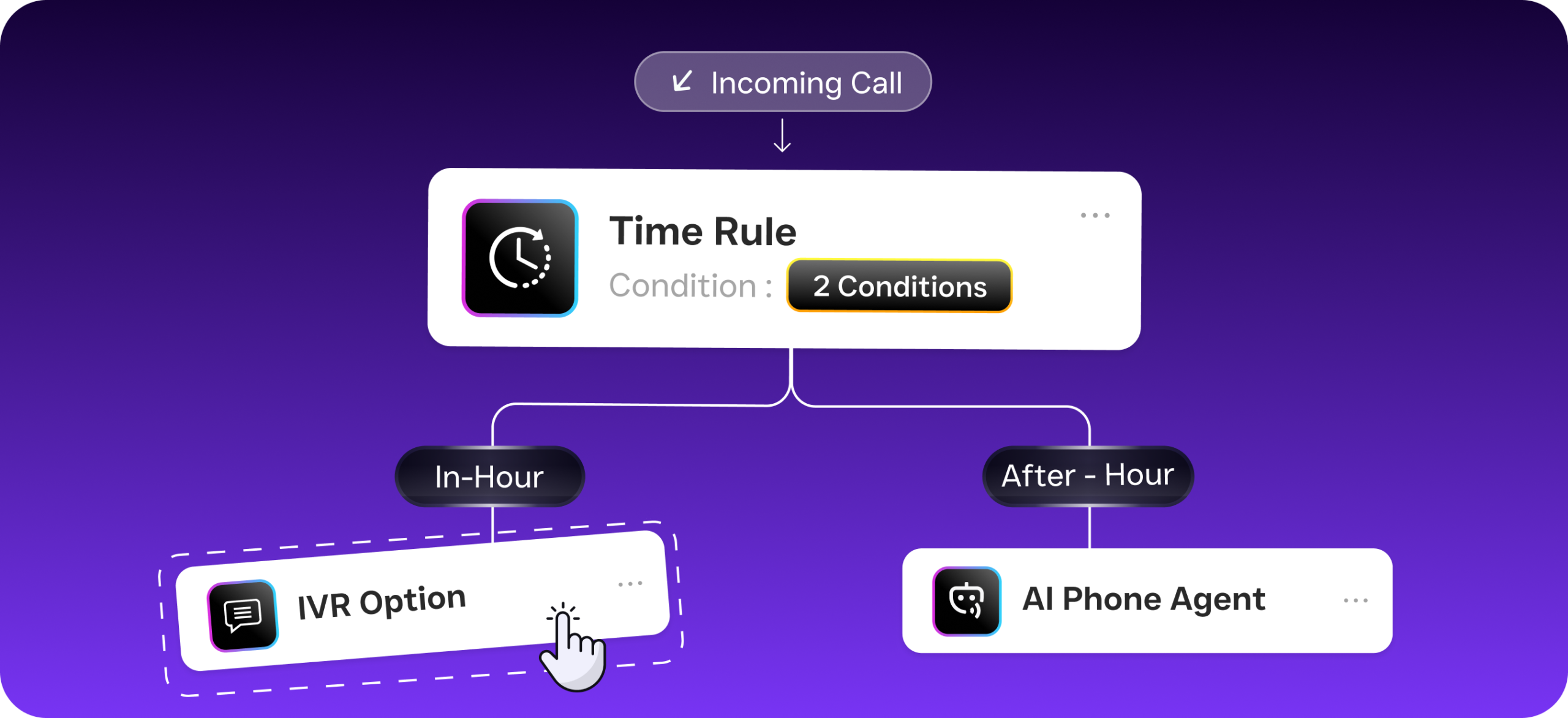
2. Use AI Phone Agents for 24/7 Coverage
Roofing leads don’t only come in from 9 to 5. Storms happen at night, and homeowners do their research on weekends. An AI Phone Agent can answer every call instantly, 24/7.
Unlike a simple answering service, a sophisticated AI agent can:
Answer FAQs about your services and warranties.
Triage emergencies (e.g., “active leak”) versus routine inspections.
Book an inspection directly onto your calendar while the customer is still on the phone.
3. Centralize Your Leads into a Unified Inbox
Many roofers lose track of leads because they are scattered across different platforms—Facebook DMs, website forms, Google Business Profile messages, and emails. By using a Unified Inbox, your team can see every inquiry in one place. This visibility ensures that no lead sits unread for hours just because it came through a channel the office manager hasn’t checked.
4. Create an Escalation Hierarchy
Technology is the first line of defense, but for high-value leads, you still need human interaction. Set up an automated notification system that escalates if a lead isn’t claimed:
Minute 0: Immediate automated text acknowledgment.
Minute 2: Notification to the primary sales rep.
Minute 5: If the rep hasn’t logged an action, the lead is “round-robined” to the next available rep or the sales manager.
5. Utilize Two-Way Texting for Scheduling
Homeowners increasingly prefer texting over phone calls. If you receive a web lead, don’t just call them—text them. A text message has a 98% open rate, whereas an unknown phone number is often ignored. Sending a quick text to confirm the address and offer a time for a drone inspection is the fastest way to “lock in” the appointment.
How to Improve Your Lead Response Time Without Adding Staff
When you master speed-to-lead, the benefits ripple through your entire roofing company:
Lower Customer Acquisition Cost: You close a higher percentage of the leads you’ve already paid for, making your marketing dollars work twice as hard.
Higher Sales Morale: Salespeople are more successful when they are talking to “hot” leads who are ready to buy, rather than “cold” leads who have already spoken to three other contractors.
Predictable Revenue: A consistent, automated system for capturing and nurturing leads creates a stable pipeline of jobs, even during the slower off-season.
Speed is the Ultimate Competitive Edge
The roofing market is more crowded than ever, and homeowners have more information at their fingertips than at any time in history. In this “on-demand” economy, the roofer who wins isn’t necessarily the one with the best shingles or the lowest price—it’s the one who provides the most frictionless experience.
Speed-to-lead is the foundation of that experience. By committing to the 5-minute rule and leveraging modern customer communication platforms, you remove the biggest obstacle to your company’s growth: the missed opportunity.
Every minute you shave off your response time is a direct investment in your bottom line. Stop letting your high-quality leads turn cold in your inbox. Automate your follow-up, capture the intent of your prospects the moment it strikes, and turn your response time into your greatest sales tool.
Ready to see it in action?
See how roofing contractors use SalesCaptain to respond to leads in seconds, not hours.
Frequently Asked Questions
What is lead response time for roofing contractors?
Lead response time is the gap between when a potential customer first contacts you through any channel—phone call, website form, text message, or social media—and when your business responds with that first meaningful contact. It’s not about scheduling an estimate or closing the deal, just that initial callback or reply that acknowledges the homeowner’s inquiry.
How long do I have to respond to a roofing lead before losing it?
Research shows that the odds of qualifying a lead drop dramatically after the first five minutes, meaning you should aim to respond within that window to stay competitive. If a homeowner submits a request at 2:00 PM and doesn’t hear back until 4:30 PM, they’ve likely already contacted a competitor who responded faster.
Does lead response time really affect whether I win the roofing job?
Yes, lead response time is one of the most critical factors in winning roofing jobs because homeowners rarely call just one contractor, especially after storm damage when urgency is high. In a competitive market, fast response can be the deciding factor—not the quality of your work, but simply who picked up the phone first.
Does lead response time apply to all communication channels for roofing leads?
Lead response time applies to every channel where you receive inquiries, including phone calls, website forms, text messages, chat, social media DMs, and email. A homeowner messaging your business through website chat on a Saturday night at 9 PM still starts the response clock ticking immediately.
How can roofing contractors improve response time without hiring more staff?
The article indicates there are ways to fix slow response times without expanding your office staff, though it notes this requires implementing systems and processes to handle multiple communication channels efficiently. The key is treating lead response as a critical priority and setting up workflows that ensure no inquiry goes unanswered within that crucial five-minute window.