
AI-powered customer experience marketing (CXM) platform that helps local businesses win.


Choosing the right business phone system has a direct impact on team productivity, customer experience, and the scalability of your communication workflow. Quo (formerly OpenPhone) and Aircall are two of the most widely adopted cloud-based calling platforms, but they’re designed with very different types of teams and use cases in mind.
In this guide, we break down the strengths and limitations of both platforms, compare their features side-by-side, and help you understand which tool is the best fit for your business needs in 2025.
| Feature | Quo | Aircall |
|---|---|---|
| No seat minimum | ✅ | ❌ (3-seat minimum) |
| Affordable base pricing | ✅ | ❌ |
| Unlimited toll-free calling (USA/Canada) | ✅ | ❌ |
| Team collaboration tools | ✅ | ❌ |
| AI included in base plan | ✅ | ❌ (AI add-on required) |
| Great for small teams | ✅ | ❌ |
| Call center routing/queues | ❌ | ✅ |
| Large integration ecosystem | ❌ | ✅ |
| Great for call centers | ❌ | ✅ |
What Quo does well
Competitive pricing for small teams
Quo’s Starter plan (US-Canada calls/texts, shared numbers) starts at $15/user/month (billed annually), making it affordable and accessible for startups and small teams.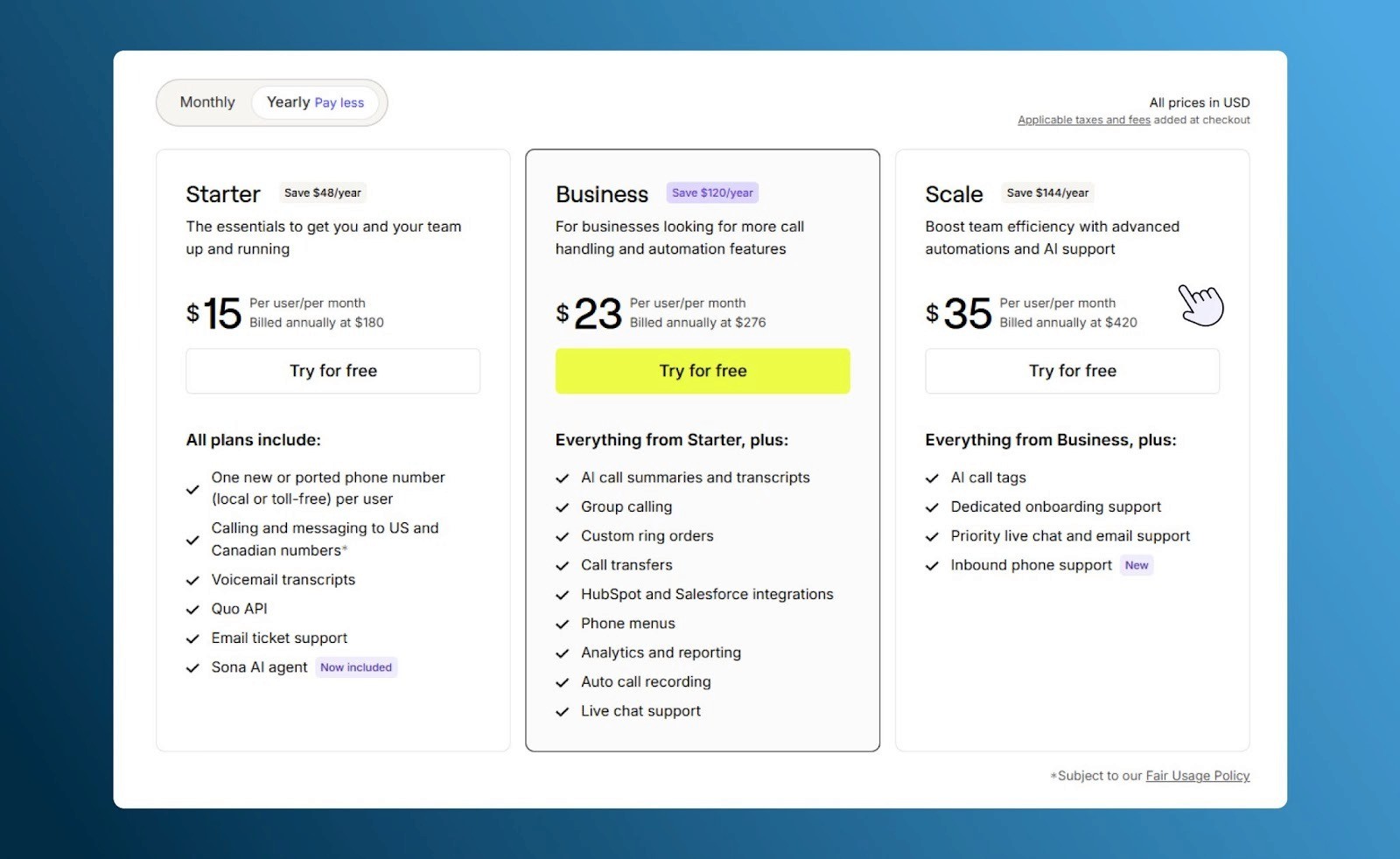
Clean, modern interface with unified communication
Quo provides a very user-friendly UI that brings calls and SMS into the same workspace, making teamwork and communication smooth.
Voicemail transcription & call recording
Every plan supports voicemail-to-text, and business tiers even include automatic call recording, great for keeping track of conversations.
Where Quo Falls Short
Call quality issues on mobile and weak networks
According to customer feedback, poor audio quality or dropped calls can be a real issue, particularly on mobile devices.
Customer support responsiveness concerns
Some user reviews describe delayed support, especially for critical issues like missed calls or API bugs.
High international calling rates
International call rates for OpenPhone can get expensive, which may be a drawback for businesses with a global presence.
What Aircall Does Well
Advanced call-center features
Aircall supports multi-level IVR menus, smart routing, and call queues, ideal for handling larger volumes of inbound calls efficiently.
Robust integrations
Deep integration with tools like Salesforce, HubSpot, Zendesk, and more helps teams keep call data in sync and act faster.
Intelligent, automated routing
Aircall supports smart routing (based on CRM data), skills-based logic, and time-based flows to ensure calls go where they’re most likely to be resolved.
Where Aircall Falls Short
Relatively high pricing
Aircall’s feature-rich plans come with a cost. Compared to similar VoIP solutions, Aircall is on the more expensive end, especially when you include add-ons like analytics or AI features.
Advanced analytics behind a paywall
According to customer feedback, more detailed or granular reporting is only available in premium tiers, making it less accessible for smaller teams.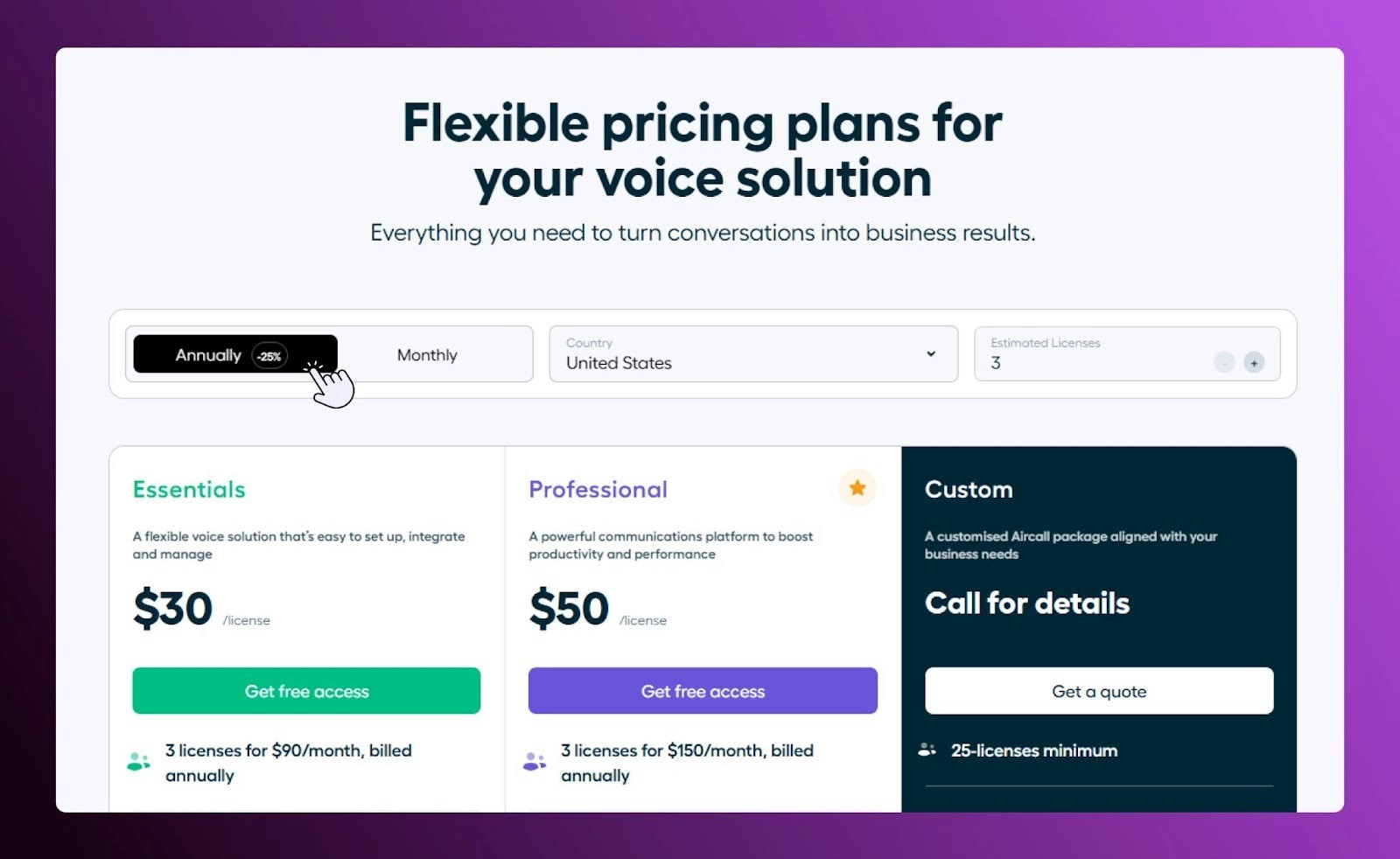
Connection and audio issues
Multiple user reviews mention call quality and connection issues, leading to dropped calls and poor audio quality, which can add a layer of friction to the customer experience.
| Feature | Quo | Aircall | SalesCaptain |
|---|---|---|---|
| No seat minimum | ✅ | ❌ | ✅ |
| Unified inbox (calls + SMS + chat + socials) | ✅ | ❌ | ✅ |
| AI built-in | ✅ | ❌ | ✅(AI Agents included) |
| Great for small teams | ✅ | ❌ | ✅ |
| Advanced call routing | ❌ | ✅ | ✅ |
| Deep CRM automation | ❌ | ✅ | ✅ |
| Great for call centers | ❌ | ✅ | ✅ |
| 24/7 Real-time AI phone agents | ❌ | ❌ | ✅ |
| Automation workflows | ❌ | ❌ | ✅ |
SalesCaptain As a Compelling Alternative
If you’re evaluating Quo vs Aircall, it’s also worth looking at SalesCaptain, especially if your team values automation, collaboration, and scalability. Here’s where SalesCaptain shines:
1. AI at the Core, Not an Add-On
SalesCaptain natively embeds AI across calls, messaging, workflows, and routing. Your IVR, call flows, and inbox automations can all trigger AI agents that answer calls, qualify leads, and complete tasks without human intervention.
2. True Omni-Channel Inbox
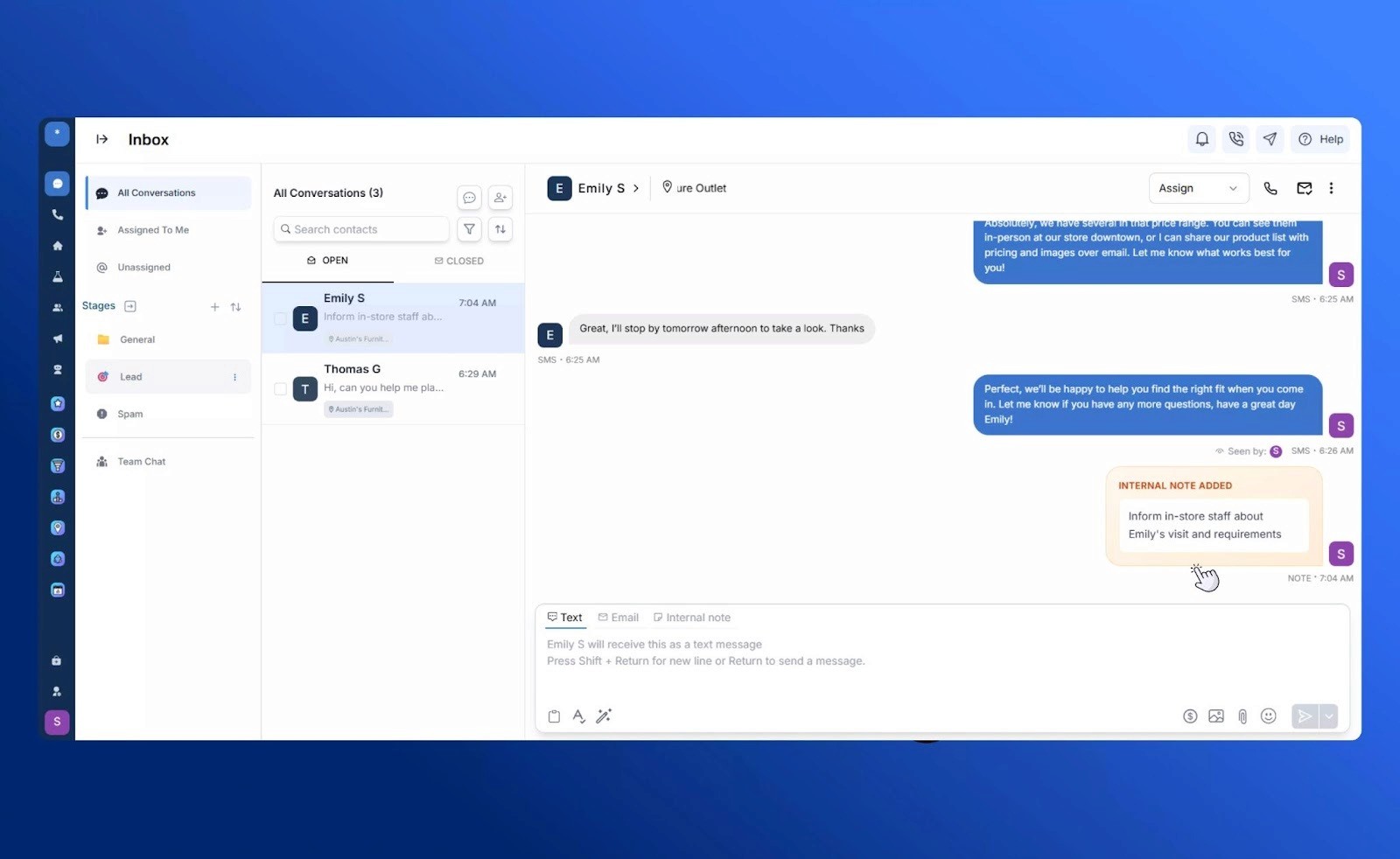
While Quo and Aircall mainly focus on VoIP + SMS (Quo) or VoIP + integrations (Aircall), SalesCaptain brings every channel (Calls, SMS, Email, Webchat, Social) into a single threaded conversation. Teams get full context, faster replies, and one shared workspace for customer communication.
3. Unified Platform for CRM
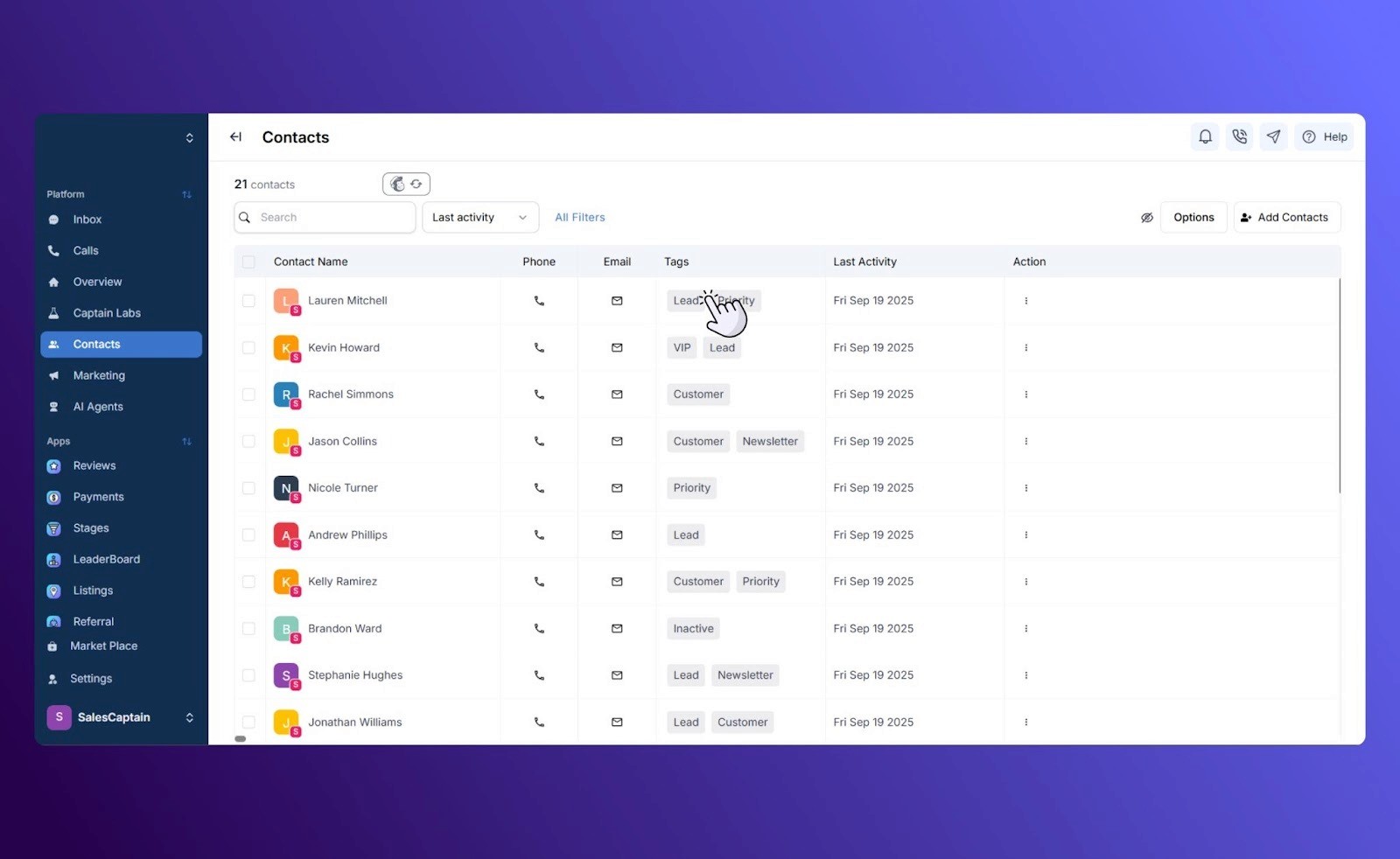
SalesCaptain is more than just a phone system. You can manage contacts, automations, and reviews all in one place, reducing the need for multiple tools, whereas Quo and Aircall rely on integrations for the same.
Final Verdict: Which Platform Should You Choose?
Quo is a strong fit for small teams and startups that want something simple, affordable, and easy to operate. If your workflow is built around basic calling and reliable texting without the need for heavy routing or deep integrations, it gets the job done.
Aircall, on the other hand, is built for fast-growing sales or support teams, call centers, and businesses that rely on advanced call routing, queues, and a wide ecosystem of CRM and helpdesk integrations. It’s a more robust option, but also more complex and costly.
SalesCaptain stands apart from both options by offering something more comprehensive: a unified, automation-first communication system.
If you need call flows, AI-driven voice agents, multi-channel messaging, and a platform designed to plug directly into your workflows, book a free 15-minute demo with our sales team today.