
AI-powered customer experience marketing (CXM) platform that helps local businesses win.


SalesCaptain vs Birdeye: Which Communication Platform Is Right for Your Service Business?
You’re comparing SalesCaptain vs Birdeye for a reason. You need to handle customer communication more efficiently without hiring more staff. Both platforms promise to streamline how you interact with customers, but they take very different paths to get there. Birdeye started as a reputation management tool and expanded into messaging. SalesCaptain was built from the ground up as an AI-powered communication automation platform. This comparison breaks down exactly where each platform excels, where each falls short, and which one makes more sense for your specific business needs and goals.
This guide is written for small and mid-sized service business owners. Roofers, plumbers, dentists, attorneys, salon owners, HVAC contractors, anyone who depends on phone calls, texts, and online inquiries to generate revenue. We’ll cover features, pricing, AI capabilities, ease of use, and the real-world impact on your bottom line. By the end, you’ll have a clear picture of which platform deserves your money and your trust.
What Is Birdeye?
Birdeye originally gained traction by helping businesses collect and manage online reviews. Over time, it expanded. Listings management, surveys, referrals, webchat, and some messaging capabilities all got added to the platform. According to a 2024 announcement from Birdeye, the company has been adding AI features like Insights AI and Competitors AI to help businesses analyze review data and competitive positioning. But its core strength remains reputation management, getting more reviews, managing your Google Business Profile, and monitoring what customers say about you across the web.
Birdeye serves a broad range of industries. It’s most popular among healthcare providers, dental practices, and multi-location businesses that depend heavily on their online reputation to attract new patients or clients. The platform does include a webchat widget and some texting features, but here’s the catch: these communication tools were added on top of what’s fundamentally a reputation-first product. That distinction matters when you’re evaluating it against a platform purpose-built for communication automation.
What Is SalesCaptain?
SalesCaptain is different. It’s a unified communication platform built specifically for service businesses that need to automate customer interactions across every channel, phone calls, SMS, webchat, Instagram DMs, Facebook Messenger, and email. Unlike platforms that bolt on communication features as an afterthought, SalesCaptain was designed from day one to solve the problem of missed calls, slow response times, and chaotic multi-channel messaging. The platform’s AI Phone Agent answers calls 24/7 with natural-sounding voice responses, books appointments, qualifies leads, and blocks spam, all without a human picking up the phone.
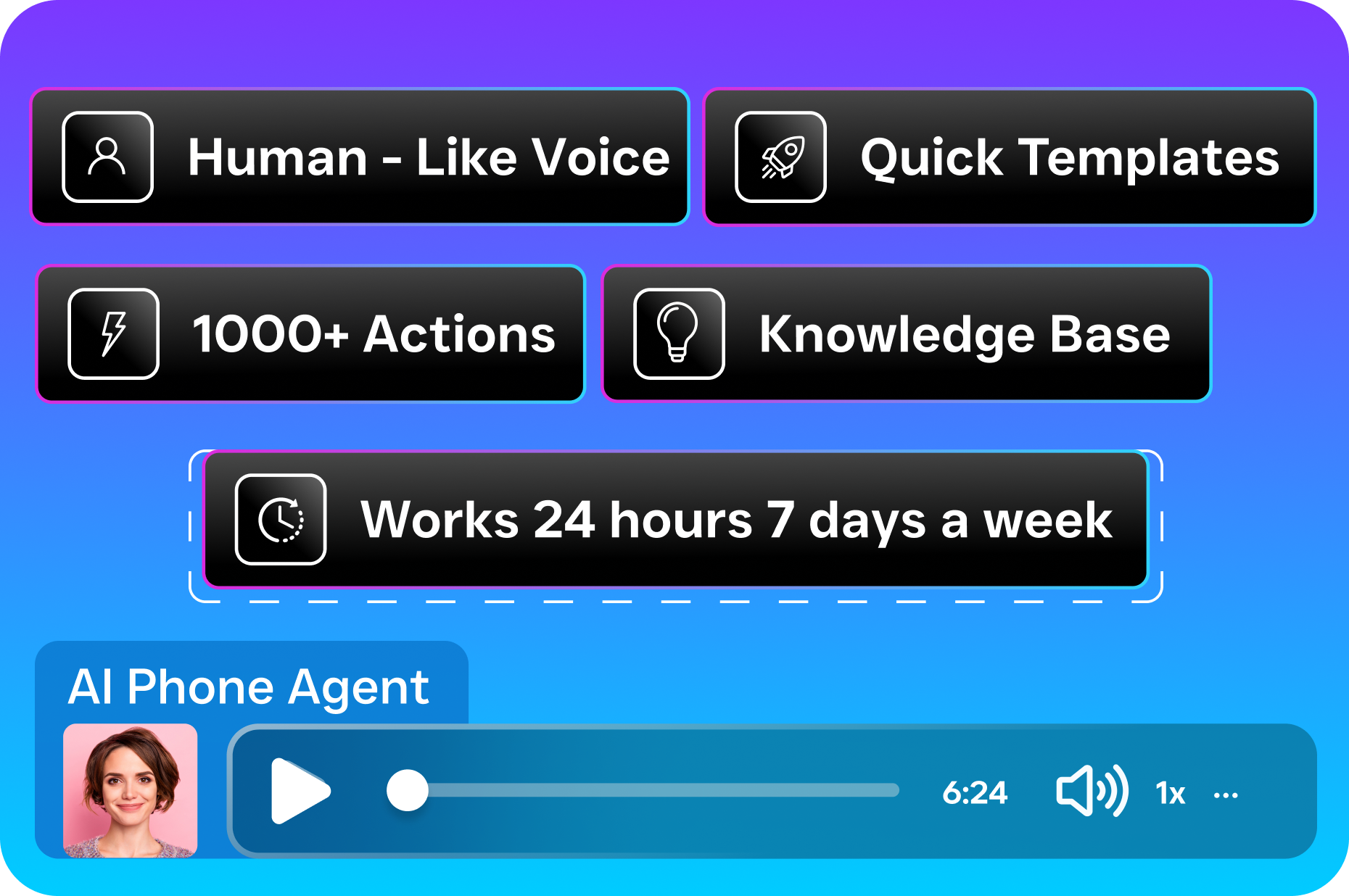
Beyond voice, SalesCaptain offers AI Chat Agents that handle text-based conversations across SMS and social media. There’s a Unified Inbox that pulls every customer interaction into one team-friendly workspace, and a drag-and-drop Workflow Automation builder for follow-ups, reminders, and CRM updates. The platform integrates natively with over 50 tools including HubSpot, Salesforce, ServiceFusion, HousecallPro, QuickBooks, and Clio. And pricing? SalesCaptain offers a free plan for single-location businesses, with paid plans starting at $159 per month per location, making it accessible to businesses of almost any size.
SalesCaptain vs Birdeye: Feature-by-Feature Comparison
Want to see how these two stack up? The table below compares the features that matter most to service businesses trying to capture more leads, respond faster, and manage communication without adding headcount. Pay close attention to the AI capabilities and communication automation columns, that’s where the gap between these two platforms is most significant.
| Feature | SalesCaptain | Birdeye |
|---|---|---|
| AI Phone Agent (Voice) | Yes, 24/7 AI voice agent that answers calls, books appointments, qualifies leads, answers FAQs, and blocks spam | No, no AI-powered voice agent for inbound or outbound calls |
| AI Chat Agents | Yes, automated agents for SMS, webchat, Instagram DMs, Facebook Messenger with instant responses and lead capture | Limited, webchat widget and some messaging, but not full AI agent automation across channels |
| Unified Inbox | Yes, all channels (calls, texts, webchat, social DMs, email, notes) in one collaborative inbox with real-time tracking | Partial, inbox includes webchat and texts but does not consolidate calls, social DMs, and email in the same way |
| Reputation Management | Not a core feature | Yes, core strength: review generation, monitoring, listings management, surveys |
| Phone System | Yes, full business phone system with 99.99% uptime, IVR, call routing, voicemail, call recording | No, no built-in business phone system |
| Workflow Automation | Yes, visual drag-and-drop builder with trigger-based automation, CRM sync, 50+ integrations | Limited, some automated review requests and follow-ups, but not a general-purpose automation builder |
| Pricing | Free plan available; paid plans from $159/month per location; AI calls at $0.12/minute | Custom pricing (not publicly listed); generally considered premium-priced for SMBs |
| Ease of Setup | No technical expertise required; designed for non-technical business owners | Moderate, some features require configuration; reputation tools are straightforward but messaging setup can be complex |
| Integrations | 50+ native integrations: HubSpot, Salesforce, Zoho, HousecallPro, ServiceFusion, Mindbody, Shopify, QuickBooks, Clio, Zapier | Integrations available through API and some native connections; strong in healthcare-specific tools |
| Best For | Service businesses that want to automate calls, texts, and messaging to capture more leads without hiring staff | Businesses that need to improve online reviews, manage listings, and monitor their reputation |
The comparison makes one thing crystal clear: these platforms were built to solve different problems. Birdeye wins when your challenge is getting more five-star reviews and managing your online presence. SalesCaptain wins when your challenge is answering every call, responding to every message, and converting more of the leads already finding you. For most service businesses, the latter is far more urgent and expensive. You can review how users compare both platforms on the G2 comparison page for Birdeye vs SalesCaptain for additional user-generated perspective.
Where Birdeye Falls Short for Service Businesses
Birdeye is solid. But for most service businesses, it falls short in critical ways. Sound familiar? You signed up expecting a full communication solution, only to realize reputation management alone doesn’t fix your biggest revenue leak: missed customer interactions. Here’s where Birdeye’s approach creates gaps.
Reputation Management Focus Leaves Communication Gaps
Birdeye’s DNA is in online reviews, and that shows. Review generation, review monitoring, competitive benchmarking, and listings syndication are polished and well-built. But when it comes to the real-time communication that turns a prospect into a paying customer? That’s where it struggles. Answering a phone call at 9 PM. Responding to an Instagram DM within seconds. Texting back a lead who just filled out a form. Birdeye’s tools don’t handle these scenarios well. There’s no AI voice agent that can pick up the phone and have a natural conversation. Several published roundups of Birdeye alternatives highlight this gap, noting that businesses frequently need to pair Birdeye with additional tools to cover communication automation.
And this matters. A lot. According to research compiled by Aira on missed business call statistics, small businesses lose substantial revenue each year from calls that go unanswered. If your platform doesn’t answer those calls, whether through AI or automatic routing, you’re leaving money on the table regardless of how many five-star reviews you’ve collected. Birdeye helps you attract leads, but it doesn’t ensure those leads actually reach a human (or an AI agent) when they call or message.
No AI Voice Agent Means No After-Hours Call Handling
Here’s a reality for service businesses like plumbers, HVAC contractors, and dental offices: a large percentage of customer calls come outside of business hours. A homeowner dealing with a burst pipe at 10 PM isn’t going to leave a voicemail and wait. They’re going to call the next company on their list. Birdeye has no solution here. No AI phone agent, no automated call answering, and no built-in phone system. If you’re using Birdeye, you still need a separate solution for voice communication, which means managing yet another tool, another login, and another monthly bill.
The after-hours problem extends beyond emergencies. According to an analysis by Phone2 on the true cost of missed calls, many small businesses don’t realize how many calls they’re missing during lunch breaks, weekends, and evenings. These aren’t just inconveniences, they represent direct revenue losses that compound over weeks and months. A platform that can’t answer the phone when you’re not available is a platform that’s only solving half your problem.
Limited Workflow Automation for Lead Follow-Up
Birdeye offers some automated workflows. Primarily around requesting reviews after a service is completed and sending survey follow-ups. But it doesn’t offer a general-purpose workflow automation builder. Can’t create custom sequences for lead follow-up. Can’t set up appointment reminders across channels. Can’t trigger CRM updates based on conversation outcomes or notify your team automatically. For a service business that needs to automate the entire customer journey, from first contact to appointment confirmation to post-service follow-up, Birdeye’s automation capabilities fall short. They’re narrowly focused on the reputation management piece.
Why SalesCaptain Is the Better Choice for Communication Automation
The SalesCaptain vs Birdeye comparison becomes clearest when you ask a simple question: what can I do without hiring additional staff? SalesCaptain was built to replace the receptionist you can’t afford, the after-hours answering service that gives you spotty results, and the patchwork of messaging tools you’re currently juggling. Here’s where SalesCaptain’s purpose-built approach delivers tangible advantages.
AI Phone Agent That Actually Answers Your Calls
SalesCaptain’s AI Phone Agent isn’t a simple IVR menu. It’s not a glorified voicemail system. It’s a natural-sounding AI voice agent that picks up every call and takes action. Books appointments. Answers common questions about your services and pricing. Qualifies whether the lead is a good fit. Routes urgent calls to the right team member. It blocks spam calls automatically, so your team isn’t wasting time on robocalls. The agent works 24/7, 365 days a year, at $0.12 per minute, a fraction of what you’d pay a live answering service or a part-time receptionist.
Think about this. A roofing company gets a surge of calls after a hailstorm. A dental practice receives appointment requests during lunch hour. How does this capability help? More booked jobs. Fewer lost patients. The AI Phone Agent doesn’t take breaks, doesn’t call in sick, and doesn’t forget to ask for contact information. Every interaction is logged in the Unified Inbox, so your team has full context when they follow up. Birdeye simply doesn’t have this capability.
True Multichannel AI Chat Agents
Today’s customers reach out wherever it’s convenient. Some text. Some DM on Instagram. Some use Facebook Messenger. Some use the webchat widget on your website. SalesCaptain’s AI Chat Agents operate across all these channels simultaneously, responding instantly with accurate information and capturing lead details without human intervention. The missed-call text-back feature is particularly valuable: when a call goes unanswered, it automatically sends a text to the caller, keeping the conversation alive instead of losing the lead entirely.
This multichannel approach solves a problem that SmartBizMetrics identifies as critical for small businesses: the need for consistent, fast messaging across every platform customers use. When your response time drops from hours to seconds, your conversion rate goes up. That’s not speculation. SalesCaptain makes it possible without requiring you to monitor five different apps throughout the day. Every message, regardless of channel, flows into one inbox where your team can take over if the AI agent needs backup.
Unified Inbox That Eliminates Communication Chaos
Managing customer communication across multiple channels is one of the biggest operational headaches. Most owners and office managers have multiple browser tabs open, notifications pinging from different apps, and no single place to see the full customer history. SalesCaptain’s Unified Inbox changes that. Every channel, calls, texts, webchat, social DMs, email, consolidates into one view. When a customer calls, then texts, then sends a Facebook message, all three interactions appear on the same contact record. Your entire team can see what’s been said, what’s been promised, and what still needs to happen.
This isn’t just convenience. It prevents dropped balls that damage your reputation and cost you repeat business. When a plumber’s office manager can see that a customer called about a leak, received an AI text response confirming the appointment, and then sent an Instagram DM asking about pricing, there’s no confusion and no duplicated effort. Birdeye’s inbox covers some messaging channels, but it doesn’t integrate phone calls, social DMs, and email into one unified workspace. For businesses where communication is spread across many channels, this difference is substantial.
Affordable, Transparent Pricing for Multi-Location Businesses
Here’s where pricing gets interesting. Birdeye uses custom pricing that isn’t publicly listed on their website. That means you won’t know the cost until you sit through a