
AI-powered customer experience marketing (CXM) platform that helps local businesses win.


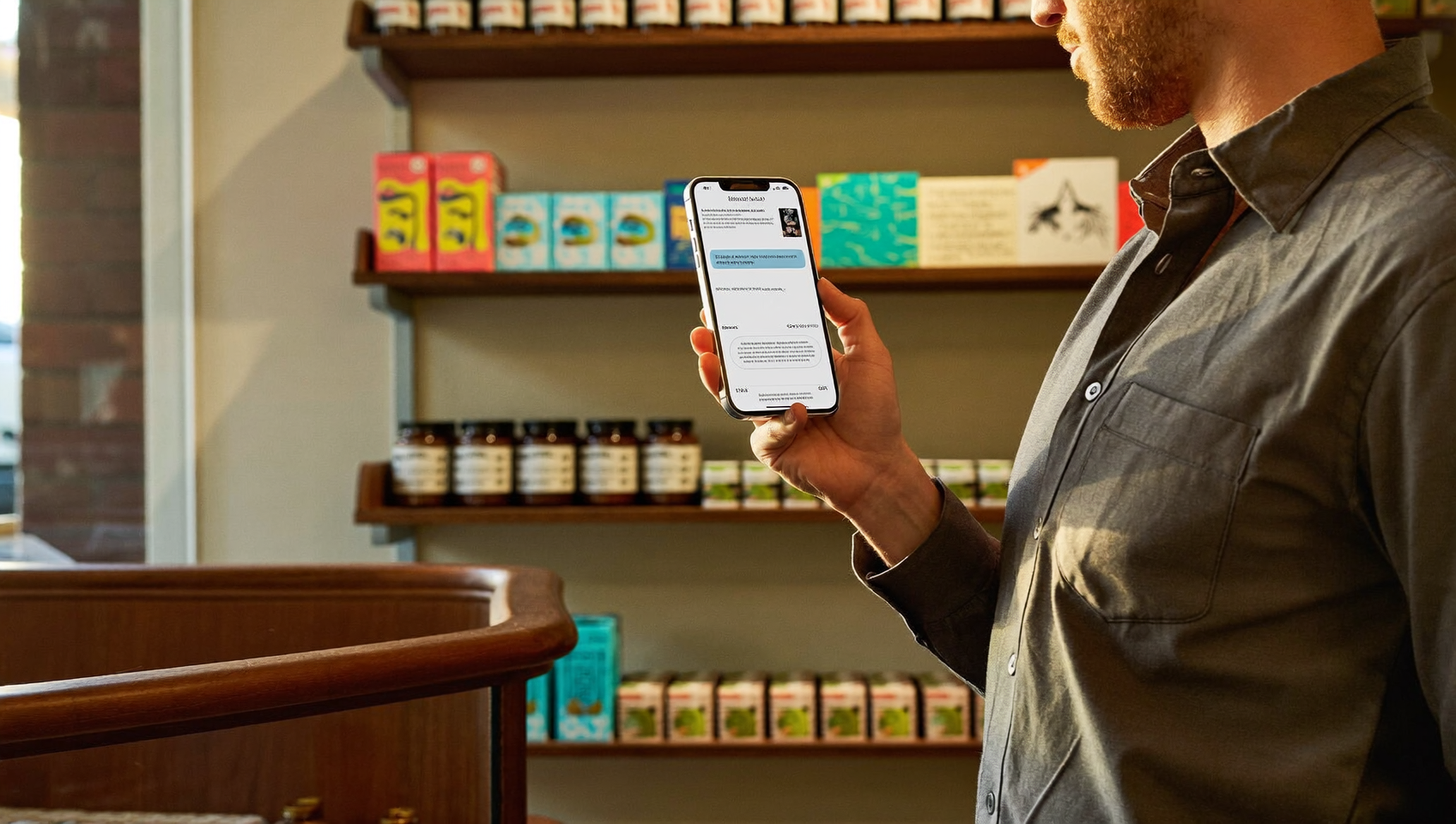
Your team spent hours crafting the perfect email campaign. Open rates? Low single digits. Meanwhile, the text message you sent in 30 seconds got read almost instantly. Sound familiar? That’s the reality of modern customer communication, and SMS marketing statistics paint a clear picture of why more service businesses are shifting budget toward text-based outreach.
SMS marketing statistics are data points measuring text message campaign performance, including open rates, click-through rates, and consumer response behavior. For service businesses, these metrics reveal why SMS typically outperforms email, with text messages read within minutes compared to email’s single-digit open rates, guiding smarter budget allocation.
Free weekly newsletter
Growth tips for service businesses
Every Tuesday — actionable ideas to get more leads, reviews, and repeat customers. No fluff.
Quick Answer
Text messages achieve 98% open rates within three minutes, compared to 20% for email, making SMS one of the highest-engagement marketing channels. Businesses using SMS see average ROI of 36:1, with conversion rates reaching 36% for SMS campaigns versus 4.5% for email. SMS drives immediate action, particularly for time-sensitive offers, appointment reminders, and customer service notifications.
What Are SMS Marketing Statistics?
SMS marketing statistics are data points that measure the performance, adoption, and growth of text message marketing as a business communication channel. They cover everything from open rates and click-through rates to consumer preferences, opt-in behavior, and revenue impact. And here’s the thing: for service business owners, these numbers aren’t academic. They’re a practical guide to deciding where your marketing dollars and staff time should go.
Unlike vanity metrics, the most useful SMS marketing statistics focus on outcomes: how quickly customers respond, how many actually read your message, and whether texts drive real bookings or sales. What does that look like in practice? According to Grand View Research’s U.S. SMS marketing report, the market is on a strong growth trajectory through 2030, which signals that businesses across industries are placing bigger bets on texting year after year.
Why SMS Marketing Outperforms Other Channels
Email inboxes are crowded. Social media algorithms are unpredictable. But text messages? They land directly in your customer’s pocket. That proximity is what makes SMS so effective. And the data backs it up consistently.
Open and Response Rates That Dwarf Email
SMS open rates regularly reach well above 90%, while email hovers in the low 20% range for most industries. Response rates tell a similar story. SimpleTexting’s research on SMS marketing performance shows that consumers don’t just open texts. They act on them, often within minutes. For a plumbing company waiting on a customer to confirm an appointment, or a dental practice trying to fill a last-minute cancellation, that speed matters enormously.
Consumer Preference Is Shifting Toward Text
People increasingly prefer texting over calling or emailing businesses. This isn’t just a generational trend limited to younger demographics. Homeowners, patients, and clients across age groups now expect the convenience of a quick text exchange. So what’s driving this shift? eMarketer’s analysis of SMS marketing potential highlights how consumer comfort with business texting has expanded rapidly, creating an opportunity that many small businesses still haven’t capitalized on.
Cost Efficiency for Small Teams
Running an SMS campaign doesn’t require a design team, a copywriter, or weeks of planning. A well-crafted 160-character message can drive appointment bookings, collect reviews, or remind customers about upcoming services. The cost per message? Typically pennies. And the return on each text often outpaces what you’d get from paid social ads or direct mail. For a business with one or two locations, that efficiency is hard to beat.
📺 Watch: How to Create an SMS Campaign
Key Benchmarks Service Businesses Should Track
Not all SMS marketing statistics are equally useful. Here are the benchmarks that actually help you make better decisions about your texting strategy.
- Opt-in rate: The percentage of customers who agree to receive your texts. A healthy opt-in rate indicates that your audience sees value in hearing from you via SMS.
- Click-through rate (CTR): When your texts include links (to a booking page, payment portal, or review site), CTR shows whether your messages drive action. Klaviyo’s industry-specific SMS benchmarks break this down by vertical, which helps you set realistic targets for your business type.
- Unsubscribe rate: High opt-out rates signal that you’re texting too frequently, sending irrelevant content, or both. Keep this under close watch.
- Response time: How quickly customers reply to your texts. Faster responses often correlate with higher conversion rates, especially for appointment-based businesses.
- Revenue per message: The dollar value generated per text sent. This is the metric that ties SMS directly to your bottom line.
Tracking these numbers over time reveals patterns. You might discover that appointment reminders sent 24 hours in advance get double the confirmation rate compared to same-day texts. Or that review requests sent within an hour of service completion produce far more responses. Because these insights matter. Text Request’s State of Business Texting report provides additional context on how businesses are using these benchmarks to refine their strategies.
Best Practices Backed by the Data
Statistics are only valuable if they change how you operate. Here’s how to translate SMS marketing data into practical improvements for your business.
Timing Your Messages Right
Send texts during business hours whenever possible. Mid-morning and early afternoon tend to produce the strongest engagement for service businesses. But here’s the exception: automated responses to inbound inquiries should happen immediately, regardless of the hour. A customer who texts your roofing company at 9 PM expects at least an acknowledgment, not silence until Monday morning.
Keeping Messages Short and Actionable
Every text should have one clear purpose: confirm an appointment, request a review, share a promotion, or answer a question. When you try to accomplish three things in one message, you’ll often accomplish none. Keep it simple. The data consistently shows that shorter messages with a single call to action outperform longer, multi-purpose texts.
Combining SMS with Other Channels
SMS works best as part of a broader communication strategy. Consider this approach:
- Missed call → automatic text-back: When you can’t answer the phone, an instant text keeps that lead warm instead of losing them to a competitor.
- Post-service follow-up: A quick text asking about their experience, with a link to leave a review, captures feedback while it’s fresh.
- Appointment reminders via text + email: Redundancy reduces no-shows. Each channel reinforces the other.
- Payment collection: Sending an invoice link via text often gets paid faster than email invoices alone.
The connection between missed calls and lost revenue is well-documented. According to research on the cost of missed business calls, even a handful of unanswered calls per week can represent significant lost revenue. Pairing a reliable phone system with automated text follow-ups addresses this gap directly.
How SalesCaptain Helps
Knowing the SMS marketing statistics is one thing. Acting on them with the right tools is another. SalesCaptain brings together the features that make text-based communication practical for service businesses, without requiring a marketing team to manage it.
SalesCaptain’s AI Chat Agents handle SMS, webchat, Instagram DMs, and Facebook Messenger from a single platform. They respond to customer inquiries instantly, capture lead information, and book appointments around the clock. For missed calls, the missed call text-back feature sends an automatic reply so potential customers aren’t left waiting.
What makes the platform particularly effective for SMS-driven strategies is the Workflow Automation builder. You can set up trigger-based sequences, like a text reminder 24 hours before an appointment, a follow-up after service completion, or a re-engagement message to dormant leads. All of this connects to a Unified Inbox where your team sees every conversation across every channel in one place, with full contact history. Native integrations with tools like Housecall Pro, ServiceTitan, and JobNimbus mean your texts can be triggered by real events in your existing software, not just manual sends.
Pricing starts with a free plan for a single location, and the Business plan runs $159/month per location. AI-powered calls are billed at $0.12/minute, keeping costs predictable as you scale.
Key Takeaways
SMS marketing statistics consistently point to the same conclusion: text messaging is one of the highest-performing communication channels available to service businesses. Open rates, response speeds, and cost efficiency all favor SMS over email, direct mail, and most digital advertising formats.
But the numbers only matter if you act on them. The businesses seeing the best results aren’t just sending bulk texts. They’re combining automated text-backs, appointment reminders, review requests, and lead follow-ups into a cohesive system. They’re tracking opt-in rates, click-throughs, and revenue per message to continuously improve. And they’re using platforms that connect SMS with their phone system, CRM, and other channels so nothing falls through the cracks. The data is clear. The opportunity is real. What you do with it determines whether those statistics become your competitive advantage or someone else’s.
Frequently Asked Questions
What is a good open rate for SMS marketing?
SMS open rates are consistently reported above 90% across most industries, dramatically higher than email’s typical 20-25% range. Because text messages appear directly on a customer’s lock screen, they’re almost always seen within minutes of delivery. That visibility is what makes texting so effective for time-sensitive communications like appointment reminders and limited-time offers.
How does SMS marketing compare to email marketing for small businesses?
SMS outperforms email on speed, open rates, and response rates. Email still has advantages for longer-form content, detailed newsletters, and situations where customers need to reference information later. So what’s the smart move? Using both. Email for in-depth communication and SMS for urgent, action-oriented messages like confirmations, reminders, and quick follow-ups.
Is SMS marketing cost-effective for businesses with only one or two locations?
Absolutely. SMS campaigns are among the most affordable marketing channels available to small businesses. Individual messages typically cost just pennies. You don’t need graphic designers or lengthy production timelines. Even a single-location HVAC company or dental practice can see meaningful ROI from automated appointment reminders that reduce no-shows, or review request texts that boost online visibility.
What types of SMS messages get the best response rates?
Appointment confirmations and reminders consistently produce the highest engagement, followed by order or service status updates. Promotional texts with a clear, time-limited offer also perform well, but only when sent sparingly. Here’s what matters most: relevance. Messages that feel personally useful to the recipient get responses. Generic blast promotions? They get opt-outs.
How often should a service business send marketing texts?
Most successful businesses limit promotional texts to two to four per month. Transactional messages like appointment reminders and service confirmations don’t count toward that limit because customers expect and appreciate them. If your unsubscribe rate starts climbing, it’s a signal to reduce frequency or improve the relevance of your content. Quality beats quantity with SMS every time.
Ready to see it in action?
See how service businesses use SalesCaptain to convert SMS leads into more booked appointments.
Book a Free Demo →See How SalesCaptain Can Help
Ready to put SMS marketing statistics to work for your business? SalesCaptain’s AI Chat Agents, missed call text-back, and workflow automation tools help you turn every customer interaction into a booking or sale. Explore the platform and start building your SMS strategy today.