
AI-powered customer experience marketing (CXM) platform that helps local businesses win.



If you’re searching for Intercom competitors, you’re likely a service business owner who’s realized that a tool built for SaaS customer support teams doesn’t quite fit your needs. This comparison breaks down where Intercom excels, where it falls short for service businesses, and why SalesCaptain might be the better fit for companies that rely on phone calls, text messages, and appointment bookings to drive revenue.
What Is Intercom?
Intercom is a customer messaging platform designed primarily for SaaS and tech companies. It offers live chat widgets, chatbots, help desk ticketing, and customer engagement tools that work well for software teams managing support tickets at scale. Starting at roughly $74/month, it’s positioned as a premium solution. According to Sprinklr’s analysis of Intercom alternatives, the platform is strong at in-app messaging and product tours but lacks depth in channels that service businesses depend on, like voice calls and SMS.
What Is SalesCaptain?
SalesCaptain is an AI-powered unified communication platform built specifically for service businesses. It combines AI phone agents, AI chat agents, a collaborative unified inbox, and a full business phone system into one tool. Rather than focusing on website chat widgets like most Intercom competitors, SalesCaptain covers the channels service businesses actually use: phone calls, SMS, webchat, Instagram DMs, Facebook Messenger, WhatsApp, and email.
Pricing starts with a free plan for one location, with paid plans at $159/month per location. That’s a fundamentally different approach than per-seat pricing, and it scales much more affordably for multi-location businesses like dental practices, HVAC companies, or law firms.
Intercom vs SalesCaptain: Feature Comparison
Here’s a side-by-side look at the features that matter most to service businesses. Every value in this table comes from verified product data, not marketing claims.
| Feature | SalesCaptain | Intercom |
|---|---|---|
| AI Voice Agent | ✓ (24/7 call answering, booking, lead qualification) | ✗ |
| Unified Inbox | ✓ (calls, SMS, webchat, social, email, notes) | Partial (chat and email focused) |
| WhatsApp Messaging | ✓ | ✗ |
| Two-Way SMS | ✓ (including high-volume SMS) | ✗ |
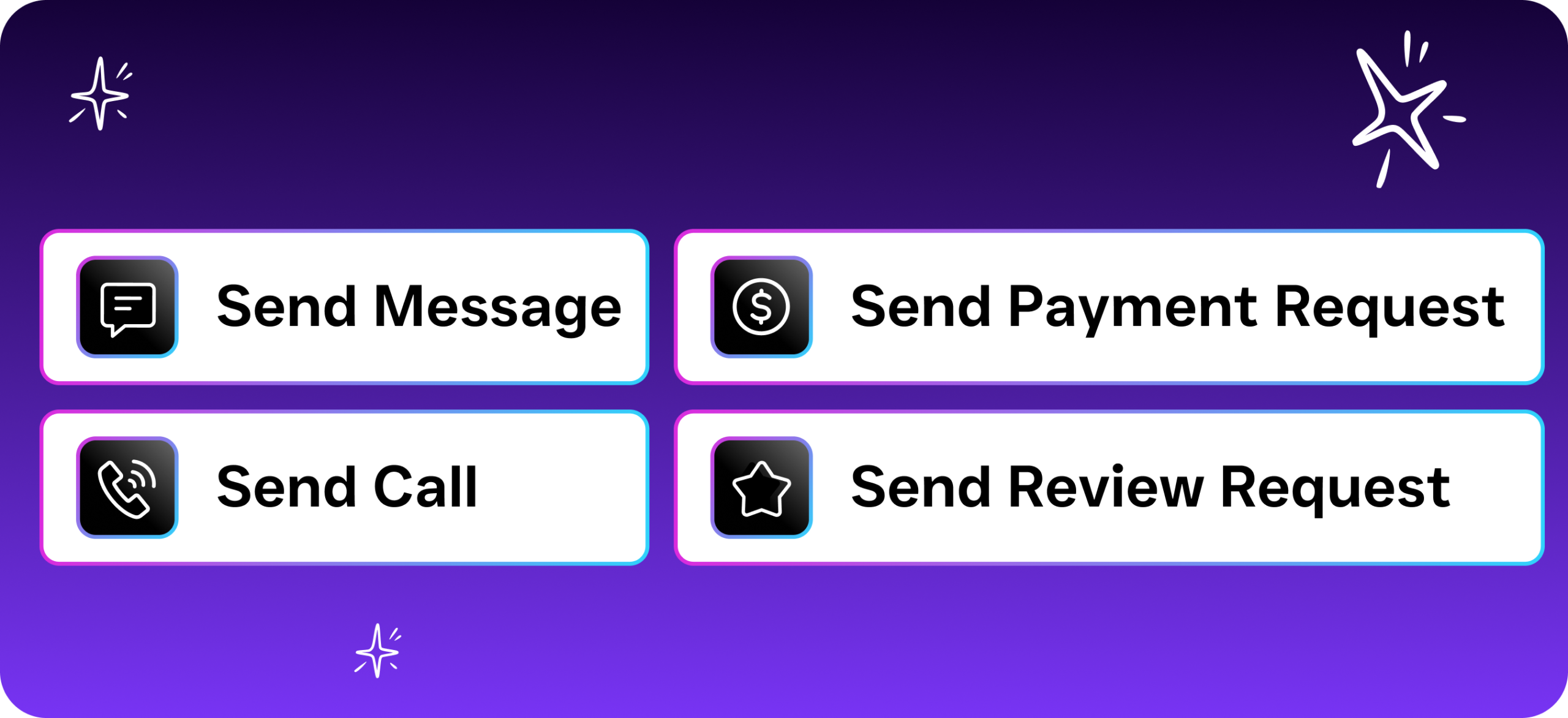
| Text-to-Pay | ✓ | ✗ |
| Call Flow Builder | ✓ (drag-and-drop with IVR) | ✗ |
| Workflow Automation | ✓ (visual builder, 50+ integrations) | Partial (chat-focused automations) |
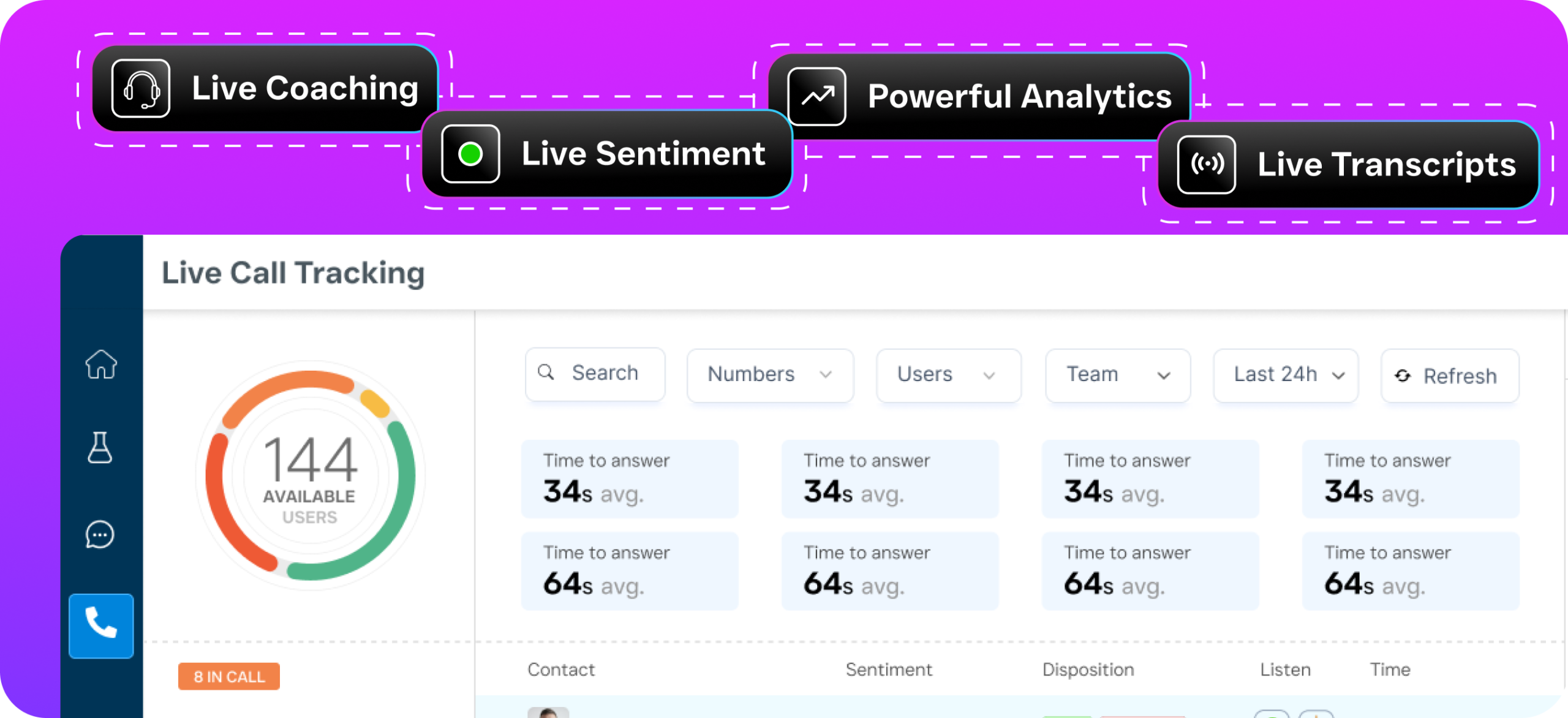
| Call Coaching & Whispering | ✓ | ✗ |
| Sentiment Analysis for Calls | ✓ | ✗ |
| AI Transcription & Summaries | ✓ | ✗ |
| Pricing | Free plan available; $159/mo per location | Starts ~$74/mo (per seat) |
| Best For | Service businesses, SMBs, multi-location | SaaS customer support teams |
The pattern is clear. Intercom doesn’t offer any of the voice, calling, or SMS features that service businesses depend on daily. As Boei’s roundup of Intercom alternatives points out, many businesses outgrow Intercom once they need communication beyond website chat.
Where Intercom Falls Short
Intercom is a genuinely good product for its intended audience. But “intended audience” is the key phrase. If you run a roofing company, dental practice, law firm, or landscaping business, here’s where Intercom creates problems rather than solving them.
No Voice AI or Phone System
Service businesses live and die by phone calls. According to Aira’s research on missed business calls, the cost of missed calls varies by industry but consistently represents significant lost revenue for small businesses. Intercom doesn’t offer a phone system, AI voice agents, call routing, IVR, or any call management features. There’s no call coaching, no call recording with AI summaries, and no way to handle after-hours calls. For a platform that costs $74/month and up, that’s a massive gap if your customers prefer calling over chatting.
No SMS Automation for SMBs
Two-way SMS, missed-call text-back, appointment reminders via text, high-volume SMS campaigns. None of these exist in Intercom. Yet OnceHub’s analysis of missed call costs shows that texting back missed calls is one of the highest-ROI actions a small business can take. Intercom simply wasn’t designed with this workflow in mind.
Expensive at Scale
Intercom’s per-seat pricing adds up fast. If you’ve got a front desk team of three people plus two technicians who need access, you’re paying per person. As Deskpro notes in their comparison, pricing unpredictability is one of the top reasons businesses look for alternatives. For multi-location service businesses, per-seat costs multiply quickly across locations.
Missing Social and Messaging Channels
No WhatsApp. No native Instagram DM management. In fact, no Facebook Messenger integration with AI responses. Service businesses increasingly get inquiries through social channels, especially in industries like salons, fitness studios, and MedSpas. Intercom’s chat widget works great on your website, but your customers aren’t always on your website when they need you.
Why SalesCaptain Is the Better Choice for Service Businesses
SalesCaptain doesn’t try to replace Intercom for SaaS support teams. Instead, it solves a completely different set of problems, the exact ones service businesses face every day. Here’s what makes it a stronger fit:
- AI Phone Agent answers calls 24/7: A natural-sounding voice agent picks up every call, qualifies leads, books appointments, answers FAQs, and blocks spam. No missed revenue from after-hours calls or hold times.
- Missed-call text-back: When a call can’t be answered, an automatic text goes out immediately, keeping the conversation alive instead of losing the lead to a competitor.
- True unified inbox: Calls, texts, webchat, Instagram DMs, Facebook Messenger, WhatsApp, email, and internal notes all land in one collaborative inbox. Your team sees every customer interaction in context.
- Per-location pricing that scales: A free plan for one location and $159/month per location for the Business plan means you’re not penalized for adding team members. A five-person team at one location pays the same as a one-person team.
- Drag-and-drop call flow builder: Set up custom IVR menus, call routing rules, after-hours handling, and voicemail-to-text without touching any code.
- AI transcription, summaries, and sentiment analysis: Every call gets transcribed and summarized automatically. Your team can review key action items without listening to full recordings, saving hours per week.
- 50+ native integrations: Connect to HubSpot, Salesforce, Zoho, ServiceFusion, HousecallPro, Mindbody, Shopify, QuickBooks, Clio, and more through native connectors or Zapier.
- Text-to-Pay: Collect payments directly through text message. No separate payment platform needed.
According to the National Federation of Independent Business (NFIB), labor costs remain the top concern for small business owners. SalesCaptain’s AI agents directly address this by handling repetitive calls and messages without adding headcount.
Which Should You Choose?
If you’re a SaaS company or tech startup that needs in-app messaging, product tours, and help desk ticketing, Intercom is purpose-built for you. It’s polished, well-established, and deeply integrated with the SaaS ecosystem. Searching for Intercom competitors in that category means looking at tools like Zendesk or Freshdesk, which Quidget’s comparison guide covers in detail.
However, if you run a service business where phone calls drive bookings, where missed calls mean lost customers, and where your team juggles texts, social messages, and voicemails across different apps, SalesCaptain is built specifically for you. It’s not a chat widget with extras bolted on. It’s a full communication platform with AI agents that handle calls and messages around the clock, a unified inbox that keeps your team organized, and pricing that doesn’t punish you for growing. For home services, legal practices, healthcare, salons, fitness studios, and real estate agencies, that difference isn’t subtle.
Is SalesCaptain a direct replacement for Intercom?
Not exactly. They serve different markets. Intercom is designed for SaaS customer support, while SalesCaptain is built for service businesses that rely on phone calls, SMS, and appointment bookings. If your business depends on voice communication and multi-channel messaging beyond website chat, SalesCaptain covers those needs where Intercom doesn’t.
Can SalesCaptain handle website chat like Intercom?
Yes. SalesCaptain offers webchat with AI chat agents that can respond instantly, capture leads, and book appointments. It also converts webchat conversations to text so the conversation can continue after the visitor leaves your site.
How does pricing compare between SalesCaptain and Intercom?
Intercom starts at roughly $74/month per seat, which adds up as your team grows. SalesCaptain offers a free plan for one location and charges $159/month per location on the Business plan, regardless of how many team members you add. For service businesses with multiple staff members, SalesCaptain’s model is typically more cost-effective.
Does SalesCaptain integrate with my existing tools?
SalesCaptain offers 50+ native integrations including HubSpot, Salesforce, Zoho, HousecallPro, ServiceFusion, Mindbody, Shopify, QuickBooks, and Clio. Anything not natively supported can usually be connected through Zapier.
What happens to my calls after hours with SalesCaptain?
SalesCaptain’s AI Phone Agent answers every call 24/7 with natural-sounding voice responses. It can qualify leads, book appointments into your calendar, answer common questions, and send a text follow-up, all without a human touching the phone. You won’t lose another after-hours lead.
Ready to Switch from Intercom to a Platform Built for Service Businesses?
SalesCaptain gives you AI phone agents, AI chat agents, a unified inbox, and a complete business phone system in one platform, starting free. Stop paying for a chat tool that doesn’t cover the channels your customers actually use.