
AI-powered customer experience marketing (CXM) platform that helps local businesses win.



A customer calls your restaurant to place a large catering order. The line rings six times, then goes to a generic voicemail. They hang up and dial your competitor down the street. That’s not a hypothetical scenario. It’s happening right now, probably more often than you think, and it’s one of the clearest reasons why restaurants lose customers to missed calls every single day.
What “Losing Customers to Missed Calls” Really Means for Restaurants
On the surface, a missed call seems minor. Someone didn’t pick up the phone, so the caller left a message or tried again later. But that’s not how it works in the restaurant business. When a hungry customer calls and nobody answers, they don’t wait. They move on. According to research on missed call costs for small businesses, most callers won’t try a second time. One unanswered ring, and you’ve lost that revenue permanently.
The problem goes beyond a single lost reservation or takeout order. Each missed call represents a potential regular customer, a catering inquiry, a private event booking, or a group dinner. Multiply that by the dozens of calls a busy restaurant misses each week, and you’re looking at a compounding revenue leak that quietly erodes your bottom line. For an industry already facing a surge in bankruptcies and financial pressure, ignoring this problem isn’t just careless. It’s dangerous.
Why Restaurants Miss So Many Calls in the First Place
Understanding the root causes matters more than just knowing the problem exists. Restaurants aren’t missing calls because they don’t care about their customers. They’re missing calls because the operational reality of running a restaurant makes consistent phone coverage nearly impossible.
The Rush Hour Problem
Peak dining hours and peak calling hours overlap almost perfectly. Between 11 AM and 1 PM, and again from 5 PM to 8 PM, your staff is handling orders, running food, managing the line, and dealing with walk-in guests. The phone rings, and nobody’s free to grab it. Even when someone does answer, they’re distracted, rushed, and more likely to give incomplete information or forget to mention tonight’s special. That kind of interaction doesn’t exactly build customer loyalty.
Staffing Gaps and After-Hours Inquiries
Restaurant staffing has been a persistent challenge. The National Restaurant News reports that closures and operational strain continue to plague the industry. Short-staffed restaurants simply can’t dedicate someone to phone duty. Meanwhile, a significant chunk of calls come in during off-hours, before opening or late at night, when potential customers are planning their next meal. Those calls go straight to voicemail, and most of those voicemails go unreturned.
Lack of a Dedicated Phone System
Many restaurants still rely on a single landline or a personal cell phone. There’s no call routing, no voicemail transcription, no way to prioritize calls, and certainly no automated backup when the line is busy. Compare that to what customers expect today: instant answers, text confirmations, and a professional experience from first contact. The gap between expectation and reality is where you lose people.
The Real Financial Impact of Missed Restaurant Calls
Let’s put actual numbers behind this. According to industry data on missed business calls, small businesses lose significant revenue annually from unanswered calls, with restaurants being among the hardest-hit categories. Here’s what that looks like in practice.
Direct Revenue Loss
Every missed call has a dollar value attached to it. A takeout order averages $35 to $50. A reservation for a party of six could mean $200+ in revenue. In fact, a catering inquiry might be worth thousands. Even if only a fraction of your missed calls would’ve converted, the math adds up fast. Consider these common missed-call scenarios:
- Takeout and delivery orders: Callers who can’t get through won’t leave a voicemail. They’ll order from someone who answers.
- Reservation requests: Large parties and special occasions especially tend to call rather than book online, and they won’t wait.
- Catering and event inquiries: These high-value opportunities are often time-sensitive, and the first restaurant to respond wins the business.
- Gift card purchases and loyalty questions: These seem small individually but add up over a year.
The Ripple Effect on Reputation
Financial damage isn’t limited to direct lost sales. A customer who can’t reach you forms an impression of your business. That impression gets shared. Research on the true cost of missed calls shows that unanswered calls damage trust and brand perception in ways that are hard to recover from. Negative reviews mentioning “couldn’t even get anyone on the phone” are common on Google and Yelp, and they influence hundreds of future customers.
On top of that, the restaurant industry’s overall failure rate remains alarmingly high. Margins are razor-thin. Losing even 5% of potential revenue to something as fixable as missed calls could be the difference between survival and closure.
Practical Strategies to Stop Losing Customers on the Phone
Knowing the problem is only half the battle. What can restaurant owners actually do about it? Here are approaches that work, ranked roughly from simplest to most effective.
Assign Phone Responsibility During Peak Hours
If you’ve got the staff, dedicate one person to phone duty during your busiest windows. This seems obvious, but most restaurants treat phone answering as “whoever’s closest grabs it.” Formalizing the role, even for just a few hours a day, immediately improves your answer rate. However, this only works when you can afford the labor, which brings us back to the staffing problem.
Use Missed-Call Text-Back
When you can’t answer, an automated text response can save the interaction. Instead of dead silence after a missed call, the customer gets an instant message: “Sorry we missed you! How can we help?” That keeps the conversation alive and gives them a reason to stay engaged rather than calling your competitor. This single feature recovers a surprising percentage of otherwise lost business.
Set Up an AI-Powered Phone Agent
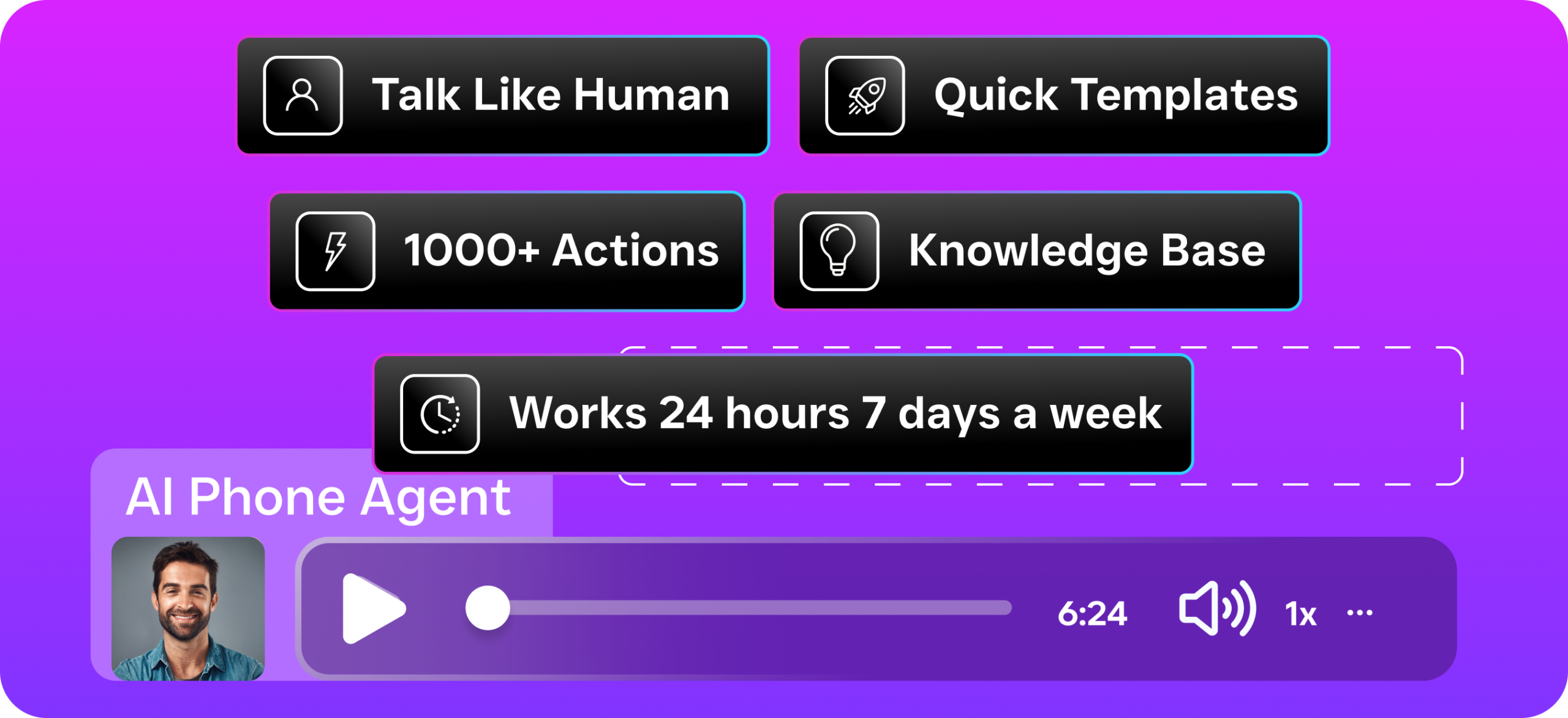
This is where the real transformation happens. An AI phone agent answers every call, 24/7, with a natural-sounding voice. It can handle reservations, answer menu questions, provide hours and directions, take messages, and even route urgent calls to the right person. No hold times. No voicemail black holes. For example, no lost revenue at 9 PM when someone’s planning tomorrow’s lunch.
The key difference between this approach and a traditional answering service is cost and consistency. Human answering services charge per minute and still can’t match the availability or speed of an AI agent. As recent industry analysis shows, AI-powered call handling is quickly becoming essential for small businesses that can’t afford to leave money on the table.
Consolidate Your Communication Channels
Phone calls are just one channel. Customers also reach out through Instagram DMs, Facebook Messenger, Google Business messages, and your website’s chat widget. If each channel lives in a separate app with no shared view, messages fall through the cracks. A unified communication system pulls everything into one place so your team sees every customer touchpoint, regardless of how it came in.
How SalesCaptain Helps Restaurants Stop the Revenue Leak
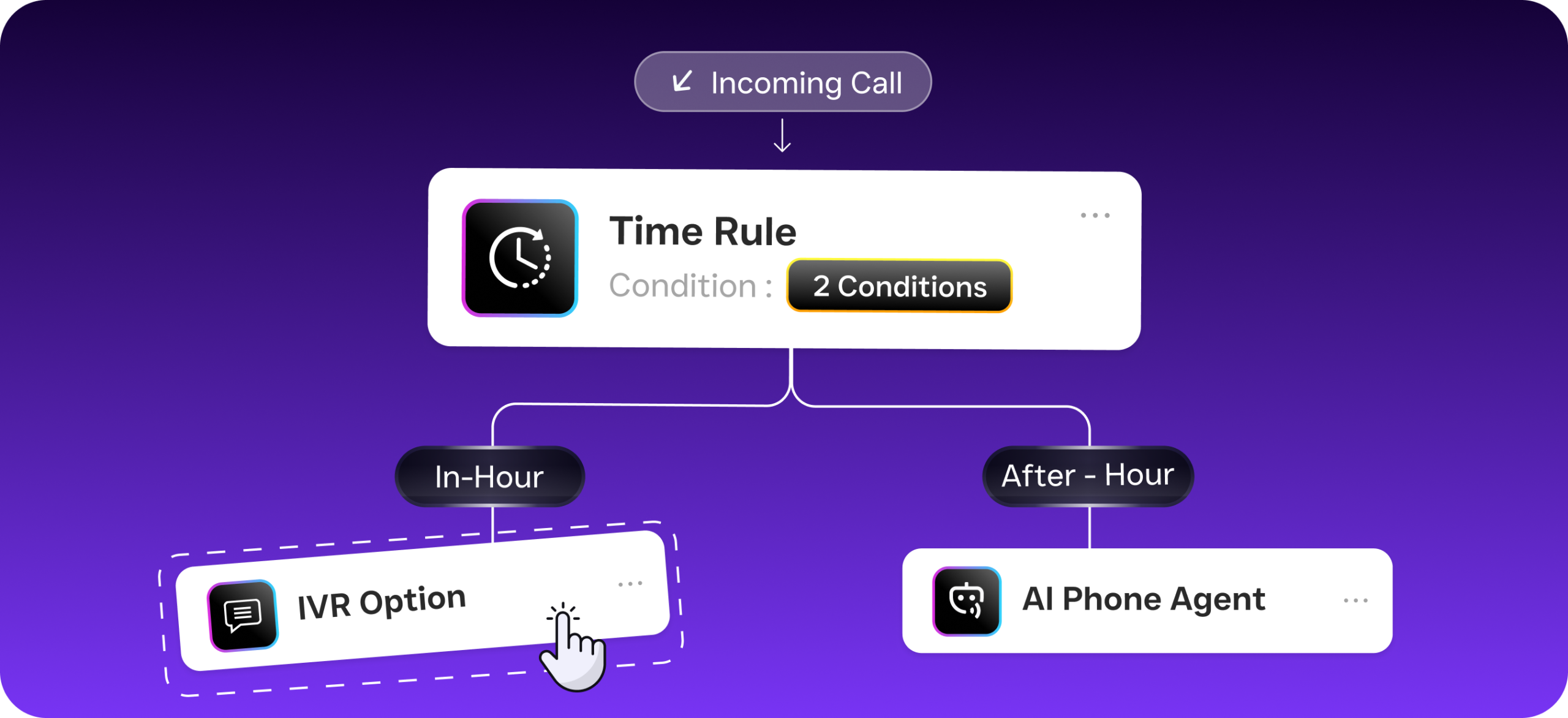
SalesCaptain was built for exactly this kind of problem. Its AI Phone Agent answers calls around the clock with a natural-sounding voice that can handle reservations, answer FAQs about your menu or hours, qualify leads like catering inquiries, and block spam calls that waste your staff’s time. At $0.12 per minute, it costs a fraction of what a human receptionist or traditional answering service charges.
But the phone is only part of the picture. SalesCaptain’s AI Chat Agents handle SMS, webchat, Instagram DMs, and Facebook Messenger simultaneously. When a customer texts after seeing your ad, or DMs you on Instagram asking if you’re open, they get an instant response that can book a table or answer a question. Everything flows into a single Unified Inbox, so your team has full context for every conversation across every channel.
Here’s what makes this particularly relevant for restaurants:
- Missed-call text-back: Every unanswered call triggers an automatic text, recovering conversations that would’ve otherwise disappeared.
- After-hours capture: The AI agent works overnight, on weekends, and during holidays without overtime pay.
- Appointment and reservation booking: Callers can book without needing to speak to a human.
- Workflow automation: Automatic follow-ups, reservation reminders, and review requests keep customers engaged without manual effort.
- Integrations with existing tools: Connects with HubSpot, Zapier, and 50+ other platforms to sync with your existing systems.
The free Startup plan covers a single location, so there’s no financial risk in testing whether it works for your restaurant. Multi-location operators can scale at $159 per month per location, which is typically less than a single shift of dedicated phone staff.
Key Takeaways
Restaurants lose customers to missed calls because of a fundamental mismatch: peak call volume hits when staff is least available to answer. The financial impact compounds through lost orders, damaged reputation, and missed high-value opportunities like catering and events. In an industry where full-service restaurants are already under extreme financial pressure, this preventable revenue leak can be the tipping point between profitability and closure.
The fix isn’t complicated. Assign phone responsibility during rush hours, set up missed-call text-back as a safety net, and seriously evaluate AI phone agents that can handle calls 24/7 at a fraction of human staffing costs. Consolidate all your communication channels so nothing slips through, and automate the follow-up that turns first-time callers into regulars. The restaurants that solve this problem won’t just stop losing customers. They’ll capture the ones their competitors are still missing.
Frequently Asked Questions
How many calls does the average restaurant miss per week?
It varies by size and volume, but most busy restaurants miss anywhere from 30 to 60+ calls per week, concentrated during lunch and dinner rushes and after closing hours. Even a modest-volume restaurant that misses 15 to 20 calls weekly is leaving significant revenue on the table when you factor in the average order value.
Don’t most customers just book online instead of calling?
Online booking has grown, but phone calls remain the preferred method for complex requests like large party reservations, catering inquiries, dietary accommodation questions, and last-minute changes. These tend to be higher-value interactions, which means the calls you’re missing are often worth more per customer than online bookings.
Is an AI phone agent going to sound robotic to my customers?
Modern AI voice agents use natural language processing that produces conversational, human-sounding responses. Most callers can’t tell the difference, especially for routine interactions like hours, directions, menu questions, and simple reservations. The experience is dramatically better than ringing endlessly or hitting a generic voicemail box.
What’s the difference between an AI phone agent and a traditional answering service?
Traditional answering services use human operators who take messages but rarely have the context to answer specific questions about your menu, hours, or specials. They also charge per minute at rates that add up quickly for high-call-volume restaurants. An AI phone agent is available 24/7, costs less, and can be trained on your restaurant’s specific information so it actually resolves caller questions rather than just taking a name and number.
Can missed-call text-back really recover lost business?
Yes, and it’s one of the highest-impact changes a restaurant can make. When a customer gets an instant text after their call goes unanswered, the conversation continues rather than ending. Many people actually prefer texting once they’re in a text thread, which means you can handle multiple conversations simultaneously without tying up a phone line.
See How SalesCaptain Can Help Your Restaurant
SalesCaptain’s AI Phone Agent and unified communication platform help restaurants answer every call, capture every lead, and turn missed opportunities into revenue. Start with a free plan for your first location and see the difference within your first week.