
AI-powered customer experience marketing (CXM) platform that helps local businesses win.


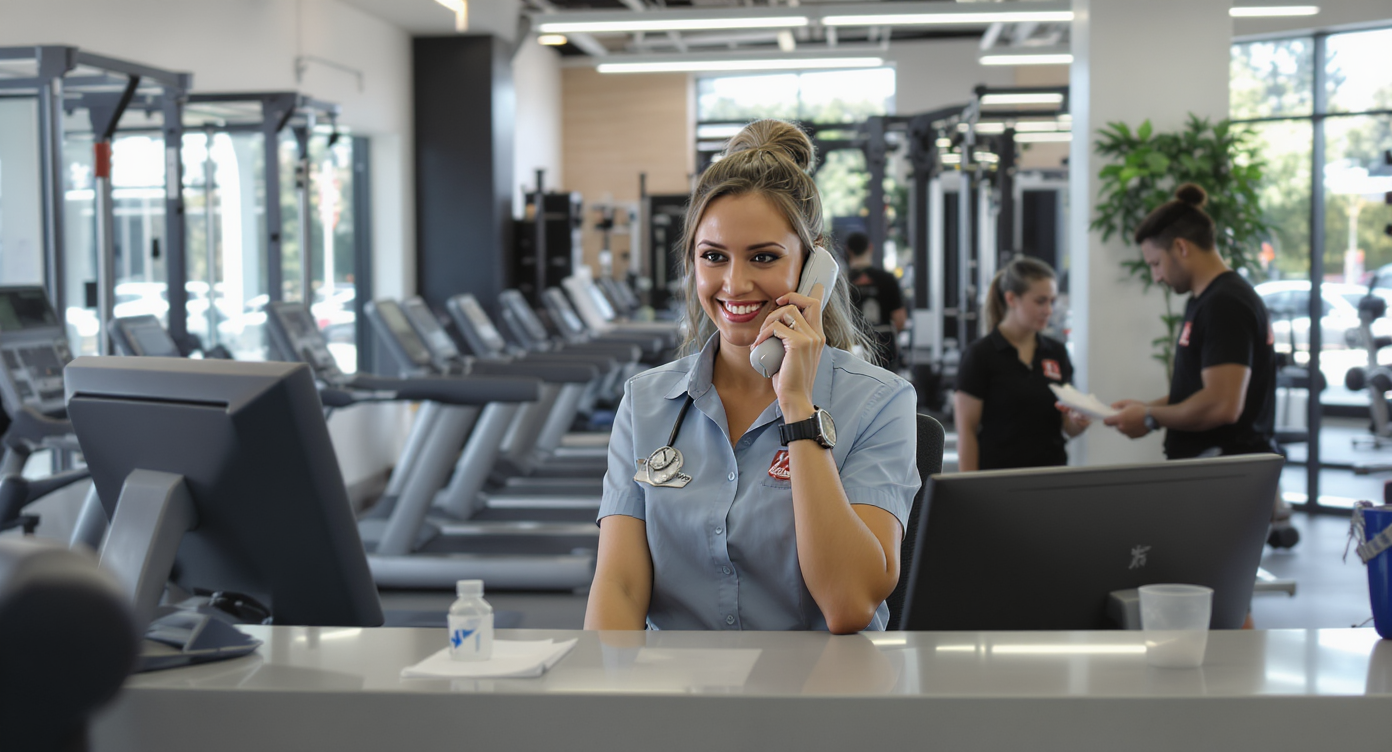
A prospective member calls your gym at 8 PM on a Tuesday. They’re ready to sign up. Nobody answers, so they call the next gym on their list. That lost call probably cost you hundreds of dollars in recurring membership revenue. It happens far more often than most gym owners realize. Choosing the best phone system for gyms isn’t just about making and receiving calls. It’s about capturing every opportunity to grow your business, even when your front desk is busy or your doors are closed. Sound familiar?
The best phone system for gyms is a cloud-based communication platform designed to capture every lead and manage member interactions across calls, texts, and voicemail. It routes calls over the internet, allows call routing to multiple staff members, and enables automated responses when your gym is closed—ensuring you never lose a prospect to a missed call.
Free weekly newsletter
Growth tips for salons, gyms & beauty businesses
Every Tuesday — actionable ideas to get more leads, reviews, and repeat customers. No fluff.
Quick Answer
Gyms need phone systems with call routing, voicemail-to-text, and missed call capture to prevent losing leads during busy hours or after-hours. Cloud-based systems with mobile apps let staff answer calls anywhere, while integration with membership software ensures lead data syncs automatically. Priority features include call forwarding, automated scheduling, and analytics to track which marketing campaigns drive calls.
What Makes a Phone System “Built for Gyms”
A gym phone system is the communication infrastructure that connects your business to current members, prospective members, vendors, and staff. Modern gyms typically use cloud-based or VoIP (Voice over Internet Protocol) platforms that route calls over the internet instead of traditional landlines. But here’s what’s changed: the definition has expanded well beyond simple phone calls.
Today’s gym phone system should handle voice calls, text messages, and even webchat or social media inquiries from a single place. According to FinancesOnline’s analysis of business phone system data, the vast majority of small businesses now rely on cloud-based phone solutions. The trend keeps accelerating. For gyms specifically, your phone system needs to work during peak class hours, after closing, on weekends, and during those early morning sessions when the front desk is unmanned. It also needs to integrate with your scheduling software, since booking classes and personal training sessions is one of the most common reasons people call a gym.
Why Most Gyms Lose Revenue Through Their Phone Lines
Here’s the uncomfortable truth. Gyms are uniquely bad environments for answering phones. Music is blasting, trainers are coaching, the front desk person is checking someone in. Meanwhile the phone rings four times and goes to voicemail. And most callers don’t leave voicemails anymore. They just hang up and try somewhere else.
The Real Cost of Missed Calls
Research from Callsetter’s industry analysis estimates that missed calls can cost businesses over $100,000 per year in lost revenue. For a gym, even a fraction of that stings. Consider a single membership worth $50/month. Miss just five sign-up calls per week, and you’re potentially leaving $13,000 or more in annual recurring revenue on the table. That doesn’t even count personal training upsells, merchandise, or referrals from happy members.
According to Zadarma’s research on missed call costs, the majority of callers who don’t reach a business on the first try won’t call back. That one ring isn’t just a missed call. It’s a missed relationship. So any phone system you choose needs to address this problem head-on, whether through smart routing, automated text-back, or AI-powered answering.
Peak Hours Create a Communication Bottleneck
Gyms face a pattern most businesses don’t: your busiest times for foot traffic are also your busiest times for phone calls. Early morning, lunch hour, and the 5-7 PM rush all generate high call volume while your staff is managing check-ins, cleaning equipment, and running classes. A traditional phone setup with one or two lines simply can’t keep up. Calls queue up. Callers abandon. Opportunities vanish.
Features to Prioritize When Choosing a Gym Phone System
Not every phone system feature matters equally for a gym. Some are table stakes. Others genuinely differentiate how well you can serve members and capture new ones. Here’s what to focus on, ranked by impact.
- After-hours call handling: Your gym might close at 9 PM, but people research and call at all hours. The system needs to capture those leads through voicemail, automated text responses, or an AI agent that can answer questions and book tours.
- Appointment and class booking: The most common reason someone calls a gym is to schedule something, whether it’s a tour, a personal training session, or a class. Your phone system should connect directly to your scheduling tools so bookings happen in real time.
- Missed-call text-back: When you can’t answer, an automatic text that says “Hey, we missed your call! How can we help?” keeps the conversation alive. This single feature can recover a surprising number of leads.
- Multi-channel messaging: Members increasingly reach out via text, Instagram DMs, Facebook Messenger, or webchat. A system that consolidates all of these into one inbox prevents messages from falling through the cracks.
- Call routing and IVR: Even a small gym benefits from basic routing. “Press 1 for membership info, press 2 for class schedules, press 3 for billing.” This directs callers to the right place without wasting staff time.
- Call recording and transcription: Useful for training new front desk staff, resolving disputes, and understanding what prospective members actually ask about most frequently.
Beyond these core features, look for workflow automation. For example, after someone calls about a membership, you’ll want an automatic follow-up text or email sent within minutes. Voksha’s guide to small business phone systems emphasizes that automated follow-ups are one of the highest-ROI features a small business can adopt. Yet most gym owners never set them up because their phone system doesn’t support them.
How Traditional Systems Compare to Modern Alternatives
Gym owners evaluating phone systems typically encounter three categories. Traditional landlines, basic VoIP providers, and unified communication platforms that bundle voice, messaging, and automation together. What does that look like in practice?
Traditional Landlines and Legacy Systems
If you’re still on a landline, you’re paying more for less. Traditional phone service doesn’t offer call routing, text messaging, automation, or any form of AI assistance. You get one line. Maybe two. If both are busy, the caller hears a busy signal. For a gym trying to grow, that’s a ceiling you’ll hit fast.
Basic VoIP Providers
Platforms like Grasshopper or OpenPhone offer affordable entry points. Usually starting around $15-$20 per user per month. They’ll give you a business number, basic call routing, and maybe texting. But they tend to lack depth. OpenPhone, for instance, has minimal AI capabilities and only about 7 integrations. For a gym that needs scheduling integration, automated follow-ups, and multi-channel communication, basic VoIP often falls short within the first few months.
Larger platforms like RingCentral or Nextiva offer more features. But they come with complexity. Nextiva, for example, caps SMS at 250 messages per user per month. That can be a problem if you’re sending appointment reminders and promotional texts to hundreds of members. According to Lucent Phone’s 2025 guide for SMBs, many small businesses end up paying for enterprise-tier plans to get features they actually need. That defeats the purpose of choosing a cloud solution in the first place.
Unified Communication Platforms with AI
The newest category combines phone service, texting, social messaging, and AI agents in a single tool. These platforms are particularly valuable for gyms. Why? Because they solve the core problem: you can’t always answer the phone. But you also can’t afford to miss the call. An AI phone agent can pick up, answer common questions about hours, pricing, and class schedules, and even book a tour appointment. All without a human touching the phone. A 2026 buyer’s guide on AI receptionists notes that these systems now sound natural enough that most callers can’t tell the difference.
How SalesCaptain Helps
SalesCaptain was built for exactly the kind of business a gym is. Appointment-heavy, high call volume during peak hours, and a front desk team that can’t be chained to the phone. It combines an AI Phone Agent, AI Chat Agents, a unified inbox, and a full business phone system into one platform. Starting with a free plan for a single location.
The AI Phone Agent answers calls 24/7. It uses natural-sounding voice conversations. It can handle the questions your front desk gets fifty times a day. “What are your hours?”, “How much is a membership?”, “Do you’ve personal trainers?” Beyond answering FAQs, it qualifies leads and books appointments directly. When a caller needs a human, the system routes them appropriately using customizable call flows. You build these with a drag-and-drop visual builder. No coding required.
On the messaging side, SalesCaptain’s AI Chat Agents handle SMS, webchat, Instagram DMs, and Facebook Messenger. All of them feed into one unified inbox. So when a member texts about freezing their account and a prospect messages on Instagram about a free trial, your team sees both conversations in the same place. Missed-call text-back is built in. That means every unanswered call automatically triggers a text to keep the lead warm.
What makes the platform especially practical for gyms is the workflow automation engine. You can set up trigger-based sequences. A new lead calls, the AI agent qualifies them, books a tour, and then a follow-up text goes out an hour before the appointment with directions and a reminder. After the tour, another automated message asks how it went. All of this runs without your staff doing anything manually. Plus, with integrations into tools like Mindbody (a popular gym management platform), HubSpot, and Zapier, SalesCaptain connects to the systems you’re already using.
Pricing is per location rather than per user. That matters for gyms where multiple staff members need access. The Business plan at $159/month per location includes the full feature set. AI call minutes run $0.12 per minute. With 99.99% uptime, call quality isn’t a concern.
Key Takeaways
Picking the best phone system for gyms comes down to understanding what makes gym communication unique. Peak-hour bottlenecks, after-hours demand, and a staff that’s physically unable to prioritize the phone over in-person members. Traditional landlines and basic VoIP aren’t enough anymore.
- Missed calls directly translate to lost membership revenue, often more than gym owners estimate.
- After-hours call handling, missed-call text-back, and appointment booking integration are the three most impactful features for gyms.
- Multi-channel communication (voice, text, social, webchat) in a unified inbox prevents the chaos of managing messages across separate apps.
- AI-powered phone and chat agents let you capture every lead without hiring additional staff.
- Per-location pricing is more cost-effective than per-user pricing for gyms with multiple team members.
The right phone system doesn’t just make communication easier. It directly grows your membership base by ensuring no call, text, or message goes unanswered.
Frequently Asked Questions
Can a gym use a cloud phone system without any special hardware?
Yes. Cloud-based phone systems like SalesCaptain work through existing smartphones, tablets, and computers. You don’t need desk phones or PBX boxes. Your staff can answer calls and texts from their personal devices using the business number. So your gym’s number stays professional and consistent regardless of who’s working.
How does an AI phone agent handle complex membership questions?
AI phone agents are trained on your specific gym’s information. That includes pricing tiers, class schedules, trainer availability, and policies. When a question falls outside what the AI can confidently answer, it routes the call to a staff member or takes a message. You control the call flow. So the handoff is smooth and callers aren’t left frustrated.
Is a per-location pricing model better than per-user pricing for gyms?
For most gyms, yes. Per-user pricing means costs climb every time you add a front desk staffer, trainer, or manager who needs phone access. With per-location pricing, everyone at your gym shares the system at one flat rate. If you’ve five staff members who need to make or receive calls, you’re paying once instead of five times.
What happens to calls that come in during peak class hours?
A well-configured phone system handles this through call routing and AI answering. Calls can be picked up by the AI agent, placed in a queue with hold music, or routed to an available team member’s mobile device. Missed-call text-back ensures that even if nobody answers, the caller gets an immediate text to keep the conversation going.
How quickly can a gym set up a new phone system?
Most cloud phone systems can be set up within a day. SalesCaptain’s drag-and-drop call flow builder and no-code AI agent setup mean you don’t need a technician or IT consultant. You can port your existing business number so members don’t need to learn a new one. The transition typically takes just a few business days for the number transfer to complete.
Ready to see it in action?
See how gyms use SalesCaptain to answer every call and convert prospects into members.
See How SalesCaptain Can Help Your Gym
Stop losing members to missed calls and slow follow-ups. SalesCaptain gives your gym a 24/7 AI-powered phone and messaging system with a unified inbox. All starting with a free plan.
Start your free account at SalesCaptain.com and see the difference in your first week.