
AI-powered customer experience marketing (CXM) platform that helps local businesses win.



After Hours Call Handling for Small Business: The Complete Guide to Never Missing a Customer Again
After hours call handling for small business routes customer calls to a live receptionist or automated system when your office is closed, ensuring no urgent calls go unanswered. This captures high-intent leads calling outside business hours and prevents customers from contacting competitors instead.
It’s 7:30 PM on a Tuesday. A homeowner’s pipe just burst, and they’re calling every plumber in the area. Your phone rings four times and goes to voicemail. They hang up. The next business on their list answers, and that customer is gone forever. This scenario plays out thousands of times every day across every service industry. And it’s one of the most preventable problems a small business can solve.
After hours call handling for small business isn’t a luxury anymore, it’s a basic requirement for competing in today’s market. Customers expect instant responses. Whether you run a dental practice, a roofing company, or a legal office, the calls that come in after you close are often your highest-intent leads. They’re people with urgent needs and money to spend. So the question is simple: are you set up to capture them, or letting them slip away?
Free weekly newsletter
Growth tips for service businesses
Every Tuesday — actionable ideas to get more leads, reviews, and repeat customers. No fluff.
Quick Answer
Small businesses can handle after-hours calls through automated answering services, call forwarding to personal phones, voicemail-to-email systems, or live answering services that screen and route messages. These solutions capture leads during off-hours, reduce missed opportunities, and typically cost less than hiring full-time staff. Many services also provide call transcripts and integration with scheduling systems to ensure no customer inquiry goes unaddressed.
What Is After Hours Call Handling for Small Business?
After hours call handling refers to any system or process that manages incoming phone calls outside your normal business hours. That’s evenings, weekends, holidays, and early mornings. For most small businesses, this means the window between 5 PM and 9 AM on weekdays, plus all day Saturday and Sunday. The goal is straightforward: make sure every caller gets a professional response, even when no one’s physically in the office.
Historically, small businesses had limited options. You could forward your business line to your personal cell phone and sacrifice your evenings. You could hire a third-party answering service staffed by human operators. Or you could just let calls go to voicemail and hope people left a message. Each approach has real trade-offs. A voicemail box, for example, feels like a dead end to most callers. The majority won’t leave a message, they’ll try a competitor instead.
Today, everything’s changed. Thanks to AI-powered phone agents, small businesses can now handle after-hours calls with natural conversations, appointment booking, FAQ answers, and lead qualification, all without human involvement. This shift has democratized professional after-hours coverage. Even solo operators and businesses with tight budgets can now compete. According to Voctiv’s guide to out-of-hours call handling, 24/7 availability is now the baseline expectation for service businesses of all sizes.
Why After Hours Calls Matter More Than You Think
The Real Cost of Missed Calls
Most small business owners seriously underestimate how many calls they miss. And how much revenue those missed calls actually represent. It’s easy to rationalize: “People will call back tomorrow” or “If it’s important, they’ll leave a voicemail.” But that’s not what the data shows. According to research from Phone2.io on the true cost of missed calls, the majority of callers who reach voicemail won’t leave a message. A significant portion will simply call a competitor instead. For service businesses where a single job can be worth hundreds or thousands of dollars, even a handful of missed calls per week adds up fast.
But here’s what really hurts: the compounding effect. It’s not just the immediate revenue from one lost job. It’s the lifetime value of that customer. It’s the referrals they would have sent your way. It’s the online reviews they might have posted. A plumbing company that misses five after-hours calls per week? That’s not five lost jobs. Over a year, that’s 260 potential customers who had a negative first impression, or no impression at all. According to SkipCalls research on the true cost of missed business calls, small businesses lose significant annual revenue from unanswered calls alone. The impact is especially severe in HVAC, legal, and healthcare.
When Your Customers Are Actually Calling
There’s a fundamental mismatch between when small businesses are open and when customers have time to call. Think about your own behavior. When do you call your dentist to schedule a cleaning? Probably not at 2 PM on a Wednesday when you’re in the middle of your own workday. You call during lunch. Or on your commute home. Or after dinner once the kids are in bed. Your customers behave exactly the same way. Which means a large percentage of your inbound calls naturally fall outside the traditional 9-to-5 window.
Emergency-driven industries see this even more starkly. Pipes burst at midnight. Roofs leak during weekend storms. What does a toothache care about business hours? According to the U.S. Small Business Administration, small businesses that respond quickly to customer inquiries have a measurable advantage in conversion rates. The businesses that answer these after-hours calls, or have a system that handles them intelligently, capture customers at their most motivated and urgent moment. That urgency translates directly into higher conversion rates compared to callbacks made the next morning, when the crisis may have already passed or a competitor solved it.
📺 Watch: After-Hours Call Routing Setup: Never Miss a Lead
Your Options for After Hours Call Handling
Voicemail: The Default (and Worst) Option
Voicemail is where most small businesses start. It costs nothing. It requires zero setup. But the hidden cost is enormous. Callers hate leaving voicemail messages. Many will just hang up when they hear the beep. And even among those who do leave a message, there’s delay. In that window, they’ve already hired someone else. Voicemail also provides zero engagement: it can’t answer questions, it can’t book an appointment, it can’t reassure an anxious caller. For a business that depends on phone leads, voicemail is essentially a “we’re closed, try someone else” sign.
Call Forwarding to Your Personal Phone
Many solo operators forward their business line to their cell phone after hours. This ensures calls get answered. But the personal cost is steep. You’re essentially on call 24/7. That leads to burnout, family tension, and the inability to ever fully disconnect. There’s also a quality issue, answering a business call while you’re at dinner, at your kid’s soccer game, or half-asleep at midnight doesn’t project professionalism. It works early on, but it’s not sustainable long-term.
Traditional Answering Services
Human answering services have been around for decades. They solve the core problem: a real person picks up and takes a message. Better services can transfer urgent calls, follow scripts, and provide basic information. But they have real limitations for small businesses. They charge per call or per minute. Costs escalate quickly during busy periods. The operators are handling calls for dozens of businesses simultaneously, so they lack deep knowledge of your services, pricing, or availability. They can take a message, but they usually can’t book an appointment directly into your calendar or answer detailed questions. As Dialzara’s comparison of AI answering services notes, traditional services are increasingly being outperformed by AI alternatives. Better consistency. Lower cost. No contest.
AI-Powered Phone Agents
The newest option, and the one rapidly becoming the standard, is an AI phone agent. It answers calls with a natural-sounding voice. It holds real conversations. It takes meaningful action on your behalf. Unlike voicemail or basic answering services, an AI agent understands what the caller needs. It answers frequently asked questions about your services. It checks your calendar for availability. It books appointments. It qualifies leads based on criteria you define. The technology has improved dramatically in the past two years. Many callers can’t tell they’re speaking with an AI. This gives small businesses enterprise-level call handling without enterprise-level costs or the need to hire staff.
Best Practices for Setting Up After Hours Call Handling
Define What Happens With Each Type of Call
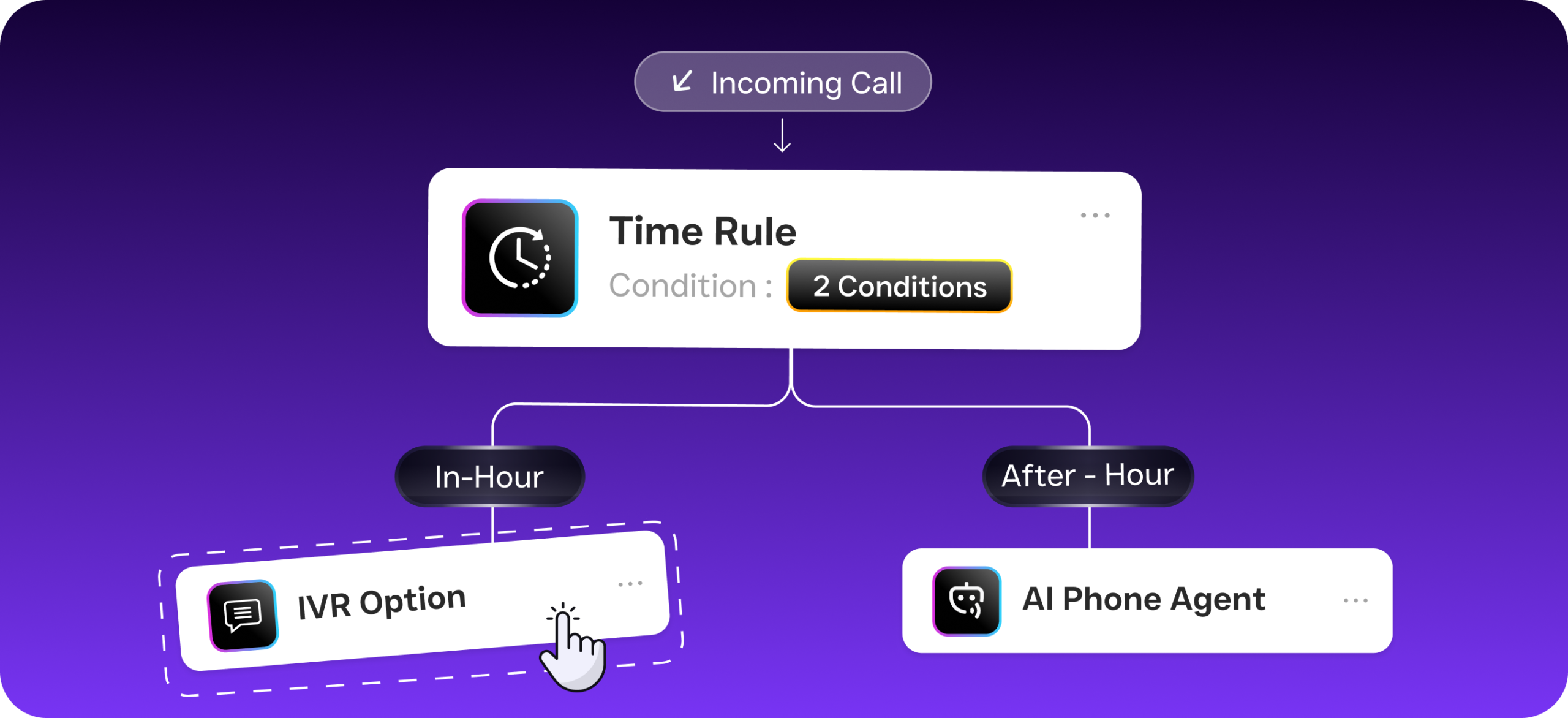
Not every after-hours call requires the same response. Map out the different types of calls your business receives before you set up anything. Then decide how each one should be handled. Emergency calls, a water heater explosion for an HVAC company, a severe toothache for a dental practice, may need to route immediately to an on-call technician. Appointment requests can be booked automatically if you’ve got calendar integration. General questions about pricing, service areas, or hours can be answered on the spot. And spam? Filter it out entirely. Why waste your morning on robocalls? Having this call flow mapped out in advance ensures your after-hours system delivers the right response every time, rather than treating every caller the same.
Prioritize Speed and Professionalism
The single most important factor in after-hours call handling is answering quickly with a professional response. Speed matters. Research consistently shows that response speed is one of the strongest predictors of whether a lead converts. A caller who gets an immediate, helpful response, even from an automated system, is far more likely to book with you than one who gets called back 12 hours later. Make sure your greeting is warm, professional, identifies your business name clearly, and moves quickly to help the caller. Avoid long menu trees or complicated IVR systems that frustrate people. The goal is to make them feel taken care of, not to make them jump through hoops. According to NextPhone’s compilation of AI customer service statistics, customer satisfaction is closely tied to response time. Businesses that respond within minutes dramatically outperform those that take hours.
Capture Information, Don’t Just Take Messages
The difference between good and great is what happens with the call. Taking a message, “John called about a roof leak, here’s his number”, is the bare minimum. A truly effective system captures the caller’s name, contact information, the nature of their need, their urgency level, their address or service location, and their preferred appointment times. It then feeds that information directly into your CRM or scheduling tool. Your team can act on it first thing in the morning. Or immediately, if it’s urgent. The more complete the information capture, the faster and more confidently your team can follow up. And the more professional you appear. Integration with HubSpot, Salesforce, or industry-specific platforms like HousecallPro or ServiceFusion makes this seamless.
Test Your System Regularly
Once your after-hours call handling is set up, don’t assume it’s working perfectly and forget about it. Call your own business line after hours at least once a month. Experience what your customers experience. Is the greeting clear? Does the system respond appropriately to different requests? Are appointments actually showing up in your calendar? Are messages delivered promptly to the right person? Small issues, a broken integration, an outdated business hour setting, a confusing menu option, can silently cost you customers for weeks or months before you notice. Regular testing catches problems early. Ask a friend or family member to call too. Fresh ears spot things you’ve become blind to.
Industry-Specific Considerations
Home Services (Plumbing, HVAC, Roofing, Landscaping)
Home service businesses are hit hardest by missed after-hours calls. So many customer needs are urgent and time-sensitive. A homeowner with a flooded basement at 10 PM isn’t leaving a voicemail and waiting until morning. They need someone now. For these businesses, after hours call handling for small business should include the ability to distinguish emergency calls from routine scheduling requests. Route true emergencies to an on-call technician. Book non-urgent appointments for the next available slot. The after-hours period is also when many homeowners research and compare contractors. Being the one that actually answers the phone gives you a massive competitive advantage over businesses that send everything to voicemail. According to the National Federation of Independent Business (NFIB), responsiveness is consistently ranked as one of the top factors customers use when choosing a local service provider.
Healthcare, Dental, and Wellness
Medical and dental practices face a unique challenge: patients often call with concerns that feel urgent to them, even if they aren’t clinical emergencies. A patient calling at 8 PM about a toothache wants reassurance and a next-day appointment. Not a callback three days later. After-hours handling for healthcare should include the ability to triage calls based on urgency. Provide basic guidance (like “if this is a medical emergency, please call 911”). And book appointments directly into practice management software like Mindbody. Wellness businesses, MedSpas, therapy practices, fitness studios, benefit enormously from after-hours booking too. Many of their clients are professionals who prefer scheduling during evening hours when their own workday is done.
Legal Practices
For law firms, after-hours calls represent high-value potential clients in crisis. Someone just got arrested. They were served with papers. They’re involved in an accident. These callers are highly motivated. They’ll hire the first attorney who responds. A legal practice’s after-hours system should capture the nature of the legal matter, the caller’s contact details, and the urgency level. Then immediately notify the appropriate attorney or intake specialist. Integration with legal practice management tools like Clio ensures potential client information flows directly into the firm’s workflow. No manual data entry the next morning.
How SalesCaptain Helps With After Hours Call Handling
SalesCaptain was built specifically for service businesses that lose the most revenue from unanswered after-hours calls. Its AI Phone Agent answers every call with a natural-sounding voice. 24 hours a day. 7 days a week. Including evenings, weekends, and holidays. Unlike voicemail or basic answering services, the AI agent holds real conversations with callers. It answers frequently asked questions about your services. It qualifies leads based on your criteria. It books appointments directly into your calendar. And it blocks spam calls automatically, so your morning isn’t cluttered with junk.
What sets SalesCaptain apart? It combines the AI Phone Agent with AI Chat Agents (for SMS, webchat, Instagram DMs, and Facebook Messenger). You get a Unified Inbox that pulls every conversation into one place. Plus a full business phone system with 99.99% uptime. This means your after-hours coverage extends beyond just phone calls to every channel your customers might use to reach you. A missed call triggers an automatic text-back via the AI Chat Agent. A late-night webchat inquiry gets an instant response. Every interaction is logged in one collaborative inbox so your team sees exactly what happened overnight and can follow up intelligently in the morning.
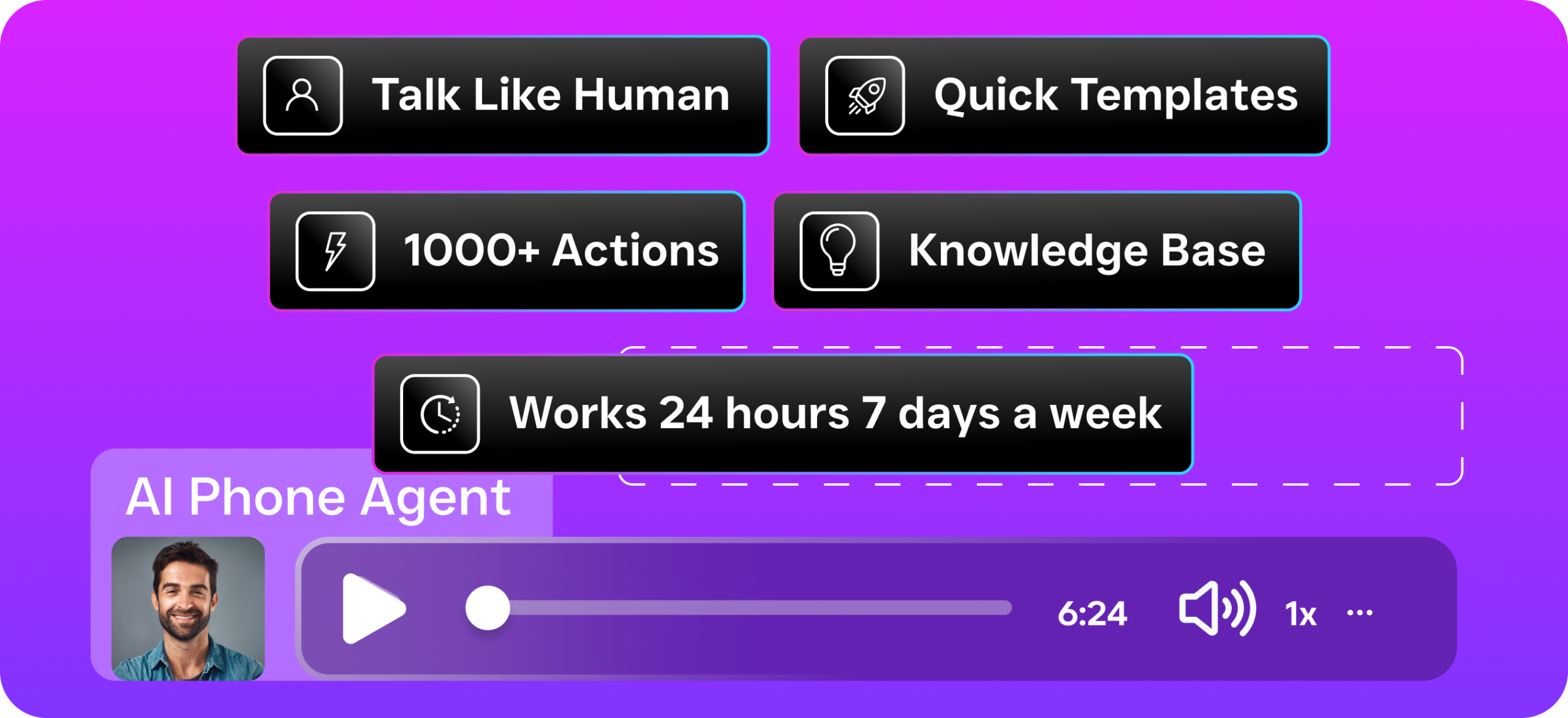
Setup doesn’t require technical expertise. You can build custom call flows, set business hours, define how different call types are handled, and connect SalesCaptain to over 50 integrations including HubSpot, Salesforce, HousecallPro, ServiceFusion, C
Ready to see it in action?
See how small businesses use SalesCaptain to capture every after-hours call automatically.
Book a Free Demo →Frequently Asked Questions
What is after hours call handling for small business?
After hours call handling is any system or process that manages incoming phone calls outside your normal business hours, including evenings, weekends, holidays, and early mornings. The goal is to ensure every caller receives a professional response even when no one is physically in the office, capturing high-intent leads that might otherwise go to competitors.
Why do after hours calls matter for small businesses?
After-hours calls often represent your highest-intent leads—people with urgent needs and money to spend who are actively seeking services right now. Missing these calls by only having voicemail results in most callers trying a competitor instead, making after-hours coverage critical for competing in today’s market where customers expect instant responses.
What are the options for handling after hours calls?
Small businesses can forward calls to a personal cell phone, hire a third-party answering service with human operators, use AI-powered phone agents for automated conversations and appointment booking, or rely on voicemail. AI-powered solutions have democratized professional after-hours coverage, allowing even solo operators and budget-conscious businesses to compete effectively.
How do AI-powered after hours call handling systems work?
AI-powered phone agents handle after-hours calls with natural conversations, answer FAQs, book appointments, and qualify leads—all without human involvement. This technology allows small businesses to provide 24/7 professional coverage that was previously only available through expensive human answering services.
Is after hours call handling a necessity or luxury for small businesses?
After hours call handling is now a basic requirement for competing in today’s market, not a luxury. According to industry guidance, 24/7 availability is the baseline expectation for service businesses of all sizes, whether you run a dental practice, roofing company, or legal office.