
AI-powered customer experience marketing (CXM) platform that helps local businesses win.


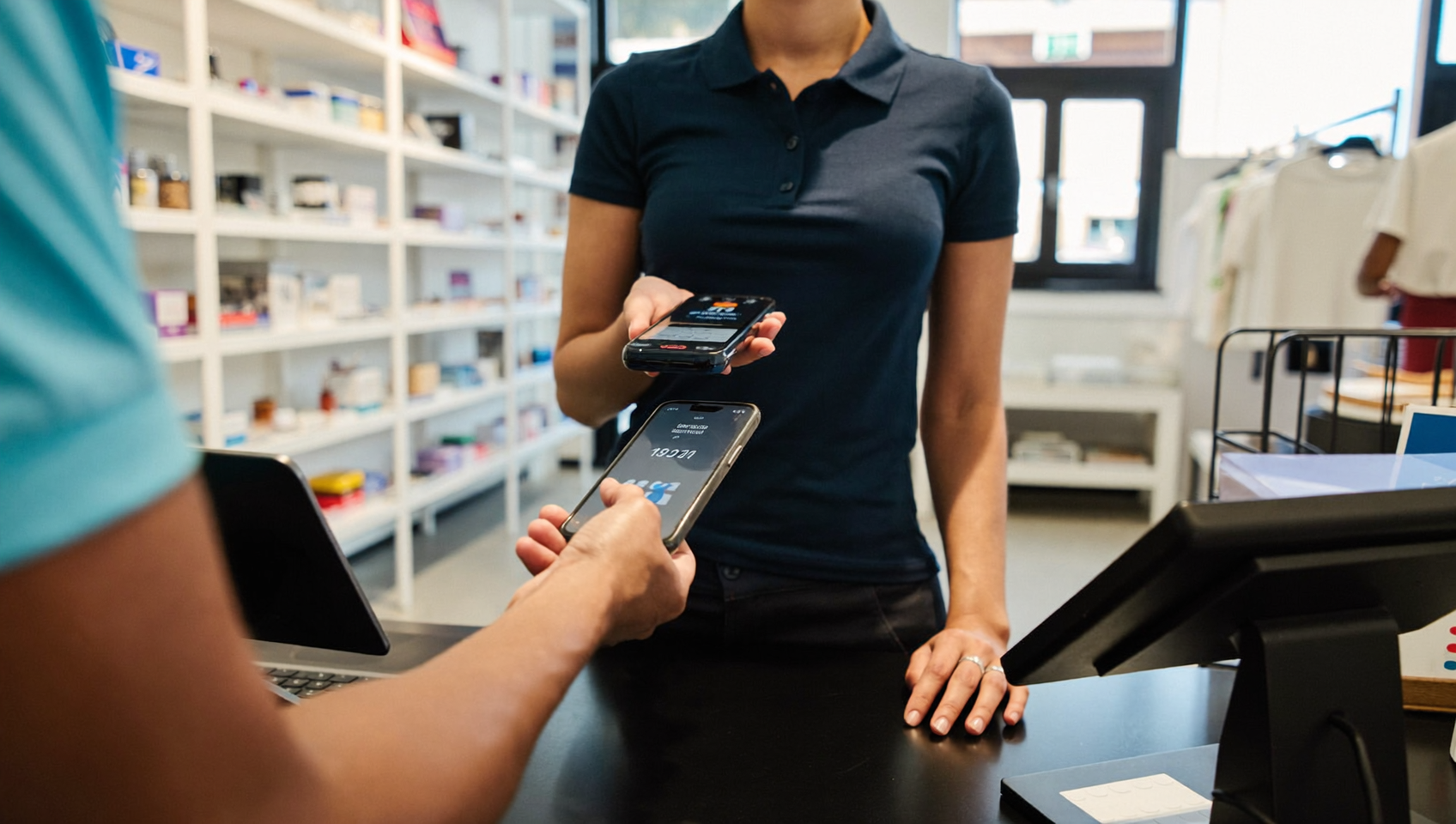
Your team finished a job, sent an invoice by email, and then waited. Days passed. The customer forgot about it. The invoice sat unopened in their inbox, and your cash flow stalled. Sound familiar? This scenario plays out constantly for service businesses, and it’s exactly why payments via text statistics tell such a compelling story about how customers actually want to pay in 2026.
Payments via text statistics show that SMS payment links are transforming how businesses collect money in 2026. These text-to-pay solutions let customers complete transactions in seconds by tapping a link and entering payment details, dramatically reducing unpaid invoices and improving cash flow for service businesses.
Free weekly newsletter
Growth tips for service businesses
Every Tuesday — actionable ideas to get more leads, reviews, and repeat customers. No fluff.
Quick Answer
SMS payment reminders boost payment collection rates by 30-40% and reduce payment processing time by an average of five days. Mobile payment adoption continues climbing, with 60% of consumers now preferring text-based payment options over traditional invoicing methods for convenience and speed.
What Are Payments via Text?
Payments via text, often called SMS payments or text-to-pay, let businesses send a payment link directly to a customer’s phone through a standard text message. The customer taps the link, enters their card or bank details (or uses a saved payment method), and completes the transaction in under a minute. No app to download. No login portal. No paper check in the mail.
This approach works because it meets customers where they already are. People check text messages way more frequently than email, and the friction between “I owe money” and “I’ve paid” shrinks dramatically. For service businesses like plumbers, roofers, dental offices, and salons, that speed translates directly into faster collections and healthier revenue.
Key Statistics Driving Text Payment Adoption
The shift toward text-based payments isn’t a niche trend. It’s backed by meaningful data points that show both consumer preference and business impact.
Consumer Demand Is Clear
According to a Weave survey, 30% of customers now prefer paying through phone texts. That’s not marginal. One in three of your customers would rather tap a link in a text than pull out a checkbook, call your office, or navigate an online portal. Among younger demographics? The preference skews even higher.
Research from Datos Insights on digital payment trends confirms growing demand for text messaging as a bill payment channel. Their analysis found that consumers increasingly expect businesses to offer SMS as a payment option alongside traditional methods, and they’re more likely to pay promptly when it’s available.
Text Messages Get Opened, Emails Often Don’t
SMS open rates consistently land above 90%, while email open rates hover around 20-30% for most businesses. That gap matters enormously for payments. An invoice that never gets opened? It never gets paid. When you send a payment request via text, the customer sees it almost immediately.
The 2024 State of Business Texting report from Text Request found that business texting volumes continue climbing year over year, with payment-related messages becoming one of the fastest-growing use cases. Customers aren’t just reading these texts. They’re acting on them.
Faster Payment Cycles
Businesses that adopt text-to-pay typically see payment collection times drop significantly compared to traditional invoicing. While a mailed invoice might take 30+ days to collect, and an emailed invoice averages several weeks, text payment requests often convert within hours. Some businesses report same-day payment rates jumping by double digits after switching to SMS-based billing.
Why Text Payments Matter for Service Businesses
The statistics paint a broad picture. But the real impact shows up in day-to-day operations for businesses that rely on appointments, jobs, and in-person services.
Cash Flow Becomes Predictable
Unpredictable cash flow is one of the biggest pain points for small businesses. According to the U.S. Small Business Administration, cash flow problems contribute to a significant percentage of small business failures. Text payments compress the collection cycle, turning “net 30” invoices into same-day receipts. For a roofing company finishing three jobs a week, that acceleration can mean tens of thousands of dollars arriving sooner each month.
It Reduces Manual Follow-Up
Every phone call your office staff makes to chase a late payment is time they could spend booking new jobs or helping current customers. Text-to-pay automates the ask. Send the link, and the customer handles the rest. No awkward “just checking in on that invoice” calls. No printing and mailing statements.
Consider the alternative cost. Research on the cost of missed calls shows that businesses lose real revenue every time staff are tied up on the phone instead of handling incoming leads. Text payments free up that bandwidth.
Customers Actually Prefer It
This isn’t just a business efficiency play. Customers want simplicity, and paying via a text link is about as simple as it gets. There’s no portal to remember, no account to create. They receive a message, tap a link, confirm payment, and move on with their day. That low friction translates to higher satisfaction scores and fewer billing disputes.
Best Practices for Collecting Payments via Text
Knowing the statistics is useful. But putting text payments into practice requires some thought. Here’s what works well for service businesses already using this approach.
- Send the payment link at the right moment. The best time to request payment is immediately after a job is completed or an appointment ends. Customers are most engaged right after they’ve received value from your service. Waiting days reduces conversion.
- Keep the message short and clear. Include the customer’s name, the service performed, the amount due, and the payment link. That’s it. Long-winded text messages don’t get read.
- Use a trusted payment gateway. Customers need confidence that the link is legitimate. Established gateways like Stripe, Helcim, or Authorize.net provide secure checkout pages that look professional and protect cardholder data.
- Set up automatic reminders. If a customer doesn’t pay within 24-48 hours, a gentle follow-up text can nudge them without requiring staff involvement. Automation handles this consistently.
- Confirm payment receipt. Always send a confirmation text once the payment processes. It closes the loop for the customer and reduces “did my payment go through?” calls to your office.
The U.S. Chamber of Commerce has published a practical guide on accepting SMS payments that covers compliance considerations and setup steps for businesses getting started.
The Broader Digital Payment Landscape
Text-to-pay sits within a much larger shift toward real-time digital payments. The global real-time payments market is experiencing rapid growth, with projections showing significant expansion through the end of this decade. B2B payments, in particular, are moving away from checks and ACH toward faster digital methods, and text-based requests are part of that evolution.
Open banking and API-driven payment infrastructure continue to make it easier for smaller businesses to offer sophisticated payment options without enterprise-level budgets. Cloud-based solutions have lowered the barrier to entry. So a five-person plumbing company can collect payments with the same convenience as a national brand. Smartphone proliferation is the engine behind all of this. When virtually every customer carries a device capable of completing a secure payment in seconds, the only question is whether your business makes it easy for them to do so.
According to McKinsey’s Global Payments Report, digital payment adoption continues accelerating across every sector, with small and mid-size businesses representing the fastest-growing adopter segment.
How SalesCaptain Helps
SalesCaptain includes Payments via Text as a built-in feature. So you don’t need to stitch together separate tools for messaging and billing. After a job wraps up, your team (or an automated workflow) sends a payment link directly through SMS. The customer pays through a secure checkout powered by Stripe, Helcim, or Authorize.net.
What makes this especially effective is how it connects with the rest of SalesCaptain’s platform. Your AI Phone Agent can answer after-hours calls and book the appointment. The Unified Inbox tracks every conversation across calls, texts, and social media. And once the service is delivered, Workflow Automation can trigger the payment text automatically, no manual step required. The entire cycle runs through one system.
For multi-location businesses, this scales cleanly. Each location gets its own phone number and communication hub, with pricing at $159/month per location for the Business plan. Compared to competitors like Nextiva or RingCentral, which don’t offer native text-to-pay, SalesCaptain handles both customer communication and payment collection without add-ons.
Key Takeaways
The data on payments via text statistics points in one direction: customers prefer paying by text, and businesses that offer it collect faster. A significant share of consumers now actively choose SMS payments over other methods, and the gap between text and email effectiveness for payment collection is wide.
For service businesses, the practical benefits are hard to ignore:
- Faster cash flow with same-day payment potential
- Less staff time spent chasing unpaid invoices
- Higher customer satisfaction from a frictionless payment experience
- Stronger collection rates compared to email or mail-based billing
Businesses that haven’t adopted text-to-pay are leaving money on the table. Literally. The technology is accessible, the customer demand is proven, and the ROI shows up in your bank account within weeks of implementation.
Frequently Asked Questions
Are text payments secure for my customers?
Yes. Text-to-pay systems don’t transmit card data through SMS itself. Instead, the text contains a link to a secure, encrypted checkout page hosted by a PCI-compliant payment gateway like Stripe, Helcim, or Authorize.net. The customer’s payment information is handled with the same security standards as any online purchase.
What percentage of customers actually prefer paying by text?
Survey data indicates that roughly 30% of customers prefer paying through text messages when given the option. Among younger consumers who are accustomed to mobile-first interactions, that preference is typically higher.
How quickly do customers pay after receiving a text payment link?
Most customers who pay via text do so within a few hours of receiving the message. Because SMS open rates exceed 90%, the payment request reaches the customer almost instantly, and the low-friction checkout process encourages immediate action. Many businesses report collecting the majority of text-based payments on the same day they’re sent.
Do I need a separate tool to send payment texts?
Not necessarily. Some platforms, including SalesCaptain, bundle text-to-pay into their communication system. Others require you to connect a standalone payment tool with a separate texting platform. An all-in-one approach typically saves setup time and keeps your customer conversations and payment history in one place.
Can I automate payment reminders if a customer doesn’t pay right away?
Yes. With workflow automation, you can set rules that trigger a follow-up text if payment hasn’t been received within a certain timeframe. This eliminates the need for manual check-ins and ensures consistent follow-up without burdening your staff.
Ready to see it in action?
See how businesses use SalesCaptain to collect payments via text and boost conversion rates instantly.
Book a Free Demo →See How SalesCaptain Can Help
SalesCaptain combines AI-powered calling, SMS, and built-in text-to-pay so your business can communicate with customers and collect payments from one platform. Stop chasing invoices and start getting paid faster.
Visit SalesCaptain.com to explore the platform and get started.