
AI-powered customer experience marketing (CXM) platform that helps local businesses win.


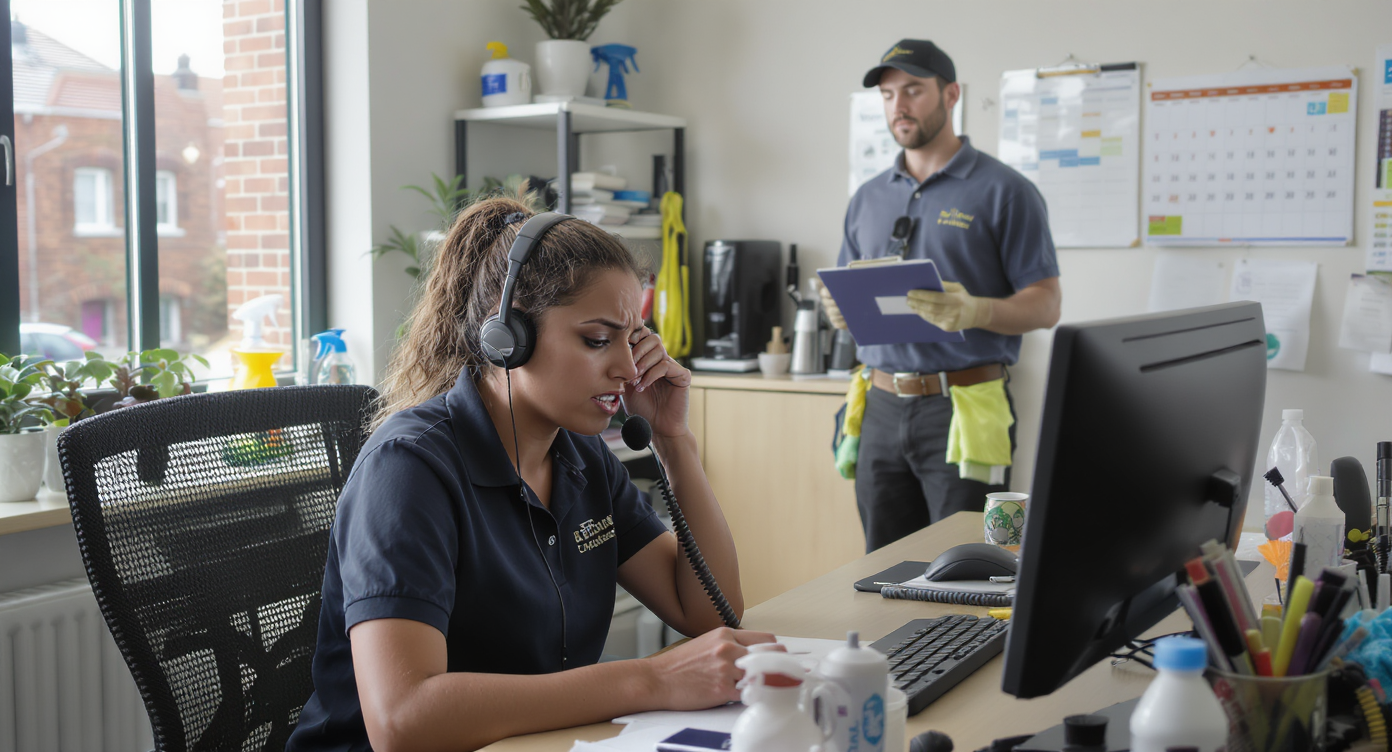
A homeowner’s toilet is overflowing. They call the first three cleaning companies they find online. Two don’t answer. The third picks up, books the job, and earns a repeat customer. Sound familiar? If you’re one of the two who didn’t answer, you’ll never even know what you lost. Learning how to reduce missed calls for cleaning companies isn’t just a nice-to-have operational tweak. It’s the difference between a full schedule and an empty one.
Quick Answer
Cleaning companies reduce missed calls by implementing automated answering systems, setting up call routing to multiple team members, using dedicated business phone lines, enabling voicemail-to-text transcription, and training staff on call protocols. Scheduling callbacks during business hours, hiring a part-time receptionist, and using appointment reminder systems also help capture leads that would otherwise slip away.
What Are Missed Calls Costing Your Cleaning Business?
A missed call is any inbound call that goes unanswered, hits voicemail, or rings out before someone picks up. For cleaning companies, these calls almost always represent a potential booking, a service inquiry, or an existing customer with a time-sensitive need. Unlike retail or e-commerce, cleaning is different. People don’t call to browse. They call because they need someone now, or at least this week.
The financial impact is staggering. According to recent data on missed business calls, a significant percentage of business calls go unanswered, and the revenue lost per missed call can add up to six figures annually. And here’s the part that really stings: missed call statistics show that most callers won’t leave a voicemail. They’ll just call the next company on their list. For a cleaning business where the average recurring residential contract might be worth $200 to $400 per month, losing even a few leads per week compounds fast.
Free weekly newsletter
Growth tips for home service businesses
Every Tuesday — actionable ideas to get more leads, reviews, and repeat customers. No fluff.
Why Cleaning Companies Miss So Many Calls
Before you can fix the problem, you need to understand why it’s happening. Cleaning companies face a unique set of challenges that make missed calls almost inevitable without the right systems in place.
Your Team Is Doing the Work, Not Answering the Phone
Most cleaning businesses are lean operations. The owner is often on-site supervising jobs, managing crews, or handling supplies. Dedicated reception staff? That’s a luxury. So when a call comes in at 2 PM on a Tuesday, everyone who could answer is elbow-deep in a commercial deep clean. According to the Federal Reserve’s small business data, staffing constraints remain one of the top challenges for small service businesses. Cleaning companies are no exception.
After-Hours and Weekend Inquiries Vanish
Homeowners often search for cleaning services in the evening, after their own workday ends. Commercial property managers might call early in the morning before their buildings open. But most cleaning companies only have someone available to answer during standard business hours, if that. Every call that arrives outside those hours is a lead that quietly disappears.
High Call Volume During Peak Seasons
Spring cleaning season hits hard. Holiday prep, post-construction cleanup—these create call spikes. When your phone rings five times in an hour and you can only handle one call at a time, four potential customers hear silence. Seasonal surges can overwhelm even well-staffed businesses. They’re brutal for lean teams.
📺 Watch: Missed Call Text Back Setup in 5 Minutes
Proven Strategies to Stop Missing Calls
Reducing missed calls doesn’t require hiring a full-time receptionist or chaining yourself to your phone. The best approaches combine smart technology with simple process changes. Here’s what actually works for cleaning companies.
Set Up Automatic Text-Back for Missed Calls
If you can’t answer a call, the next best thing is an instant text message that says, “Hey, we saw you called. How can we help?” This simple tactic keeps the lead warm. You can finish your current task without worrying. Research on missed call recovery shows that a quick text response within minutes dramatically improves the chance of converting that caller into a customer. Without it, most people move on within 60 seconds.
Use an AI Phone Agent Instead of Voicemail
Voicemail is where leads go to die. Most callers won’t leave one. Those who do expect a callback that often comes too late. An AI-powered phone agent answers every call with a natural-sounding voice, gathers the caller’s information, answers basic questions about your services, and can even book appointments directly. It works at 3 AM on a Sunday just as well as it does at noon on a Wednesday.
This isn’t a robotic phone tree from 2005. Modern AI voice agents handle real conversations. They understand context and route complex calls to a human when needed. For cleaning companies, where most inbound calls follow predictable patterns (“Do you serve my area?”, “What are your rates?”, “Can I book a deep clean for Saturday?”), an AI agent can handle the vast majority of inquiries without any human involvement.
Build Structured Call Flows
A call flow determines what happens to every incoming call, step by step. Instead of one phone ringing until it stops, a well-designed call flow routes calls through a logical sequence:
- Step 1: AI agent answers with a professional greeting and handles common questions
- Step 2: If the caller needs a specific person, the call routes to that team member’s mobile
- Step 3: If no one’s available, the AI captures the caller’s details and sends a text confirmation
- Step 4: An automatic follow-up text or email goes out within minutes
With a visual drag-and-drop call flow builder, you don’t need any technical skills to set this up. You just map out the path. The system handles the rest.
Consolidate All Communication Channels
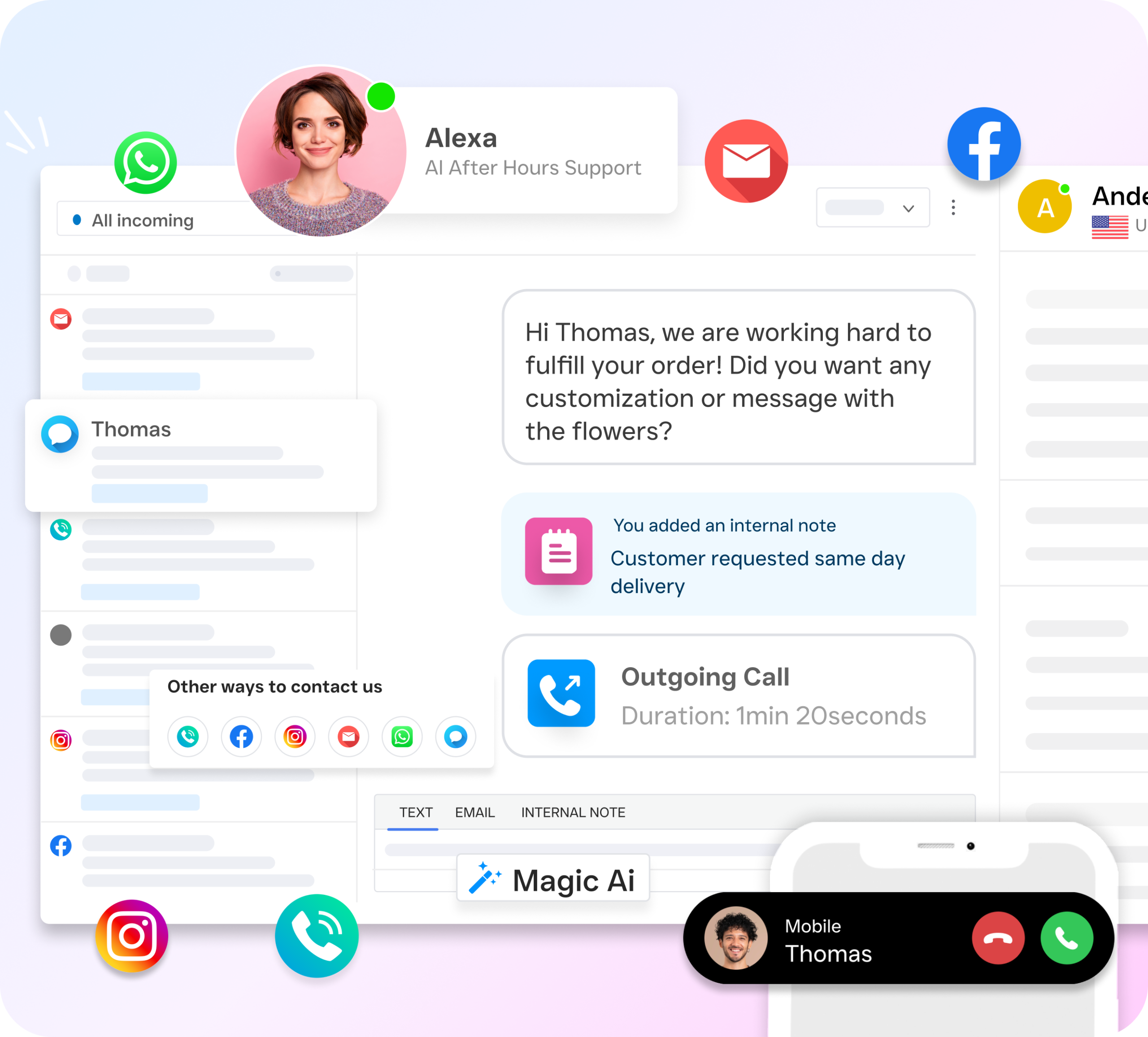
Missed calls are just one piece of the puzzle. Many cleaning companies also miss messages on Facebook, Instagram, their website chat, and even text messages because each channel lives in a separate app. This is chaos. When you consolidate everything into a single inbox, nothing slips through. Your team sees every call, text, DM, and webchat message in one place, and can respond from that same screen.
Automate Follow-Ups and Reminders
Even when you do connect with a lead, poor follow-up kills conversions. Automated workflows solve this by triggering actions based on specific events:
- New lead calls in → automatic appointment confirmation text
- Quote sent → follow-up text in 24 hours if no response
- Appointment booked → reminder text the day before
- Service completed → review request and rebooking offer
These workflows run in the background without anyone on your team needing to remember or manually send anything. That’s how you turn a one-time caller into a recurring client.
Comparing Your Options for Call Management
Cleaning company owners typically consider three routes when they’re ready to tackle missed calls seriously. Each has tradeoffs worth understanding.
Hiring In-House Staff
Adding a dedicated receptionist guarantees a human answers your phone during business hours. But the math gets uncomfortable quickly. A full-time receptionist costs $30,000 to $40,000 per year in salary alone, a significant expense for the average small service business. Plus, they don’t work evenings, weekends, or holidays. You’re paying a full salary to cover maybe 40 of the 168 hours in a week.
Traditional Answering Services
Companies like Smith.ai and Ruby offer live human receptionists who answer on your behalf. They’re professional, but they charge per call or per minute. Costs add up fast for busy cleaning companies. A business fielding 30 to 50 calls per week could easily spend $500 to $1,000 per month. These services also can’t book appointments into your calendar. They can’t send text follow-ups or manage your other communication channels.
AI-Powered Communication Platforms
The newest option combines everything you need. AI voice agents, automated texting, and unified communication live in one platform. This approach covers all hours. It handles multiple calls simultaneously. And it costs a fraction of human alternatives. Because it integrates with your existing tools, like HubSpot, ServiceFusion, or HousecallPro, it can update your CRM, book appointments, and trigger workflows automatically.
How SalesCaptain Helps Cleaning Companies Capture Every Call
SalesCaptain was built specifically for service businesses like cleaning companies that can’t afford to miss calls but also can’t afford to hire a full reception team. What does that look like in practice? Here’s what the platform brings together in one place.
The AI Phone Agent answers every call with a natural-sounding voice, 24 hours a day, 7 days a week. It handles appointment booking. It answers FAQs about your services and pricing. It qualifies leads by asking the right questions. And it blocks spam calls so your team isn’t wasting time. For calls that need a human touch, it routes them intelligently based on the call flow you’ve built.
When a call does go unanswered, AI Chat Agents automatically send a missed-call text-back via SMS. This keeps the lead engaged while your team finishes their current job. Those same chat agents handle conversations on your website, Instagram DMs, and Facebook Messenger. So you’re covered across every channel a potential customer might use.
Everything lands in a Unified Inbox where your entire team can see and respond to calls, texts, social messages, and emails. No more checking four different apps. No more “I thought you responded to that.” And with AI Summaries and Transcriptions, every call gets automatically transcribed and summarized. Anyone on your team can pick up where a conversation left off without listening to a recording.
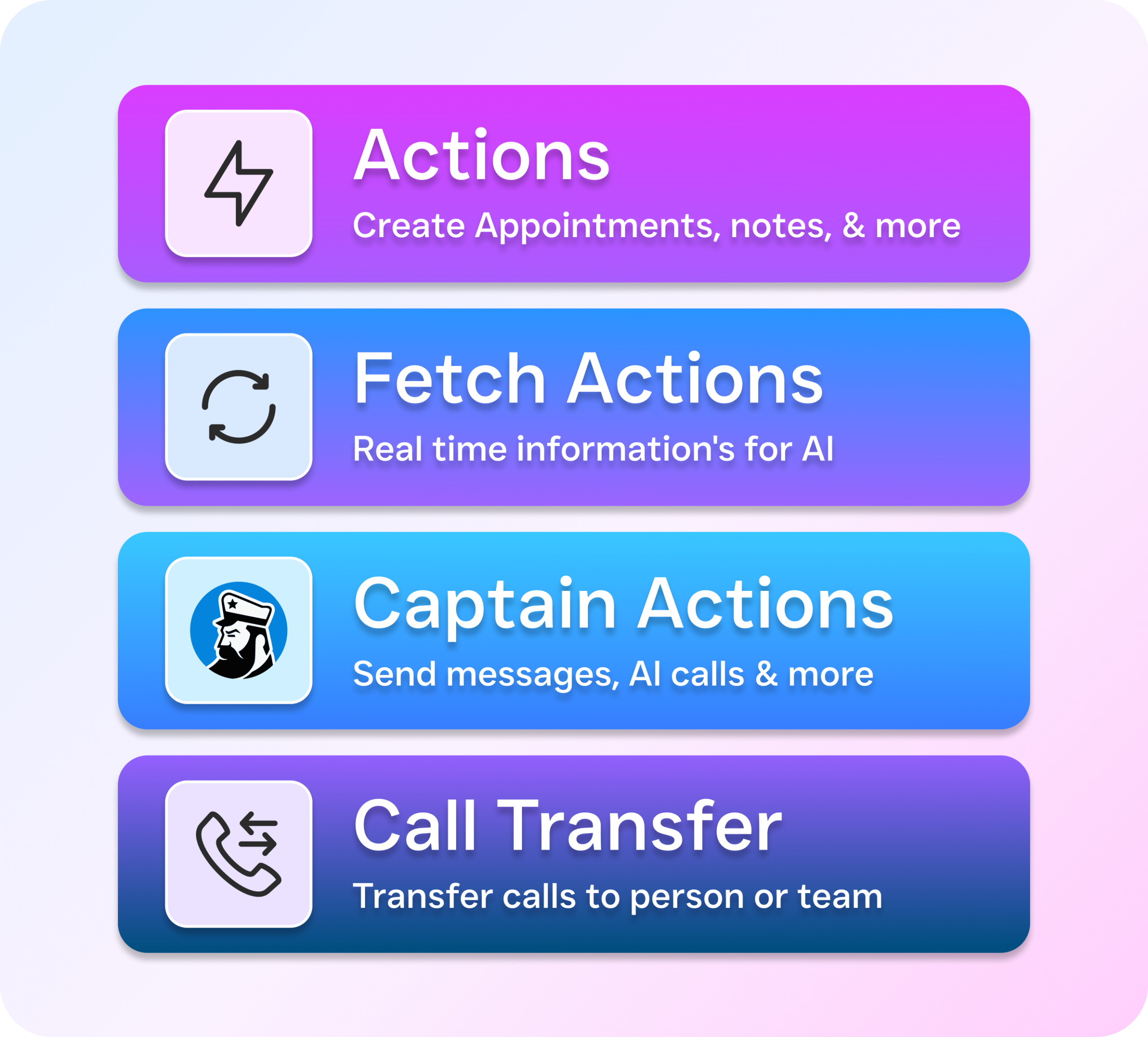
The Workflow Automation builder handles the follow-up sequences that convert leads into booked jobs. Quote follow-ups, appointment reminders, review requests, and rebooking campaigns all run automatically. With 50+ integrations including popular field service tools, SalesCaptain fits into the systems you’re already using.
Pricing starts with a free plan for single-location businesses. Paid plans run $159 per month per location. AI call minutes are billed at $0.12 per minute, which makes it dramatically cheaper than human answering services for most cleaning companies. When you calculate the true cost of missed calls, the platform typically pays for itself within the first week of use.
Key Takeaways
Reducing missed calls for your cleaning company comes down to three principles: answer every call (even when you can’t), respond instantly to every missed connection, and automate the follow-up that turns a lead into a customer. AI phone agents, missed-call text-back, structured call flows, and unified communication aren’t futuristic concepts. They’re available now. They’re affordable. And they’re purpose-built for service businesses.
The cleaning companies that figure out how to reduce missed calls will win more jobs without spending more on ads. They’ll convert a higher percentage of the leads they’re already generating. And they’ll do it without hiring additional staff or working longer hours. That’s not incremental improvement. It’s a fundamental competitive advantage.
Frequently Asked Questions
How many calls does the average cleaning company miss per week?
It varies by size, but most small cleaning businesses miss 30% to 60% of inbound calls, according to industry data on missed business calls. During peak hours and after-hours periods, that number climbs even higher. If you’re fielding 40 calls a week and missing half, that’s 20 potential customers you never spoke to.
Does missed-call text-back actually work for cleaning leads?
Yes. Cleaning service inquiries are high-intent. The person calling wants to book soon. An instant text response acknowledges their need and opens a conversation they can continue at their pace. Most leads will respond to a text within minutes. Even if they’ve already called another company, you’re back in play.
Can an AI phone agent handle cleaning-specific questions?
Absolutely. You configure the AI agent with your service details, pricing ranges, service areas, and booking availability. It can answer questions like “Do you do move-out cleans?”, “What’s your hourly rate?”, and “Are you available this Saturday?” with accurate, up-to-date information specific to your business.
Is it better to hire a receptionist or use an AI answering system?
For most cleaning companies under $1M in revenue, an AI system delivers better coverage at a fraction of the cost. A receptionist covers about 24% of the week. An AI agent covers all of it. If your business handles complex sales conversations or high-value commercial contracts, a hybrid approach often works best. Let AI handle initial answering and routing. Humans close the deal.
How quickly can I set up a missed call reduction system?
With a platform like SalesCaptain, most cleaning companies go live within a day. You’ll set up your call flow. Configure your AI agent’s knowledge base with your services and pricing. Connect your calendar for appointment booking. Turn on missed-call text-back. There’s no coding required. The drag-and-drop builder makes it straightforward for non-technical users.
Ready to see it in action?
See how cleaning companies use SalesCaptain to capture every missed call and book more jobs.
Book a Free Demo →See How SalesCaptain Can Help Your Cleaning Business
Stop losing leads to missed calls. SalesCaptain’s AI Phone Agent, missed-call text-back, and unified inbox are built for service businesses like yours. Start with a free plan and see the difference in your first week.