
AI-powered customer experience marketing (CXM) platform that helps local businesses win.


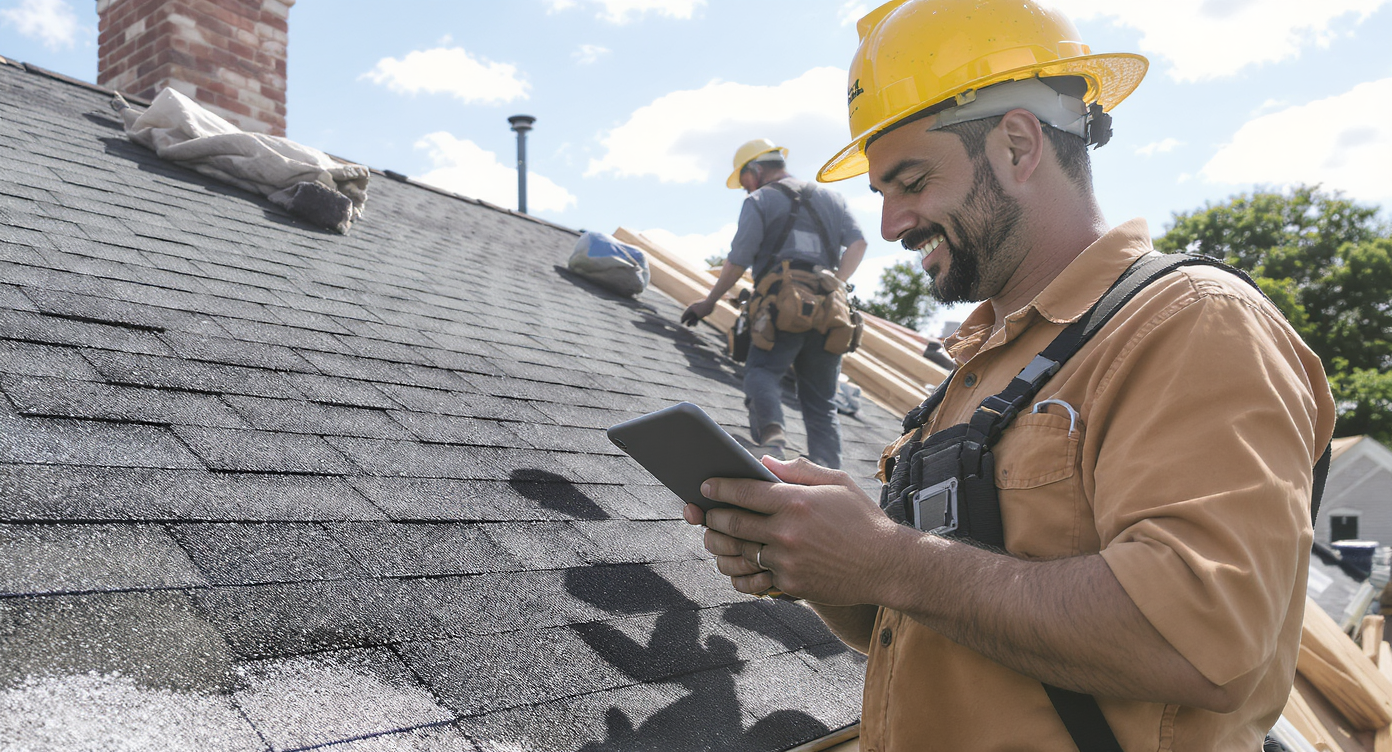
A homeowner in Seattle just had their roof replaced. They’re thrilled with the work, they paid on time, and they even told a neighbor about your crew. But three weeks later? Still no Google review. That glowing recommendation lives in a single conversation instead of on your business profile where hundreds of potential customers could see it. Learning how to get more reviews for roofing companies isn’t about badgering customers. It’s about building a simple, repeatable system that captures feedback while the experience is still fresh. Sound familiar?
How to get more reviews for roofing companies involves building a systematic process to request feedback at the right time and make leaving reviews effortless. This means identifying when customers are most satisfied, simplifying the review process, and following up consistently across Google, Yelp, and Facebook.
Quick Answer
Roofing companies get more reviews by systematically requesting them after job completion through email, text, and phone follow-ups, offering multiple review platforms like Google, Yelp, and HomeAdvisor, making the process simple with direct links, incentivizing reviews with discounts or contests, and training staff to ask satisfied customers in person before leaving the job site.
What Is a review generation strategy for Roofing Companies?
A review generation strategy is a structured process for consistently collecting customer feedback on platforms like Google, Yelp, and Facebook. For roofing contractors, it goes beyond just asking, “Hey, can you leave us a review?” It means identifying the right moment in your workflow, making the process effortless for the homeowner, and following up when life gets in the way.
Free weekly newsletter
Growth tips for home service businesses
Every Tuesday — actionable ideas to get more leads, reviews, and repeat customers. No fluff.
Most roofers understand that reviews matter. Fewer have an actual system in place. A strategy turns an occasional favor into a predictable part of your business operations, much like scheduling inspections or ordering materials. Without one? You’re relying on chance, and chance doesn’t scale.
Why Online Reviews Matter More Than Ever for Roofers
Trust Is the Foundation of Every Roofing Sale
Roofing is a high-ticket, high-trust purchase. Homeowners are spending thousands of dollars on something they can’t easily inspect themselves. Before they call you, they’re reading what other homeowners have to say. A strong review profile doesn’t just look nice. It directly influences whether someone picks up the phone or scrolls to your competitor.
According to the National Roofing Contractors Association, the roofing industry generates tens of billions in annual revenue across the U.S., and competition is fierce in metro areas across Washington, Texas, Florida, and beyond. Reviews are how smaller, local companies compete with larger outfits that have bigger ad budgets.
Local Search Visibility Depends on Reviews
Google’s local pack algorithm weighs review quantity, quality, and recency when deciding which businesses to show. So if a homeowner searches “roof repair near me,” the contractors with more recent, higher-rated reviews tend to appear first. That visibility gap compounds over time. Businesses with 50+ reviews attract more clicks, which generates more calls, which leads to more jobs and more reviews. Meanwhile, a contractor with six reviews from 2022 slowly disappears from search results.
Conversion Rates Climb with Social Proof
Even if someone finds your website through a paid ad, they’ll often check your Google profile before requesting a quote. A profile with dozens of detailed, recent reviews converts far better than one with a handful of vague ratings. Think about your own behavior as a consumer. Would you hire a plumber with two reviews? Homeowners feel the same way about roofers.
📺 Watch: How to Automate Review Requests After a Job
Proven Strategies to Get More Roofing Reviews
Ask at the Right Moment
Timing is everything. The best moment to ask for a review is right after the customer has experienced a positive outcome, not weeks later when the excitement has faded. For roofing, that’s typically one of these touchpoints:
- Right after the final walkthrough when the homeowner sees the finished roof and expresses satisfaction
- Immediately after you resolve a warranty claim because the relief and gratitude are highest at that point
- When the customer compliments your crew either in person, by text, or on a phone call
Don’t wait for a “good time.” There isn’t one. The window closes fast. According to Biz2Credit’s 2024 small business research, service businesses that capture customer sentiment quickly tend to retain stronger reputations over time.
Make It Extremely Easy
Every extra step between your request and the published review is a point where you lose people. Sending a customer to “just search for us on Google and click the review button” is asking too much. Instead, give them a direct link that opens the review form immediately. Here’s how to reduce friction:
- Send a direct Google review link via text message within minutes of project completion
- Include the link in your invoice or receipt email so it’s attached to a document they’re already opening
- Use QR codes on printed materials like leave-behind cards or yard signs at the job site
- Keep the request to one tap on mobile because most homeowners will respond from their phone, not a desktop
Short, direct messages work best. Something like: “Thanks for choosing us for your roof! Would you mind sharing your experience? Here’s a quick link.” That’s it. No essay required.
Use Simple, Clear Language
Many customers hesitate because they don’t know what to write. You can help without scripting their review. Suggest they mention specific details: the crew’s professionalism, how quickly the job was done, or how you handled cleanup. For example, “If you’ve a moment, a sentence or two about your experience really helps other homeowners find a contractor they can trust.” That framing shifts the ask from “do me a favor” to “help other people like you.”
Follow Up Without Being Pushy
Life gets busy. A homeowner who genuinely intended to leave a review might forget within an hour. One polite follow-up text a few days later is perfectly appropriate. Two is the maximum. Beyond that, you risk annoying someone who was otherwise happy with your work. Persistence without pressure is the key.
Common Problems Roofers Face When Collecting Reviews
Even with good intentions, roofing contractors run into predictable obstacles. Understanding these helps you build a system that actually works rather than one that falls apart after two weeks.
- Crews forget to ask. Your field team is focused on the job, not marketing. Without a process, asking for reviews depends on individual initiative, and that’s inconsistent.
- Customers say they will but don’t. Verbal commitments don’t translate to published reviews. People get distracted the moment they walk back inside.
- Negative reviews feel disproportionate. Unhappy customers are more motivated to leave feedback than satisfied ones. If you aren’t actively collecting positive reviews, the negatives carry outsized weight.
- No one monitors or responds. An unanswered review, whether positive or negative, signals to potential customers that you don’t care. Response matters almost as much as the review itself.
- Manual processes break down. Relying on a spreadsheet or one person’s memory to send review requests doesn’t scale, especially during busy season when you’re completing multiple jobs per day.
According to research on the cost of missed business calls, service businesses already lose significant revenue from communication gaps. The same principle applies to reviews. Every satisfied customer who doesn’t leave a review is a missed opportunity for social proof that could have generated future leads.
Building a Review System That Runs on Autopilot
Step 1: Map Your Customer Touchpoints
Identify every interaction point in your workflow: initial call, estimate visit, contract signing, project start, completion walkthrough, and follow-up. Decide which moments are best suited for a review request. For most roofers, the completion walkthrough and the first follow-up call are the highest-conversion moments.
Step 2: Create Templates That Sound Human
Draft two or three text message templates and one email template. Keep them conversational, short, and direct. Include the homeowner’s first name and a reference to the specific work you did. “Hi Sarah, glad we could get your roof taken care of before the rain. If you’ve 30 seconds, a quick review helps us out a ton: [link].” That’s the kind of message that actually gets read.
Step 3: Automate the Delivery
This is where most roofing companies stall. Manually sending texts after every job is realistic when you’re doing three projects a week. At ten or twenty, it falls apart. You need a system that triggers the review request automatically once a job is marked complete. Workflow automation tools can handle this by sending a text at a set time after a status change in your CRM or project management tool.
Step 4: Monitor and Respond to Every Review
Set up notifications so you know the moment a new review appears. Respond to positive reviews with a brief thank-you. Respond to negative reviews professionally and promptly, acknowledging the concern and offering to resolve it offline. According to data on unanswered business communications, failing to respond to customer outreach, whether it’s a call or a review, erodes trust quickly.
How SalesCaptain Helps
Roofing companies that use SalesCaptain can automate the entire review collection process without adding another tool to their stack. The platform’s Workflow Automation builder lets you create trigger-based sequences that send a review request via SMS the moment a job is marked complete, with a follow-up reminder a few days later if no review appears. Since SalesCaptain connects with tools like HousecallPro, ServiceFusion, and Zapier, it plugs into the project management systems you’re already using.
Beyond review requests, SalesCaptain’s AI Phone Agent answers every inbound call 24/7, so the leads generated by your reviews don’t go to voicemail. Research from SchedulingKit on missed calls and revenue loss shows that unanswered calls cost service businesses thousands each month. SalesCaptain’s Unified Inbox keeps every conversation, whether it started as a text, call, webchat, or social media message, in one place so your team can track review-related follow-ups alongside regular customer communication.
The AI Chat Agents handle missed-call text-back automatically, which means even after-hours inquiries get an instant response. For a roofing company fielding storm-damage calls at all hours, that speed matters. And because SalesCaptain supports Payments via Text and high-volume SMS, you can collect final payments and request reviews in the same conversation thread.
Key Takeaways
Getting more reviews for your roofing company comes down to three things: timing, simplicity, and consistency. Ask when the customer is happiest, make the process one tap on their phone, and automate delivery so it happens on every single job. Don’t rely on memory or manual effort during your busiest season.
Reviews compound. Each one improves your local search ranking, builds trust with new prospects, and creates a competitive advantage that’s hard for other contractors to replicate quickly. The businesses that win aren’t necessarily the best roofers in town. They’re the ones with the most visible proof that they do great work. Build the system now, and let it work for you year-round.
Frequently Asked Questions
How many Google reviews does a roofing company need to rank well locally?
There’s no magic number, but aiming for more reviews than your top local competitors is a practical benchmark. In most metro areas, roofing companies with 40 to 100+ recent reviews tend to dominate the local pack. Recency matters as much as quantity, so a steady stream of new reviews outperforms a large batch from years ago.
Is it okay to offer incentives for reviews?
Google’s guidelines prohibit offering money, discounts, or gifts in exchange for reviews. You can remind and encourage customers, but tying a reward to the review itself violates platform terms and can result in reviews being removed. Focus on making the process easy rather than bribing for participation.
How soon after a roofing job should I ask for a review?
Within 24 hours of project completion is ideal. The homeowner’s satisfaction is highest right after the walkthrough. If you wait more than a week, your conversion rate drops significantly. Automated text messages sent the same day consistently outperform delayed manual requests.
What should I do about negative reviews?
Respond promptly, professionally, and without defensiveness. Acknowledge the customer’s concern, apologize for their experience, and offer to resolve the issue offline. Potential customers reading the exchange will judge you more on your response than on the complaint itself. A thoughtful reply to a negative review can actually build trust.
Can I ask customers to leave reviews on multiple platforms?
You can, but it’s more effective to focus on one platform per request. Google carries the most weight for local search visibility, so prioritize it. If you also want Yelp or Facebook reviews, rotate which platform you link to or ask different customer segments to review on different sites. Splitting one customer’s attention across platforms usually means they don’t review on any of them.
Ready to see it in action?
See how roofing companies use SalesCaptain to automatically request reviews from every customer.
Book a Free Demo →See How SalesCaptain Can Help
SalesCaptain gives roofing companies the tools to automate review requests, respond to every lead instantly, and manage all customer communication from a single inbox. With workflow automation, AI phone and chat agents, and integrations with the tools you already use, you can collect more reviews without adding more work to your plate. Visit SalesCaptain and start building a review system that runs on autopilot.