
AI-powered customer experience marketing (CXM) platform that helps local businesses win.


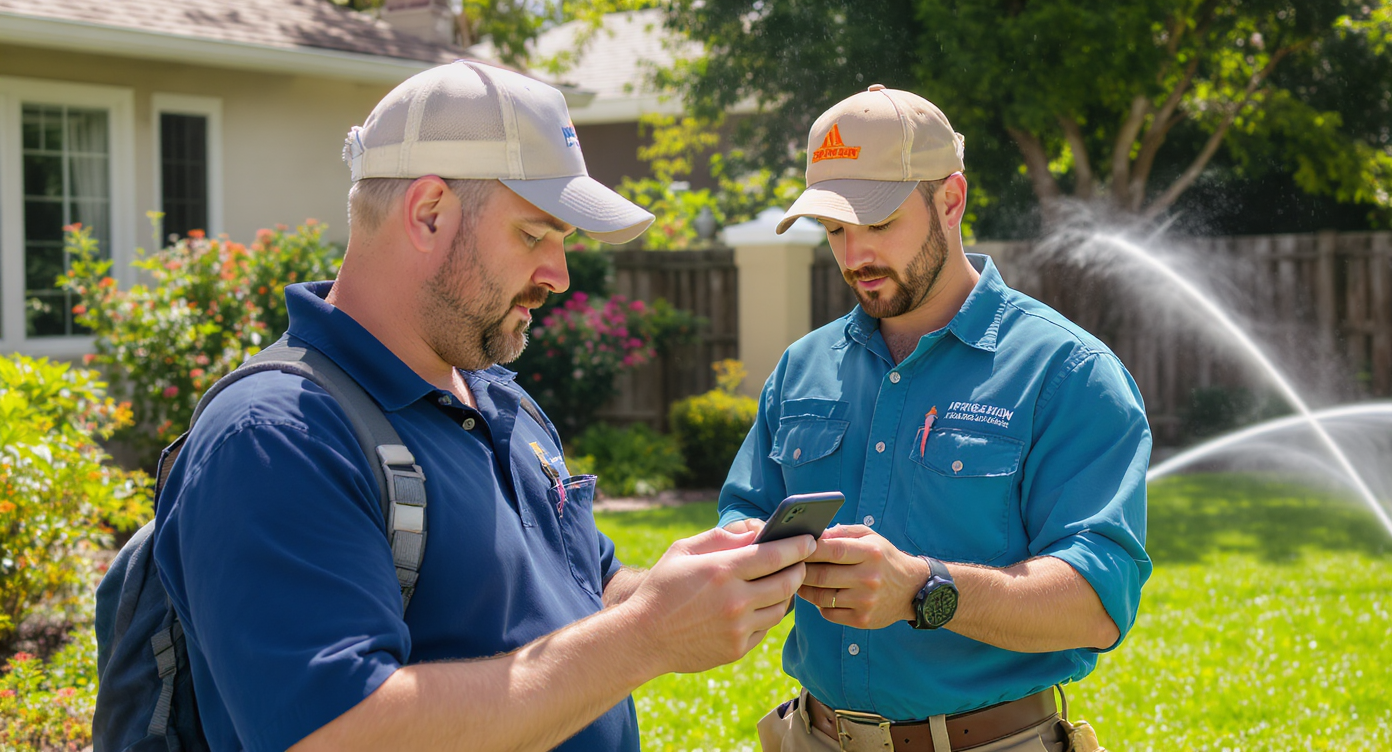
A homeowner fills out your irrigation estimate form at 9:47 PM on a Tuesday. By the time your office opens at 8 AM, they’ve already booked with a competitor who texted back in two minutes. Sound familiar? That scenario plays out constantly for irrigation companies during peak season, and it’s costing thousands in lost revenue every month.
Lead response automation for irrigation companies uses software to instantly respond to incoming leads via phone, text, email, or web forms—before competitors do. Automated systems capture contact details, send immediate replies, and book appointments 24/7, helping seasonal businesses stop losing customers to faster-responding competitors.
What Is Lead Response Automation for Irrigation Companies?
Lead response automation for irrigation companies is the practice of using software to instantly respond to incoming leads, whether they arrive by phone call, web form, text message, or social media. Instead of relying on a person to manually check voicemails or emails and call back hours later, an automated system handles that first touchpoint within seconds. It can send a text, answer a call, capture contact details, and even book an estimate appointment. All before a human gets involved.
For irrigation businesses specifically, this matters because demand is deeply seasonal. Spring and early summer bring a flood of inquiries for new installations, sprinkler repairs, and winterization scheduling. According to speed-to-lead research from GreetNow, the odds of qualifying a lead drop dramatically after the first five minutes of contact. In an industry where your busiest months also mean your crews are in the field and your front desk is overwhelmed, automation closes that gap fast.
Why Speed Matters More for Irrigation Businesses Than Most Industries
Irrigation work is inherently local and competitive. When a homeowner notices a broken sprinkler head or wants to get a new system installed before summer, they typically reach out to two or three companies at once. The first business to respond almost always wins the job. Not because they’re cheaper or better, but simply because they answered first.
The Real Cost of Slow Response
Most irrigation companies don’t realize how much revenue slips through the cracks. Research from Aira shows that a significant percentage of business calls go unanswered, costing small businesses tens of thousands annually. For an irrigation company running $300-$800 service calls and $2,000-$10,000 installations, even a handful of missed leads per week adds up fast. Really fast.
The problem gets worse during peak season. Your technicians are running from job to job, your office manager is juggling scheduling and invoicing, and the phone keeps ringing. Every call that goes to voicemail is a potential customer who’ll move on. Leadferno’s research on web form lead management found that many businesses take hours or even days to follow up on form submissions. In irrigation, where the competition is just a quick Google search away, that delay kills your chances.
Seasonal Demand Creates Unique Pressure
Unlike a plumber who gets steady calls year-round, irrigation companies often earn 60-70% of their annual revenue in just four to five months. According to the National Association of Landscape Professionals, landscape and irrigation businesses face acute labor shortages during peak months. Hiring a dedicated receptionist for seasonal overflow isn’t practical when margins are already tight. But automation solves this without adding headcount.
How Lead Response Automation Actually Works for Irrigation Businesses
Setting up lead response automation isn’t complicated. But it does require thinking through the customer journey. Here’s what a well-built system handles for a typical irrigation company.
Capturing Every Inbound Lead
The first job is making sure no lead falls through the cracks, regardless of how it comes in. A solid automation setup covers all your inbound channels:
- Phone calls: An AI phone agent answers every call, including after-hours and weekends, with a natural-sounding voice that can answer common questions about your services, pricing ranges, and service area.
- Web forms: When someone submits a request on your website, an automated text goes out immediately confirming receipt and offering to schedule an estimate.
- Missed call text-back: If a call does go unanswered, an automatic SMS fires within seconds letting the caller know you received their call and asking how you can help.
- Social media messages: Inquiries through Facebook or Instagram get instant replies instead of sitting unread for days.
Each of these touchpoints feeds into one central place where your team can see every conversation. Nothing gets lost between a sticky note and a voicemail box.
Qualifying and Routing Leads Automatically
Not every inquiry deserves the same response. A commercial property manager asking about a 20-zone irrigation install is completely different from someone wanting a single sprinkler head replaced. Good automation qualifies leads by asking the right questions upfront, either through the AI phone agent’s conversation or through an automated text sequence.
For example, your system can ask about property type (residential or commercial), the scope of work, and the preferred timeframe. Based on those answers, it routes the lead to the right person on your team or books them directly into your calendar for an estimate. This saves your salespeople from wasting time on calls that don’t match your service profile.
Following Up Without Manual Effort
Here’s where most irrigation companies really struggle. Someone calls, you give them a quote, and then nobody follows up. The lead goes cold. But automated workflows fix this by triggering follow-up sequences after key events:
- Estimate sent but no response after 48 hours? An automated text checks in.
- Appointment booked? A confirmation and reminder go out automatically.
- Job completed? A follow-up asks for a review and mentions your maintenance plans.
- Winterization season approaching? A campaign goes out to your entire customer database.
These workflows run in the background while your crew focuses on installations and repairs. No sticky notes, no forgotten callbacks, no revenue left on the table.
Best Practices for Irrigation Companies Getting Started
Automation works best when it’s thoughtful, not robotic. Your customers should feel like they’re getting fast, professional service, not talking to a machine. Here are the practices that separate effective automation from the kind that annoys people.
Personalize Your Automated Messages
Generic responses like “Thanks for contacting us, we’ll get back to you soon” don’t cut it anymore. Your automated texts and chat responses should mention your company name, reference the specific service they inquired about, and give a clear next step. Something like “Hi [Name], thanks for reaching out to Green Valley Irrigation about your sprinkler repair. We’d love to get a tech out to you this week. Does Thursday morning work?” feels real and drives action.
Set Up After-Hours Coverage First
If you’re going to automate one thing, start with after-hours response. CallJolt’s analysis of missed call costs confirms that a large share of small business calls come in outside regular hours. Irrigation customers often notice problems in the evening when they’re home, or they browse for contractors on weekends. An AI phone agent or automated text-back during these windows captures leads your competitors are sleeping on.
Integrate With Your Existing Tools
Automation shouldn’t create another system your team has to check. It should plug into the tools you already use. Look for platforms that connect with your field service software like ServiceFusion or HousecallPro, your CRM, and your calendar. When a lead books an estimate through automation, it should appear on the same schedule your dispatcher already manages. No double entry, no confusion.
Track What’s Working
Measure your response time before and after implementing automation. Track how many leads convert from each channel. Pay attention to which automated messages get replies and which don’t. AI lead generation benchmarks from The Starr Conspiracy show that businesses using AI-driven lead management see measurable improvements in conversion rates. But you won’t know your specific ROI unless you’re tracking it.
How SalesCaptain Helps
SalesCaptain was built for exactly this kind of challenge. It’s a unified communication platform that combines an AI Phone Agent, AI Chat Agents, a full business phone system, and workflow automation in one place. Designed specifically for service businesses like yours.
The AI Phone Agent answers calls 24/7 with a natural-sounding voice. It can handle FAQs about your services and service area, qualify leads by asking about property type and job scope, block spam calls, and book estimate appointments directly on your calendar. After hours, weekends, during your busiest days. It never misses a call. And the missed call text-back feature sends an immediate SMS to any caller who doesn’t connect, so even when your crew is in the field, every lead gets a response within seconds.
All conversations land in a Unified Inbox, whether they come from phone calls, texts, web chat, Facebook Messenger, or Instagram DMs. Your team sees everything in one place with full contact history and AI-generated summaries of every call. The drag-and-drop Workflow Automation builder lets you create follow-up sequences, appointment reminders, and seasonal outreach campaigns. No coding required. And with native integrations for ServiceFusion, HousecallPro, Zapier, and over 50 other tools, it fits right into the systems you already run.
Pricing starts with a free plan for one location, with the Business plan at $159/month per location and AI calls at $0.12/minute. For a multi-crew irrigation company, that’s a fraction of what a part-time receptionist costs.
Key Takeaways
Lead response automation for irrigation companies isn’t a luxury. It’s a competitive necessity, especially during peak months when every missed call represents hundreds or thousands of dollars in lost work. Speed wins in this industry, and automation is the only reliable way to respond in seconds when your team is out in the field.
The most effective approach combines instant response across every channel, intelligent lead qualification, and automated follow-up workflows that keep prospects engaged. All without burdening your staff. Start with after-hours coverage, integrate with your field service tools, and personalize your messages so customers feel like they’re dealing with a professional operation, not a robot.
Irrigation companies that automate their lead response don’t just capture more leads. They close more jobs, reduce their cost per acquisition, and grow through their busiest seasons without hiring and training seasonal staff.
Frequently Asked Questions
Will automated responses feel impersonal to my irrigation customers?
Not if you set them up correctly. Modern AI agents sound natural and conversational. You can customize the messaging to reflect your brand, mention specific services like sprinkler repair or drip irrigation installation, and include clear next steps. Most customers actually prefer a fast, helpful automated response over waiting hours for a human callback.
Can lead response automation handle both residential and commercial irrigation inquiries?
Yes, it can. A well-configured system asks qualifying questions to distinguish between a homeowner needing a backflow test and a property manager requesting a bid on a 50-zone commercial system. Based on the answers, it routes each lead differently. Smaller jobs get booked directly, while larger opportunities get flagged for your sales team to handle personally.
How does automation work during peak irrigation season when call volume spikes?
That’s exactly when automation shines. An AI phone agent handles unlimited concurrent calls without hold times or busy signals. Every caller gets answered immediately, qualified, and either booked or routed appropriately. Your office staff can then focus on scheduling, dispatching, and managing jobs. No more racing to answer every ring.
What if a customer has a complex question the automation can’t answer?
Good automation systems are designed to recognize when a conversation needs a human. The AI agent captures the customer’s details and question, then routes the call or flags the conversation for your team. The customer still gets an instant response and confirmation that someone will follow up. Far better than voicemail.
How quickly can an irrigation company set up lead response automation?
With a platform designed for service businesses, most companies can have basic automation running within a day. Setting up an AI phone agent, missed call text-back, and a simple follow-up workflow doesn’t require technical expertise. More complex workflows, like seasonal marketing campaigns or multi-step estimate follow-ups, might take a few more days to fine-tune. But the core lead capture starts working immediately.
See How SalesCaptain Can Help Your Irrigation Business
Stop losing leads to slow response times. SalesCaptain gives your irrigation company 24/7 AI-powered call answering, instant text-back, and automated follow-ups. All from one platform built for service businesses.
Start your free plan at SalesCaptain.com and capture every lead this season.