
AI-powered customer experience marketing (CXM) platform that helps local businesses win.



After Hours Call Handling for Small Business: The Complete Guide to Never Missing a Customer Again
After-hours customer inquiries represent a critical yet often overlooked opportunity for small businesses. Consider a common scenario: it is 7:30 PM on a weekday, and a homeowner experiences a burst pipe. They urgently contact multiple plumbers in the area. If one business fails to answer, even after several rings, the caller quickly moves on to the next available option. The opportunity is lost—not because of service quality, but due to inaccessibility at a crucial moment. This situation is not isolated. It occurs thousands of times daily across various service-based industries. Despite being highly preventable, missed after-hours calls continue to result in significant revenue loss for small businesses.
In today’s market, after-hours call handling is no longer a luxury; it is a fundamental requirement for remaining competitive. Customer expectations have evolved, with immediacy now a standard. Whether operating a dental clinic, a roofing service, or a legal practice, businesses must recognize that after-hours calls often come from high-intent customers—individuals with urgent needs and a readiness to engage services. Accordingly, businesses must evaluate their accessibility beyond standard operating hours. The key question is not whether after-hours inquiries occur, but whether the business is equipped to respond effectively—or is instead allowing valuable opportunities to go unrealized.
What Is After Hours Call Handling for Small Business?
After-hours call handling refers to the systems and processes a business uses to manage incoming phone calls outside of standard operating hours. This includes evenings, weekends, holidays, and early mornings. For many small businesses, this period typically spans from 5:00 PM to 9:00 AM on weekdays, in addition to full-day coverage on Saturdays and Sundays. The primary objective is to ensure that every caller receives a timely and professional response, even when staff are not physically present in the office.
Historically, small businesses have had limited options for addressing after-hours communication. A common approach was to forward business calls to a personal mobile device, requiring owners or staff to remain constantly available and often compromising their personal time and work-life balance. You could hire a third-party answering service staffed by human operators. Alternatively, businesses could allow calls to route to voicemail, relying on customers to leave messages for follow-up. However, each of these approaches involves clear trade-offs. Voicemail, in particular, is often perceived by callers as an unresponsive or impersonal endpoint. As a result, many potential customers choose not to leave a message and instead contact a competitor who can provide immediate assistance. Today, however, the landscape has evolved significantly. Thanks to AI-powered phone agents, small businesses can now handle after-hours calls with natural conversations, appointment booking, FAQ answers, and lead qualification, all without human involvement. This shift has democratized professional after-hours coverage. Even solo operators and businesses with tight budgets can now compete. According to Voctiv’s guide to out-of-hours call handling, 24/7 availability is now the baseline expectation for service businesses of all sizes.
Why After Hours Calls Matter More Than You Think
The Real Cost of Missed Calls
Many small business owners significantly underestimate both the volume of missed calls and the revenue those missed opportunities represent. It is common to rationalize this gap by assuming that customers will call back the next day or leave a voicemail if the matter is important. However, available data and customer behavior trends indicate otherwise. According to research from Phone2.io on the true cost of missed calls, the majority of callers who reach voicemail won’t leave a message.A substantial number of prospective customers will simply contact a competitor instead. In service-based industries—where a single engagement may be worth hundreds or even thousands of dollars—missing even a small number of calls each week can result in meaningful revenue loss.
When Your Customers Are Actually Calling
There is a fundamental misalignment between standard business operating hours and the times when customers are most available to make calls. In practice, many individuals are unable or unwilling—to place non-urgent service calls during the middle of their own workday. Instead, they tend to reach out during more convenient moments, such as lunch breaks, commutes, or later in the evening after personal responsibilities have been addressed. As a result, a significant portion of inbound calls naturally occurs outside the traditional 9:00 AM to 5:00 PM window.
This disparity is even more pronounced in emergency-driven industries. Service needs do not adhere to business hours: plumbing failures can occur late at night, roofing issues often arise during weekend storms, and acute dental pain demands immediate attention regardless of the time. In such cases, customer urgency is high, and the expectation for a prompt response is even greater.
According to the U.S. Small Business Administration, small businesses that respond quickly to customer inquiries have a measurable advantage in conversion rates. The businesses that answer these after-hours calls, or have a system that handles them intelligently, capture customers at their most motivated and urgent moment. That urgency translates directly into higher conversion rates compared to callbacks made the next morning, when the crisis may have already passed or a competitor solved it.
Your Options for After Hours Call Handling
Voicemail: The Default (and Worst) Option
Voicemail is often the default starting point for small businesses. It is cost-free, requires no setup, and operates passively in the background. However, its hidden costs can be substantial. Many callers are reluctant to leave voicemail messages and will simply disconnect upon hearing a recorded prompt. Even when messages are left, the delay in response creates a critical gap—during which the caller may already have secured services elsewhere. Moreover, voicemail offers no real-time engagement. It cannot answer questions, schedule appointments, or provide reassurance to a concerned or time-sensitive caller. For businesses that rely heavily on inbound phone leads, voicemail functions less as a solution and more as a barrier—effectively signaling unavailability and prompting customers to seek alternatives.
Call Forwarding to Your Personal Phone
Many sole proprietors choose to forward their business calls to a personal mobile device after hours to ensure availability. While this approach can improve responsiveness, it carries significant personal and operational drawbacks. From a personal standpoint, it effectively places the business owner on call at all times, making it difficult to maintain clear boundaries between professional and personal life. Over time, this can contribute to fatigue, increased stress, and strain on family or personal commitments. From a professional perspective, call quality may also be compromised. Responding to business inquiries in informal or distracting environments—such as during meals, family activities, or late at night—can detract from the level of professionalism customers expect. Although this method may be workable in the early stages of a business, it is generally not a sustainable long-term solution.
Traditional Answering Services
Human answering services have been a longstanding solution for managing after-hours calls. They address the fundamental issue by ensuring that a live representative answers incoming calls and records messages. More advanced providers may also route urgent inquiries, follow predefined scripts, and share basic business information with callers. However, these services present notable limitations for small businesses. Their pricing models—typically based on per-call or per-minute usage—can lead to rapidly increasing costs during periods of high call volume. Additionally, because operators often manage calls for multiple businesses simultaneously, they may lack in-depth knowledge of a specific company’s services, pricing, or scheduling availability. As a result, while they can effectively capture messages, their ability to provide detailed assistance is limited. In most cases, they are not equipped to book appointments directly into a business’s calendar or address more complex customer inquiries in real time. As Dialzara’s comparison of AI answering services notes, traditional services are increasingly being outperformed by AI alternatives. Better consistency. Lower cost. No contest.
AI-Powered Phone Agents
The most recent development in after-hours call management—and one that is rapidly becoming the standard—is the use of AI-powered phone agents. These systems are capable of answering calls with natural-sounding voices, engaging in fluid, conversational interactions, and taking meaningful actions on behalf of the business. Unlike voicemail or traditional answering services, AI agents are designed to understand caller intent. They can respond to frequently asked questions, provide information about services, check real-time availability, and schedule appointments directly within a business’s calendar. Additionally, they can qualify leads based on predefined criteria, ensuring that only relevant inquiries are escalated or prioritized. Advancements in this technology over the past two years have been substantial. In many cases, callers are unable to distinguish between an AI agent and a human representative. As a result, small businesses can now access a level of responsiveness and operational efficiency previously associated with larger enterprises—without incurring comparable costs or expanding their workforce.
Best Practices for Setting Up After Hours Call Handling
Define What Happens With Each Type of Call
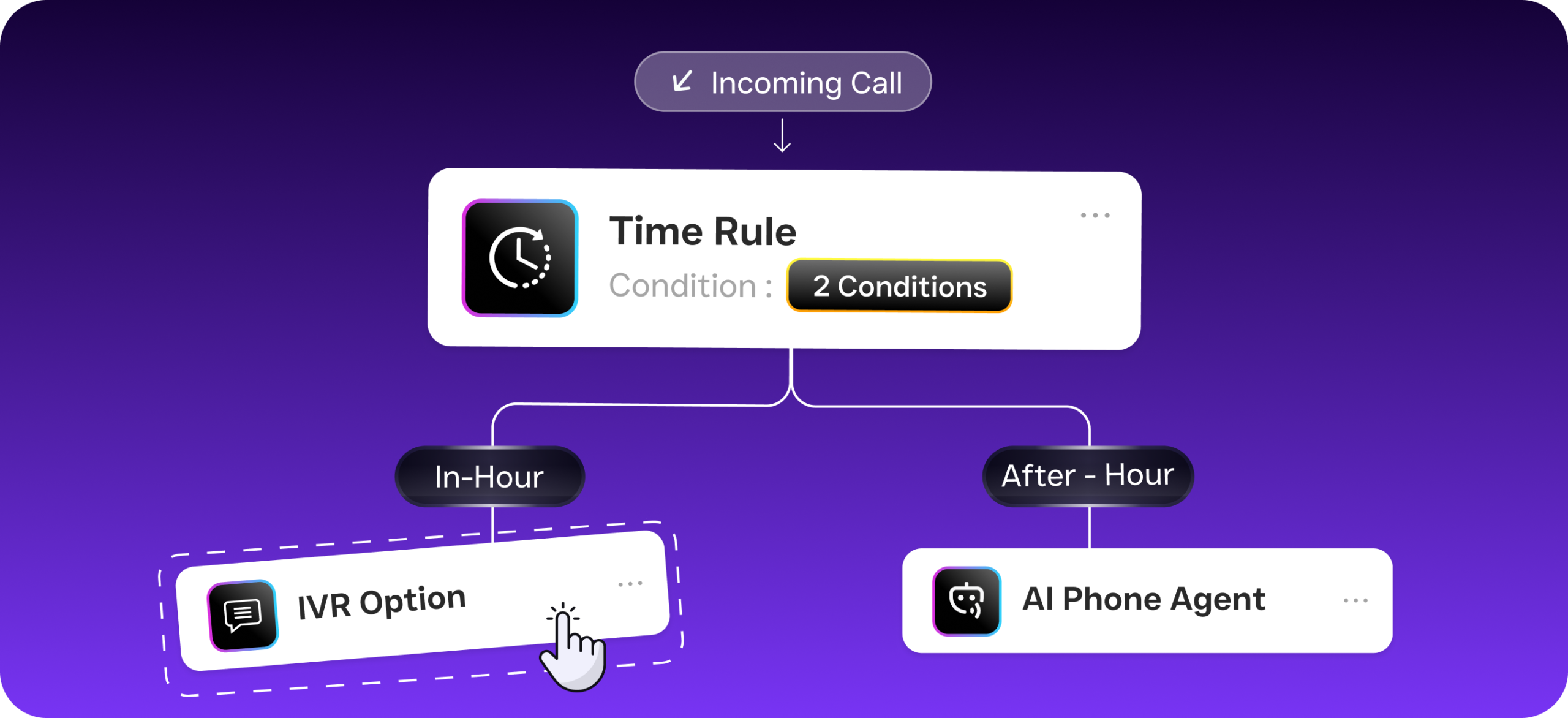
Prioritize Speed and Professionalism
The single most critical element of effective after-hours call handling is responding promptly with a professional and helpful interaction. Speed is paramount: research consistently shows that the faster a lead is engaged, the higher the likelihood of conversion. A caller who receives an immediate, informative response—even from an automated system—is far more likely to schedule services than one who must wait hours for a return call. Your greeting should be clear, warm, and professional, stating your business name upfront and quickly guiding the caller toward assistance. Avoid long menu trees or overly complicated IVR systems that can frustrate or confuse callers. The objective is to make each caller feel acknowledged and supported, not burdened by unnecessary obstacles. According to NextPhone’s compilation of AI customer service statistics, customer satisfaction is closely tied to response time. Businesses that respond within minutes dramatically outperform those that take hours.
Capture Information, Don’t Just Take Messages
The difference between a merely adequate after-hours system and an exceptional one lies in how the call is handled. Simply taking a message—e.g., “John called about a roof leak, here’s his number”—meets only the minimum requirement. A truly effective system goes further: it collects the caller’s full name, contact information, the nature of their request, urgency level, service location, and preferred appointment times. This information is then automatically integrated into your CRM or scheduling platform, allowing your team to follow up first thing in the morning—or immediately for urgent matters. Comprehensive data capture not only enables faster, more confident follow-up but also reinforces your business’s professionalism. Integration with platforms such as HubSpot, Salesforce, or industry-specific tools like HousecallPro or ServiceFusion ensures a seamless workflow from call to action.
Test Your System Regularly
Once your after-hours call handling system is in place, it is important not to assume it is functioning perfectly and then forget about it. Regular testing is essential. At least once a month, call your own business line after hours to experience the process from a customer’s perspective. Evaluate key aspects: Is the greeting clear and professional? Does the system respond appropriately to different types of requests? Are appointments being recorded correctly in your calendar? Are messages delivered promptly to the correct team member? Even minor issues—a broken integration, outdated business hours, or a confusing menu option—can quietly result in lost customers over weeks or months. To ensure objectivity, consider asking a friend or family member to make a test call as well. Fresh perspectives often reveal issues that you may have become accustomed to or overlooked. Regular testing allows problems to be identified and corrected before they impact your business.
Industry-Specific Considerations
Home Services (Plumbing, HVAC, Roofing, Landscaping)
Home service businesses are particularly vulnerable to the consequences of missed after-hours calls. Many customer needs in this sector are urgent and time-sensitive—consider a homeowner discovering a flooded basement at 10:00 PM. Such situations cannot wait for a voicemail callback the following morning; immediate action is required. For these businesses, an effective after-hours call handling system must differentiate between emergencies and routine scheduling requests. True emergencies should be routed promptly to an on-call technician, while non-urgent appointments can be booked for the next available time slot. The after-hours window is also a critical period when many homeowners research and compare service providers. Being the business that actually answers the phone, rather than sending calls to voicemail, provides a significant competitive advantage and positions your company as reliable, responsive, and professional. According to the National Federation of Independent Business (NFIB), responsiveness is consistently ranked as one of the top factors customers use when choosing a local service provider.
Healthcare, Dental, and Wellness
Medical and dental practices face a distinct challenge: patients frequently call after hours with concerns that feel urgent to them, even if they are not true clinical emergencies. For example, a patient calling at 8:00 PM about a toothache is seeking immediate reassurance and a next-day appointment—not a callback scheduled several days later. Effective after-hours call handling in healthcare should include the ability to triage calls based on urgency. Systems can provide clear guidance—for instance, instructing callers to dial 911 in the event of a medical emergency—while also facilitating direct appointment scheduling into practice management software, such as Mindbody. Wellness-focused businesses, including MedSpas, therapy practices, and fitness studios, also benefit significantly from after-hours booking. Many clients are working professionals who prefer to schedule appointments during evening hours, after their own workday has concluded. Implementing responsive, accessible call handling during these hours improves both customer satisfaction and overall retention.
Legal Practices
For law firms, after-hours calls often represent high-value prospective clients facing urgent, high-stakes situations. Callers may have just been arrested, served with legal papers, or involved in an accident. These individuals are highly motivated and will often retain the first attorney who responds promptly. An effective after-hours system for a legal practice should capture key information: the nature of the legal matter, the caller’s contact details, and the urgency of their situation. This information should then be communicated immediately to the appropriate attorney or intake specialist. Integration with legal practice management software, such as Clio, ensures that all client information flows seamlessly into the firm’s workflow, eliminating the need for manual data entry the following day and allowing the firm to respond efficiently and professionally.
How SalesCaptain Helps With After Hours Call Handling
SalesCaptain is designed specifically for service businesses that lose the most revenue from missed after-hours calls. Its AI Phone Agent answers every call with a natural, human-like voice—24 hours a day, 7 days a week, including evenings, weekends, and holidays. Unlike voicemail or traditional answering services, the AI agent engages in real conversations, responds to frequently asked questions, qualifies leads based on your criteria, books appointments directly into your calendar, and automatically filters spam calls so your mornings remain uncluttered.
What differentiates SalesCaptain is its integration of the AI Phone Agent with AI Chat Agents across multiple channels—SMS, webchat, Instagram DMs, and Facebook Messenger. All interactions are consolidated into a single Unified Inbox. Combined with a full business phone system boasting 99.99% uptime, this ensures your after-hours coverage extends well beyond phone calls. Missed calls trigger automatic text responses via the AI Chat Agent, and late-night webchat inquiries receive instant attention. Every interaction is logged in the collaborative inbox, giving your team complete visibility into overnight activity and enabling informed, timely follow-up the next morning.
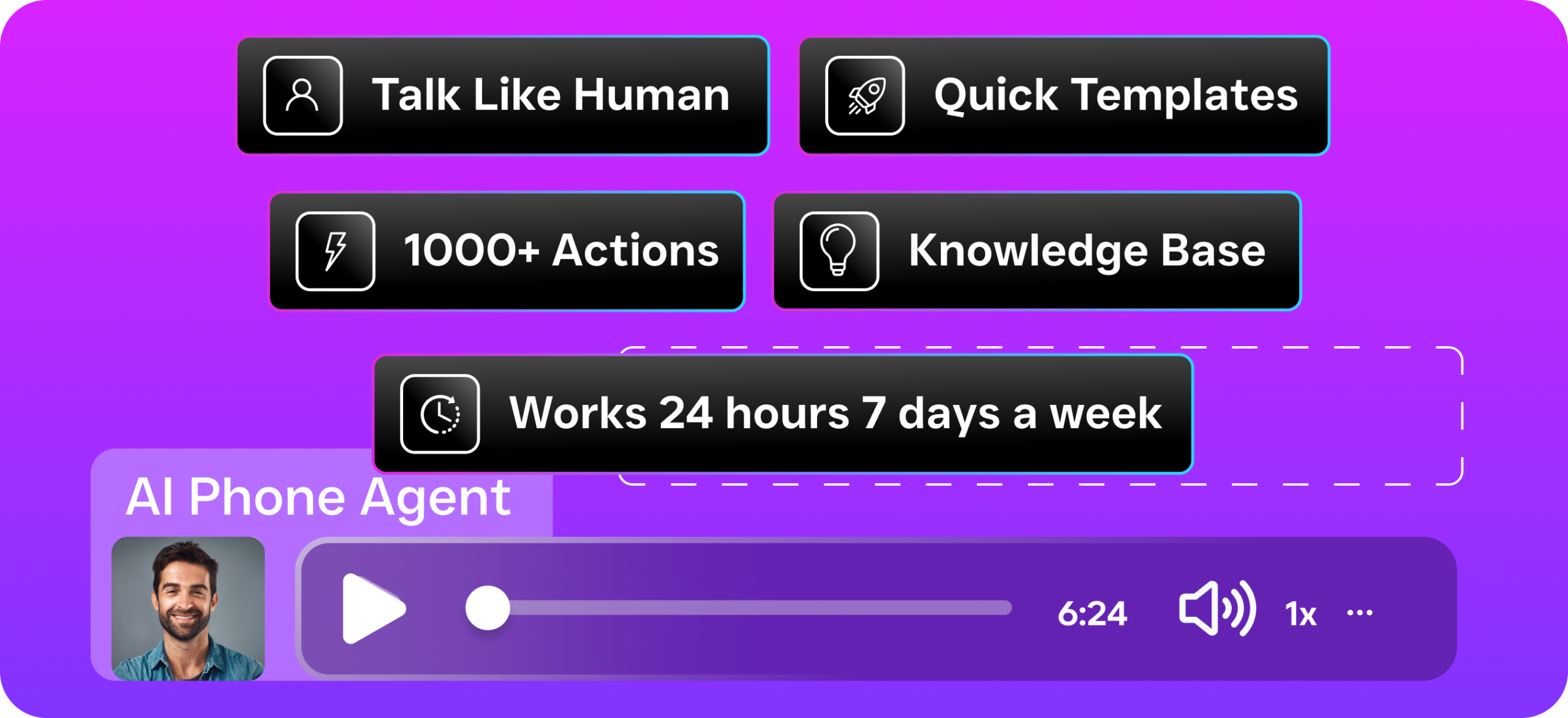
Setup requires no technical expertise. You can easily build custom call flows, set business hours, define how different call types are handled, and connect SalesCaptain to over 50 integrations, including HubSpot, Salesforce, HousecallPro, ServiceFusion, QuickBooks, and other popular CRM, scheduling, and business management platforms. This seamless connectivity ensures that every lead, appointment, and customer interaction flows directly into the tools your team already uses, eliminating manual data entry and keeping your business organized and responsive.
Ready to Feel the Difference?
Still have questions? Reach out to our team here, or schedule a free demo of all the ways SalesCaptain can help your business grow.