
AI-powered customer experience marketing (CXM) platform that helps local businesses win.



Automated Customer Follow Up for Real Estate
In the real estate industry, the fortune is famously found in the follow-up. However, the reality of a modern agent’s life—filled with showings, closings, and constant new lead intake—often makes consistent follow-up a physical impossibility. Real estate is characterized by long sales cycles; a lead may enter the system today but not be ready to list or buy for six, twelve, or eighteen months.
When follow-up is managed manually, “pipeline leakage” is inevitable. Leads who are not ready for an immediate transaction often fall through the cracks, only to surface months later as a closed deal for a competitor who stayed top-of-mind. Automated Customer Follow-Up is the strategic solution to this problem, ensuring that every contact in your database receive relevant, timely engagement without requiring a single manual minute from the agent.
Quick Answer
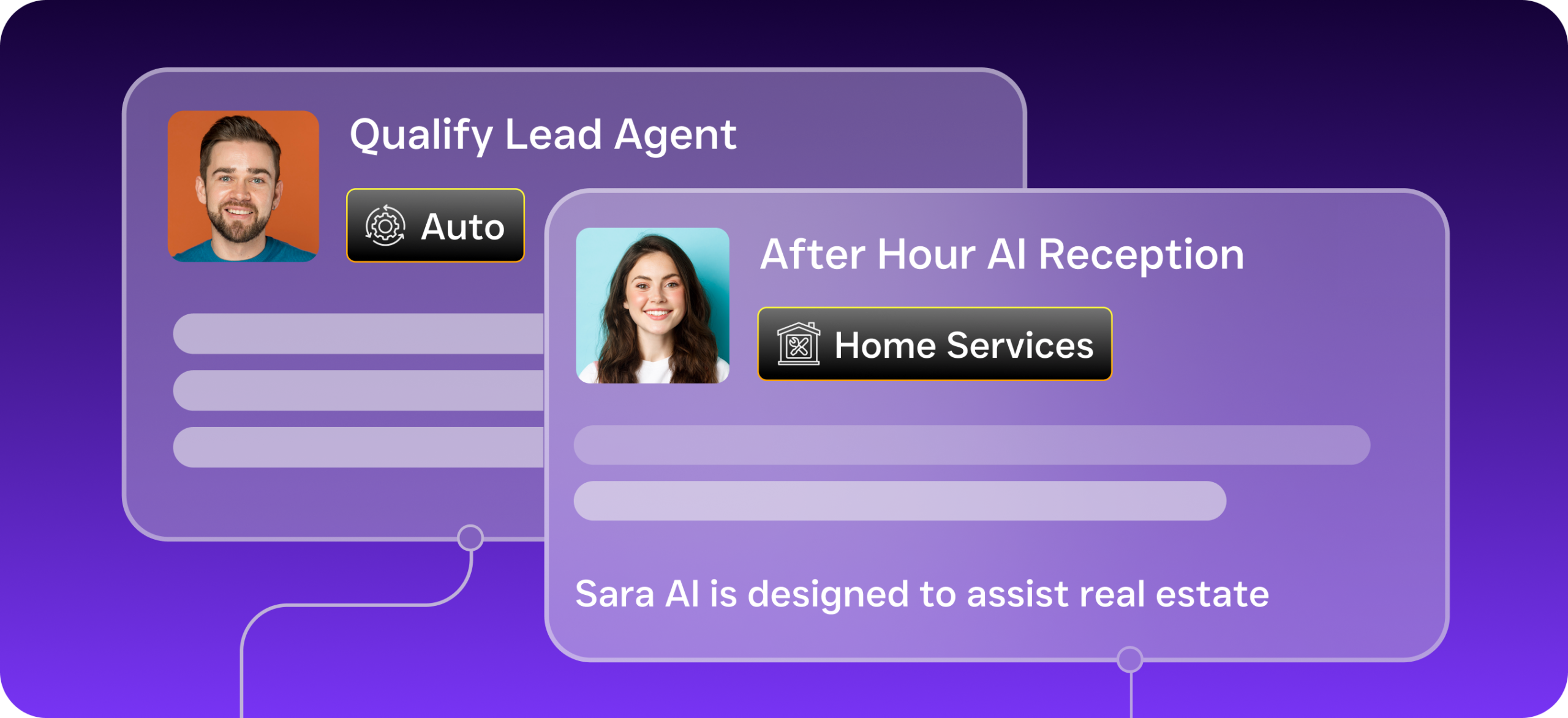
Automated customer follow-up systems in real estate use AI-powered tools to send texts, emails, and make calls to leads and clients automatically based on triggers like inquiry dates or property views. These systems work 24/7, ensuring no prospect falls through the cracks while agents focus on qualified opportunities and closings.
The Strategic Impact: Follow-Up as a Scalability Multiplier
For a real estate brokerage or team, automation changes the fundamental nature of the business from a “transactional” model to a “relationship” model.
1. Maximizing Lead ROI and Lifetime Value
Most agents spend significant capital on lead generation (Zillow, Facebook, Google). If an agent only converts the “low-hanging fruit”—those ready to act in 30 days—the cost per acquisition remains high. Strategically, automation allows you to nurture the other 90% of your leads over the long term. This significantly lowers the overall cost of customer acquisition and increases the lifetime value of every lead in your CRM.
2. Market Positioning and Brand Recency
Real estate is a “recency” business. A client will hire the agent they remember most clearly at the moment they decide to move. Strategically, automation ensures that your brand maintains “Recency” through consistent, value-driven touchpoints. By the time the client is ready to transact, the trust has already been established through months of automated, professional interaction.
Free weekly newsletter
Growth tips for real estate professionals
Every Tuesday — actionable ideas to get more leads, reviews, and repeat customers. No fluff.
3. Protection Against Agent Attrition
For brokerages, automation serves as a “safety net” for the firm’s data. If an agent leaves a team, the automated follow-up systems ensure that the leads remain engaged with the brand. This protects the brokerage’s intellectual property and ensures that years of lead generation spend are not lost when a single team member moves on.
Core Pillars of a Proactive Real Estate Follow-Up Strategy
To maintain a healthy pipeline, an agency must automate three distinct phases of the customer journey: Lead Incubation, Transactional Support, and Post-Close Loyalty.
1. Lead Incubation (The “Long Game”)
The vast majority of website visitors are in the “research” phase. The Automated Solution: Instead of a one-time “thank you” email, the system triggers a long-term nurture sequence. This includes automated Market Reports for their specific zip code, invitations to local community events, and check-in texts that feel personal but are driven by AI logic. This keeps the lead “warm” until their behavior (such as re-visiting your site) signals they are ready for a human conversation.
2. Transactional Milestones
A real estate transaction is a high-stress environment with dozens of moving parts. The Automated Solution: Once a contract is signed, automation handles the logistical updates. The system can send automated reminders to the client about inspection deadlines, utility transfers, and closing documents. This professionalizes the experience, reduces the client’s anxiety, and frees the agent to focus on negotiation rather than administrative reminders.
3. Post-Close Advocacy and Referrals
The average person moves every 7–10 years. Without automation, most agents lose contact with their clients within 12 months of closing. The Automated Solution: The system “remembers” the home anniversary, the client’s birthday, and local tax deadlines. By sending automated, personalized messages on these dates, the agent remains the “trusted advisor” for life. This is the primary driver of the most valuable lead source in real estate: the referral.
Advanced Features of the SalesCaptain Follow-Up Suite
SalesCaptain provides the technical infrastructure to turn your CRM into an active sales assistant.
Behavioral Triggers
Automation is most effective when it is relevant. SalesCaptain can trigger messages based on client behavior. If a “cold” lead from a year ago suddenly clicks on a listing in your email, the system can instantly send a text: “Hi [Name], I noticed you were looking at homes in [Neighborhood] again. Have your criteria changed at all?”
AI-Powered Conversational SMS
Generic “drip” emails are often ignored. SalesCaptain uses AI-driven SMS that encourages two-way conversation. These messages are designed to be short, helpful, and impossible to distinguish from a manual text sent by an agent.
Unified Communication History
Every automated touchpoint is logged in a single, unified thread. When an agent finally hops on a call with a client, they can see exactly which automated reports the client opened and which texts they replied to, allowing for a much more informed and professional “warm” call.
Deep CRM Integration
SalesCaptain integrates natively with Follow Up Boss, kvCORE, Lofty, and HubSpot. This ensures that as a lead’s status changes in the CRM (e.g., from “Lead” to “Under Contract”), the follow-up workflows update automatically, ensuring the client always receives the right message at the right time.
Operational Impact: How Automation Changes the Daily Business
Implementing automated follow-up fundamentally changes the daily workload and efficiency of a real estate team.
1. Increased “Face-to-Face” Time
The primary operational benefit is the “Redistribution of Labor.” When the system handles the 1,000+ touches required to manage a database of 5,000 leads, the agent is freed to do what they do best: show houses and negotiate deals. This typically results in a higher number of “appointments set” per agent.
2. Consistency of Service
In a manual team, the quality of follow-up depends on how busy the agent is. During a “hot” market, follow-up usually stops. Automation provides a “Floor of Service” that never wavers. Every client receives the same high-standard of professional communication regardless of how many closings the agent has that week.
3. Reduced “Lead Decay”
Leads lose interest quickly. Operationally, an automated system ensures that the “Lead Response Time” is measured in seconds, not hours. By engaging a lead the moment they show interest, the business significantly reduces “Lead Decay” and increases the conversion rate of top-of-funnel traffic.
4. Data-Driven Team Management
For team leaders, automation provide visibility. You can see exactly which follow-up sequences are resulting in the most replies and appointments. This allows you to manage the team based on objective data rather than “gut feelings” about who is working their leads.
Building a Scalable Real Estate Practice
The gap between a “high-performing agent” and a “scalable real estate business” is systems. An agent who relies on their memory and their manual effort will eventually hit a ceiling. A business that leverages automated follow-up has no such ceiling.
By putting your relationship management on autopilot with SalesCaptain, you ensure that your pipeline is always full, your clients are always informed, and your brand is always the first one they think of when it’s time to move.
Ready to see it in action?
See how real estate agents use SalesCaptain to follow up with every lead automatically.
Frequently Asked Questions (FAQ)
Does automation make my business feel impersonal?
If done correctly, automation actually makes your business feel more personal. By “remembering” small details like home anniversaries or specific neighborhood interests that a human might forget, you demonstrate a level of attention that clients appreciate. The goal of automation is to facilitate human connection, not replace it.
Can I stop an automation if I start talking to a client manually?
Yes. This is a critical feature known as “Pause on Reply.” The moment a client responds to an automated message and a human agent takes over the thread, the automated sequence pauses to ensure no “robotic” messages interfere with the real conversation.
How long does it take to see results?
You will see immediate results in “Speed to Lead” and engagement from new inquiries. For your “old” database, you will typically see a “Lead Revival” effect within the first 30 days as the system identifies people who are finally ready to move.
Is it difficult to set up the workflows?
SalesCaptain provides pre-built “Industry Best Practice” templates for real estate. You can use these proven sequences out of the box or customize them to fit your specific brand voice and local market nuances.