
AI-powered customer experience marketing (CXM) platform that helps local businesses win.


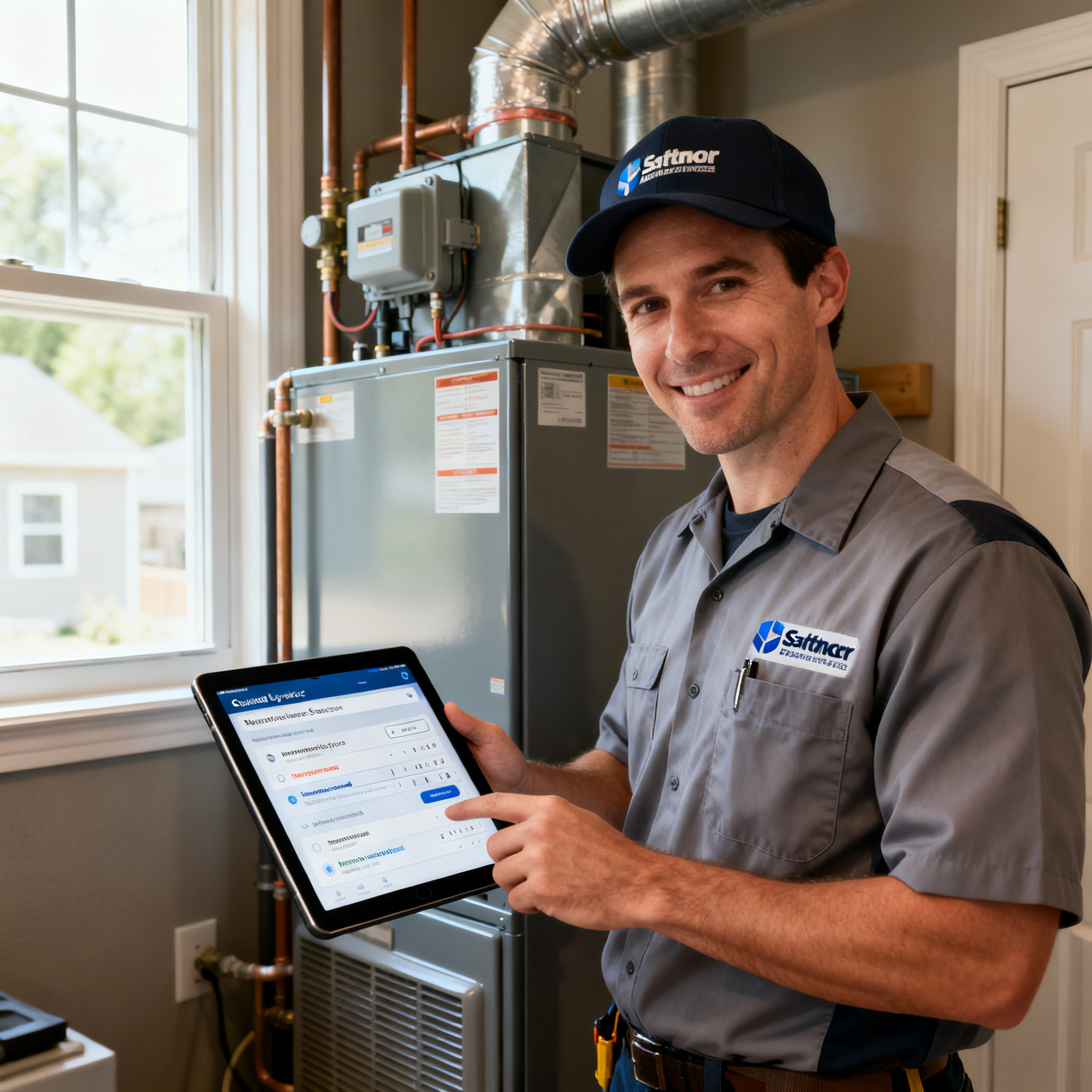
Automated customer follow up for HVAC
Every HVAC business knows the pain. You lose a job because nobody followed up fast enough. A homeowner calls about a broken AC unit, your team’s out on service calls, and by the time someone gets back to them, they’ve already booked with a competitor. That’s where automated customer follow up for HVAC changes everything. It ensures every lead, every service request, and every post-job check-in happens on time, without your team lifting a finger. If you’re losing revenue to slow response times and inconsistent communication, this feature is exactly what you need.
Quick Answer
HVAC companies can implement automated follow-up systems that send timely messages to customers via email, SMS, or phone calls after initial contact or service completion. These systems track customer interactions, schedule reminders for maintenance appointments, and nurture leads automatically, significantly improving response rates and conversion. Automation ensures no lead falls through the cracks while your team focuses on jobs rather than manual outreach.
What Is Automated Customer Follow Up for HVAC?
Automated customer follow up is a system that sends texts, calls, and messages at the right time. It’s triggered by specific events like a missed call, a completed service appointment, or an estimate that’s still sitting in your queue unapproved. Instead of relying on your office staff to remember who needs a callback, or hoping a technician reminds a customer about their maintenance plan, the system handles it all automatically. No more sticky notes. No more spreadsheets. No more reminders falling through the cracks.
For HVAC companies, this matters more than almost any other industry. Why? Your customers typically reach out when they have an urgent problem. Their furnace stopped working in January. Their AC died in July. And they’re calling multiple companies. According to Lifewire, roughly 27% of small businesses fail at customer follow-up, and in a time-sensitive industry like HVAC, that failure directly translates to lost jobs and lost revenue. Automated follow-up ensures the moment a customer interacts with your business, whether they call, text, fill out a web form, or message you on Facebook, they get an immediate response and a structured sequence of follow-ups until the job is booked or the issue is resolved.
Free weekly newsletter
Growth tips for home service businesses
Every Tuesday — actionable ideas to get more leads, reviews, and repeat customers. No fluff.
And here’s the thing: this isn’t just about marketing emails. Automated follow-up for HVAC covers your entire customer lifecycle. Initial lead response. Estimate follow-up. Appointment reminders. Post-service satisfaction checks. Seasonal maintenance reminders. Review requests. Each touchpoint either gets handled automatically or it doesn’t happen at all. Businesses that automate them consistently outperform those that don’t.
How Automated Customer Follow Up Works in SalesCaptain
SalesCaptain was built specifically for service businesses like HVAC companies, so automated follow-up isn’t a bolted-on feature. It’s core to the platform. The system combines AI Phone Agents, AI Chat Agents, a Unified Inbox, and a visual Workflow Automation builder to create follow-up sequences that run across calls, texts, webchat, and social media. No technical expertise required. Here’s how it works from that first customer interaction to the moment they become a repeat client.
Step 1: Capture Every Inbound Lead Instantly
A potential customer calls your HVAC business and no one’s available? SalesCaptain’s AI Phone Agent picks up. It sounds natural. Answers common questions about your services and pricing. Qualifies the lead by asking about their issue. Books an appointment directly on your calendar. If the customer reaches out via text, webchat, Instagram, or Facebook Messenger, the AI Chat Agent does the exact same thing. Instant response. Captured information. Scheduled service. No lead sits unanswered. Not even at 2 AM on Saturday when your office is closed.
Step 2: Trigger Follow-Up Workflows Automatically
Once a lead is captured, SalesCaptain’s Workflow Automation builder kicks in automatically. You can set up drag-and-drop workflows based on any event you choose. A new lead comes in. An estimate is sent. An appointment is booked. Or a service is completed. Here’s what that looks like: you send an estimate and the customer hasn’t responded in 24 hours. The system automatically sends a follow-up text. Still nothing after 48 hours? It sends another message or triggers an AI phone call. These sequences are fully customizable. You decide the timing, the message, and the channel.
Step 3: Manage Everything from One Unified Inbox
Every interaction lives in one place. The initial call. The follow-up texts. The webchat conversation. The Facebook message. All of it shows up in SalesCaptain’s Unified Inbox. Your office manager, dispatchers, and technicians can see the complete history of every customer conversation instantly. Sound familiar? When a customer calls back and says “I got your text about the estimate,” anyone on your team pulls up the full context in seconds. No switching between apps. No missed messages hiding in someone’s personal phone. No duplicate outreach because two people didn’t know the other already followed up.
Step 4: Continue the Relationship After the Job
The follow-up doesn’t stop when the technician leaves. SalesCaptain automatically sends satisfaction surveys after service completion. Requests Google reviews. Schedules seasonal maintenance reminders months down the road. Here’s what that actually looks like: a customer had their AC serviced in spring. Come fall, the system automatically texts them about furnace maintenance. Your HVAC business stays top of mind without your team tracking anything manually. This post-service automation is what turns one-time emergency calls into long-term recurring customers.
📺 Watch: How to Create a Lead Follow-Up Sequence
Key Capabilities of SalesCaptain’s HVAC Follow-Up Automation
SalesCaptain packs a wide range of follow-up capabilities into one platform. Each feature addresses a specific gap in typical HVAC customer communication. From first contact through years of ongoing service. Here’s what you get and how it applies to your business.
Missed Call Text-Back: A customer calls and you can’t answer? SalesCaptain automatically sends them a text within seconds. The conversation stays alive instead of them moving to the next company in their search results. According to SkipCalls, small businesses can lose over $26,000 per year from missed calls alone. Even recovering a fraction of those calls pays for the platform many times over. AI-Powered Call Answering (24/7): The AI Phone Agent handles calls around the clock. It qualifies leads. Answers FAQs about your HVAC services. Blocks spam calls. Books appointments directly into your schedule. Your after-hours calls become revenue instead of voicemails that never get returned. Estimate Follow-Up Sequences: Build automated workflows that follow up on outstanding estimates via text and phone. You set the intervals, 24 hours, 48 hours, one week, and the system takes care of the rest. No more guessing whether someone followed up on that $8,000 system replacement quote. Appointment Reminders and Confirmations: Reduce no-shows by automatically sending appointment reminders via text. Customers can confirm or reschedule directly through the message. That frees up your dispatcher’s time for higher-value tasks like routing and scheduling optimization. Post-Service Follow-Up and Review Requests: After a technician completes a job, automatically check in with the customer. Make sure they’re satisfied. Then ask for a Google or Facebook review. Positive reviews are the lifeblood of local HVAC marketing, and automated requests generate far more reviews than hoping your team remembers to ask. Seasonal Maintenance Campaign Automation: Set up recurring campaigns that remind customers when it’s time for their spring AC tune-up or fall furnace inspection. These campaigns run year after year without manual effort and drive predictable recurring revenue for your business. Multichannel Messaging: Follow up via SMS, webchat, Instagram DMs, Facebook Messenger, and phone. All from one interface. Customers get responses on the channel they prefer, which dramatically increases engagement compared to single-channel follow-up. CRM Sync and Integrations: SalesCaptain connects with 50+ tools including HousecallPro, ServiceFusion, QuickBooks, HubSpot, Salesforce, and Zapier. When a follow-up converts to a booked job, your field service software and accounting system update automatically. No double data entry.
Who Needs Automated Customer Follow Up for HVAC?
If you’re running an HVAC business of any size and you’re still handling follow-up manually, you’re leaving money on the table. But certain business profiles benefit even more than others. Their specific operational challenges make consistent follow-up nearly impossible without automation. Here’s who should be paying close attention.
Owner-Operators and Small HVAC Companies
You’re running a one- to five-person HVAC shop. You wear every hat. Estimator. Technician. Dispatcher. Office manager. You physically can’t answer every call while you’re on a roof replacing a condenser. Automation gives you the communication capacity of a company three times your size without the payroll to match. According to Pipedrive’s State of Sales and Marketing report, small businesses are increasingly leading the AI revolution in sales automation. Your competitors are likely already exploring these tools.
Multi-Location HVAC Companies
Operating across two, five, or ten locations? Keeping follow-up consistent becomes exponentially harder. Each office has different staff. Different processes. Different levels of discipline around customer communication. SalesCaptain’s per-location pricing (starting with a free plan for one location, then $159/month per additional location) makes it affordable to standardize your follow-up process everywhere. Every location runs the same workflows. Sends the same quality of communication. Feeds into the same reporting dashboard. You can see which locations convert leads and which ones drop them.
HVAC Office Managers and Dispatchers
You’re the front line of customer communication. And you’re usually overwhelmed. Answering incoming calls. Scheduling technicians. Processing invoices. Handling customer complaints. Manually following up on estimates? That falls to the bottom of the priority list. Automation takes those repetitive tasks off your plate. You focus on work that actually requires a human, complex scheduling conflicts or resolving escalations. The G2 2024 customer service automation trends report highlights that automation directly accelerates ROI by freeing staff to focus on higher-value interactions.
HVAC Sales Managers Focused on Close Rates
Your HVAC business generates healthy lead volume. But your close rate on estimates is lower than it should be. Why does this matter? The problem is almost always follow-up. Studies consistently show that speed and consistency of follow-up is one of the biggest factors in converting an estimate to a signed job. A sales manager who implements automated estimate follow-up sequences, texts at 24 hours, a phone call at 48 hours, another text at one week, will see conversion rates climb without adding headcount to the sales team.
Benefits of Automated Customer Follow Up for HVAC Businesses
The outcomes of implementing automated follow-up are both immediate and compounding. You’ll notice results in the first week. The benefits get stronger over time as your customer database grows and more people enter your automated sequences. Here’s what HVAC businesses gain when they stop relying on manual follow-up and let the system work.
Recover Revenue from Missed Calls and Slow Responses
The single biggest revenue leak in most HVAC businesses is missed calls and delayed responses. A homeowner’s AC breaks. They’re calling two or three companies. Whoever responds first wins. Phone2.io reports that the true cost of missed calls for small businesses is substantial, often running into tens of thousands of dollars annually. SalesCaptain’s missed call text-back and AI Phone Agent ensure that even when your team is unavailable, the customer gets an immediate response. They stay engaged with your business instead of moving to a competitor.
Increase Estimate-to-Job Conversion Rates
Many HVAC companies send out estimates and cross their fingers. The reality? Customers who receive timely, personalized follow-up after an estimate are dramatically more likely to approve the job. Automated sequences handle this systematically. Every estimate gets followed up at the right intervals. With the right messaging. Through the customer’s preferred channel. Over time, even a modest improvement in your estimate conversion rate translates to significant additional revenue, especially on higher-ticket jobs like full system replacements.
Build a Recurring Maintenance Revenue Stream
HVAC businesses that rely solely on emergency repair calls live and die by the weather. Automated seasonal maintenance reminders help you build a predictable, recurring revenue base. Your system automatically texts last year’s AC customers every spring and heating customers every fall. You’re generating inbound demand that doesn’t depend on something breaking. This smooths out your revenue across the year and gives your technicians consistent work during slower shoulder seasons.
Save Staff Hours on Repetitive Communication Tasks
According to Cazoomi’s marketing automation statistics roundup, businesses that implement automation see significant time savings on repetitive tasks. For HVAC companies, that means less time making reminder calls. Less time chasing down estimate approvals. Less time manually sending review requests. Those saved hours either reduce your need to hire additional office staff or free up your existing team to handle more volume. Both directly impact your bottom line.
Improve Customer Satisfaction and Generate More Reviews
Customers notice when a business follows up promptly and professionally. Automated post-service check-ins show customers that you care about their experience, not just their payment. Automated review requests make it effortless for satisfied customers to leave positive feedback on Google and Facebook. Since local search rankings are heavily influenced by review volume and recency, a steady stream of automated review requests fuels your online visibility. More leads. More jobs. More revenue flowing right back into your system.
How SalesCaptain Compares to Other HVAC Follow-Up Solutions
There’s no shortage of software claiming to help HVAC businesses with customer communication. But most platforms only solve part of the problem. Understanding where common alternatives fall short clarifies why a purpose-built platform like SalesCaptain delivers better results for service businesses needing comprehensive automated follow-up.
Vs. Podium and Kenect: Text-Only Isn’t Enough
Podium and Kenect are popular in the HVAC space for text messaging. But they’re fundamentally limited. Podium focuses on inbound texting. No outbound automation. No AI agent capabilities. Kenect is text-only. No voice AI. No phone agent. No multichannel automation. Here’s the problem: phone calls are still one of the primary ways customers reach out, especially for emergency service. A platform that only automates texts while ignoring calls leaves a massive gap in your follow-up process. SalesCaptain handles both AI phone and AI chat in a single platform. Every channel is covered from one interface.
Vs. HighLevel: Built for Simplicity, Not Complexity
HighLevel is powerful but notoriously complex. It was built as a white-label agency tool, assuming a level of technical sophistication that most HVAC
Ready to see it in action?
See how HVAC companies use SalesCaptain to follow up with every customer automatically.
Book a Free Demo →Frequently Asked Questions
What is automated customer follow up for HVAC?
Automated customer follow up is a system that sends texts, calls, and messages at the right time, triggered by specific events like missed calls, completed service appointments, or pending estimates. It handles initial lead response, estimate follow-up, appointment reminders, post-service checks, and maintenance reminders without requiring your team to manually track or remember each customer interaction.
Why is automated follow up important for HVAC businesses?
HVAC customers typically call during urgent problems like broken AC units in summer or failed furnaces in winter, and they’re often calling multiple companies simultaneously. Automated follow-up ensures immediate responses and structured communication sequences that increase the likelihood of booking jobs before competitors do, directly preventing lost revenue from slow response times.
How does automated follow up help reduce lost jobs?
When customers call and your team is out on service calls, automated systems provide immediate responses and scheduled follow-ups so no lead falls through the cracks due to delayed callbacks. Studies show roughly 27% of small businesses fail at customer follow-up, but automation ensures every customer interaction triggers a timely response sequence that keeps your business in the running.
What customer touchpoints does automated follow up cover?
Automated follow-up covers your entire customer lifecycle including initial lead response, estimate follow-ups, appointment reminders, post-service satisfaction checks, seasonal maintenance reminders, and review requests. Each touchpoint either gets handled automatically or it doesn’t happen at all, ensuring consistent communication at every stage.
What triggers automated follow up messages in HVAC systems?
Automated follow-up is triggered by specific customer interactions such as missed calls, completed service appointments, unapproved estimates in your queue, web form submissions, text messages, or social media messages like Facebook inquiries. Once triggered, the system automatically sends the appropriate response and continues with a structured sequence until the job is booked or the issue is resolved.