
AI-powered customer experience marketing (CXM) platform that helps local businesses win.



Best Live Chat Software for Small Business: A Complete Guide for 2025
A prospective customer visits your website at 9 PM, prepared to schedule a service, but has a question regarding pricing. With no one available to respond immediately, the inquiry goes unanswered, and the potential revenue is lost. According to research from SkipCalls, small businesses lose over $26,000 per year from missed communication opportunities alone. The best live chat software for small business changes this equation. It ensures every visitor gets an instant response, whether your team is working or sleeping. Today’s solutions include AI-powered agents, multichannel messaging, appointment booking, and deep integrations with your existing tools. This guide breaks down what actually matters when choosing a live chat platform.
What Is Live Chat Software for Small Business?
Live chat software enables website visitors to initiate real-time text conversations with your business directly from your site, without the need for a phone call or email. A chat widget appears on the webpage, allowing visitors to type questions that are answered by a representative—or an automated system—on your end. For small businesses, live chat has become a critical communication channel, supporting tasks ranging from answering frequently asked questions to capturing leads and scheduling appointments.
The distinction for small businesses is important. Not all live chat solutions are suited for companies with limited staff. Enterprise platforms such as Zendesk or Intercom offer extensive features, many of which may go unused, and come with price points that are often prohibitive for a team of five. The ideal live chat software for small businesses balances functionality with simplicity: it must be robust enough to manage real customer interactions, easy enough to operate without a dedicated IT resource, and cost-effective enough to demonstrate a return on investment quickly.
Modern live chat solutions have blurred the line between “live” and “automated.” Many now include AI chatbots that can answer common questions, qualify leads, and even book appointments without any human involvement. According to data compiled by G2, businesses using live chat see meaningful improvements in customer satisfaction and conversion rates. For a small business owner wearing multiple hats, this kind of automation isn’t a luxury. It’s how you compete with larger companies that have dedicated support teams.
Why Live Chat Matters More Than Ever for Small Businesses
Speed Is the New Currency of Customer Service
The primary driver behind the rapid adoption of live chat is evolving customer expectations for response time. Traditional contact forms can leave inquiries unanswered for hours or even days, while unanswered phone calls often lead potential customers to reach out to competitors. Live chat addresses this gap by offering immediate, low-friction communication that allows customers to engage on their own terms, without disrupting their workflow. Fit Small Business reports that live chat consistently achieves the highest satisfaction ratings among customer service channels. It outperforms both phone and email for resolution speed.
For service-oriented businesses—such as plumbing, roofing, dental practices, and salons—rapid response directly impacts revenue. A homeowner seeking an emergency plumber at 7 AM will not wait for your office to open at 9. The first business to respond secures the appointment. By integrating live chat with AI automation, businesses can act as the first responder even outside normal operating hours. Companies that leverage this approach consistently capture leads that competitors fail to engage, gaining a significant advantage in customer acquisition.
Your Website Visitors Are Already Expecting It
Chat widgets have become so common on business websites that their absence now feels like something’s missing. ServiceBell’s compilation of live chat statistics
Research highlights that a substantial and increasing proportion of consumers now prefer chat as their primary mode of communication with businesses. While this trend is particularly pronounced among younger demographics, it is quickly becoming standard across all age groups. Businesses without a chat solution are at a measurable disadvantage compared to competitors who offer this channel.
Moreover, live chat reduces the volume of incoming phone calls. Every inquiry handled via chat represents one fewer call your staff must manage, easing the burden on teams that already face challenges in answering every incoming call promptly. Aira’s research on missed calls shows that small businesses miss a staggering portion of incoming calls, adding chat as a channel doesn’t create more work. It redistributes existing demand into a channel that’s easier and cheaper to manage, especially with automation.
What Makes the Best Live Chat Software for Small Business
Not every live chat tool is worth your money. And the flashiest marketing doesn’t always signal the best fit. After evaluating what service-focused SMBs actually need from these tools, here are the criteria that separate the best options from the rest.
AI Automation That Goes Beyond Canned Responses
The most significant distinction in modern live chat software lies between solutions that merely connect visitors to a human agent and those that leverage AI to manage conversations autonomously. For small businesses, this difference can determine success or failure. Most small teams cannot dedicate staff to monitor chat interactions continuously, let alone 24/7. Leading platforms employ AI agents that comprehend customer inquiries, provide accurate responses based on your business information, capture contact details, and even schedule appointments—all without human intervention.
Basic chatbots or canned response systems offer only minimal assistance. They often frustrate visitors whose questions fall outside predefined scripts. The ideal solution employs conversational AI capable of understanding natural language, not merely matching keywords. The resulting chat experience should resemble interaction with a knowledgeable receptionist rather than navigating a rigid automated system. When the AI cannot resolve a query, it should seamlessly escalate to a human agent, carrying full conversation context so the customer does not need to repeat information.
Multichannel Reach, Not Just Website Chat
A website chat widget is only the starting point for customer communication, yet many businesses stop there. Customers today reach out through multiple channels, including Instagram, Facebook, SMS, and other messaging platforms. The most effective live chat software for small businesses consolidates all these interactions into a single inbox. There is no need to monitor multiple apps separately; a message sent via Facebook DM appears alongside website chats, text messages, and phone call records.
This multichannel integration is not a matter of convenience—it is essential for operational efficiency. When a customer engages through different channels over several days, the system should recognize them as the same individual, preserving the complete conversation history. Standalone chat widgets typically treat each interaction as isolated, forcing staff to repeatedly collect information and creating a fragmented experience for the customer. Platforms that unify communications into a single view enable small teams to manage high volumes of inquiries effectively, without increasing headcount.
Easy Setup and Low Maintenance
If a live chat tool takes more than a day to set up and train, it’s probably not built for small businesses. The best platforms let you install a chat widget in minutes. Configure your AI agent’s knowledge base with plain-language instructions. Start handling real conversations the same day. You shouldn’t need to write code, hire a consultant, or watch hours of training videos. Tools like HighLevel, for example, are powerful but notoriously complex. According to reviews on G2, steep learning curves are one of the most common complaints among SMB users of enterprise-oriented platforms.
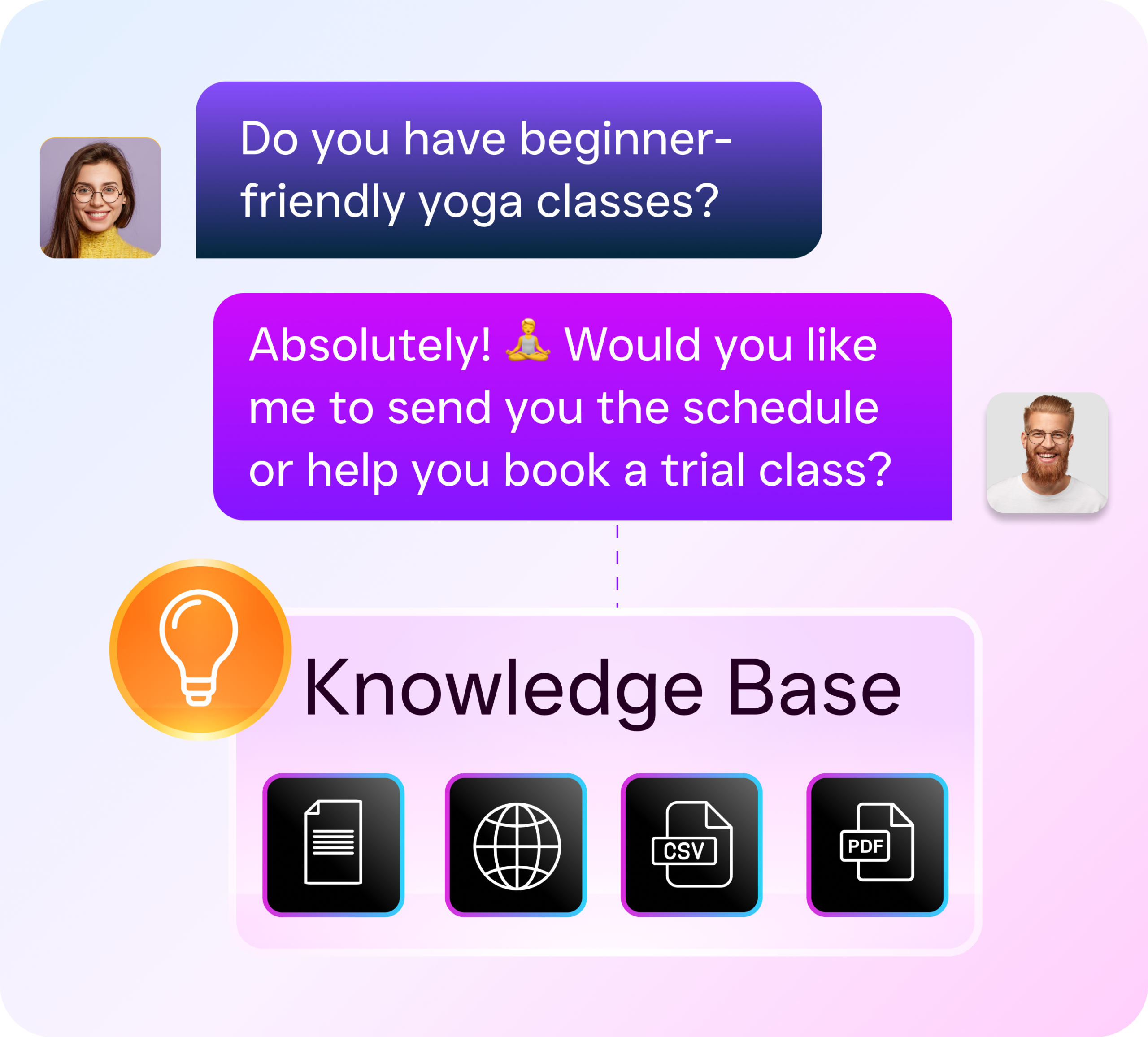
Maintenance matters just as much as setup. Your live chat software should get smarter over time as it handles more conversations. It shouldn’t require you to manually update scripts every week. Platforms with AI learning capabilities improve their responses based on real interactions. That reduces the ongoing management burden. For a business owner already juggling operations, marketing, and customer service, the best tool is one you can largely set and forget. You step in only for conversations that genuinely need a human touch.
Transparent Pricing That Scales
Pricing for live chat software varies widely, ranging from free tiers to several hundred dollars per month. However, feature differences are not always evident from the published list. Some platforms attract users with a free plan but restrict essential capabilities—such as AI automation, CRM integration, or the removal of vendor branding—behind costly upgrades. Others charge on a per-agent basis, which can quickly become expensive for teams that require multiple users.
The most small-business-friendly pricing models either charge per location or offer flat monthly rates with comprehensive feature access, providing transparency and predictable costs upfront. It is also important to consider hidden fees. Certain platforms impose additional charges for each AI-powered conversation, SMS messages sent through the system, or require annual contracts to access their most favorable rates. For small businesses evaluating options, total cost of ownership is far more relevant than the advertised base price. A platform that appears inexpensive at $50 per month may ultimately be more costly than a transparent $159 per month plan that includes full functionality without unexpected fees.
Comparing Popular Live Chat Platforms for Small Business
To make your evaluation easier, here’s how the most commonly recommended live chat platforms stack up across the criteria that matter most for small businesses. Each tool has strengths. But they serve different types of users. Understanding those differences saves you from expensive trial-and-error.
| Platform | Best For | AI Automation | Multichannel | Free Plan | SMB-Friendly Pricing |
|---|---|---|---|---|---|
| SalesCaptain | Service businesses (home services, healthcare, legal, salons) | Full AI chat + voice agents | SMS, webchat, Instagram, Facebook, phone | Yes (1 location) | $159/mo per location |
| LiveChat | E-commerce customer support | Basic chatbot builder | Website, Facebook, email | No | $20+/agent/month |
| tawk.to | Budget-conscious startups | Minimal | Website only | Yes (fully free) | Free (paid add-ons) |
| Intercom | SaaS and tech companies | Strong AI (Fin) | Website, email, in-app | No | Starts at $39/seat/mo |
| Zendesk | Enterprise support teams | AI add-on available | Website, email, phone, social | No | $55+/agent/month |
| Podium | Reputation management + messaging | Limited (inbound only) | SMS, webchat, Google | No | Custom pricing |
| HubSpot | Businesses already using HubSpot CRM | Basic chatbot builder | Website, Facebook, email | Yes (limited) | Expensive at scale |
Several key takeaways emerge from this comparison. Free tools, such as tawk.to, provide a genuinely no-cost option but lack the AI automation necessary for businesses that cannot dedicate staff to monitor conversations continuously. Platforms like Intercom and Zendesk are robust solutions; however, they were designed primarily for technology companies and larger support teams. Their per-seat pricing models and feature complexity often do not align with the needs of small service businesses, such as roofing companies or dental practices, with limited personnel. Podium is widely used in the service industry, but its focus on reviews and reputation management means its automation capabilities—particularly for outbound follow-up—are limited.
A gap exists in the market for a platform that combines true AI-driven automation (beyond basic chatbot flows), spans the channels where service business customers actually engage—SMS, social media messaging, phone calls, not merely website widgets—and offers pricing that scales appropriately for businesses with one to five locations. SalesCaptain is designed to fill precisely this gap, making it a solution worth examining in detail.
How SalesCaptain Helps Small Businesses With Live Chat and Beyond
SalesCaptain addresses the live chat challenge differently from most platforms. Rather than providing a standalone website chat widget, it deploys AI Chat Agents that operate seamlessly across SMS, webchat, Instagram DMs, and Facebook Messenger. All interactions converge in a single Unified Inbox, allowing your team to view each customer as a continuous conversation. For example, a customer who initiates a chat on your website and follows up via text the next day appears as one thread, eliminating the need to switch between multiple tabs or platforms. This unified approach ensures that no messages are missed, regardless of the channel through which they are received.
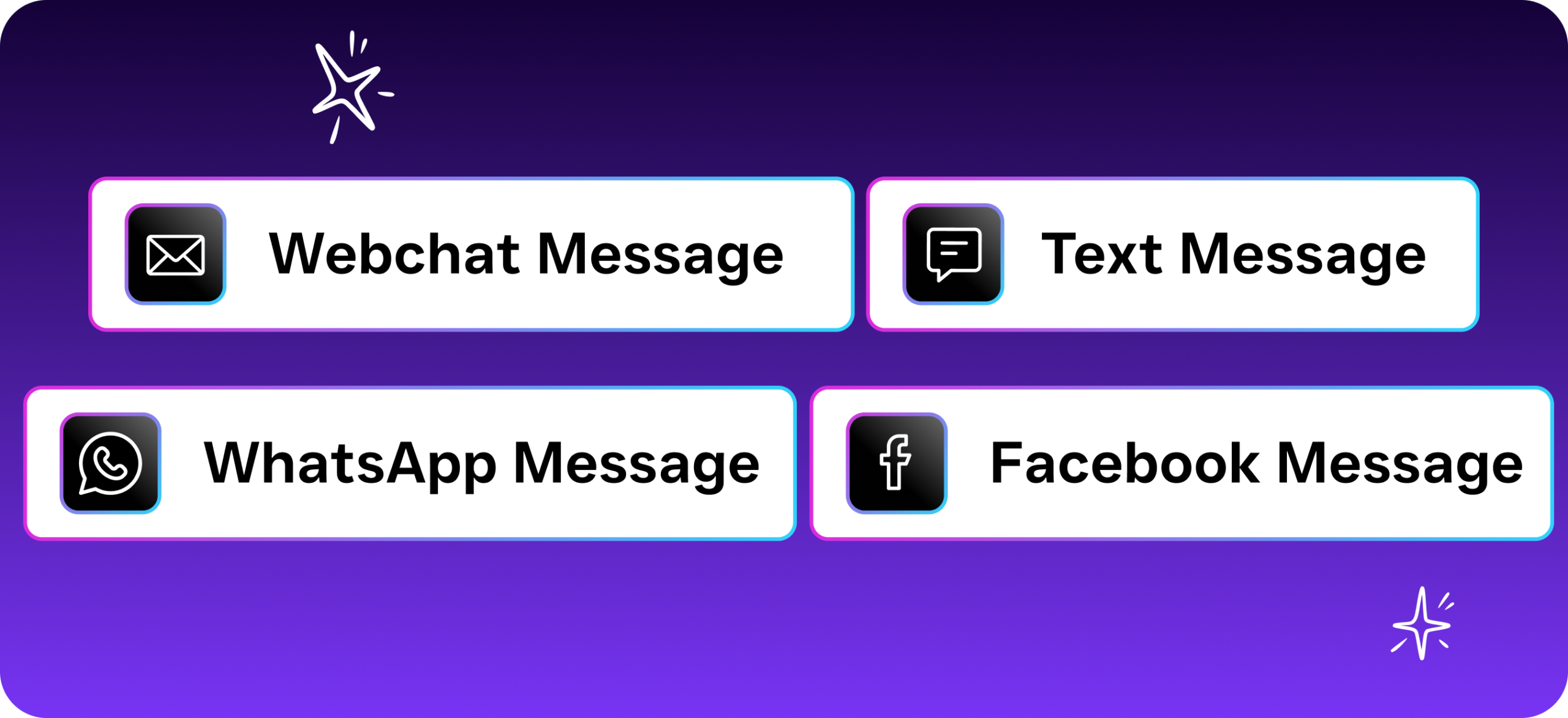
What distinguishes SalesCaptain is its AI Phone Agent. While most live chat solutions focus solely on web-based messaging, they often overlook phone calls entirely—treating them as a separate challenge. For service businesses such as HVAC companies, MedSpas, and law offices, phone calls remain a primary channel for customer inquiries. SalesCaptain’s AI Phone Agent answers calls 24/7 using a natural-sounding voice, qualifies leads, books appointments, addresses frequently asked questions, and filters out spam. When combined with AI Chat Agents, the platform ensures that every customer interaction—across phone, text, webchat, or social messaging—is managed automatically, allowing human staff to intervene only when necessary.
Additionally, SalesCaptain includes a drag-and-drop Workflow Automation builder. This tool enables businesses to create automated follow-up sequences based on specific triggers, such as completed appointments, missed calls, or new inquiries. For instance, a workflow can automatically send an estimate PDF after a consultation, follow up via text if no response is received within 48 hours, and schedule a reminder call if further engagement is required. By automating these repetitive tasks, businesses can maintain consistent customer communication, increase lead conversion rates, and optimize operational efficiency without adding extra staff.
Ready to Feel the Difference?
Still have questions? Reach out to our team here, or schedule a free demo of all the ways SalesCaptain can help your business grow.