
AI-powered customer experience marketing (CXM) platform that helps local businesses win.


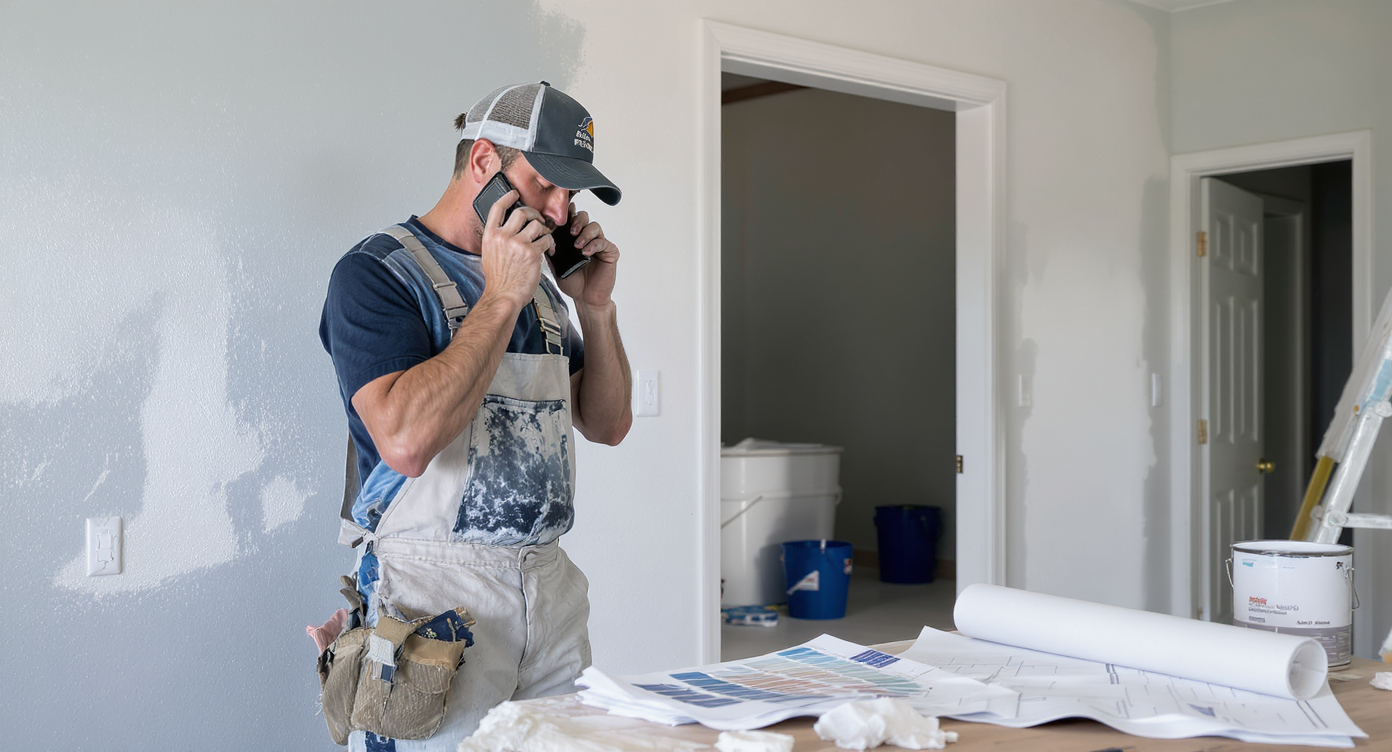
A homeowner calls your painting business at 6:30 PM. They’re ready to schedule an exterior repaint estimate. Nobody picks up. By 7 PM, they’ve already booked with your competitor down the road. That lost call probably cost you $3,000 to $5,000 in revenue, and it happens far more often than most painting contractors realize. Sound familiar? Finding the best phone system for painting contractors isn’t about fancy features or enterprise-grade complexity. It’s about making sure every call turns into an opportunity, whether you’re on a ladder or driving between job sites.
The best phone system for painting contractors combines call handling, text messaging, and voicemail into one unified platform that keeps your business reachable 24/7—even when you’re on job sites. Modern systems use automation and call routing to capture every lead and convert Missed Calls into scheduled estimates.
What a Phone System for Painting Contractors Actually Means
A phone system for painting contractors is how your business communicates with prospects and existing customers. At its simplest, it’s how calls reach you. But modern systems go way beyond basic call forwarding. They combine voice calls, text messaging, voicemail, and often AI-powered automation into one unified platform. Your business stays reachable around the clock.
Free weekly newsletter
Growth tips for home service businesses
Every Tuesday — actionable ideas to get more leads, reviews, and repeat customers. No fluff.
For painting contractors specifically, there’s a real problem to solve. You’re rarely at a desk. You’re estimating jobs, managing crews, picking up materials, or actually painting. So calls get missed. According to research from Aira, a significant percentage of business calls go unanswered, and the financial impact adds up quickly. A phone system built for field-based service businesses bridges that gap. You stay professionally responsive even when you’re physically unavailable.
Why Painting Contractors Can’t Rely on a Personal Cell Phone
Most painting businesses start the same way. You use your personal cell, maybe add a Google Voice number, and hope you can answer calls between coats of primer. It works until it doesn’t. And the breaking point comes faster than you’d expect.
Missed Calls Mean Lost Revenue
Painting is seasonal and competitive. When a homeowner or property manager is ready to get quotes, they call two or three contractors. Whoever answers first gets booked. Missed call statistics from SchedulingKit show that most callers who don’t reach a business won’t leave a voicemail. They won’t call back either. Every missed call is a lead that vanishes permanently.
Your personal phone doesn’t have call routing or after-hours handling. No automated text-back either. So when you’re on a roof with a spray gun, those calls just ring out. Even if you check missed calls at lunch, the window’s already closed on most leads.
Professionalism and First Impressions
Think about what a potential customer hears when they call your business. A personal voicemail that says “Hey, leave a message” doesn’t inspire confidence for a $10,000 whole-house repaint. Professional greetings, organized call routing, and prompt responses signal you run a legitimate operation. That perception directly influences whether someone trusts you with their home.
Scaling Beyond Yourself
Once you add crew members or a second truck, a single cell phone becomes a problem. You need a system where multiple team members can handle calls. Messages shouldn’t get lost in personal text threads. Customer communication history needs to live in one place, not scattered across devices.
What to Look For in a Painting Contractor Phone System
Not every feature matters equally. The business phone system market is growing rapidly, so there’s no shortage of options. But many are built for call centers or large enterprises, not contractors. Here’s what actually matters for someone running one to five crews.
Must-Have Features
- After-hours call handling: Most residential customers call evenings or weekends. Your system needs to capture those calls intelligently, not just send them to voicemail.
- Missed call text-back: When you can’t answer, an instant text to the caller (“Thanks for calling ABC Painting, we’ll get back to you shortly”) keeps the lead warm and prevents them from calling your competitor.
- Call routing and IVR: If you have an office manager, estimator, and field supervisor, calls should reach the right person without the caller having to guess.
- Appointment booking: Painting estimates require scheduling. A system that books appointments directly during the call or via text saves significant back-and-forth.
- Mobile-friendly operation: You’re in the field. Everything needs to work from your phone without needing a desk setup.
- Text messaging (SMS): Customers increasingly prefer texting over calling. Sending estimate follow-ups, job confirmations, and scheduling reminders via text improves close rates.
Nice-to-Have Features
- Call recording and transcription: Useful for training new estimators and resolving disputes about what was discussed during a call.
- CRM integration: Syncing call data with tools like HubSpot, Salesforce, or QuickBooks keeps your customer records organized without double-entry.
- Voicemail drop: When following up with leads who didn’t answer, pre-recorded voicemail drops save time and keep your outreach consistent.
- Workflow automation: Automatic follow-up sequences after a missed call or completed estimate can dramatically improve your conversion rate.
What You Probably Don’t Need
Enterprise features like QoS reporting or AI scorecards sound impressive on a features page. But they’re designed for managing large sales floors, not painting crews. Paying extra for capabilities you’ll never use is a waste. Focus on tools that solve the actual problem of capturing and converting painting leads while you’re doing the work.
Comparing Popular Options for Small Contractors
Several phone systems target small businesses, but their fit for painting contractors varies widely. The Voksha guide to small business phone systems provides a solid overview of the general landscape, though it doesn’t address contractor-specific needs. Here’s how the most commonly considered options stack up for painting businesses.
| Feature | SalesCaptain | OpenPhone | Dialpad | Nextiva | Grasshopper |
|---|---|---|---|---|---|
| Starting Price | Free (1 location) | $15/user | $15/user | $20/user | $14/month |
| Missed Call Text-Back | Yes | No | No | No | No |
| Call Coaching/Whispering | Yes | No | No | No | No |
| Unified Inbox (all channels) | Yes | No | No | No | No |
| Appointment Booking | Yes (built-in) | No | No | No | No |
| Voicemail Drop | Yes | No | No | No | No |
| Toll-Free Minutes Included | Yes | Yes | No | Yes | Yes |
| Per-Location Pricing | Yes | Per-user | Per-user | Per-user | Flat |
OpenPhone is a solid basic option at $15 per user. But it lacks voicemail drop, call coaching, and any real AI capabilities. Dialpad brings some AI features but doesn’t include toll-free minutes or high-volume SMS. Both matter for painting contractors doing local marketing. Nextiva caps SMS at 250 messages per user per month, which can be limiting if you’re running text-based follow-up campaigns during your busy season.
Grasshopper is the simplest option here. It’s essentially a virtual phone number with basic routing. There’s no AI, no texting automation, no unified inbox. It’s fine for a solo painter who just wants a business number. But it won’t scale. As CloudTalk’s analysis of AI receptionists points out, after-hours automation is becoming essential. Small businesses need it to compete against larger operations with dedicated office staff.
How SalesCaptain Helps Painting Contractors
SalesCaptain was built specifically for service businesses like painting contractors. Not repurposed from a call center platform or enterprise CRM. That distinction matters because it shapes every feature decision in the product.
The AI Phone Agent answers every call, 24/7, with natural-sounding conversation. It doesn’t just take messages. It qualifies leads by asking about scope of work, books estimate appointments directly into your calendar, answers common questions about your services, and blocks spam calls. No wasted time. At $0.12 per minute, it costs a fraction of what a missed lead costs your business. For painting contractors who lose the most calls during evenings and weekends, this alone can be transformative.
Beyond voice, SalesCaptain pulls together calls, SMS, webchat, Instagram DMs, Facebook Messenger, and email into a single unified inbox. So when a homeowner texts about a quote after seeing your work on Instagram and then calls to follow up, your entire team can see the full conversation history. No digging through multiple apps. That context makes every interaction faster and more professional.
Several other capabilities are particularly relevant for painting businesses:
- Workflow automation triggers follow-up texts after missed calls, sends appointment reminders before estimates, and updates your CRM automatically. No manual work required.
- Call flows with drag-and-drop setup let you route calls differently during business hours versus evenings, or send commercial inquiries to one estimator and residential to another.
- AI summaries and transcriptions of every call give you complete records. When a customer disputes what was discussed about paint colors or scope, you have the transcript.
- Payments via text let you collect deposits or final payments without chasing checks or handling cash on job sites.
- 50+ integrations with tools like HubSpot, QuickBooks, and Zapier mean SalesCaptain fits into whatever software stack you already use.
Per-location pricing starts with a free plan for single-location businesses. The Business tier runs $159 per month per location. Unlike per-user pricing models, adding a crew leader or office manager doesn’t increase your cost. For a painting company with three estimators and an office coordinator, that’s significantly cheaper than platforms charging $15 to $30 per user.
Key Takeaways
The best phone system for painting contractors isn’t the one with the longest feature list. It’s the one that captures calls when you’re physically unable to answer. It responds to leads fast enough to beat competitors. And it scales affordably as your business grows.
- Personal cell phones cost painting contractors real revenue through missed calls and unprofessional first impressions.
- After-hours handling and missed call text-back are non-negotiable features for any field-based business.
- AI voice agents now handle lead qualification, appointment booking, and FAQ answering at a fraction of the cost of additional staff.
- Per-location pricing is more cost-effective than per-user pricing for painting companies with multiple team members.
- A unified inbox prevents customer conversations from falling through the cracks across different channels.
Your phone system should work as hard as your crew does. When every call is answered, every lead gets a fast response, and every follow-up happens automatically, you’ll close more jobs without adding overhead. That’s the competitive advantage that separates growing painting companies from those that plateau.
Frequently Asked Questions
How many calls does a typical painting contractor miss per week?
It varies by season and marketing spend. But industry data on missed calls suggests service businesses miss a substantial portion of inbound calls. During peak painting season (spring and summer), when you’re busiest on job sites, the percentage of missed calls tends to spike. Each missed call represents a potential estimate worth thousands of dollars.
Can an AI phone agent really sound natural enough for my customers?
Modern AI voice agents have improved dramatically over the last two years. SalesCaptain’s AI Phone Agent carries on fluid conversations, asks relevant follow-up questions, and handles common objections. Most callers don’t realize they’re speaking with AI. According to Trillet’s review of AI receptionists, customer satisfaction with AI-handled calls is now comparable to human-answered calls for routine inquiries.
Do I need to keep my existing phone number?
Yes, and you can. Most modern phone systems, SalesCaptain included, support number porting. You’ll keep the same business number your customers already know. The new system handles calls behind the scenes. The transition is invisible to your callers.
Is a free phone system plan actually usable for a real painting business?
SalesCaptain’s free Startup plan covers one location and includes core features like the unified inbox, call flows, and basic automation. For a solo painter or small operation just getting started, it’s genuinely functional. As your volume grows, upgrading to the Business plan at $159 per month per location unlocks AI agents, advanced workflows, and priority support.
What’s the setup process like for someone who isn’t tech-savvy?
SalesCaptain uses drag-and-drop builders for call flows and workflow automation. There’s no coding or technical configuration involved. Most painting contractors have their system live within an hour. You pick a number (or port your existing one), set up your call flow, configure your AI agent’s responses, and you’re running. As Smallforce’s guide to AI receptionists notes, ease of setup is one of the biggest factors. It determines whether small business owners actually adopt and stick with a new system.
Ready to see it in action?
See how painting contractors use SalesCaptain to capture every estimate request automatically.
Book a Free Demo →See How SalesCaptain Can Help Your Painting Business
Stop losing leads to missed calls and slow follow-ups. SalesCaptain gives painting contractors an AI-powered phone system with 24/7 call answering, automated text-back, appointment booking, and a unified inbox for every customer conversation. Start with the free plan and see the difference in your first week.
Get started at SalesCaptain.com and put every call to work for your business.