
AI-powered customer experience marketing (CXM) platform that helps local businesses win.


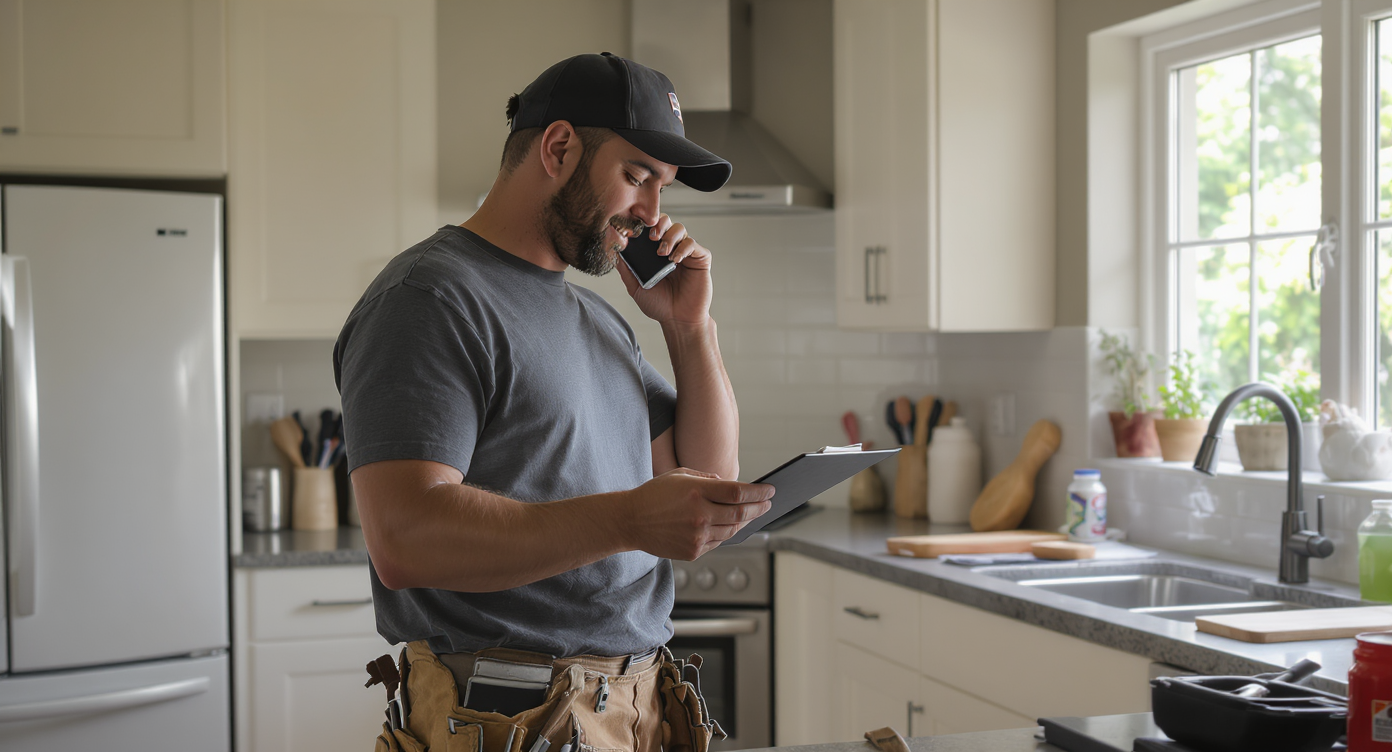
You’re on a roof patching a leak. Your phone buzzes six times in your pocket. By the time you climb down, three callers have already booked someone else. That’s the reality for most handyman business owners, and it’s costing real money every single week. Finding the best phone system for handyman services isn’t about fancy features or enterprise-grade complexity. It’s about making sure every call turns into a job on your calendar, even when your hands are full.
A phone system for handyman services is a communication platform designed to capture every call and appointment, even when you’re on job sites. It automatically answers calls, takes messages, schedules jobs, and follows up with leads—ensuring you never lose business to missed phones again.
Quick Answer
A reliable phone system for handyman services should automatically answer calls, route messages to your team, and let customers book appointments without interrupting your work. Look for features like call forwarding, voicemail-to-text, and mobile integration so you never miss jobs while in the field or on ladders.
What Is a Phone System for Handyman Services?
A phone system for handyman services is a communication platform built to handle the unique way trades professionals work. Unlike a desk job where someone sits next to a phone all day, handyman work happens on job sites, in crawl spaces, and behind drywall. Your phone system needs to answer calls, capture messages, schedule appointments, and follow up with leads whether you’re available or not.
Free weekly newsletter
Growth tips for home service businesses
Every Tuesday — actionable ideas to get more leads, reviews, and repeat customers. No fluff.
Modern options have moved far beyond the traditional landline or basic cell phone. Cloud-based phone systems now offer call routing, voicemail transcription, automated text responses, and even AI-powered agents that can book jobs on your behalf. According to recent market research on small business phone systems, this category is growing rapidly as more service businesses move away from legacy setups. The key distinction? These platforms are designed around how small businesses actually operate, not how Fortune 500 companies do.
Why Your Handyman Business Can’t Afford to Miss Calls
Here’s the uncomfortable truth. Every missed call is a missed job. And most handyman businesses miss more calls than they realize.
Think about your typical day. You’re driving between jobs, carrying materials, working with power tools, or meeting with a homeowner about a project. Answering every call isn’t possible. Yet missed call statistics consistently show that a large percentage of callers won’t leave a voicemail and won’t call back. They’ll just move on to the next handyman.
The Revenue Impact Is Bigger Than You Think
Consider what a single handyman job is worth. Even a small repair brings in $150 to $300. Larger projects like bathroom remodels or deck repairs? Thousands. Multiply that by three to five missed calls per day, five days a week. You’re looking at thousands in lost revenue every month. Because each lost customer also represents lost referrals and repeat business, the compounding effect is significant. According to analysis on the cost of missed calls, the impact grows over time.
Speed of Response Matters More Than Price
Homeowners looking for a handyman usually have an urgent need. A leaky faucet. A broken door. A fence that blew over last night. They’re calling two or three businesses and going with whoever picks up first. So your response time isn’t just a nice-to-have metric. It’s the single biggest factor in winning or losing that job. A phone system that responds instantly, even when you can’t, changes everything.
Features That Actually Matter for Handyman Businesses
Not every phone system feature matters for a one-to-five person operation. Enterprise features like call center analytics, custom sales playbooks, and AI scorecards sound impressive but won’t move the needle. Here’s what actually makes a difference when you’re evaluating options.
- 24/7 call answering: Whether it’s an AI agent or a sophisticated routing system, your phone needs to be answered at all hours. Homeowners often call in the evening when they notice a problem, and weekend calls are common for emergency repairs.
- Missed call text-back: When a call goes unanswered, an automatic text message keeps that lead warm. Something as simple as “Hey, I’m on a job right now but I’ll call you back within 30 minutes” can prevent a customer from calling your competitor.
- Appointment booking: The fewer steps between “I need a handyman” and “you’re on my calendar,” the better. Systems that can book appointments directly during or after a call eliminate back-and-forth phone tag.
- Voicemail transcription: Reading a voicemail takes ten seconds. Listening to one takes a minute or more, and you often need to replay it to catch details like addresses and phone numbers. Transcription saves real time across dozens of daily messages.
- Spam blocking: Handyman businesses get hammered with robocalls and spam. A good phone system filters those out so you’re only notified about real customers.
- Simple setup and management: You’re a skilled tradesperson, not an IT specialist. If a phone system requires hours of configuration or a dedicated admin, it’s the wrong fit.
Beyond these core features, consider whether the system handles text messaging too. Industry analysis of small business phone systems consistently shows that customers increasingly prefer texting over calling, especially for non-urgent requests like getting a quote or confirming an appointment time.
Comparing Common Phone System Options for Handyman Pros
The market is crowded. It’s easy to get overwhelmed by choices. Let’s break down the most common categories handyman businesses typically consider.
Basic Cell Phone with Google Voice
Many handyman pros start here. It’s free or nearly free, and it separates your personal number from your business number. But it lacks call routing, automation, and any intelligent response when you miss a call. Once you’re handling more than a few calls per day, you’ll outgrow it quickly.
Traditional VoIP Platforms
Options like RingCentral, Nextiva, and 8×8 offer solid business phone features. You’ll get call routing, voicemail, and professional greetings. But most of these platforms are built for office-based teams, not field service professionals. Per-user pricing adds up fast if you’ve got helpers or subcontractors, and features like voicemail drop, call coaching, and high-volume SMS are often missing or locked behind expensive tiers. Nextiva caps SMS at 250 messages per user per month, which isn’t enough for an active handyman business running appointment reminders and follow-ups.
Answering Services
Human answering services like Smith.ai and Ruby offer a personal touch. But they come with steep per-minute or per-call costs. For a handyman business taking 20 to 40 calls per day, that expense becomes unsustainable fast. These services also can’t handle texting, chat, or social media messages. So you still need separate tools for those channels.
AI-Powered Communication Platforms
This is the newest category. And it’s where things get interesting for service businesses. These platforms combine AI voice agents, automated texting, and unified messaging into one tool. Instead of paying per call or per user, you get a system that handles everything. It scales with your business and doesn’t require hiring additional staff. As recent coverage of AI receptionists shows, this approach is gaining traction among small service businesses specifically because it solves the “I’m on a ladder and can’t answer” problem.
What to Look for Beyond Features
Features matter, but they’re only part of the picture. Several other factors will determine whether a phone system actually works for your handyman business day to day.
Reliability and Uptime
If your phone system goes down, your business goes dark. According to business phone system statistics, downtime is one of the top complaints among SMBs who’ve switched to cloud-based platforms. Look for providers that guarantee 99.99% uptime or higher, and check G2 reviews for real user experiences with reliability.
Pricing That Scales With Your Business
Per-user pricing punishes growth. Every time you add a helper, apprentice, or office assistant, your phone bill jumps. Per-location pricing makes more sense for handyman businesses. You’re typically running one operation from one service area, regardless of how many people are on your crew.
Integration with Your Existing Tools
If you’re already using QuickBooks for invoicing, HousecallPro or ServiceFusion for job management, or a CRM like HubSpot, your phone system should connect to those tools. Manual data entry between disconnected systems wastes hours every week. And it introduces errors that lead to missed appointments or double-bookings.
How SalesCaptain Helps
SalesCaptain was built specifically for the problem handyman businesses face every day: too many calls, not enough hands to answer them. Its AI Phone Agent answers every call with a natural-sounding voice, 24 hours a day, seven days a week. It doesn’t just take messages. It qualifies leads by asking the right questions, books appointments directly onto your calendar, answers common questions about your services and pricing, and blocks spam so you’re only interrupted for real opportunities.
When a call goes to voicemail, SalesCaptain’s AI Summaries and Transcriptions turn every recording into searchable text with key action items highlighted. That means you can scan ten voicemails in the time it used to take to listen to two. And the missed call text-back feature sends an instant SMS to any caller you couldn’t pick up, keeping that lead engaged until you’re free.
Everything flows into a single Unified Inbox where calls, texts, webchat messages, and social media DMs all live in one place. No more checking five different apps between jobs. Plus, SalesCaptain’s Workflow Automation handles follow-up sequences, appointment reminders, and CRM updates automatically through a drag-and-drop builder. No technical skill required.
Pricing starts with a free plan for a single location. Paid plans are $159 per month per location. That’s flat-rate, not per-user, so your crew can grow without your phone bill growing with it. With 50+ integrations including QuickBooks, HousecallPro, ServiceFusion, and Zapier, it fits into the tools you’re already using. And at 99.99% uptime, it’s available when your customers need it.
Key Takeaways
The best phone system for handyman services solves one core problem: making sure no call goes unanswered and no lead slips through the cracks while you’re working. Features like 24/7 AI call answering, missed call text-back, appointment booking, and voicemail transcription aren’t luxury add-ons for field service pros. They’re essential tools for staying competitive.
Per-user pricing doesn’t make sense for growing trades businesses. Look for per-location models that let you scale your team without scaling your communication costs. And prioritize platforms that unify all your customer conversations, including calls, texts, chat, and social messages, into a single view so nothing gets lost.
Your hands should be free to do the work. Your phone system should handle the rest.
Frequently Asked Questions
What exactly is a phone system for handyman services?
A phone system for handyman services is a cloud-based communication platform designed to capture every call and appointment even when you’re on job sites. It automatically answers calls, takes messages, schedules jobs, and follows up with leads, ensuring you never miss business opportunities while working in the field.
How does a phone system help handyman businesses that are always on job sites?
Modern phone systems use call routing, voicemail transcription, automated text responses, and AI-powered agents to handle incoming calls and schedule appointments without requiring you to be at a desk. This means you can keep working while the system automatically captures potential jobs and even books appointments on your behalf.
Why is it so important for handyman businesses to not miss calls?
Missed calls represent direct revenue loss because callers typically won’t leave a voicemail and will simply call another handyman instead. Even single repair jobs worth $150-$300 add up quickly, making a reliable call capture system critical for protecting your bottom line.
What features should I look for in a handyman phone system?
Key features include call routing, voicemail transcription, automated scheduling and appointment booking, text message responses, and AI-powered agents that can book jobs on your behalf. These features work together to ensure no call falls through the cracks regardless of whether you’re available or working at a job site.
How is a cloud-based phone system different from a traditional landline?
Cloud-based phone systems offer advanced capabilities like call routing, voicemail transcription, automated responses, and remote job scheduling that traditional landlines can’t provide. They’re specifically designed for how service businesses actually operate—with teams working across multiple job sites rather than from a fixed desk location.
How much should a handyman business spend on a phone system?
Most handyman businesses can get a fully featured cloud phone system for $100 to $200 per month per location. Avoid per-user pricing models, which can quickly exceed $200 per month once you add team members. Free plans exist for solo operators just getting started, but they typically lack automation features that save meaningful time.
Can an AI phone agent really book appointments for my handyman business?
Yes. Modern AI phone agents can ask callers about the type of job they need, check your calendar availability, and confirm an appointment, all during the initial phone call. They handle this conversationally, so callers often don’t realize they’re speaking with an AI. The appointments sync directly to your scheduling tool.
What happens to calls when I’m on a job site and can’t answer?
With the right phone system, those calls are still answered. An AI agent or automated routing picks up, gathers the caller’s information and job details, and either books them or sends you a summary to review later. A missed call text-back message goes out immediately so the customer knows you’ll follow up shortly.
Do I need a separate business phone number?
Absolutely. Using your personal cell number for business creates problems as you grow. You can’t transfer a personal number if you hire office help, and it blurs the line between work and personal time. Most cloud phone systems provide a dedicated business number that works through the same device you already carry.
How do AI phone systems compare to human answering services for handyman businesses?
Human answering services charge per call or per minute, which gets expensive at high call volumes. They also can’t send texts, manage chat, or automate follow-ups. AI phone systems handle all of those channels at a flat monthly rate, making them significantly more cost-effective for busy handyman operations that take dozens of calls daily.
See How SalesCaptain Can Help Your Handyman Business
Stop losing jobs to missed calls. SalesCaptain’s AI Phone Agent answers every call, books appointments, and follows up with leads automatically, so you can focus on the work that pays. Start with a free plan and see the difference in your first week.
Ready to see it in action?
See how handymen use SalesCaptain to capture every call and book more jobs automatically.