
AI-powered customer experience marketing (CXM) platform that helps local businesses win.


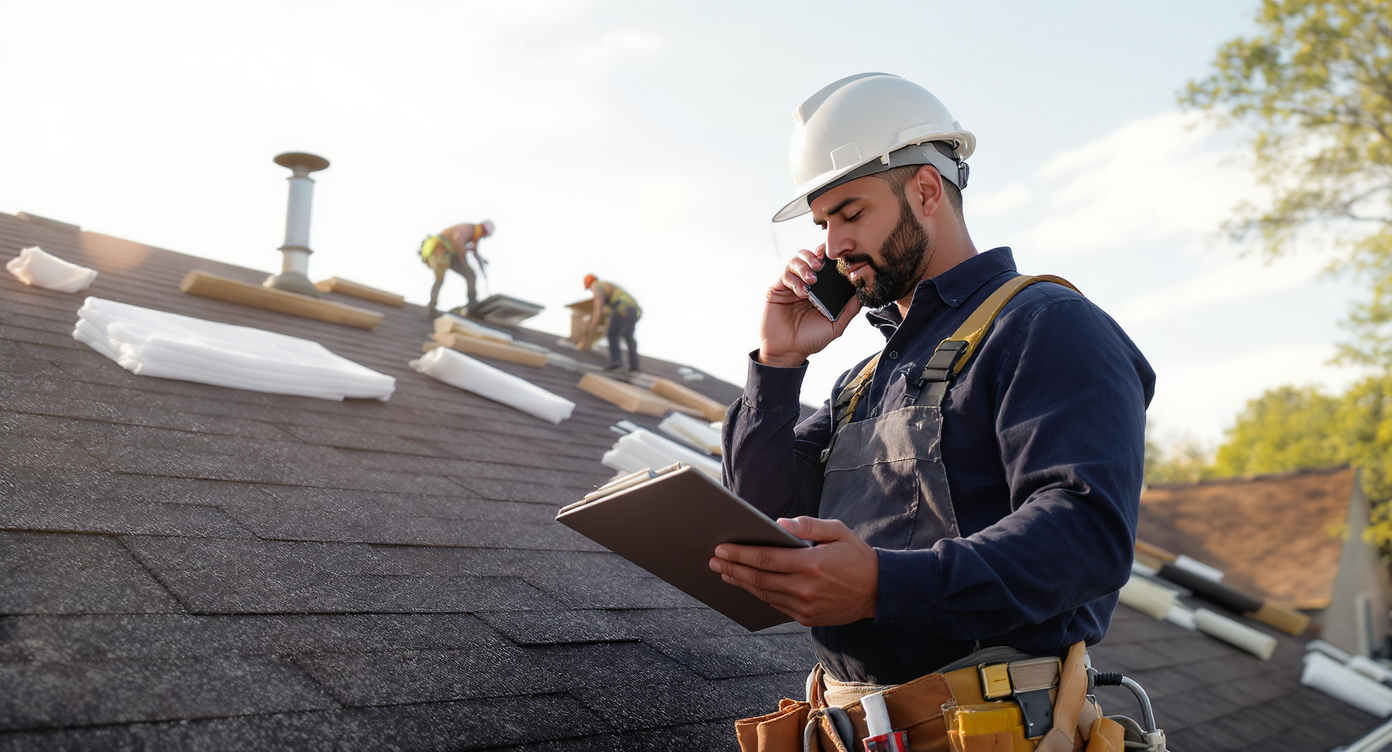
Every missed call at a roofing company is a homeowner choosing someone else. That’s not an exaggeration. Research shows that 62% of business calls go unanswered, and most callers won’t leave a voicemail or try again. For roofing companies, where a single job can be worth thousands of dollars, finding the best phone system for roofing companies isn’t just an IT decision. It’s a revenue decision.
The best phone system for roofing companies is a business communication platform that intelligently routes calls to office staff and field crews, captures leads when nobody answers, and connects your entire operation through one system. Unlike basic landlines, it prevents lost jobs by ensuring no customer call goes unanswered.
Quick Answer
A roofing company’s ideal phone system combines call routing that directs customer inquiries to available team members, mobile accessibility for field crews, voicemail-to-text transcription, and integration with job management software. The best systems offer affordable pricing per user, automatic call logging for jobs and estimates, and reliable support since missed calls directly impact revenue in this competitive industry.
What Is a Phone System for Roofing Companies?
A phone system for roofing companies is a communication platform designed to handle the specific way roofers work: crews in the field, office staff juggling estimates and scheduling, and customers calling at all hours after storm damage or a sudden leak. Unlike a basic phone line, a modern business phone system routes calls intelligently, captures leads when nobody’s available, and connects your office, field crews, and customers through one system.
Free weekly newsletter
Growth tips for home service businesses
Every Tuesday — actionable ideas to get more leads, reviews, and repeat customers. No fluff.
Traditional landlines can’t do this. Neither can a cell phone passed around the office. What you actually need is different. A cloud-based system that combines calling, texting, and automation keeps leads from slipping through the cracks while your team is on a roof. Cloud-based phone systems have become the standard for small businesses because they’re cheaper to run, easier to scale, and packed with features that on-premise hardware simply can’t match.
Why Roofing Companies Lose Revenue Without the Right Phone System
Roofing is a high-ticket, low-frequency business. You’re not selling $5 widgets. A single residential roofing job averages between $5,000 and $12,000, and commercial jobs run much higher. So when a homeowner calls after a hailstorm and nobody picks up, that’s potentially five figures walking straight to your competitor.
The Real Cost of missed calls
The cost of missed calls adds up fast, especially during storm season when call volume spikes unpredictably. Your team of three office staff might handle 30 calls a day just fine in March. But come June after a hail event, you’re getting 150. Without a system that can queue calls, route overflow, and capture information automatically, you’re hemorrhaging leads during your most profitable window.
Here’s what compounds the problem. Homeowners shopping for a roofer typically call two or three companies. Whoever answers first and sounds professional usually wins. Speed matters more than reputation in that critical first contact. An instant answer—even if it’s an AI agent or an IVR greeting—keeps that caller engaged instead of dialing the next name on their list.
After-Hours Calls Are Your Blind Spot
Roof damage doesn’t happen on a 9-to-5 schedule. Storms roll through at night. Homeowners notice leaks on weekends. Yet most roofing companies shut their phones off at 5 PM. According to industry analysis from SchedulingKit, businesses lose thousands in potential revenue each month from calls that come in outside working hours. For roofers, those after-hours callers are often the most urgent, highest-intent leads you’ll ever get.
Key Features Roofers Should Look for in a Phone System
Not every phone system feature matters equally for roofing businesses. A law firm needs call recording for compliance. A dental office needs appointment reminders. But roofers? You need a specific set of capabilities tied to how your business actually operates: fast response, field communication, and lead capture during chaos.
- 24/7 call answering or AI receptionist: You need something handling calls when your office is closed. Whether that’s an AI voice agent, a virtual receptionist, or smart voicemail with text-back, after-hours coverage isn’t optional.
- Call routing and IVR: Route calls based on purpose. New estimate requests go to sales. Existing customers with service issues go to project managers. Spam gets blocked before it wastes anyone’s time.
- SMS and text messaging: Homeowners, especially younger ones, prefer texting. Your system should let you text from your business number, send appointment confirmations, and follow up on missed calls with an automatic text.
- CRM integration: If your phone system doesn’t talk to your CRM or job management software like ServiceFusion or HousecallPro, your team is double-entering data. That’s wasted time and a recipe for lost leads.
- Scalability for storm season: Your call volume isn’t consistent. You need a system that handles spikes without crashing or requiring you to add phone lines temporarily.
- Mobile access for field crews: Foremen and project managers need to make and receive calls from the business number while they’re on job sites, not from personal cell phones that leave no record.
Business phone system adoption statistics consistently show that companies switching to cloud-based systems see measurable improvements in response time and customer satisfaction. For roofing companies, where reputation and speed drive referrals, those improvements translate directly into more jobs booked.
Comparing Popular Phone Systems for Roofers
The market is crowded. Most comparison articles just list ten platforms without explaining which ones actually fit a roofing company’s workflow. Here’s an honest look at what’s out there and where each option falls short for your specific industry.
Traditional VoIP Platforms
RingCentral, Nextiva, and Dialpad are well-known names. They’re solid general-purpose VoIP systems with reliable uptime and decent feature sets. But they’re built for a broad audience, not specifically for service businesses. RingCentral doesn’t offer voicemail drop, lead capture forms, or payments via text. Nextiva caps SMS at 250 messages per user per month, which won’t cut it during a busy storm season when you’re texting dozens of homeowners daily.
Dialpad starts at $15 per user. It includes AI-powered transcription, but lacks audio conferencing, toll-free minutes, and high-volume SMS capabilities. Running a roofing company with office staff, a sales team, and field crews? Per-user pricing adds up fast across all those seats.
Industry-Adjacent Tools
Podium and Birdeye often come up in conversations about business communication. But they’re really reputation management platforms with messaging bolted on. Birdeye has no call routing, no IVR, no call flow builder, no hold music, and no AI capabilities for phone calls. Podium lacks audio conferencing, a power dialer, and post-call analytics. Neither one is a true phone system replacement. You need reliable voice communication as your backbone.
Budget Options and Their Limits
Grasshopper and OpenPhone appeal to budget-conscious businesses. Grasshopper is voice-only with no AI, no texting automation, no chat, and no unified inbox. It’s essentially a call forwarding service with a professional greeting. OpenPhone is more capable at $15 per user. But it lacks HIPAA compliance, call coaching, a power dialer, and has only seven native integrations. Neither platform handles the multi-channel communication modern roofing businesses require.
| Feature | SalesCaptain | RingCentral | Nextiva | Dialpad | OpenPhone | Grasshopper |
|---|---|---|---|---|---|---|
| AI Voice Agent (24/7) | Yes | No | No | No | No | No |
| Missed-Call Text-Back | Yes | No | No | No | No | No |
| Unified Inbox (All Channels) | Yes | Limited | Limited | Limited | No | No |
| CRM / Job Software Integration | 50+ (HousecallPro, ServiceFusion) | Yes | Yes | Yes | 7 only | Limited |
| Voicemail Drop | Yes | No | No | No | No | No |
| Call Coaching / Whispering | Yes | No | No | No | No | No |
| Per-Location Pricing | Yes (Free plan available) | Per user | Per user | Per user | Per user | Per line |
The business phone system market continues to grow rapidly, which means more options keep entering the space. But more options doesn’t mean better fit. You need to evaluate systems based on your actual workflow, not feature count.
How SalesCaptain Helps
SalesCaptain was built for service businesses like roofing companies. Not retrofitted from an enterprise tool or a sales dialer. The platform combines an AI Phone Agent, AI Chat Agents, a unified inbox, and a full business phone system into one solution, priced per location rather than per user. That pricing model matters when you’ve got five office staff, three project managers, and a dozen crew leads who all need access.
The AI Phone Agent answers every call 24/7 with a natural-sounding voice. It can book appointments, qualify leads by asking about roof type and damage severity, answer common questions about your services, and block spam. During storm season, when your phones are ringing nonstop, the agent handles overflow without making callers wait on hold or go to voicemail. After hours, it captures every lead. Custom call flows route urgent calls based on your priorities.
Beyond voice, SalesCaptain’s missed-call text-back automatically sends an SMS to anyone whose call goes unanswered. Your unified inbox pulls calls, texts, webchat, Facebook messages, and Instagram DMs into one screen. No more toggling between six apps. And because it integrates natively with HousecallPro, ServiceFusion, and 50+ other tools via Zapier, lead information flows straight into your job management software without manual data entry.
What does that look like in practice? A homeowner calls at 8 PM after noticing storm damage. Your AI Phone Agent answers, asks qualifying questions, books an inspection for the next morning, and sends a confirmation text. By the time your team arrives at the office, the lead is already in your CRM with a call summary and transcription. No missed opportunity. No sticky notes. No guessing if someone called last night.
AI receptionists are becoming standard for small businesses because they solve a problem that hiring alone can’t fix: consistent, immediate response regardless of time or call volume. SalesCaptain’s AI agents cost $0.12 per minute, a fraction of what a human answering service charges per call.
Frequently Asked Questions
What is a phone system for roofing companies?
A phone system for roofing companies is a cloud-based communication platform designed to handle the unique workflow of roofing businesses—with crews in the field, office staff managing estimates, and customers calling at all hours. Unlike traditional landlines, it intelligently routes calls, captures leads when nobody’s available, and connects your entire operation through one unified system that includes calling, texting, and automation features.
Why do roofing companies lose money without the right phone system?
Roofing is a high-ticket business where a single residential job averages $5,000 to $12,000, meaning each missed call potentially costs thousands in lost revenue. Research shows 62% of business calls go unanswered, and most callers won’t try again—especially during storm season when call volume can spike from 30 to 150 calls daily, overwhelming teams without proper call routing and capture systems.
How does a cloud-based phone system work for roofing companies?
A cloud-based phone system routes calls intelligently to office staff and field crews, automatically captures lead information when nobody’s available, and ensures no customer call goes unanswered through features like call queuing and overflow management. It’s cheaper to run and easier to scale than traditional on-premise hardware, making it the modern standard for small businesses like roofing companies.
What’s the difference between a phone system and a traditional landline for roofers?
Traditional landlines and cell phones passed around an office can’t handle the intelligent call routing, lead capture, or automation that modern roofing businesses need. A proper business phone system prevents lost jobs by automatically managing call overflow during peak times, capturing customer information, and keeping your entire team connected—something basic phone lines simply cannot do.
When should a roofing company switch to a cloud-based phone system?
Any roofing company losing calls or struggling to manage peak volume—especially during storm season—should consider switching immediately, since each missed call represents thousands in lost revenue. If your current setup can’t handle overflow calls, capture lead information automatically, or connect office and field teams efficiently, a cloud-based system is a revenue decision, not just an IT upgrade.
SalesCaptain.com to get started today.
Ready to see it in action?
See how roofing companies use SalesCaptain to capture every lead before competitors do.